
By Johna Till Johnson
Photos by Vladimir Brezina
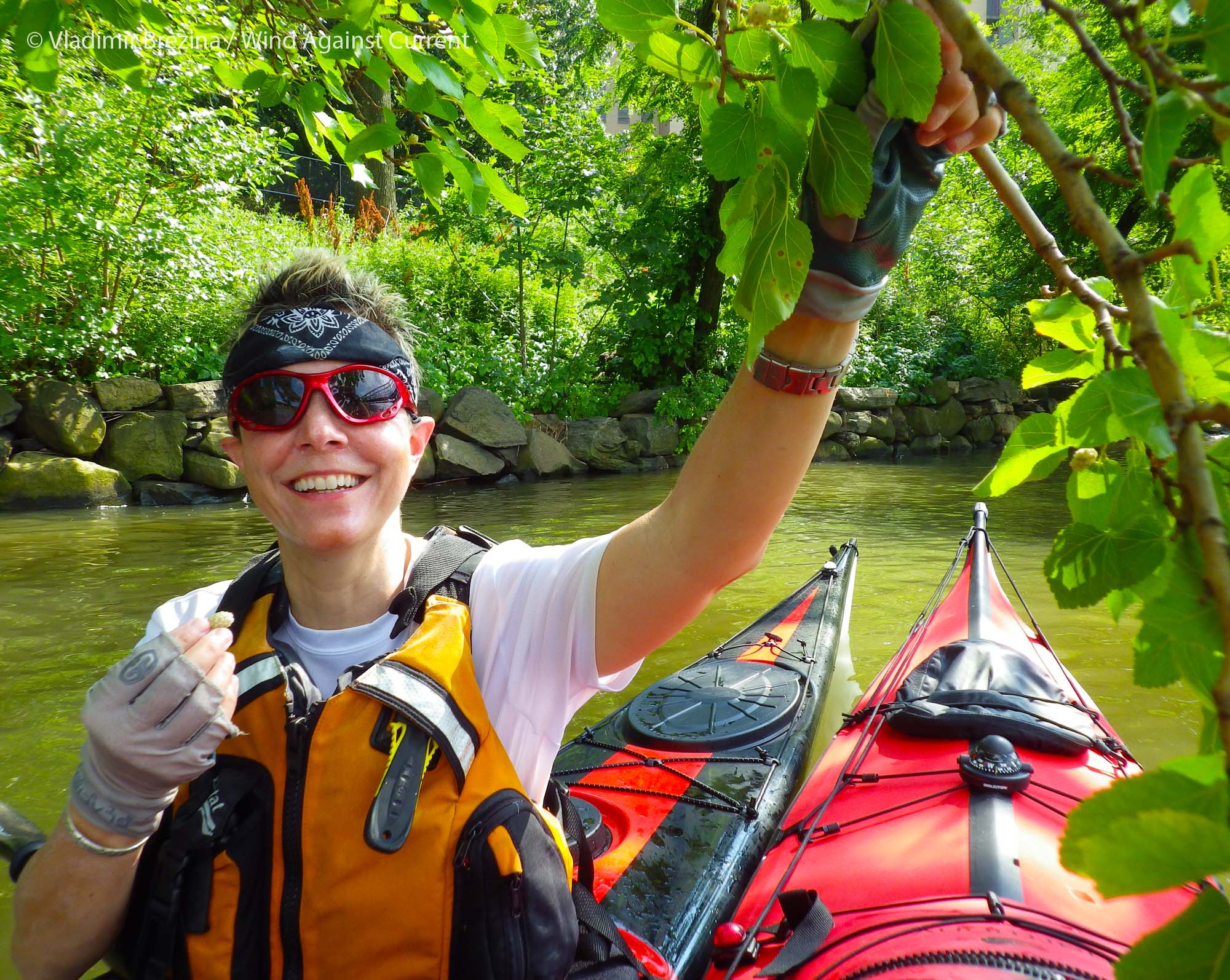 I looked behind me.
Vlad had disappeared.
Both those things were somewhat unexpected. Normally Vlad paddles slightly ahead of me, or we keep pace. But the sun was high and he was uncharacteristically lagging behind, and I thought maybe the heat was getting to him.
He was on the far side of the Harlem River, over to the East. And last I’d checked, he’d been paddling away from me, towards the low, almost insignificant, pedestrian bridge that connects Wards and Randalls Islands.
Now he’d disappeared under the bridge. I followed across the Harlem River to see where he was headed. In the several dozen times we’ve circumnavigated Manhattan together, we’ve never gone under that bridge. Never even discussed it. I wondered what had prompted him to do so today.
When I caught up with him, he was stopped, looking curiously at the reeds and marshland in the little cove that opened up past the bridge.
“What made you decide to come in here?” I asked.
“There’s a place where mulberry trees grow right down to the water. You can pick mulberries right from a kayak,” he said. “Erik Baard has been writing about it for years.” (Most recently here.)
Mulberries? From a kayak?
I looked around. Sure enough, I’d passed several green trees whose branches nearly touched the water. But none of them looked like berry trees.
I paddled closer to Vlad. He explained that we were in the remnants of what used to be Little Hell Gate. It was the strait between Wards and Randalls Islands that, just like “big” Hell Gate still is today, was once an open passage, with fierce tidal currents. But when Robert Moses built the Triborough—now the RFK—Bridge in the 1930s, he joined Wards and Randalls Islands together by blocking off Little Hell Gate at one end to turn it into the placid backwater that we’d entered today.
But what about those mulberries?
We paddled closer to the green trees and inspected them. It didn’t seem like there was anything much… but wait… what was that?
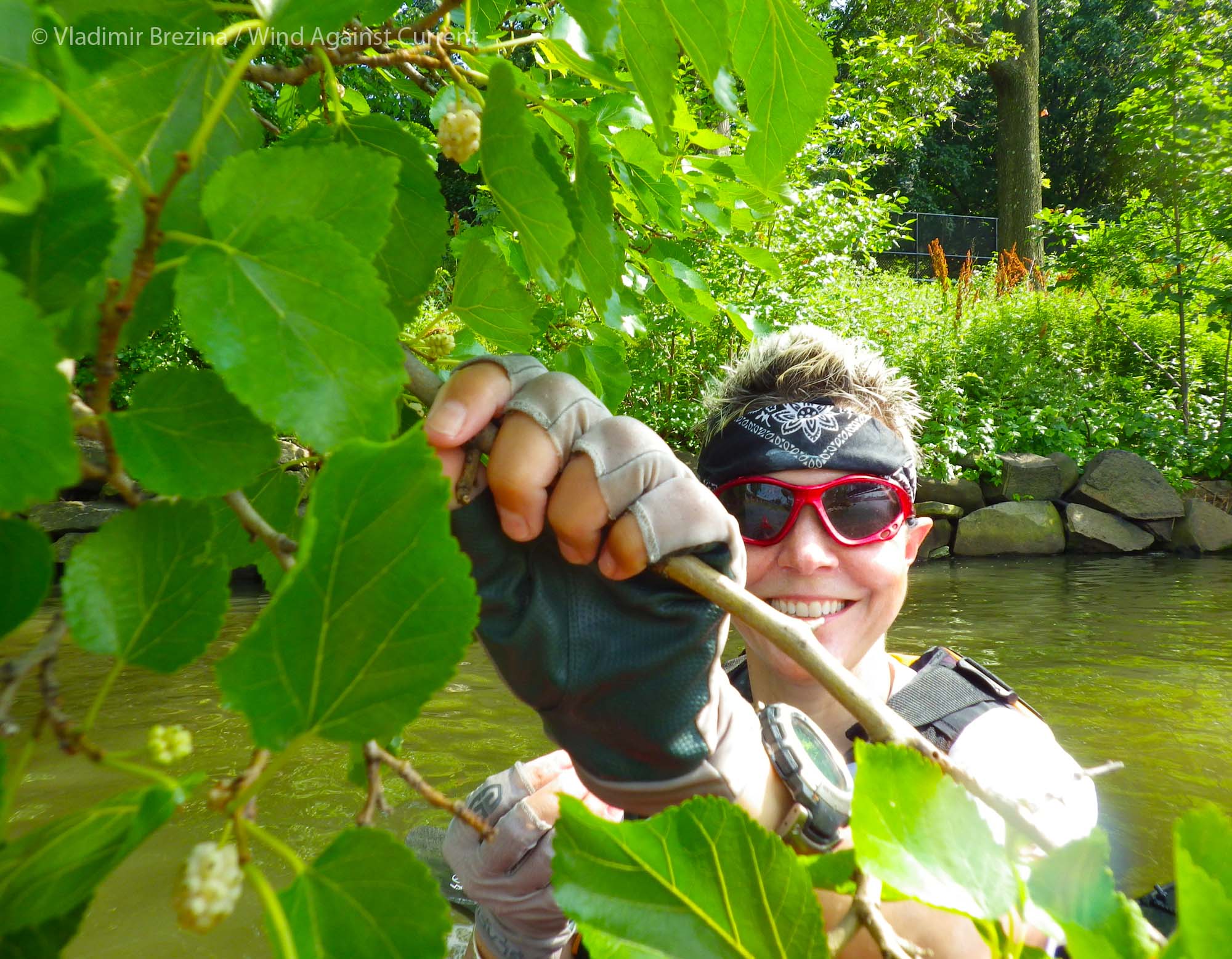
A splotch of white against the foliage. Sure enough: White mulberries!
And ripe, too. And surprisingly sweet.

Laughing with delight, we plucked and ate the berries. There were plenty of them—because who else could reach those berries except for kayakers?
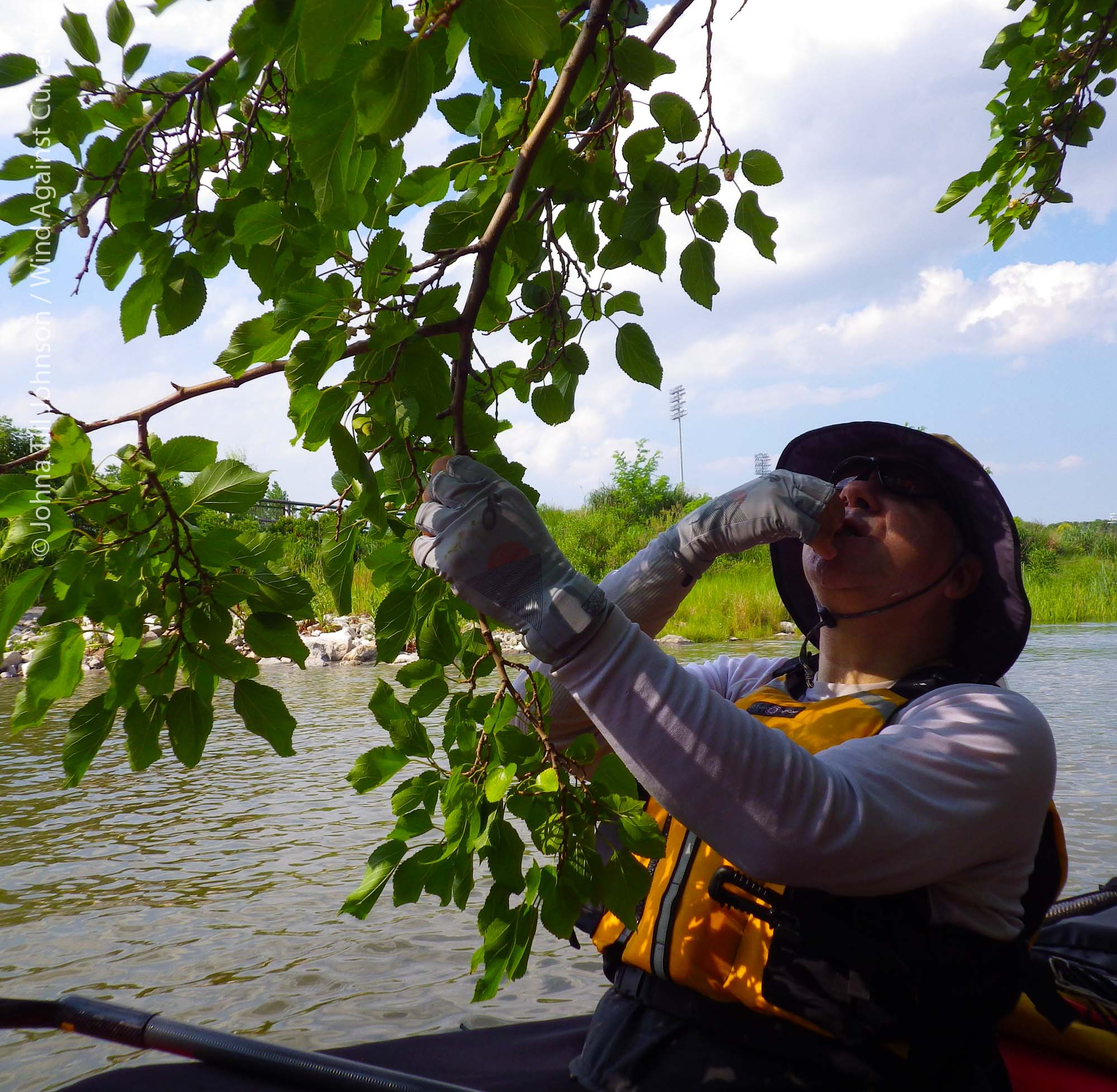
“Erik mentioned there were some red ones, too,” Vlad said. We looked at some of the other trees. Wait… what was that? A flash of pink?
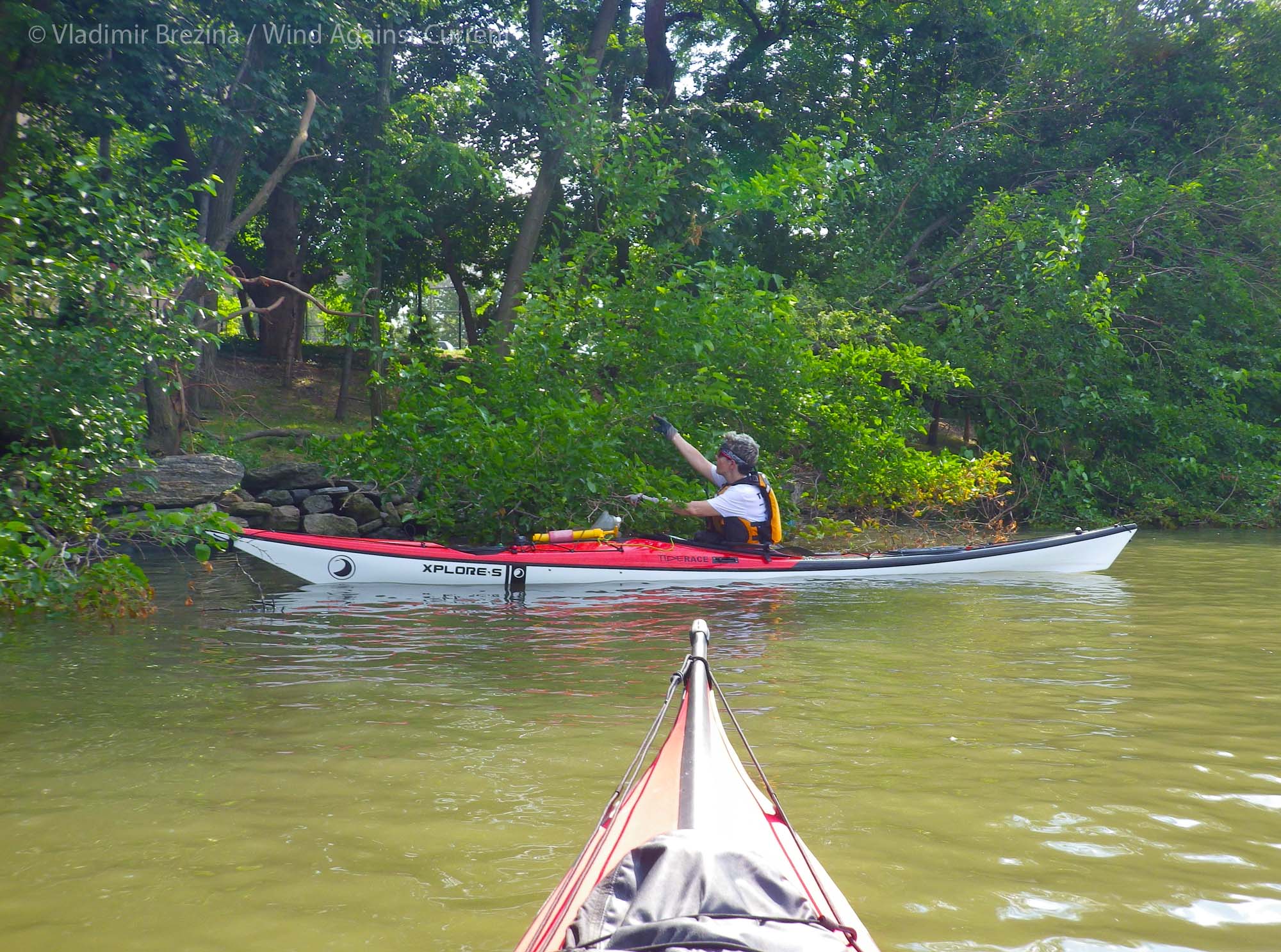

We paddled closer, and sure enough, caught sight of some dark-purple mulberries against the green. (The pink ones were semi-ripe).
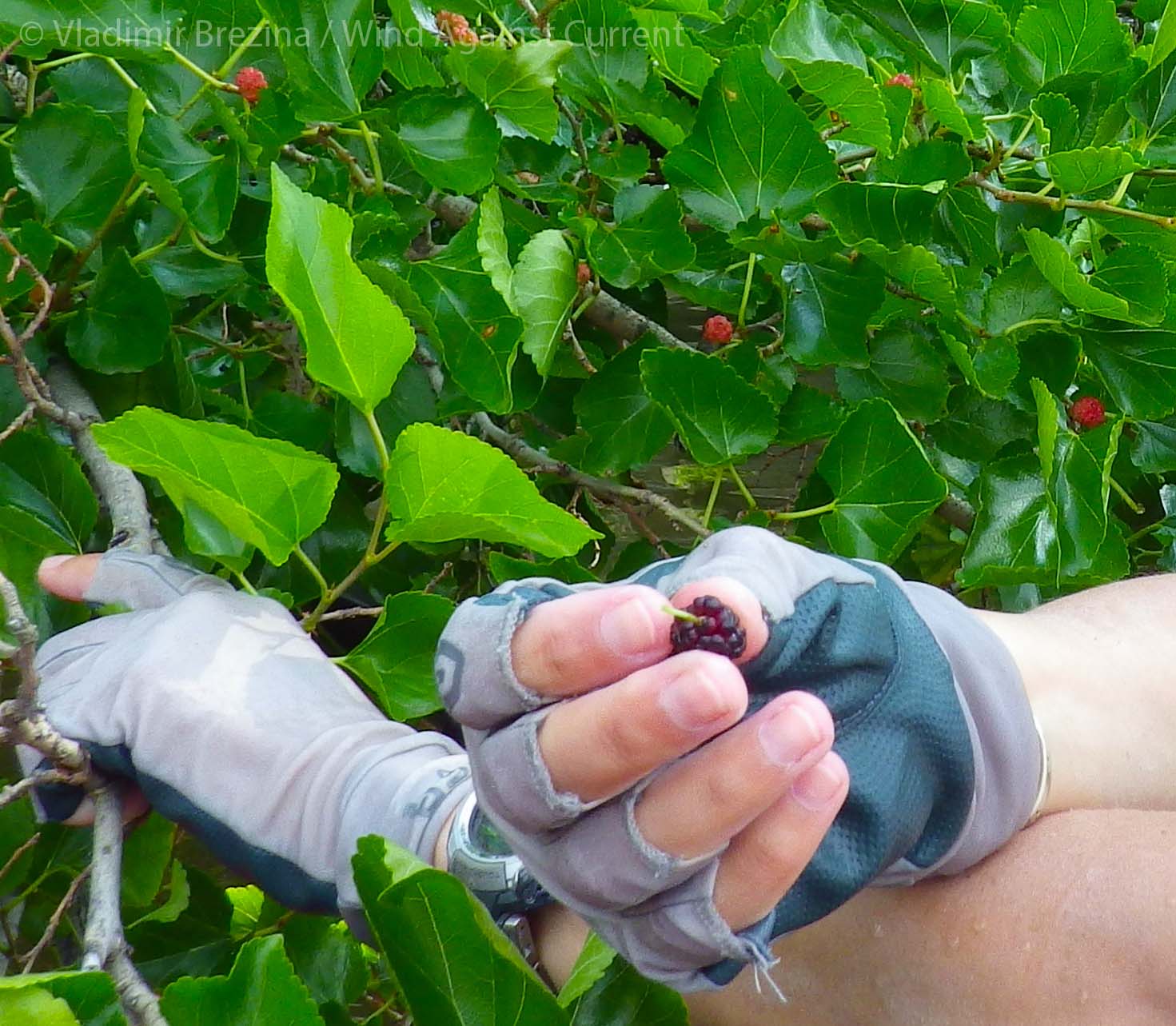
More mulberries!
And there are more to come, judging from the quantities of unripe and semi-ripe berries. We hope to be back in the next few weeks to repeat the experience, when the tides are once again right.
Mulberries!

 Vladimir Brezina (RIP)
  Johna Till Johnson


 Wind Against Current