
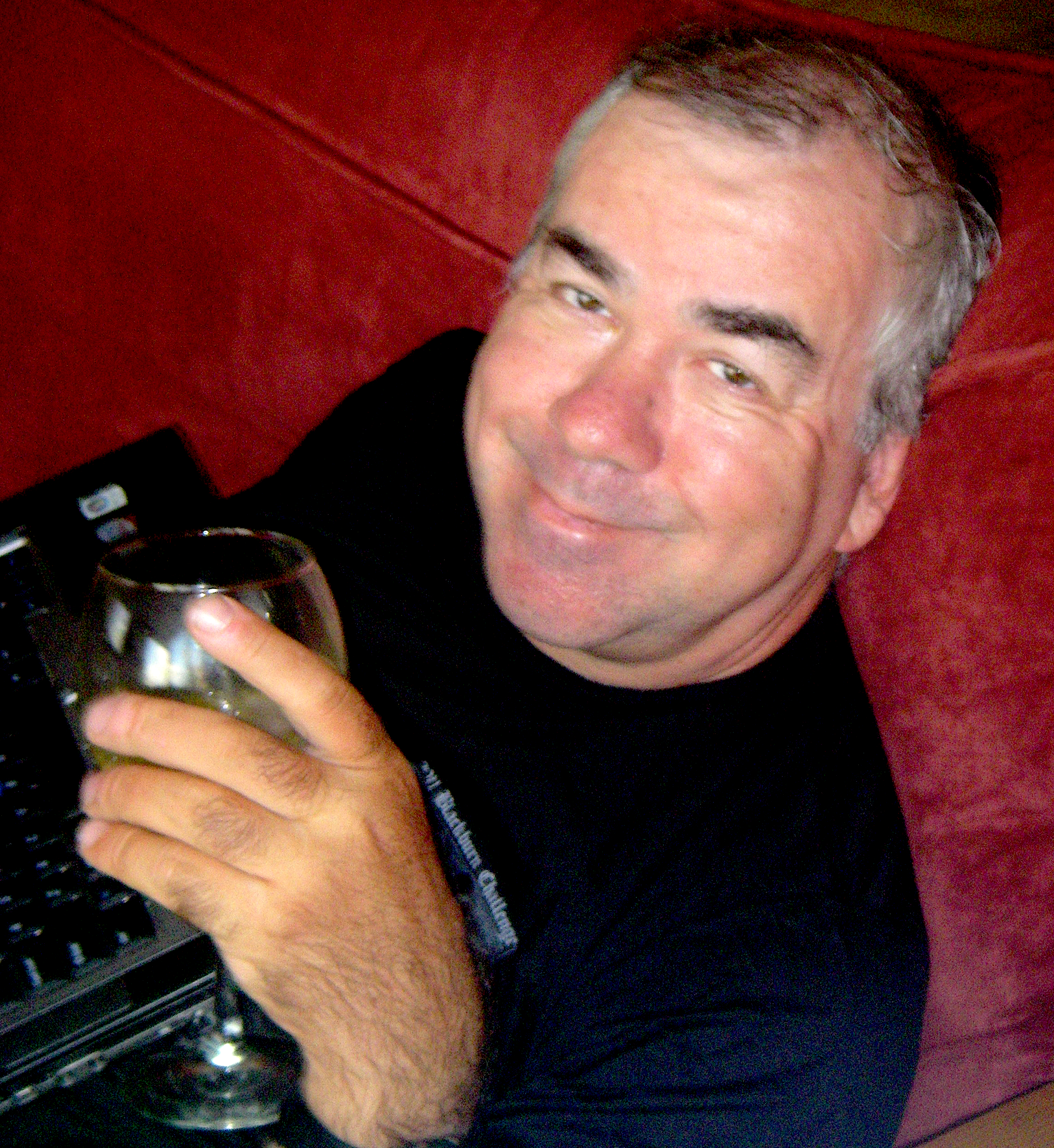
By Johna Till Johnson
“Vlad, what language are they speaking?” I asked. The young couple in the sick bay next to us were murmuring softly to each other in a language I couldn’t quite grasp. Germanic, I guessed, from the “ya’s” and “nein”’s.
“Yiddish,” he replied, and it suddenly all made sense: Orthodox. From what I could glimpse through the fluttering curtain separating her bed from Vlad’s, the woman was young—no more than early 20s–and conservatively dressed in a long dark skirt and blouse. I hadn’t been able to see him, just a glimpse of dark clothing and a warm, low-pitched voice.
She’d arrived around five AM. We were awakened by her screams—desperate wails of pain that didn’t sound like they came from an adult, sentient, human. At first I thought it was a child, or someone suffering from dementia. But in between the screams, she begged coherently for pain medication.
It must have arrived eventually, because she quieted. Then I heard her say, in a normal voice, evidently to a nurse, “I’m sorry. I’m not usually such a bad patient. But the pain was so bad…”
I wondered briefly what was wrong with her. And in a more mercenary vein, I wondered if there was a way to get a chair such as the one her husband was sitting on, on their side of the curtain.
It was early in the morning on Thursday, November 6th. We’d arrived in the emergency room the night before, at the urgent request of one of Vlad’s oncology nurses.
I had been sitting in the living room, digging through a pint of ice cream in lieu of dinner. It had been a long day, and I was exhausted. I was just waiting for Vlad to finish his dinner so I could give him his shot and get some sleep.
I heard the phone ring, and Vlad pick up. He started talking to the person at the other end, and my ears pricked up—we didn’t get many phone calls at 9 PM; usually they were automated reminders of appointments.
“High levels of potassium,” I heard. Immediately I put the container of ice cream down and ran into the bedroom, where I listened in.
The urgency in the nurse’s voice was palpable. Vlad had had his blood test that morning, to confirm he was ready to re-initiate chemo on the upcoming Monday. We already knew some of the results, because we’d visited his GP immediately afterwards, and she’d delivered the happy news that his blood hemoglobin was on the rise.
But now something was wrong, very wrong. High potassium levels, we gathered from the nurse, was a sign of potential kidney failure. Worse, they could trigger an immediate and fatal heart attack.
“You have to go to the emergency room immediately,” Paola said. “We’ll figure out what’s causing it, but we have to bring those levels down right away. You don’t have to go to our emergency room (Mt. Sinai’s). You can go to the local one.”
“Mt. Sinai is local to us,” Vlad said with a chuckle. “We live just 10 blocks away.”
“OK,” she said, stressing again that we had to go immediately. She said the doctor would “blue-slip” Vlad’s admission, to cut through the red tape at triage and make sure he was treated right away.
I quickly packed a small bag, annoyed at myself for not having a checklist for trips to the emergency room. After all, it was our third visit in two months—we should have the drill down by now.
What to bring? Food? Pillows? I settled on extra sweaters (it was a warm night, but it’s always cold in emergency rooms), laptop, phones, and some books. (Later I built out that checklist—other things to include are blankets, snacks, water, eyeshades and noise-cancelling headphones). Then I quickly brushed my teeth to remove the ice-cream scum. It might be a while before I could brush them again. The nurse had said we’d be in the ER for a few hours at least.
It turned out to be a lot longer.
We arrived around 9:15, and true to Paola’s promise, made it through triage in record time. Soon we were sitting in a row of chairs inside the ER proper, waiting to be seen.
Or rather, Vlad was sitting. I was standing, because there was no room to sit. In fact, there was no room anywhere. Every bay was full, and gurneys packed the aisles. Even the chairs were full—Vlad snagged the last one.
A nurse came to redo the blood test (since there was a possibility the first one had been mistaken—blood-potassium tests can be somewhat unreliable). She took the blood away and we waited for 45 minutes, maybe an hour.
I spent the time searching online for high potassium causes and treatments, and discovered some intriguing information that I wanted to ask the doctor about. But …where was the doctor? Vlad had been there almost an hour, and nobody had come by to see him, other than the nurse who drew blood. The oncology nurse had stressed that he needed to be seen urgently, yet nothing was happening!
I went off in search of a white lab coat. Fortunately, the doctor came over immediately and apologized for the oversight, explaining that the ER was particularly chaotic that night.
We discussed the situation. The doctor confirmed the potassium was still high, and then said, “The thing is, we don’t know what’s causing the high potassium.”
“Could it be the lisinopril?” I asked, based on my web research. I was referring to Vlad’s blood pressure medication. One of the rarer side effects was an impact on kidney function. The doctor’s eyes lit up, “Good call,” he said. “It very well could be.” Fortunately, Vlad had stopped taking that medication already—with the approval of his GP—so if it were the cause, he should be getting better soon.
But that was a discussion for later. For now, the plan was to get IV saline infusions to bring the potassium levels down to a non-life-threatening level. One of the nurses brought over a pole with an IV drip, and the infusions began.
The problem was, the ER was so crowded that there was still a wait for a gurney.
As we waited, one man in particular caught our eye. He was tall and burly, with graying hair and blue eyes. He wore blue scrubs indicating he was one of the support and operations staff, but carried himself confidently and had a calm and steadying manner with the patients as he delivered oxygen tanks and answered their questions.
After a while we noticed that the other staff—even, occasionally, doctors and nurses—seemed to rely on him to know what was going on, and even defer to him occasionally.
“He seems like he’s running the place,” Vlad commented. And indeed he did, possibly because he was older than the mostly-30ish staff.
“Where do you think his accent’s from?” Vlad asked me rhetorically, because it was obvious: “Russia,” I said promptly.
Sure enough, when the man stopped by to let us know a gurney was on the way, he inquired about Vlad’s name and background. Vlad reciprocated, and it turned out that the man–whose name was Sergei—had been born in Ukraine when it was still part of Russia.
“He was probably a doctor back in Russia,” I said, half-jokingly. “Could very well be,” Vlad replied in all seriousness, noting that he’d had a laboratory tech with advanced degrees back in Russia. Because the United States didn’t recognize the Russian medical system, people who came over in the 1980s and 1990s often ended up working in jobs adjacent to their original professions, but at a much lower level.
Former doctor or no, Sergei became our guardian angel for the next few hours. Once he located the gurney, he suggested I stand guard over it while Vlad went to the bathroom, because the gurneys were in high demand. And he would wander over to check on us every now and then.
Initially, while we waited for a bay to come free, the gurney was in a row of four lined up on the open floor of the ER. There were very few chairs, and no room for one anyway, so I sat on a corner of Vlad’s bed. We both had books, but little desire to read, so we passed the time by watching the controlled chaos of the ER.
By around 2 AM, one of the bays came free, and we were happy to note that it was a “corner” bay, meaning that there was a wall on one side, instead of curtains on both. Definitely top ER real estate! Sergei wheeled the gurney in, and moved the IV.
We were settled in our new home—though we had no idea how long we’d be there. The doctors had indicated that if the tests showed Vlad’s blood potassium was coming down, he’d be discharged to go home. If it wasn’t, he’d be admitted to the hospital. And who knew what would happen after that? I tried not to think about the possibilities—kidney damage, dialysis, wait-listed for a transplant…
“Maybe the third time will be a charm,” I said. The last two times we’d gone to the ER, we’d gotten bad news: First, Vlad’s cancer diagnosis, and second, emergency surgery for a ruptured intestine. Maybe this would be the time we’d escape relatively unscathed.
At any rate, there wasn’t much else to do, and noplace to sit. So I crawled onto the gurney beside Vlad, and we both fell asleep.
We were awakened a few hours later by the frantic screams of the young Orthodox woman in the bay next to us. Fortunately (for her far more than for us) the pain medication seemed to work, and the screams were replaced by her soft murmurs in Yiddish. Once we figured out the accent, we both drifted back off to sleep.
We woke again a few hours later, when Vlad’s doctors arrived. The news was good, but not great: Vlad’s blood levels had improved, but not enough for them to send him home.
“We’re admitting you,” the doctor said flatly, meaning to the hospital.
Vlad’s face fell, and I realized how much we’d both been counting on being allowed to go home in the morning. But at least they didn’t seem to think the kidneys were permanently damaged.
There was yet another twist as I discovered after venturing out for breakfast. I wasn’t sure I’d have enough time to eat before he was moved to a hospital room, so I checked with the nurses. One rolled her eyes at the question. “You won’t be going anywhere soon, honey,” she said. “The wait for a hospital bed is 24 to 48 hours.”
One to two days?! Well, that certainly left me enough time for breakfast!
So I went down to the cafeteria and savored some quiche and sausages, and best of all, strong hot coffee. (The Mt. Sinai cafeteria is actually surprisingly good, with a wide variety of fresh food.)
Back at Vlad’s bedside, I noticed the young couple next to us was gone—temporarily, it appeared, as their belongings were still on the bed. The chair I’d noticed earlier now stood empty against the wall.
I sat down right away, and plugged in my laptop to the power strip along the wall. As the morning progressed, I read and Vlad alternately read and dozed, as the saline solution continued to course into his arm.
The young couple reappeared, and I stood up. “Here’s your chair back,” I said to the man. Like many Orthodox men, he appeared both younger and older than he probably was, his fresh, unlined face and gentle eyes a contrast to his severe clothing and erect posture. He could have been as old as 30, or as young as 20.
“No, no,” he demurred. “You keep it.”
“No, it’s yours,” I insisted.
“We will share,” he said firmly, and gestured to me to sit down again.
So I sat back down and read for a while. Then Vlad announced he was hungry.
This was a positive sign! Vlad’s appetite had been returning slowly since the surgery, but the rate of increase appeared to be accelerating.
He’d eaten breakfast—both our breakfasts, actually—a few hours before, when an orderly delivered two sealed boxes each containing a dry sandwich, water, and an apple. (I was amused to note that the seal indicated the contents were kosher.)
No lunch appeared to be forthcoming (I found out later why). So I suggested that I pick up some lunch for us both from the cafeteria.
We shared a picnic of fried chicken and salad (for me) and sandwich, pudding, and juice (for him) on the hospital bed. Then we had a long afternoon of reading and dozing, with the curtains closed. “It’s like being in a tent,” Vlad commented. And in a way, it was—urban camping. But instead of the dramatic forces of nature, we were surrounded by human drama.
The young couple next door once again left for tests, and returned. The young man repossessed the chair while I napped, chatting with his wife in Yiddish. The sound was strangely peaceful and lulling.
Then the doctors came by for a discussion, which of course was in English. I couldn’t help but overhear, since they were inches away, separated only by a cloth curtain.
They asked her if she’d ever had surgery. “I had two ceasarians,” she said in her gently accented English, with an unmistakable note of pride.
So young! I thought, and wondered who was caring for the children. They couldn’t possibly be very old.
Then they explained her condition: kidney stones. Just the thought made me wince. The pain was terrible, but they had medication for it. Hopefully she wouldn’t end up in such horrible pain again.
And then they said the magic words: “We’ll be sending you home later today!” My heart leapt with happiness for them.
“Oh good,” the man said. “Do you know when?”
“It usually takes a little time to process the discharge papers,” the doctor said. (That, we would find out, would turn out to be the understatement of the year.)
“I see,” the man replied. “I am hoping… we are hoping… we have a wedding to go to tonight.”
Everyone chuckled. “We’ll do our best,” the doctor said. I thought of the joy of a Jewish wedding (I’ve been to a few, though never Orthodox) and hoped the young couple would be able to make it.
They stayed for a surprisingly long time. At one point, when the young man was gone, I was returning to Vlad’s gurney and saw her sitting up in bed. “I hear you’re going home,” I said.
“Yes,” she replied, with a radiant smile.
I smiled back. “I’m so happy for you.”
“Thank you!”
It felt good to have a connection with her, and with her husband who so decently shared the chair (and who despite my many urgings, never once asked to use it when I was in it).
Dinner was another “hospital picnic” from the cafeteria. The young couple departed, and the bay was left empty for a while, to be replaced by a large Hispanic family. The rules dictated one visitor per bed, but the staff tended to look the other way, and this patient had at least two or three visitors, chattering away animatedly in Spanish.
I dozed for a bit. The curtains were closed, and the background noise from the ER floor was loud: Machines beeping, people talking, patients moaning. But over all of it, I could hear someone speaking rhythmically. A man’s voice, deep and gravelly. Reciting something, it seemed. The accent was pure New York, but the cadence was strangely familiar.
“As it was in the beginning… is now and ever shall be… world without end, Amen.”
It was the Glory Be, I realized. One of the canonical Catholic prayers, often recited as part of the Rosary. And sure enough, the man moved on to the Our Father and the Hail Mary. I’d heard those prayers thousands of times in my childhood.
I found myself reciting silently along with him, the words and phrases appearing as if by themselves on my lips. And then I drifted off to sleep again…
I was awakened by the arrival of Vlad’s night nurse, Leilani, a slight, ebullient young Filipina with a kind demeanor. She introduced herself, changed his saline solution, and said she’d return in a bit to check on him.
Sergei reappeared, too, on his second twelve-hour shift. “You guys still here?” he asked incredulously. We nodded. “You are the most patient man in the world,” he said to Vlad.
He was right—patience is one of Vlad’s strong suits—but there didn’t seem to be anything else to do. Complaining wouldn’t get him a hospital room that didn’t exist, and he was getting the treatment he needed. Plus, he wasn’t in pain—in fact, he was feeling better than at anytime since the surgery.
The evening wore on, and even Sergei acknowledged he was tired. On a rare break in his duties, he leaned on a stool and chatted with us. He’d only gotten an hour or two of sleep himself, thanks to a busy schedule and the gridlocked traffic outside.
Then Leilani appeared. “You should go home and get some sleep,” she said to me. My friends had been urging the same thing, via email.
But I worried that if Vlad were moved to a hospital bed during the night, I wouldn’t be able to find him. So Leilani kindly gave me the ER main desk phone number to call if I needed to know where Vlad was.
Of course, Vlad had his phone with him and could easily send me email if he was moved—in my sleepy state, I’d forgotten that. At any rate, I took everyeone’s advice and went back to the apartment for a few hours of restful sleep.
I set the alarm for 6 AM but surprised myself by waking up a few minutes early. There was an email from Vlad, sent moments ago: “Surreal night… going to draw blood soon… latest I heard, if potassium and creatinine are lower, I can go home… but we’ll see…”
“Surreal?” That sounded interesting.
I showered, made coffee, and packed up, optimistically packing Vlad’s new boots (which had arrived the day before) in the hopes that he’d be released soon. One of his feet had been a bit floppy after the surgery, and the physical therapist had suggested wearing ankle boots to stabilize it.
Vlad also said he was hungry, so I brought cheese, crackers, yogurt and juice (remembering the dry breakfast of the day before). And, come to think of it, that had been the last food they offered us in the ER….
After Vlad had finished breakfast, he told me the story. Apparently it was a good idea that I’d gone home, because the ER had gotten even more chaotic overnight, and Vlad had gotten very little sleep.
At one point, he woke up to the rolling cadences of a southern-accented sermon. One of the patients, a black man who said he was a preacher, had launched into a sermon about Aaaron and Moses, in traditional call-and-response style.
It was surprisingly good, Vlad said, and the ER “congregation” had listened approvingly, even the doctors and nurses.
There were a few other stories, but that was the best one. I thought about the ever-changing range of cultures and religions packed into that room: Eastern European, Hispanic, Filipino, Orthodox, Catholic, Evangelical…
Overnight, the Hispanic family had left, and the bay next to ours had been occupied by an elderly black woman. She occasionally moaned in pain, and seemed a bit disoriented. Poignantly, there was no one beside her.
She was neatly dressed, with strikingly well-cared-for nails in a becoming coral color. And she returned my smiles as I came and went, though we didn’t speak.
I was sitting beside Vlad reading when I heard a doctor come by. He was young, male, and obviously trying to be kind. But he clearly didn’t understand human dynamics.
“Do you have any family?” he asked the woman. I couldn’t hear her reply.
“Daughters, sons, brothers, sisters… Is there anyone with you?” he asked again.
Ask her who does her nails, I thought. They had clearly been done with love and attention. She seemed both too ill to have done them herself, and too frugal to pay for a professional manicure. Find out who did her nails, I thought, and you’d find out who was standing in as “next of kin”.
But that detail evidently escaped the doctor, who was growing frustrated. Finally he just broke the news he’d come to deliver: “That leg is looking very bad. It’s going to have to come off. Do you hear me? We are going to have to amputate.”
My heart stopped, and Vlad and I looked at each other with shock. Vlad’s eyes crinkled with empathy. “Probably cancer,” he whispered. “Or diabetes,” I said. He nodded. We both winced. What a horrible way to find out: alone and in the ER. The only saving grace was that it wasn’t clear whether or not the woman understood him.
That wasn’t the only down note of the day. We’d been in the ER nearly 36 hours by this point, and the mood seemed to have grown bleaker somehow. More patients were moaning or screaming in pain—or at least it seemed that way to me. The staff was as attentive as possible, but the constant onslaught of human misery was draining. One woman asked me for pain medication. I explained I was just a visitor, but she begged me to call a nurse, so I did—thinking all the while how difficult it must be to be bedridden, in pain, and alone.
I was happy to note that a visitor had finally arrived for the woman in the bay next to us: A young black woman, very poised, with an ethereal sense of calm. I couldn’t figure out her relationship to the older woman, but I was gratified by her first question: “Who did your nails?”
“See?!” I said triumphantly to Vlad. “She gets it!”
Her presence evidently soothed the older woman, who started speaking more coherently and animatedly than she had in hours. I wondered again if she understood about the amputation.
I was just about to get some breakfast when Vlad’s medical team appeared, with joyful news: He was to be released. Although his potassium was still a bit high, the kidneys were functioning normally. He would need to keep drinking water and get another blood test before the chemo, but otherwise he was fine. All they had to do was submit the paperwork.
This was great news. It was almost 10, and I figured we’d be out of there in 30 minutes. An hour at the outside.
“It might be longer than that,” Vlad warned, reminding me of the conversation with the Orthodox couple. “I can’t see why,” I retorted.
I soon learned, and began to understand something about the medical system that was, well, surreal.
After a half hour of waiting, I went to check with the discharge team to see what was going on. They told me they couldn’t discharge him without discharge paperwork. And nobody in the ER could issue that paperwork!
Apparently, once Vlad had been “admitted” to the hospital the day before, he was no longer the responsibility of the ER medical team. Although he was physically present in the ER, his care was the responsibility of his regular doctors. That’s why we hadn’t been offered meals—we weren’t the ER’s responsibility (though a few kind nurses checked in to make sure we were eating).
And the ER doctors couldn’t submit the paperwork to release him. That had to come from his own medical team—which had gone back to their rounds, believing that he was already released.
We were in limbo. And for the first time, I began to get frustrated. Mt. Sinai had a highly sophisticated online medical records system—yet they couldn’t discharge him unless a physical doctor physically showed up?
His doctors were off caring for patients—why should they have to come back just to issue some paperwork?
One of the ER doctors stopped by, just to check in.
I now knew that he could do nothing, but told him the situation anyway. He asked Vlad’s daytime nurse—a young blonde woman named Laura—to page his medical team. She’d already done so, it turned out, repeatedly. With no answer.
Another hour drew by. I checked with the nurse. Still no response. By now it was 11:30.
“That’s it, we’re leaving.” I said. “I have work to do, and this is ridiculous. We’ll leave now, and they can sort out their paperwork later.”
“No,” Vlad retorted angrily. “You leave. I’ll stay.”
“I don’t have time for this, and neither do you. We will do whatever they tell us if it’s a matter of medical treatment. But I’m not going to sit around here while you’re not getting treatment, and should have been home, just for a bureaucratic snafu.”
We finally agreed that I’d walk over to his doctor’s offices, just a half-block away, and see if there was anything they could do.
Vlad’s doctors were as surprised as I was. They thought we’d have been long gone from the ER, and said they hadn’t gotten any pages. Apparently there had been a communications gap between the ER and the physician’s assistant who was supposed to handle the paperwork. They volunteered to page her for me, and I headed back to the ER.
Whether coincidentally or not, she arrived a moment or two after I did—bearing the precious discharge papers. She apologized, and reiterated that she’d had no idea that he wasn’t going to be discharged immediately after she left. She said she’d gotten no pages until the last one from the doctor’s office.
No matter. We were finally on our way.
And at 12:15 PM on Friday—39 hours after we’d entered, and nearly three hours after we’d been told we could go—we stepped out into the bright fall sunshine.
On the short cab ride home, I thought of all the people whose lives had crossed ours, and whose stories we’d been part of.
We hadn’t had a chance to say goodbye to Sergei, whose second shift had ended at 7 AM. I hoped he’d gotten some rest. The young Orthodox couple—had they made it to their wedding? The older black lady… I hoped someone was there to hold her hand when she woke up from anesthesia to discover she no longer had a leg. And the people whose faces we never saw, the man who recited the Catholic prayers and the preacher…
“I really hope we never have to go back there,” I said to Vlad. Three times in two months was more than enough for a while, and 40 hours in the ER had to be approaching some kind of record.
On further reflection, though, I realized the third time was a charm. We hadn’t gotten any life-changing diagnoses. And we couldn’t honestly say it was a bad experience. It wasn’t one we’d have chosen to have, or anything we’d like to repeat.
But for almost 40 hours, we’d been plugged into the lives of people—ourselves included—who were grappling with the fundamentals of human experience: pain, fear, faith, empathy, kindness. It left us feeling tired—exhausted—but also strangely alive.
Back at home, we were grateful to the point of tears for the little things: a comfortable bed, quiet environment, enthusiastic colleagues, and the generosity of friends who went above and beyond to deliver dinner (after we’d abruptly cancelled a planned visit). Ordinary life suddenly seemed bigger, brighter, and more satisfying than we’d realized.










 Vladimir Brezina (RIP)
  Johna Till Johnson


 Wind Against Current