Author Archives: Johna Till Johnson

Yay Coney Island Mermaid Parade!

By Johna Till Johnson
Photos by Vladimir Brezina

DSC_0865 cropped small

“Yay, kitty cat!”  the little girl in front of us yelled. The woman in the parade stopped and smiled. She was wearing a brown fur costume—perhaps too warm for this sunny June day—and a button nose. Whiskers striped her cheeks.

DSC_0370 cropped small“She’s a friendly sea lion,” another woman said. Of course! The friendly sea lion danced over to the line of kids. “Would you like to pet my flippers?” she asked.

Shyly, the kids did. Then they went back to shouting at the weird, wacky, and wonderful array of costumed creatures before us: “Yay bunny rabbit!” “Yay green lady!” “Yay guy on stilts!”

We were at the Coney Island Mermaid Parade, an annual festival celebrating Coney Island (“America’s Playground”)—and more generally, celebrating Brooklyn, New York City, sunshine and summer, the ocean, gays, straights, recovery from Sandy, families, friends, and fun.

It almost didn’t happen this year. Hurricane Sandy devastated Coney Island, and the not-for-profit that has run the parade since 1983, Coney Island USA, was over $100,000 in the hole. The nonprofit used to get most of the funds to put on the parade from its museum and performance studio, which was demolished by Sandy.

In a last-ditch attempt to keep the parade going, Coney Island USA launched a Kickstarter campaign—which netted over $117,000. Enough to keep the show going on.

DSC_0609 cropped smallAnd enough to generate a wonderful sense of celebration. Coney Island is back, bigger, better, wackier, and wilder than ever. This year’s parade really spotlighted the reinvention of Coney Island from nostalgic landmark to au-courant hotspot—perfectly blending the traditional and the cutting edge. (Exhibit A:  The only float sponsored by a national brand was sponsored by Pabst Blue Ribbon—the lowbrow canned brew favored by Brooklyn hipsters everywhere. Go figure!)

The kids in front of us had certainly gotten the message. They loved everything about the parade, and weren’t shy about asking the paraders to perform: “Burn some rubber!” they shouted at the vintage cars, glittering in the early-summer sun. (The drivers obligingly did.)

DSC_0620 cropped small“Play your horn!” they shouted at a saxophone-wielding participant. (He did.) And of course, “Over here! Over here!” they shouted at the paraders who tossed beads, candy, and toys at the onlookers.

.

DSC_0795 cropped small.

And the kids didn’t seem to be too impressed by the eye-boggling array of nipple pasties, codpieces, and jiggling buttocks. Mermaids and their consorts require very little clothing, so creatively embellished nudity is one of the hallmarks of the Mermaid Parade. But it’s not something the kids seemed to care much about, one way or the other.

DSC_0654 cropped smallInstead, they applauded anything and everything, indiscriminately.

“Yay police!” they shouted out at one uniformed NYPD officer, who shot them a puzzled look, then grinned and waved.  Although the parade was well-patrolled, the officers almost seemed unnecessary—I’ve never been in a crowd that large where the overwhelming mood was so cordial and friendly. (The day of the parade is informally called by the NYPD “Coney Island’s Crime-Free Day”.)

Vlad took almost 2000 photos during the two-hour parade. See below for a gallery of the best photos.

DSC_0672 cropped small

DSC_0678 cropped smallAnd when it ended, we made our way onto the packed beach so I could dip a toe into the ocean, then headed back for the subway ride home.

At the gates to the Coney Island–Stillwell Avenue subway stop, we got one last surprise: As we went to add more money to our metro cards, a cop waved us through the open gates next to the turnstile. “Subway’s free today,” he said.

“Yay, police!” indeed.

And YAY Coney Island Mermaid Parade!

Continue reading

A Magical Maiden Voyage

By Johna Till Johnson
Photos by Vladimir Brezina

“This will be your best circumnav ever,” said Randy, smiling.

I smiled back, a bit dubiously.

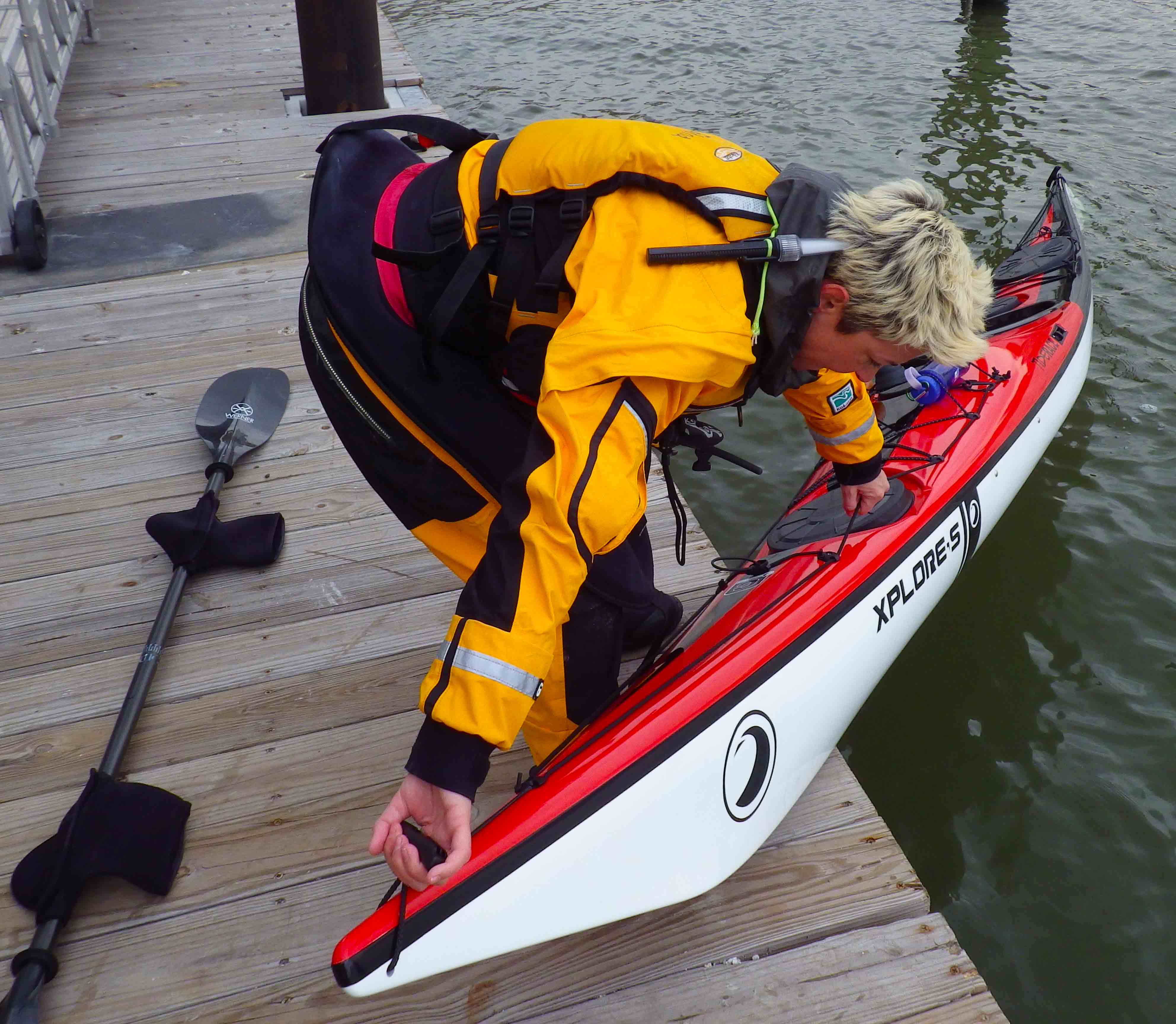
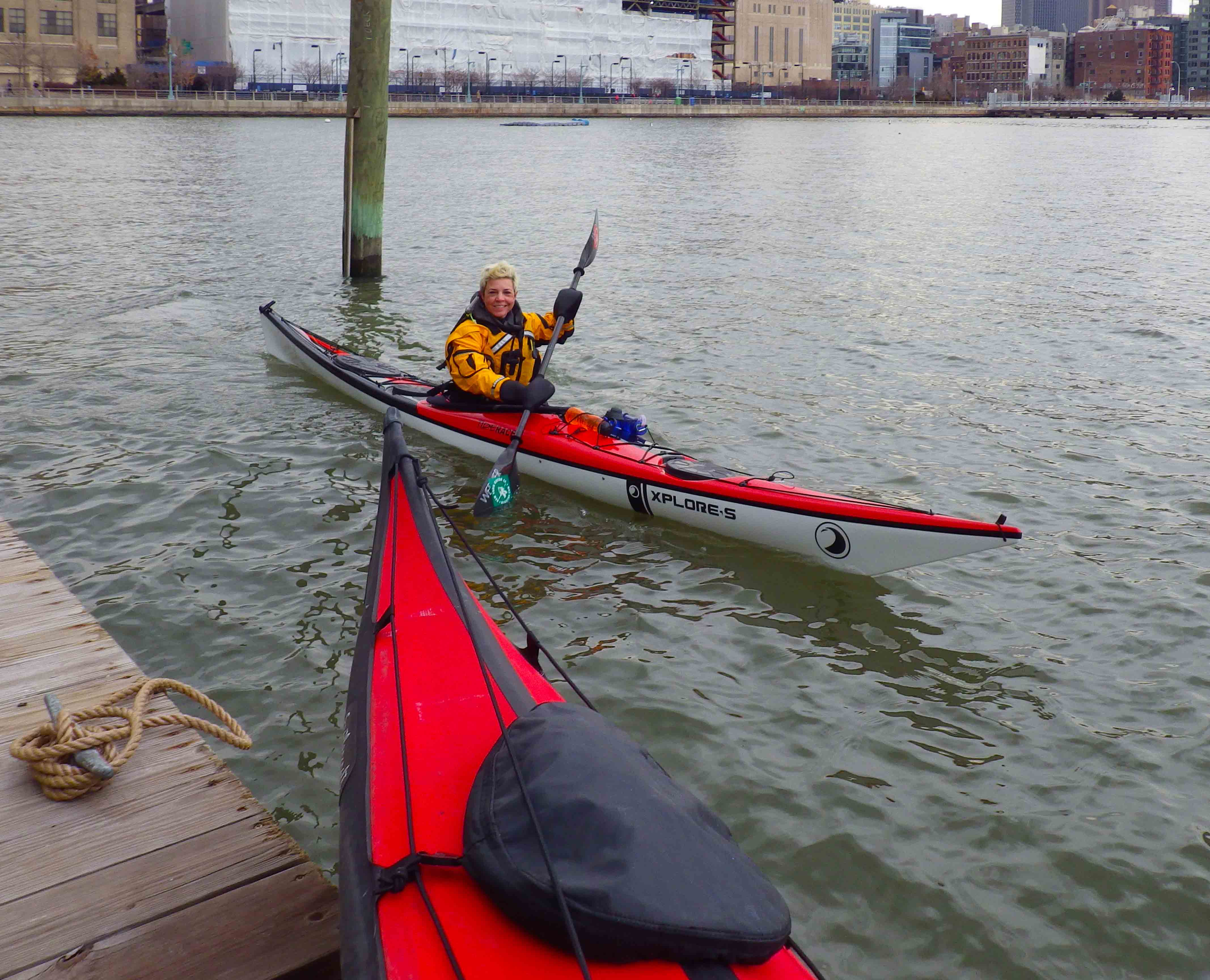
Randy’s a friend and the owner of the New York Kayak Company.  I’d just bought a new kayak from him—a red-and-black-and-white Tiderace Xplore-S Carbon Pro, a long, lean, lightweight boat designed for expedition sea kayaking.

IMGP0884 cropped small

Solstice

I loved the new boat—which I promptly named Solstice—but I was feeling a bit squeamish about taking her for a maiden voyage on a Manhattan circumnavigation. It’s always a bit tricky paddling a new boat, particularly one that handles considerably differently than your previous one.

Solstice is a good 15 inches longer than Photon, my old Valley Avocet, and an inch or two narrower.  That design makes for a boat that’s faster and more powerful, but also potentially harder to control. And although circumnavigating Manhattan isn’t an inherently challenging proposition, there are some tricky bits, even in calm conditions.

The  swirling eddies at Hell Gate can almost always be counted on to provide some excitement, for instance, as can the ferries at the Battery (and their wakes).  Being unable to handle your boat  in such situations is not a good thing—even less so in winter, when a capsize can lead to hypothermia, even if the rescue or self-rescue is effective. So taking a brand-new boat out for a 6-hour trip seemed, under the circumstances, slightly risky.

IMGP0885 cropped small

In the water for the first time!

IMGP0895 cropped small

A longer, narrower boat…

But Randy’s confidence was contagious, and I tried my best to shelve the worries.  And as Vlad and I launched a bit later that day, we were both looking forward to the outing, our first longer paddle in the NYC area since before Hurricane Sandy.  I hoped Randy was right.

IMGP0899 cropped small

First strokes

I had no idea how right he’d turn out to be. The trip was… well, “magical” is the best way I can describe it. Or maybe “enchanted”…

Continue reading

On Limits

By Johna Till Johnson
Photos by Vladimir Brezina

IMGP5757 cropped small“Argue for your limits and they will be yours,” my kayak coach said to me one day.

The words surprised me—I hadn’t thought I was “arguing for my limits”. I was just stating the facts. Being realistic. Taking a clear-eyed look at the world and myself.

Or so I thought. But over the days and weeks (and now months and years) following, that phrase kept coming back to me.

Is it actually factual to say something like “I don’t learn visually” or “I  don’t like Brussels sprouts”?

Continue reading

Happy Birthday, Colette!

By Johna Till Johnson 

Freshly Pressed on the WordPress.com home page!

You probably knew this, but January 28th is the 140th birthday of the French writer Colette.

Colette, in costume

Colette, in costume…

Okay, you probably didn’t know that. You might not even remember who Colette is, though chances are, you’re familiar with at least one of her works.

And you’re probably wondering why you should care about her birthday, or her.

Let me take a step back. This year,  Vlad and I have adopted a new tradition: We’ve selected a pantheon of personal heroes, and heroines—people whose spirits and lives matter to us—and are making a conscious effort to celebrate their birthdays.

Colette’s is the first, but there will be plenty of others.

So why did we select her?

Continue reading

The Last Day of Christmas

By Johna Till Johnson
Photos by Vladimir Brezina

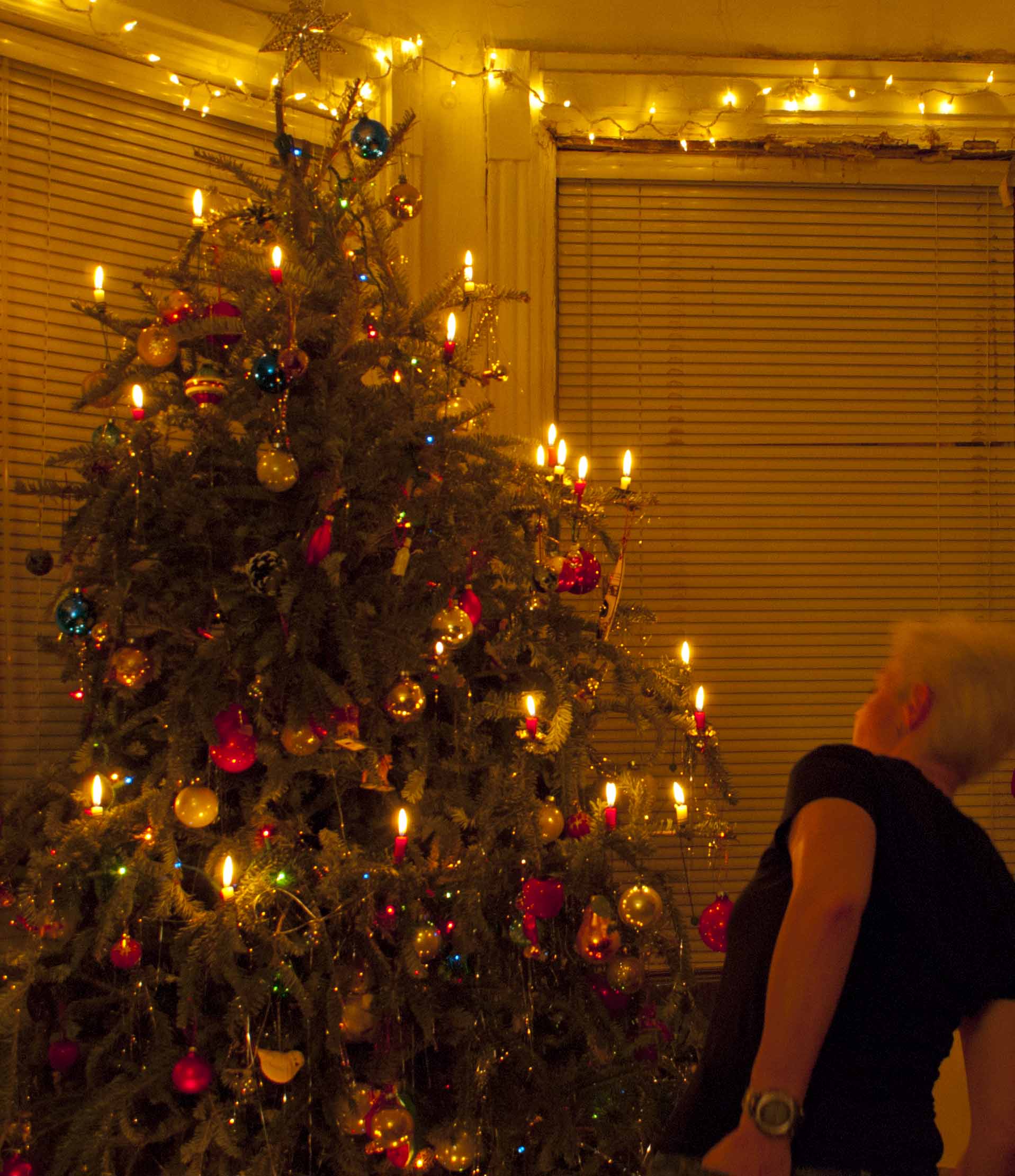
DSC_0013 cropped smallIt was the second weekend in January when we had our last Christmas dinner.

It was our third or fourth Christmas dinner. We  fixed a sumptuous meal, sipped wine, and lit the tree for the last time. As the candles slowly winked out, one by one, we talked about the meaning of Christmas.

To me, Christmas is unique. Sure, every holiday has its particular trappings (pumpkins, fireworks, candy canes…). But what’s different about Christmas is that it celebrates not that which is, but that which is to come.

Every other holiday celebrates an accomplishment or achievement: Thanksgiving is a classic harvest festival,  in which we give thanks for the year’s bounty (and historically, for having survived).  The Fourth of July celebrates the attainment of independence. Hallowe’en is the remembrance of the dead, and New Year’s celebrates the arrival of the New Year. And so on.

Christmas alone is a celebration of hope.

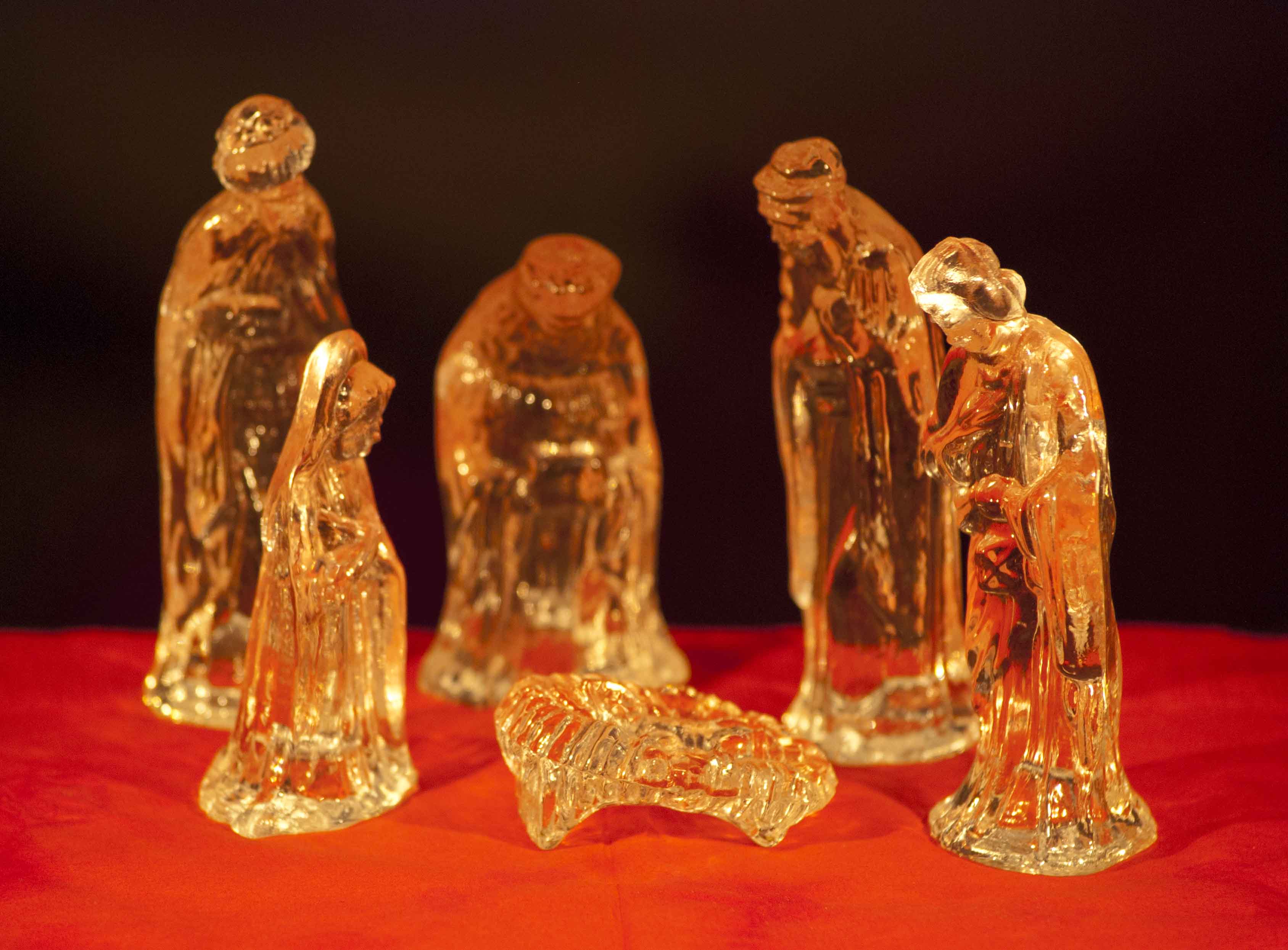
DSC_0027 cropped smallFor Christians, of course, the celebration is the birth of Jesus. But the birth of Jesus is, in a very real sense, the arrival of hope, the hope that an innocent child can be stronger than the worst evils of this world, that God is returning to His people, and that love will conquer evil. The birth of Jesus is just the start of that hope.

And the hope isn’t just for Christians. Regardless of when the birth of Jesus happened historically (and there is considerable speculation on this point), the ancient Christians elected to celebrate the birth of Christ roughly concomitantly with an older festival: Winter solstice.

It was a wise choice, because solstice, too, is a celebration of hope: The hope that the days will once again begin to lengthen, light will conquer darkness, and warmth will return.

Whether you’re a fervent Christian or an equally-fervent atheist or something else, in other words, celebrating Christmas is an act of existential courage. We are celebrating the hope that light, goodness, and warmth will return to the world.

Of course, that’s not strictly true. Vlad points out that his mother, with Eastern European clear-eyed cynicism, used to remark that the ancient Christians were wise to put Christmas a few days after the solstice proper—so by the time Christmas festivities began on the 24th, they could be certain the days were in fact lengthening again.

Nonetheless, Christmas is a festival of hope. It looks forward to better things to come.

DSC_0107 cropped smallFor this reason, in my book, Christmas deserves to be the most-celebrated holiday. The celebration of hope is the celebration of possibility. Rather than celebrating just one accomplishment, we’re celebrating the possibility of all that we can hope for: Light, love, happiness, joy. Peace on Earth, and God among us—and all the infinite accomplishments that could happen in a world in which these are realities.

That’s why we kept celebrating Christmas well into January.

And as we watched the candles sputter and wink, we thought about all the goodness we hope this year will bring.

One last time: Merry Christmas to all!

On Being Athletic

By Johna Till Johnson
Photos by Vladimir Brezina

DSC_0565 cropped small

Quite the athlete–in six inches of water!

I’m not athletic.

Or at least, I never thought I was. True, I’d been on a couple of teams when I was young (fencing, swimming) and been told I had “potential”.

But the formative comment on my athletic abilities came from a gymnastics coach when I was 8: “She hasn’t got it.”

By “it” he meant “kinesthetic sense”—that ability to know exactly where your body is and what it’s doing at every moment. It’s an ability that’s foundational for most athletic endeavors.

The coach was right—I didn’t have it, and I could see its lack in my everyday life.

I fell off things, or tripped and landed face-forward (my lower lip has been split so many times my dentist is in awe of the scar tissue). Especially early on, I could drive my kayak coaches to despair with my inability to understand basic movements: “Move the blade up, Johna… no, UP… Johna, just LOOK at me!”

So I internalized that lack, and for a while it defined me. I had many other strengths, but no kinesthetic sense—or so I thought.

Here’s what I didn’t know then, and know now: Kinesthetic sense—and with it, athletic ability—can be learned.

Sure, there are prodigies who have it at birth, and many more in whom it develops rapidly with just a minimum of encouragement. Like other human abilities, athletic talent appears to be distributed along a spectrum.

But for those of us on the “don’t have it” end of the spectrum, it’s possible to develop it by thinking about your body, what it does, and how it moves.

A revelatory moment came last year when I was taking CrossFit classes. The coach was a wool-cap-wearing tattooed guy in his 20s with interesting facial hair and the wiry body of a professional skateboarder.

“There’s one fundamental athletic motion, ” he told me, and demonstrated it: Driving your body upwards using your legs as a spring, straightening your bent knees and driving from your heels.

DSC_0543

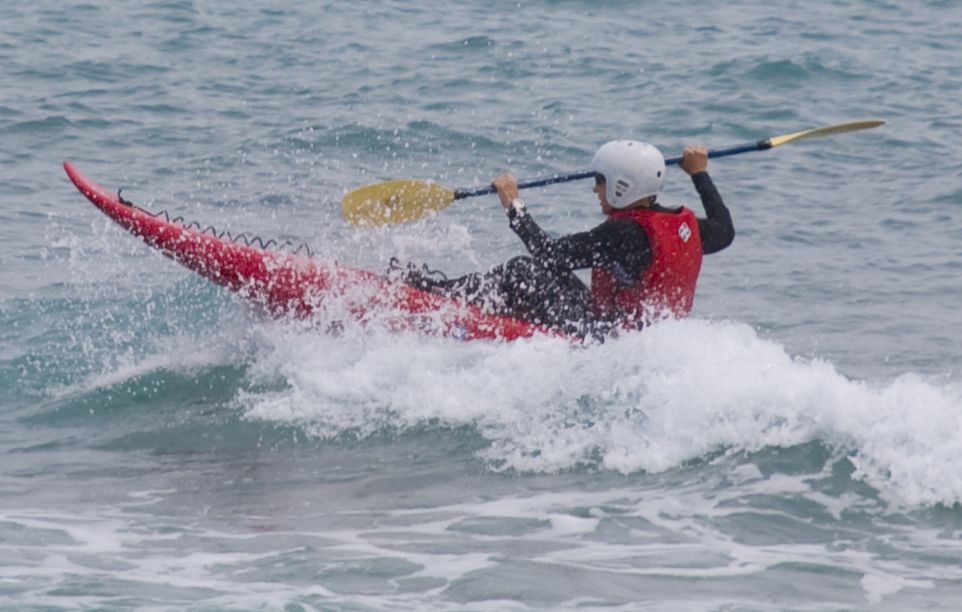
Learning to kayak-surf (before developing my kinesthetic sense)

Damn if he wasn’t right! It’s the classical motion of kayaking (driving your heels forward to propel the boat forward with your strokes). But you also see it in practically every other sport, from basketball to golf to rock-climbing. To get it right, everything has to be in proper alignment (heels, knees, back, shoulders) and even the positions of your toes and your neck matter.

CrossFit taught me to pay attention to form, because the coaches encouraged us to do weighted squats—and if you do squats with poor form, you blow out your knees (and potentially create insurance liabilities for the CrossFit gym). Good coaches are therefore dogmatic about teaching you the right form.

So I spent hours watching myself in the mirror, lifting weights and struggling with chinups and situps. I’d shut my eyes and try to feel where my knees, toes, and shoulders were—then open my eyes and see how close I’d guessed.

The attention to form paid off in kayaking—suddenly, I made progress in areas that had been baffling to me in the past. And the more I thought about where my body was and what it was doing, the better I got.

I recently took up barefoot running, which is all about proper form. You have to think about curving your toes up (you want to land on the balls of your feet, shift your weight to your toes, and then to your heels). And you need to keep your neck relaxed and your shoulders back… and use that “fundamental athletic motion” to drive yourself along.

And for once in my life, I’ve found an athletic activity that’s easy for me.  That attention to form feels natural, innate. No, I’m not fast—but my goal isn’t to be fast. If I’m moving, I’m going as fast as I need to. My goal is to develop the form and motion that will allow me to run as much as I want—and I don’t know how much that will be, yet.

IMGP7642 cropped small 2

Practicing my low brace form (don’t want to fall into the Gowanus Canal!)

What’s even more interesting, though, is how the whole experience has changed how I move my body in everyday life.  I find myself doing the “drive” when I get up from a chair, or instinctively adjusting my balance as I climb the stairs, thinking about whether my center of gravity is over my heels or my toes.  And my movements have gotten more graceful and confident—like those of the “natural” athletes I know.

I doubt that having a kinesthetic sense will ever be instinctive for me. And the coach was undoubtedly right—I would likely never have made it to the upper echelons of gymnastics.

But the fact that, as an adult, I can acquire “it” is eye-opening to me.

If someone who “hasn’t got it” can become athletic—what other seemingly impossible things might be possible, after all?

At Play in the Land of the Giants

By Johna Till Johnson and Vladimir Brezina

It started like any other kayak trip.

The night before, we prepared. We made sure we had our paddling equipment (life jackets, spray skirts, tow ropes, pumps and sponges). Navigation gear (compasses, GPS, charts). And clothing: it’s definitely the season for drysuits now, with plenty of insulation underneath. And pogies–can’t forget the pogies! (Pogies are kayaking “mittens” that allow your bare hands to grip the paddle, but simultaneously sheath them in delightfully warm neoprene.) The Jetboil, so we’d be able to make hot coffee during the trip. And food, water, all the usual.

Continue reading

Where We Are Not…

By Johna Till Johnson and Vladimir Brezina

Photos by David Hupert

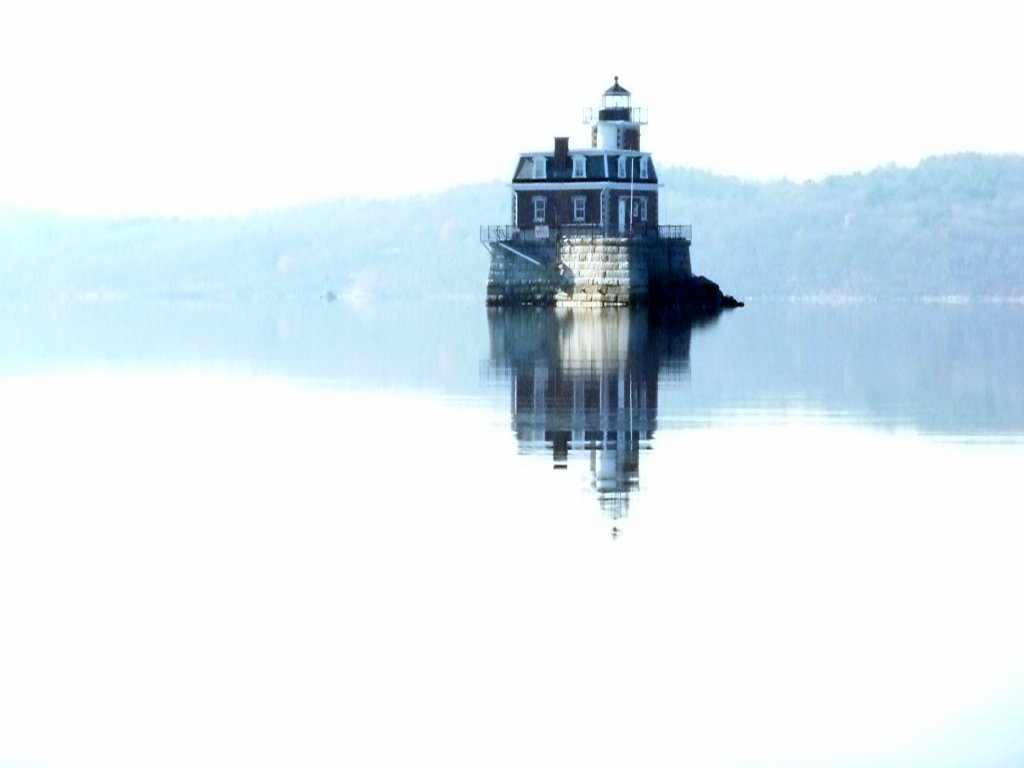
The Hudson – Athens Lighthouse (photo by David Hupert)

There are star-crossed lovers. And then there are star-crossed paddlers….

All autumn, we’ve been trying to get up north to paddle in one of our favorite parts of the Hudson, around Stockport, not far south of Albany. In summer, it’s breathtakingly beautiful. But Vlad’s favorite time there is fall, when the autumn foliage blazes like fire and the air is cool and clear.

This year, we had added incentive to make the trip: Our fellow paddler David Hupert suggested getting together up there. That dovetailed perfectly with our idea of heading up by train late Friday or early Saturday with our folding kayaks, and camping for a night or two while we took a leisurely sightseeing paddle around the area.

So we made plans…

The first weekend—the 20th/21st of October—we had to cancel at the last minute because of work pressures. David advised us that we missed a spectacular weekend of paddling up there, with the fall foliage colors at their peak. (We were happy to miss, however, a darker discovery that another fellow paddler made that Sunday right at the island where we planned to camp.)

Still, David assured us that the fall foliage was not yet over. The second weekend was October 27th/28th. We planned to go until we read about the prospect of Hurricane Sandy making landfall in New York City on Monday—and decided that we didn’t want to risk Amtrak shutting down and leaving us stranded for days in a tent upstate somewhere. (Good call, as it turned out—the trains shut down about midafternoon on Sunday).

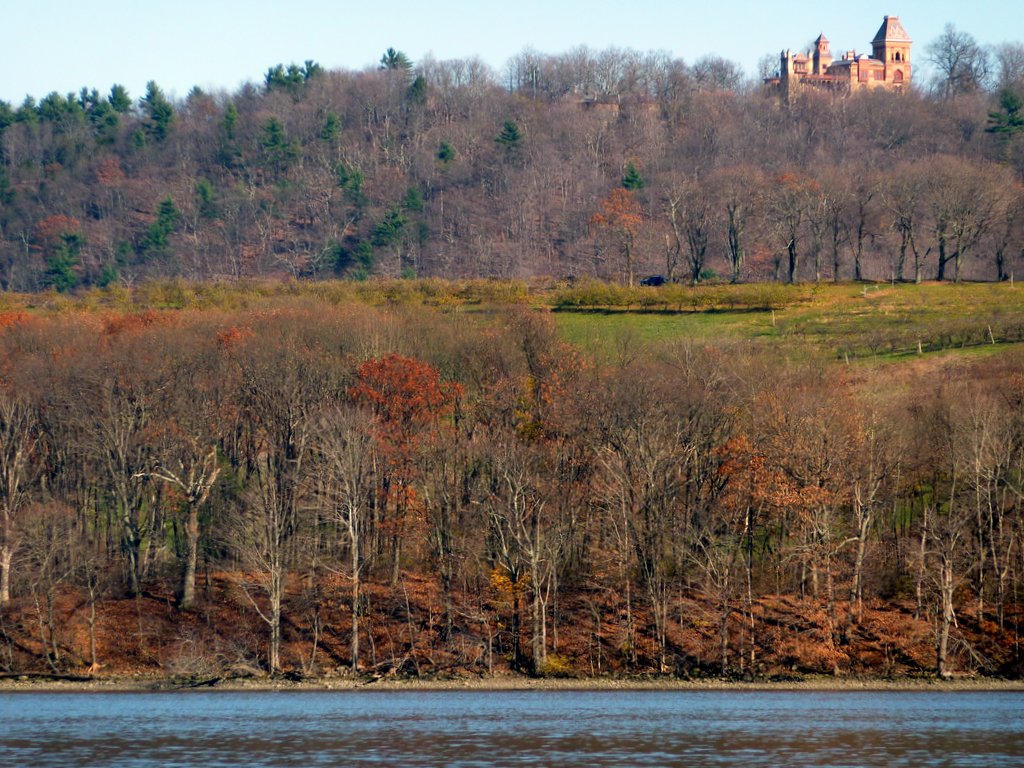
The remains of fall foliage with Olana on the hill (photo by David Hupert)

The following weekend, November 3rd/4th, we spent in post-Sandy cleanup at Pier 40 and providing assistance to folks in the Rockaways. The weekend after that Johna had to travel; then there was a “recovery” weekend after an intense week in California. And David is away this upcoming weekend…

The trees are rapidly shedding their leaves, and there are only a few more weekends left before winter sets in. So who knows if we’ll ever make it up to Stockport this year?

But in the meantime, David was kind enough to send us some of his recent photos from up there. Where we are not… but wish we were!

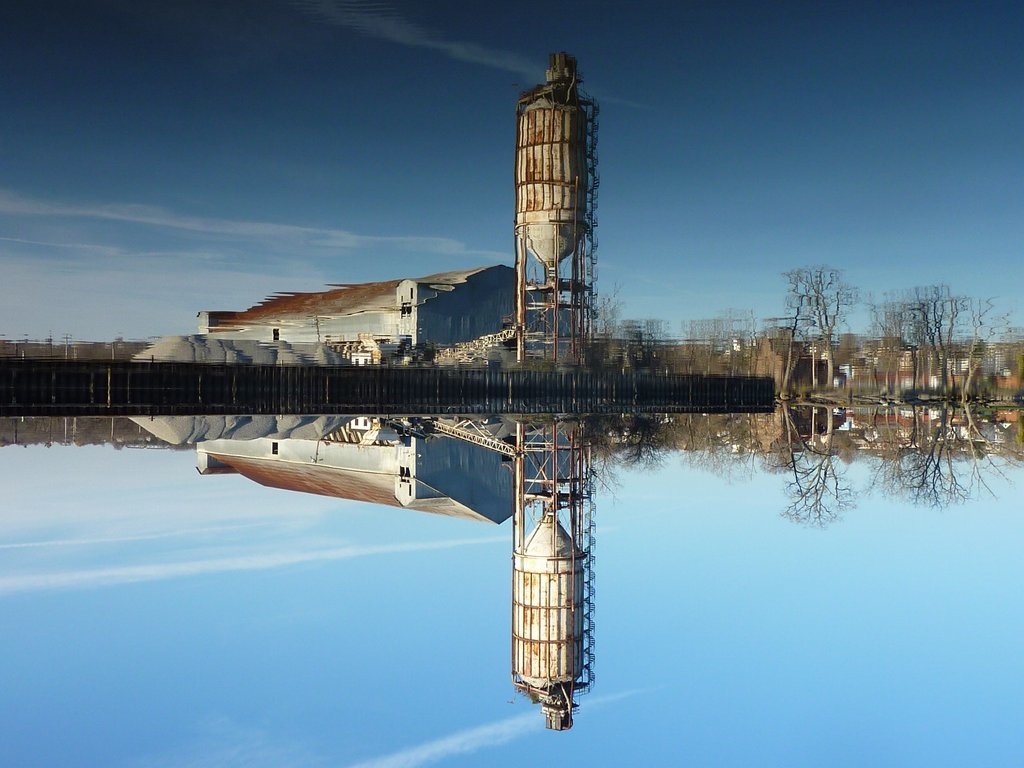
Reflections: Which Way is Up? (photo by David Hupert)

Sandy Saga, Part 2

By Johna Till Johnson and Vladimir Brezina

<— Part 1

Monday 10/29/12, 11:30 AM: Out at sea, Sandy has apparently begun her predicted westward turn toward us. Here in Manhattan, we’ve been hearing the wind all night. Now it’s whistling between the buildings, sending yellow leaves dancing high, even up to us on the 17th floor. The rain is still light: On-again, off-again.

The streets are almost empty—a few cars slide by and stooped figures in rain gear walk dogs. Some have umbrellas, which aren’t getting blown inside out—so the best guess is that the wind is at Beaufort Force 6 (25-30 mph), from the northeast. (On land, we find umbrella state, rather than sea state, to be a better indicator of wind force ;-))

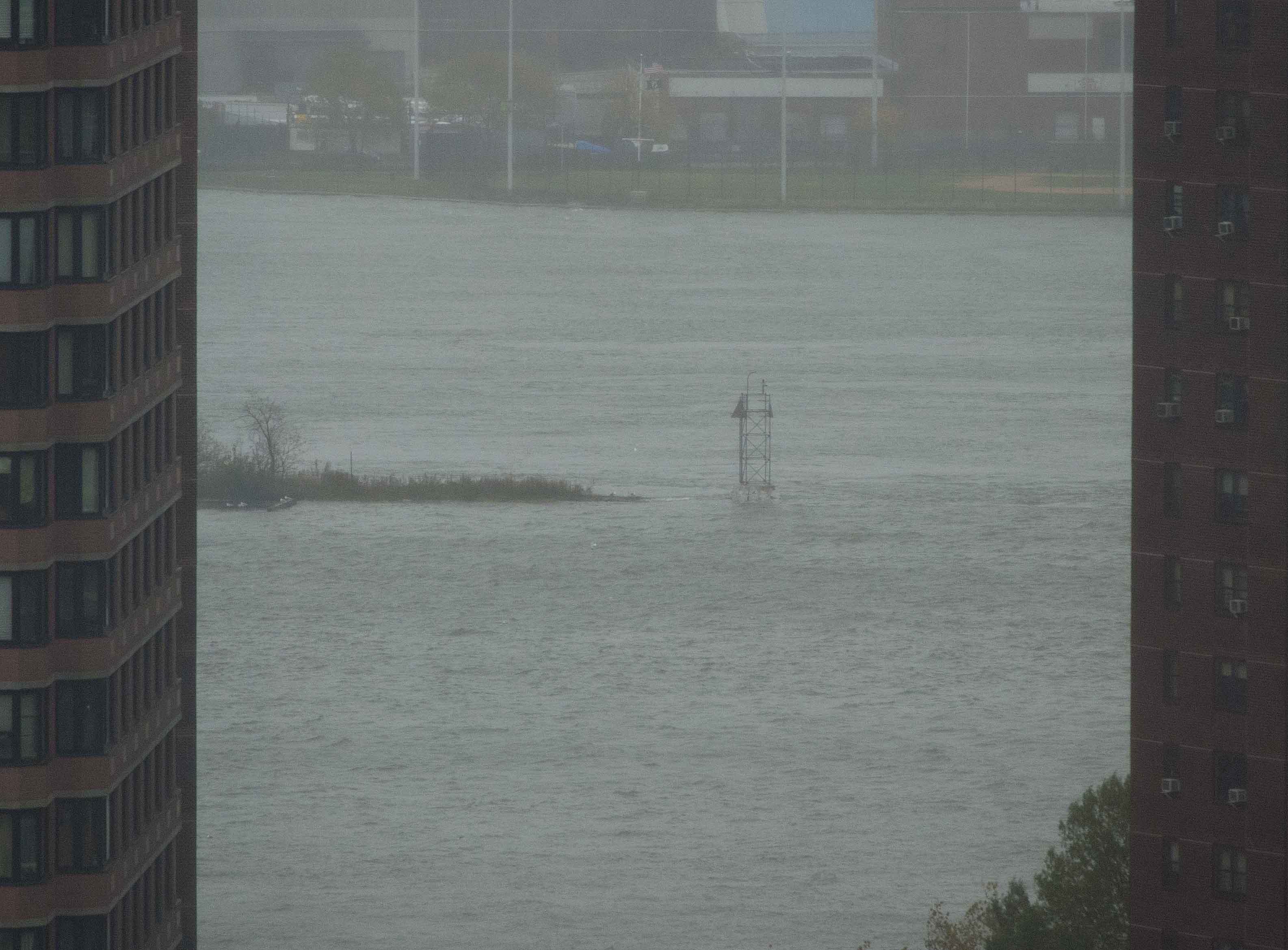
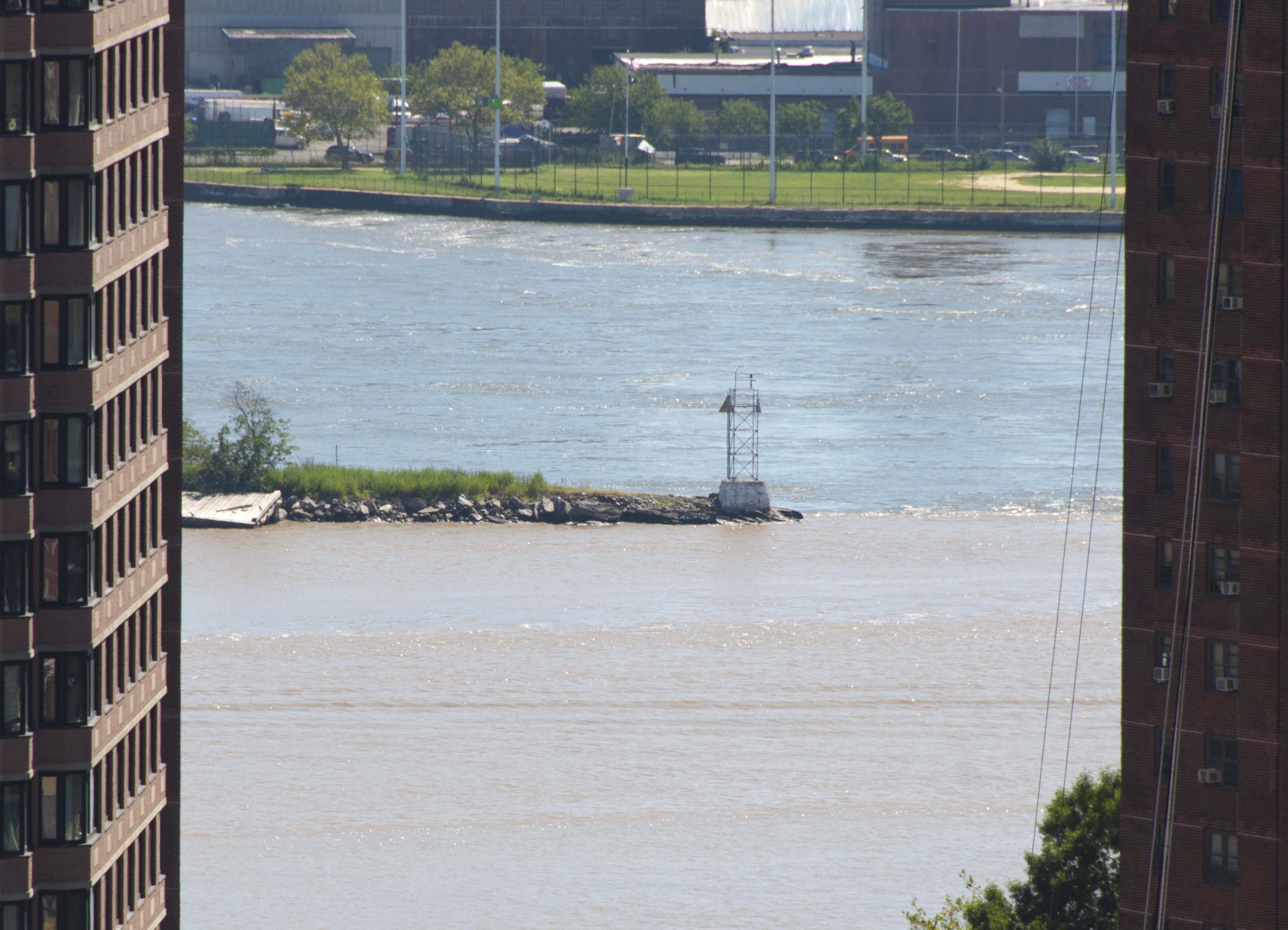
The East River is what’s worrisome: There are whitecaps on the water (another indication of the wind force), and we can see that the water is now overtopping the rocky shoreline of Ward’s Island and flooding into the park above. The tail of Mill Rock is submerged. Here are comparable photos of Mill Rock last year (as it happens, just after Hurricane Irene and Tropical Storm Lee came through :-)) and just now, at high tide:

Now, with submerged “tail”…

Last year

Definitely high water, and we haven’t even gotten started yet…

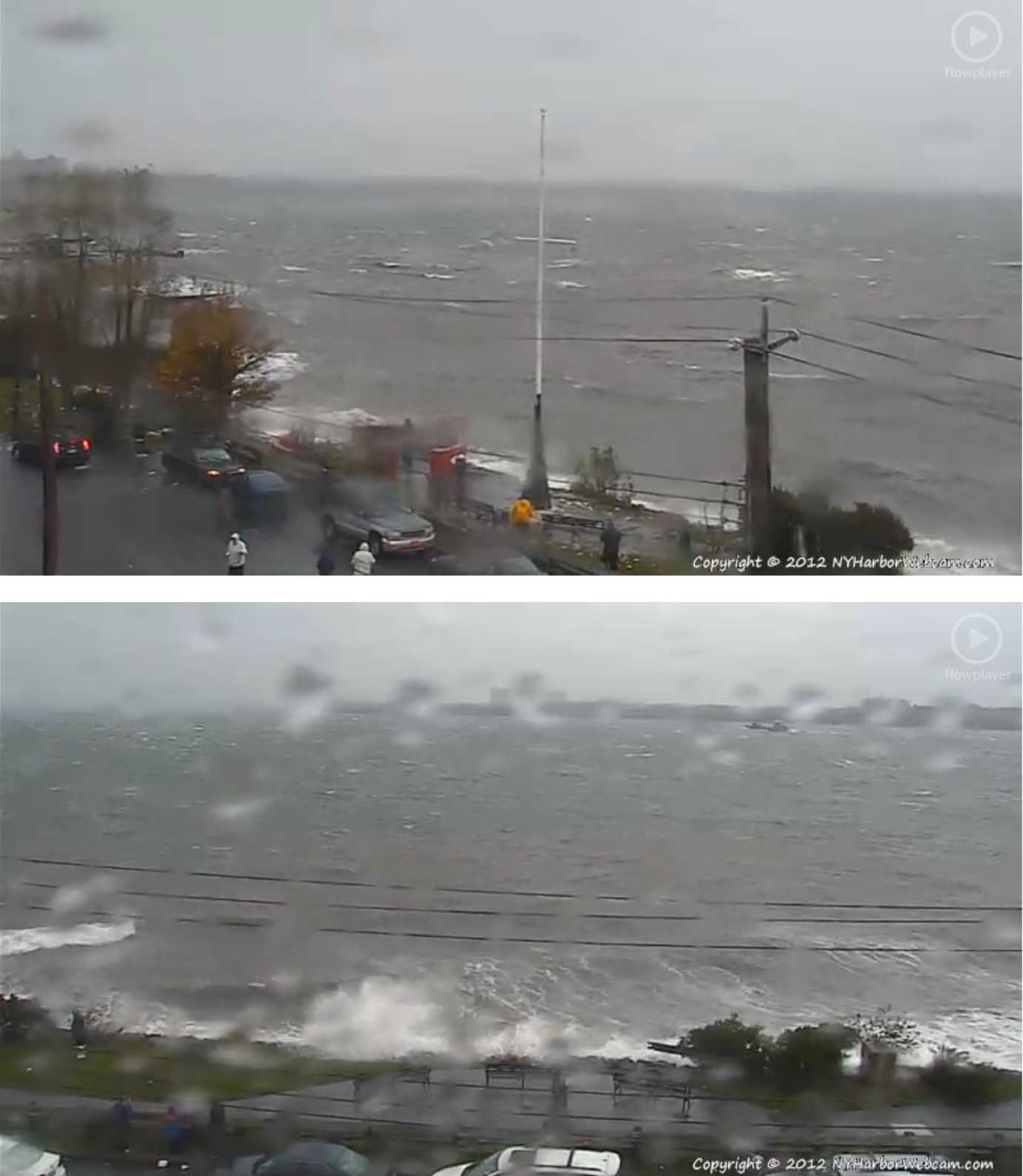
Fortunately, we’re sitting up here warm and dry, have power (so far), and the wonder of webcams allows us to see what is happening farther afield. Here’s what it looks like on Staten Island:

Part 3 —>

Sandy Saga, Part 1

By Johna Till Johnson and Vladimir Brezina

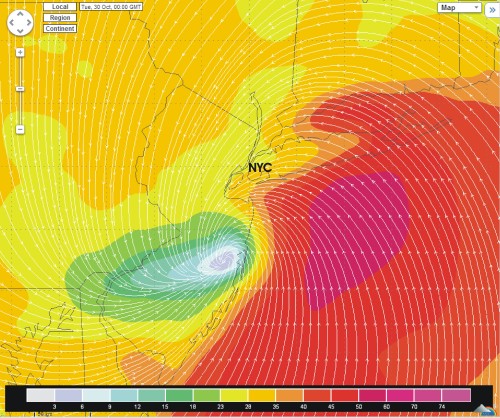
Wind forecast for 7pm Monday 10/29/12, from NOAA’s North American Mesoscale (NAM) model, showing winds blowing into NY Harbor at 45-50mph (red color) and even 50-55mph (magenta). The eye of the storm is the region with weak winds (white). Reproduced from SeaAndSkyNY.

Here’s your “feet-on-the-street” reporting from Hurricane/Nor’easter/Frankenstorm Sandy, from NYC. Please keep in mind that, as of this posting, we have no idea whatever what is going to happen—all we know is what the models forecast. Future posts will describe what actually did happen.

For an ongoing update, please check Philip Orton’s blog, SeaAndSkyNY. He’s an oceanographer and scientist whose data and insights we rely on regularly.

(For an amusing assessment of models and the people who create them, we recommend this xkcd cartoon. Be sure to mouse over the cartoon and read the comment that pops up.)

Friday 10/26/12, noon-ish. We decide to cancel our planned weekend camping trip up the Hudson, on the grounds that if Amtrak shuts down, we’ll be stranded. Little do we know we are going to miss out on the excitement of finding a body near our planned campground

Saturday 10/27/12, morning. “We should get some supplies,” Vlad says. Since this is more or less what Johna has been thinking since we’d cancelled the camping trip, we are pretty much in alignment. (Vlad’s comment takes a generalized anxiety and makes it immediately actionable.)

So we run out and lay in supplies: salami, cheese, nuts, crunchy veggies, anything tasty and filling that doesn’t require cooking (in case of a power outage.) Plus food that can be cooked, in case the power is functional but the rest of NY infrastructure is not: sausages, meat.

Saturday 10/27/12, afternoon. Gowanus Canal paddle. We’re out for four-and-a-half hours in New York Harbor, mostly poking around.  (Photos are here.) The salient elements—from the standpoint of an incoming hurricane—have to do with changes in the weather. When we set out it is overcast and warm—warm enough that Johna is overheating in her brand-new wetsuit and wetshirt. By the end of the afternoon, the wind has picked up and changed direction—instead of coming from the south/southwest, it is coming from the east. And we are happy to be wearing the wetsuits.

The most exotic part, though, is the sundog. If you’ve never seen one before (Johna hadn’t), they’re awesome. Looks like a brilliant double-rainbow in the sky—until you notice the two rainbows are symmetrical and curved facing each other, on either side of the sun. The sundog guides our travel most of the way home.

Sunday, 1o/28/12, noon-ish. New York City announces the shutdown of subways and buses. Amtrak closes lines, thus validating our decision not to go camping.

We rejigger plans (both professional and personal) to handle contingencies. The sky is slate-gray, but no wind or rain.

Sunday 10/28/12, afternoon.  We are out and about. The wind has picked up, it’s definitely colder, and there’s a tang in the air that smells like snow to come—slightly odd since the temperature feels like the high 50s.

Sunday 10/28/12, 4:40 PM. The wind picks up even more, sending dry leaves dancing. A feathery smattering of rain sprays down, but nothing lasting. If you didn’t know better, you’d think this was an ordinary late-October day: cool, overcast, breezy, drizzly.

Sunday 10/28/12, 5:00 PM. The first serious gust kicks in. It’s still no more than 20-30 mph (hard to gauge on land) but something about it feels serious. Then it dies down.

Sunday 10/28/12, 5:30 PM. The local Duane Reade is sold out of bottled water. Also canned goods. But not, fortunately, of staples like olives and ice (for martinis).

Sunday 10/28/12, 9:15 PM. Stepping out of the neighborhood restaurant where we’ve had dinner, we’re greeted with a sustained blast of wind. Still no rain, though. Halloween decorations rattle (we wonder how well they’ll survive the next few days).

More to come…

Part 2 —>