Tag Archives: Kayaking

Paddling to Manhattan Island: A Photoessay

By Vladimir Brezina

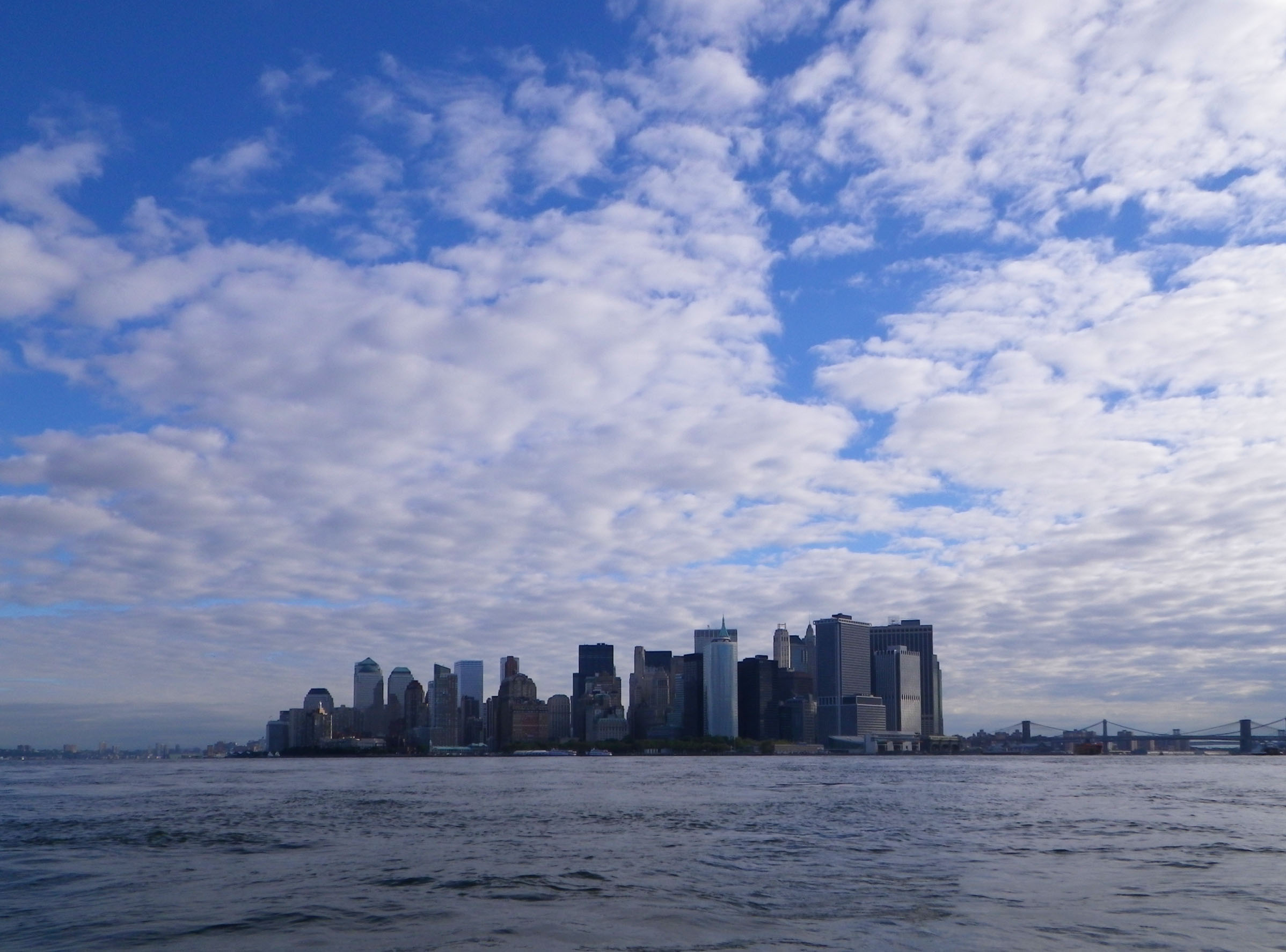
From no direction is it as obvious that Manhattan is an island as from the south.
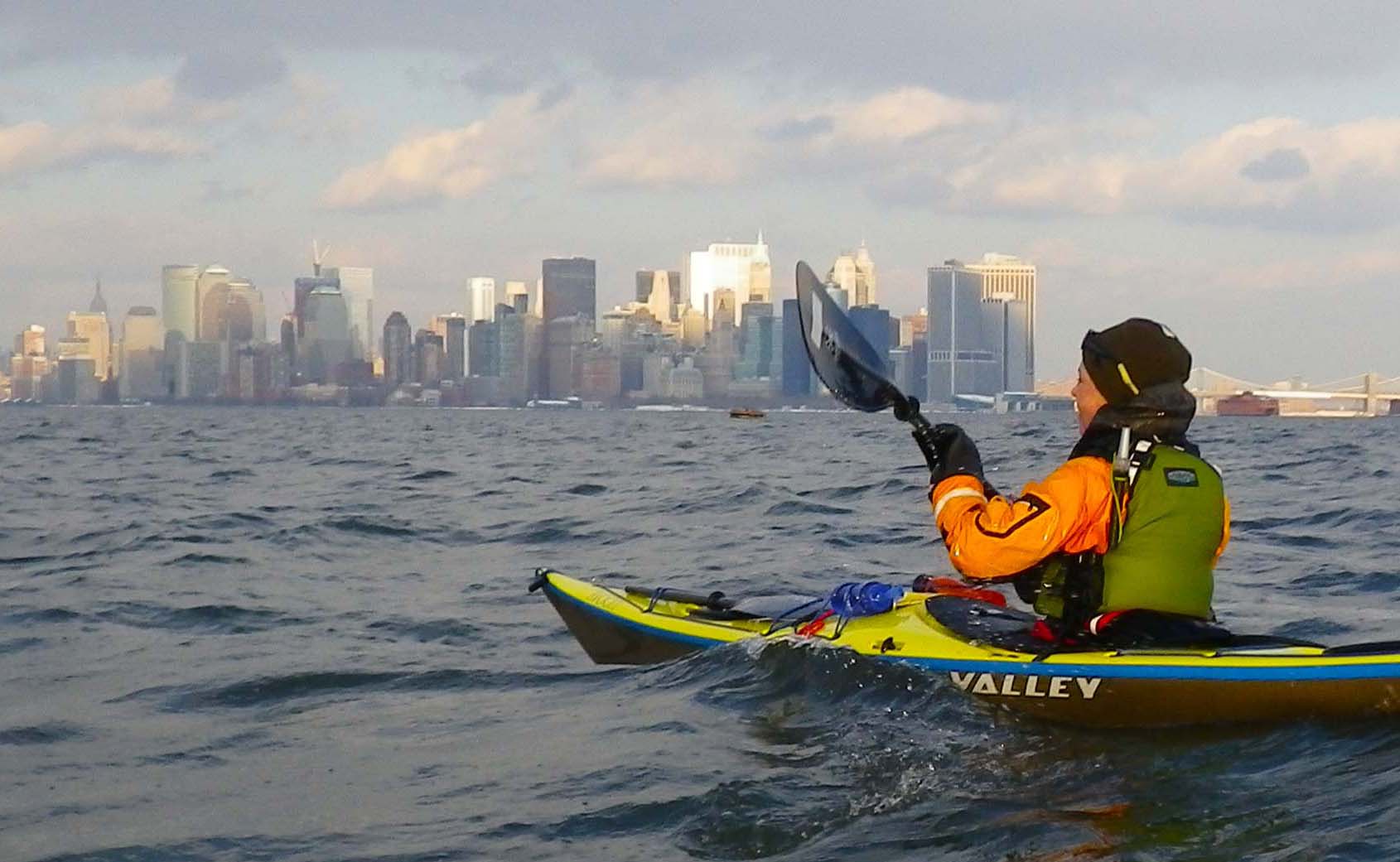
Clear across the Upper Bay the ramparts of Manhattan draw the eye.

.

Sometimes Manhattan is a fantastical mirage that we paddle toward again and again…
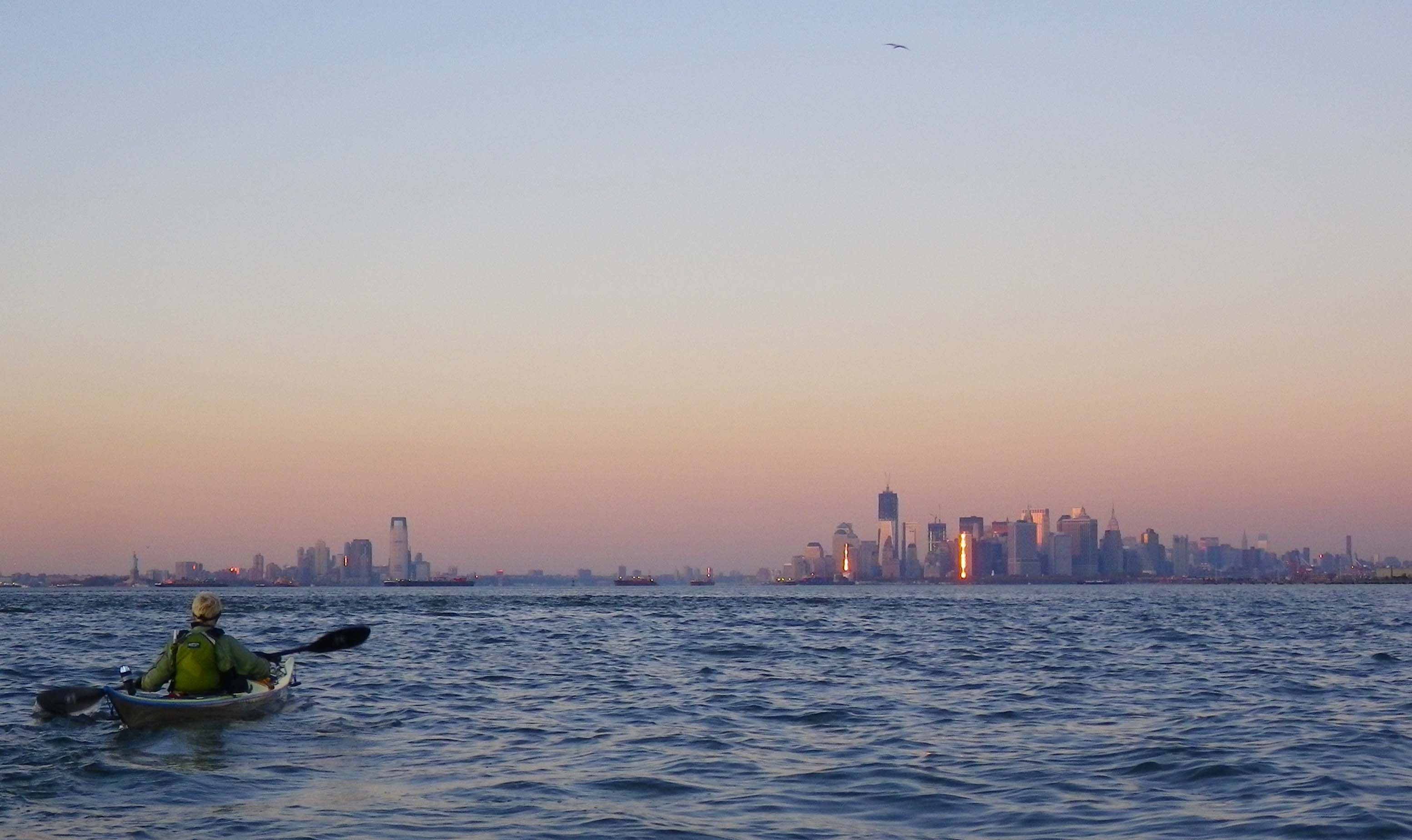
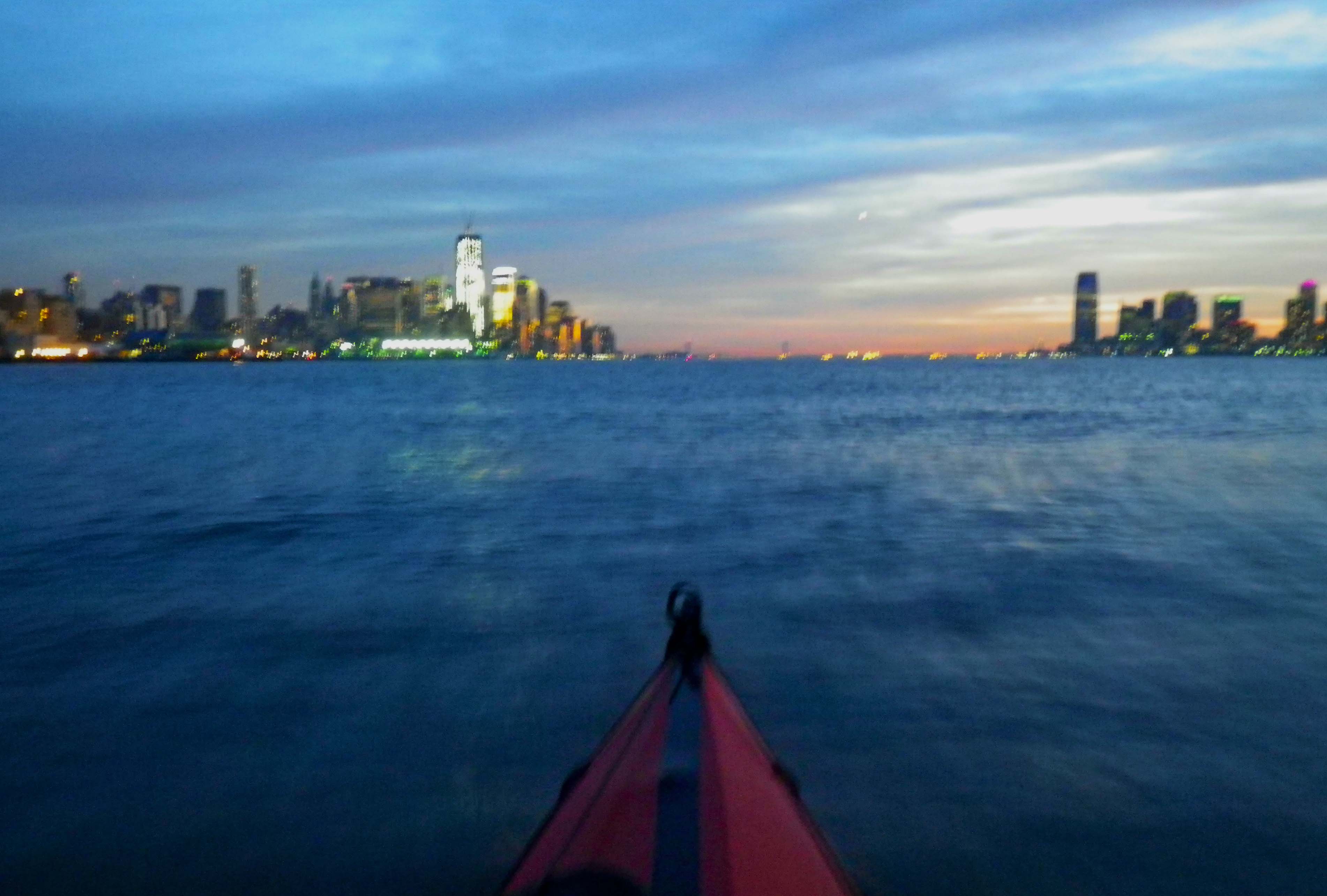
… sometimes it shimmers in the sunset and is gone as the last light fades.

Read on full-width photo page –>

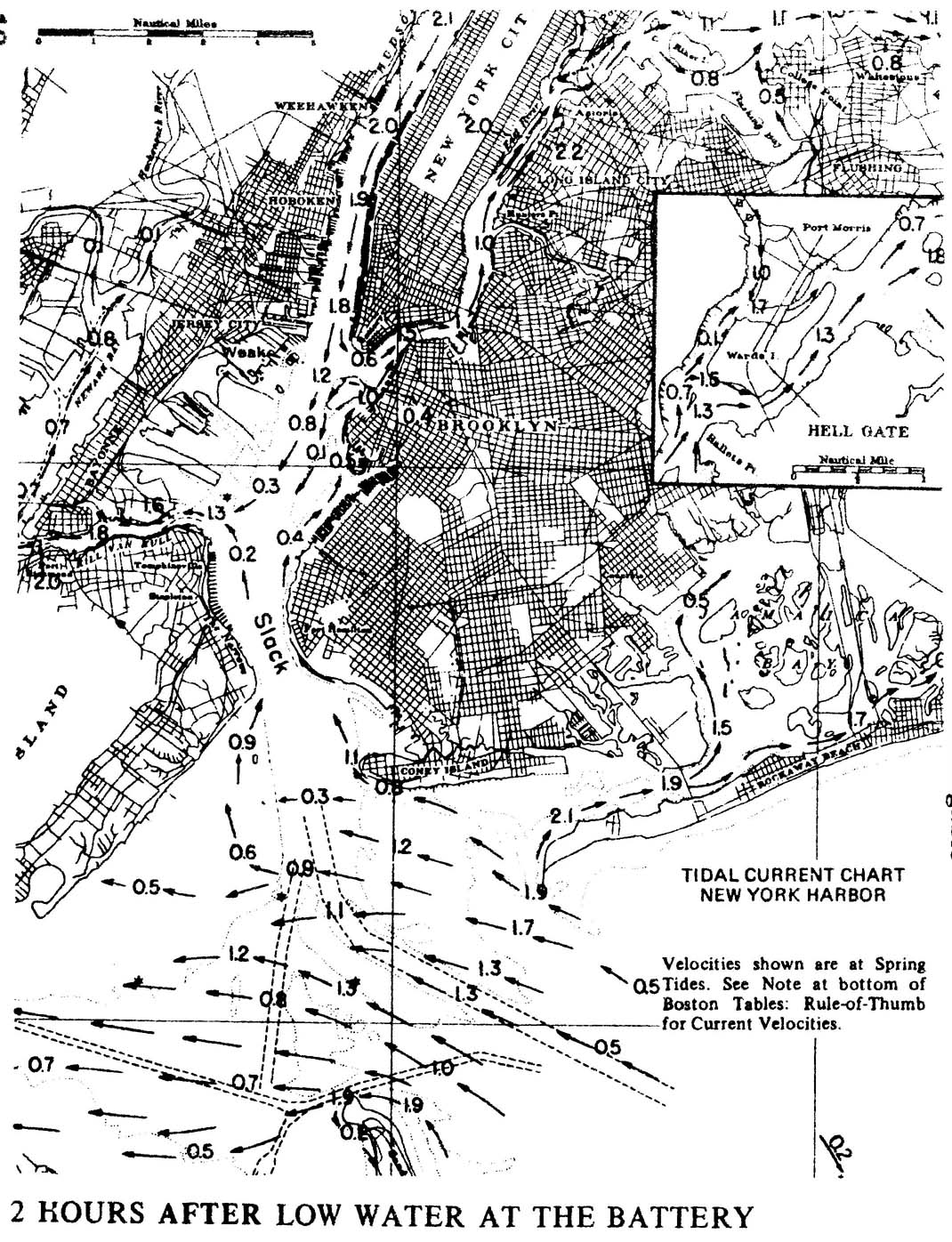
Planning Kayak Trips in New York Harbor: Tide or Current?

By Vladimir Brezina

I’ve paddled in New York Harbor quite a bit, and other kayakers often ask my advice on the timing of their trips through this tidal waterway. They say things like, “We are planning a trip from Pier 40 down to Swinburne Island to see the seals, like you did last year, and we are thinking that January 8 might be a good day to go. High tide at the Battery is at 7:13 a.m. that day. So, when do you think we should leave?” And I have to reply, “I have no idea.”

I have no idea because the time of high tide at the Battery does not immediately tell me much. I think in terms of current, not tide.

Continue reading

“It’s All About the Joy”

By Johna Till Johnson
Photos by Vladimir Brezina

Do you ever have those days where you just don’t feel like finishing what you start? I do, but not usually when it comes to kayaking.

But that’s how I felt on a recent Saturday afternoon. It was a warm autumn day, and we’d planned a fast Manhattan circumnavigation, heading around the island clockwise, rather than the more usual counterclockwise. Starting from Pier 40, a clockwise circumnavigation is usually faster than a counterclockwise one because you can catch faster current in all three main legs of the trip—up the Hudson River (about 11 miles), down the Harlem river (about 8), and down the East River (another 8), leaving you fighting the current only at the very tail end (from the Battery back up to Pier 40).

If the stars align right—and wind and currents fall into place—a reasonably fast paddler can finish a clockwise circumnavigation in under five hours. Racers can do it in three-and-change.

Continue reading

A Late-Fall Paddle Along the Palisades

By Vladimir Brezina

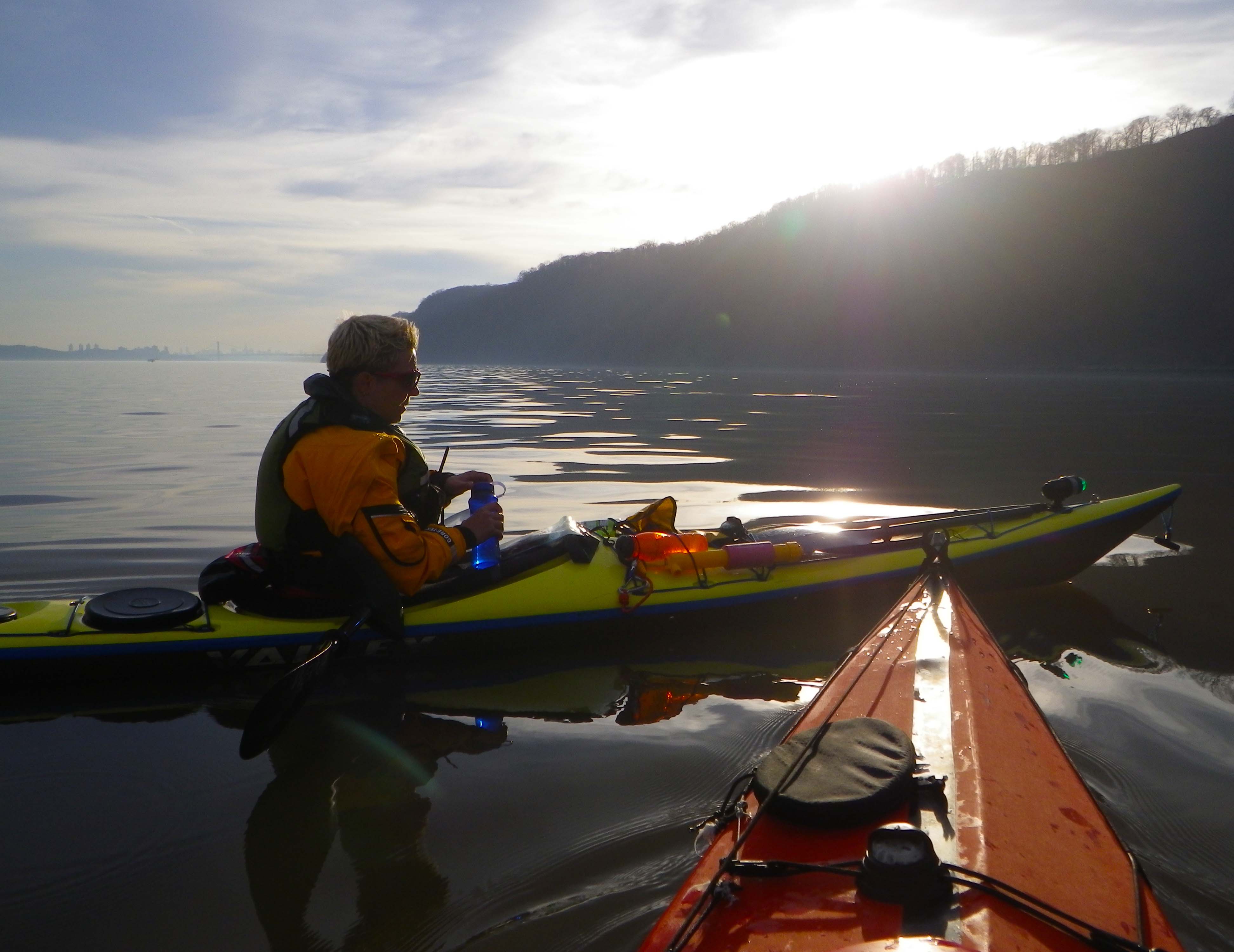
A week ago, on the last Sunday of November, the weather promised to be clear and mild—perfect for a late-fall paddle. We looked up the current predictions. In the morning, the current was flooding north. So we paddled north—from Pier 40 up the Hudson River along the West Side of Manhattan, under the George Washington Bridge and along the Palisades up to Tonetti Gardens, then returning with the ebb current in the afternoon…

It was a peaceful paddle. There were no exciting conditions, no incidents to report. But it was a beautiful day for a few photos…

Continue reading

I Paddle Faster at Night

By Vladimir Brezina

Illusion of speed

I love paddling at night. Not only for eminently practical reasons—to avoid the heat and humidity of New York’s summer days, for instance—but because of a remarkable visual illusion. As dusk falls, I feel myself paddling faster and faster, until I am simply flying over the water through the darkness. It’s an exhilarating feeling. If you paddle at night, no doubt you know exactly what I am talking about.

But when I look at my GPS, or for a moment emerge into the glare of shore lights, the illusion is shattered. I find that I am paddling at my usual daytime speed, if not slower.

I’ve often idly wondered what the basis of this illusion was. It seems that it’s by no means limited to paddling. According to this article, runners run faster at night, and cyclists ride their bikes faster at night. Even car drivers drive faster at night—although that might not be just an illusion :-).

The explanation given in the article is a relatively plausible one based on well-established neurological mechanisms. When we move through the world, we judge our speed by the speed of the optic flow, the coherent apparent motion of the objects in our visual field past us. But not all objects appear to move at the same speed. Nearby objects appear to move past faster than distant objects. (Indeed, this motion parallax helps us decide which objects are nearby and which are distant, a calculation that itself can generate some potent visual illusions.) Our brain balances the apparent fast movement of nearby objects and the slow movement of distant objects to determine our most likely true speed.

But at night this balance is disturbed. We see, dimly, only the fast-moving nearby objects—the waves around the kayak—and not the distant objects—the distant shoreline whose slow movement would in daytime provide a corrective balance.  At night, all the objects that we see are moving fast. Consequently, we conclude that we are moving fast through the world.

So that mystery is solved. Now I just have to worry about why time goes faster as you get older

Radio Calls On the Water

By Johna Till Johnson and Vladimir Brezina

We couldn’t possibly write about this topic without first referencing Bowsprite’s prior posts here and here. Not only did she accurately (and highly entertainingly) capture the lingo, her whimsical drawings are one-of-a kind!

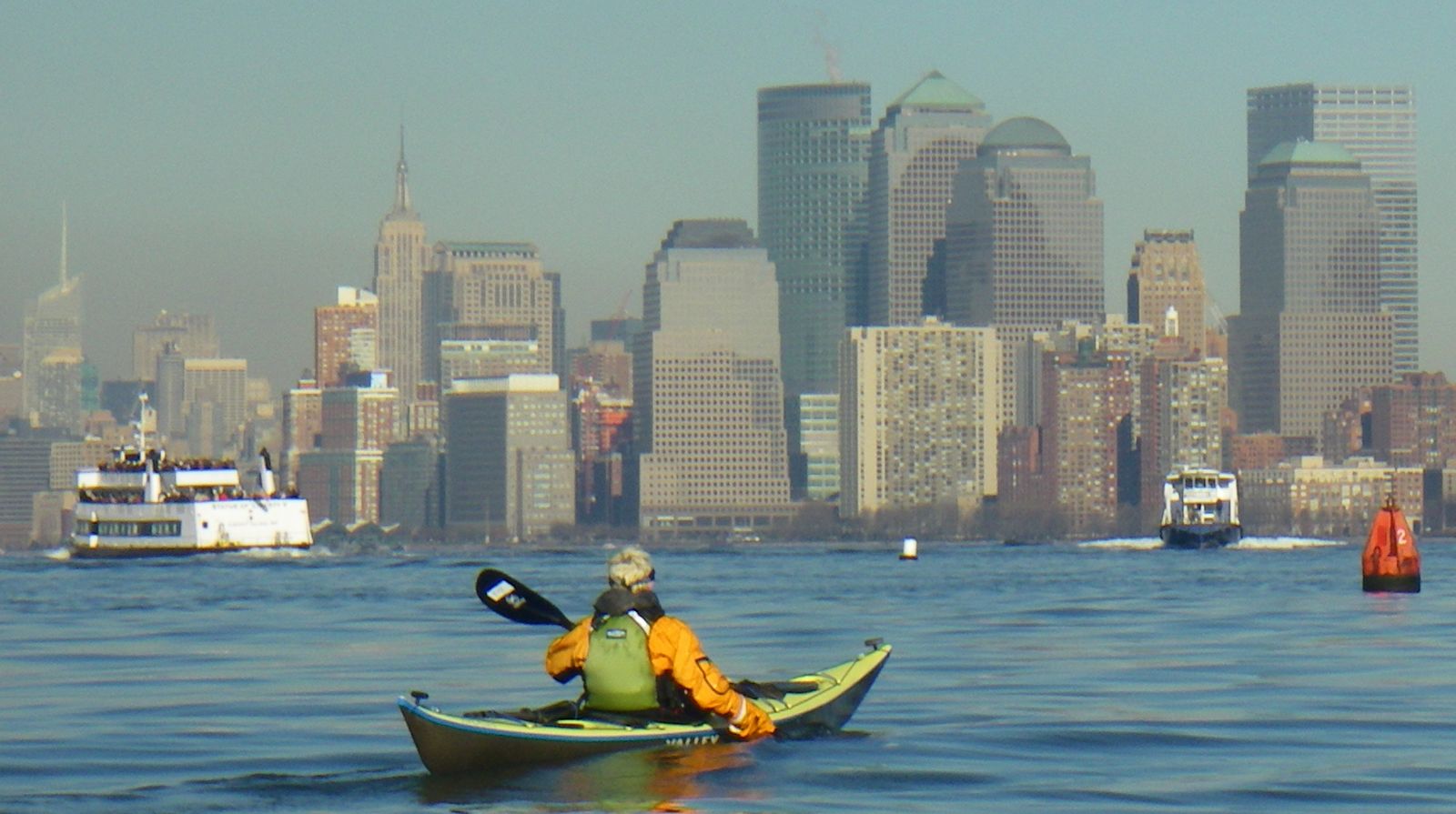
Negotiating ferry traffic in New York Harbor

When out kayaking in New York Harbor, we carry marine radios for several reasons: To call for help if something goes wiggy; to stay abreast of developments on the water; and, where appropriate, to advise larger vessels of our intentions.

But one of the more captivating aspects of kayaking with a radio in the harbor is simply the opportunity to listen to exchanges between the captains of commercial vessels.

Continue reading

Three Paddling Photo Winners

By Vladimir Brezina

The popular paddling site Paddling.net runs a Photo of the Week contest. Over the past several months, I’ve submitted a few of my photos. Two won—

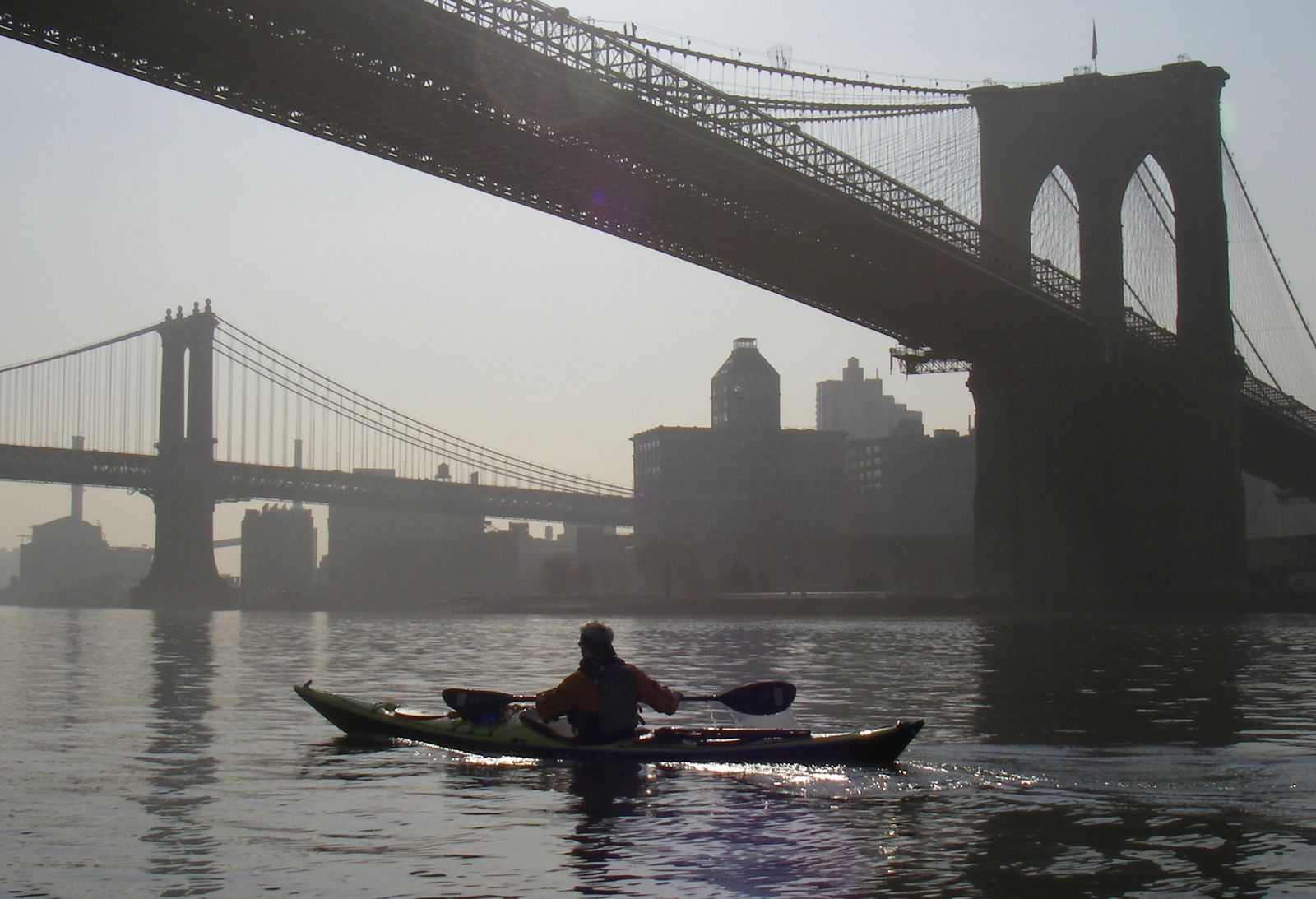
Kayaking under the Brooklyn and Manhattan Bridges, East River, New York City

Festive paddle in New York Harbor

(see here and here on the Paddling.net site)

and one was runner-up—

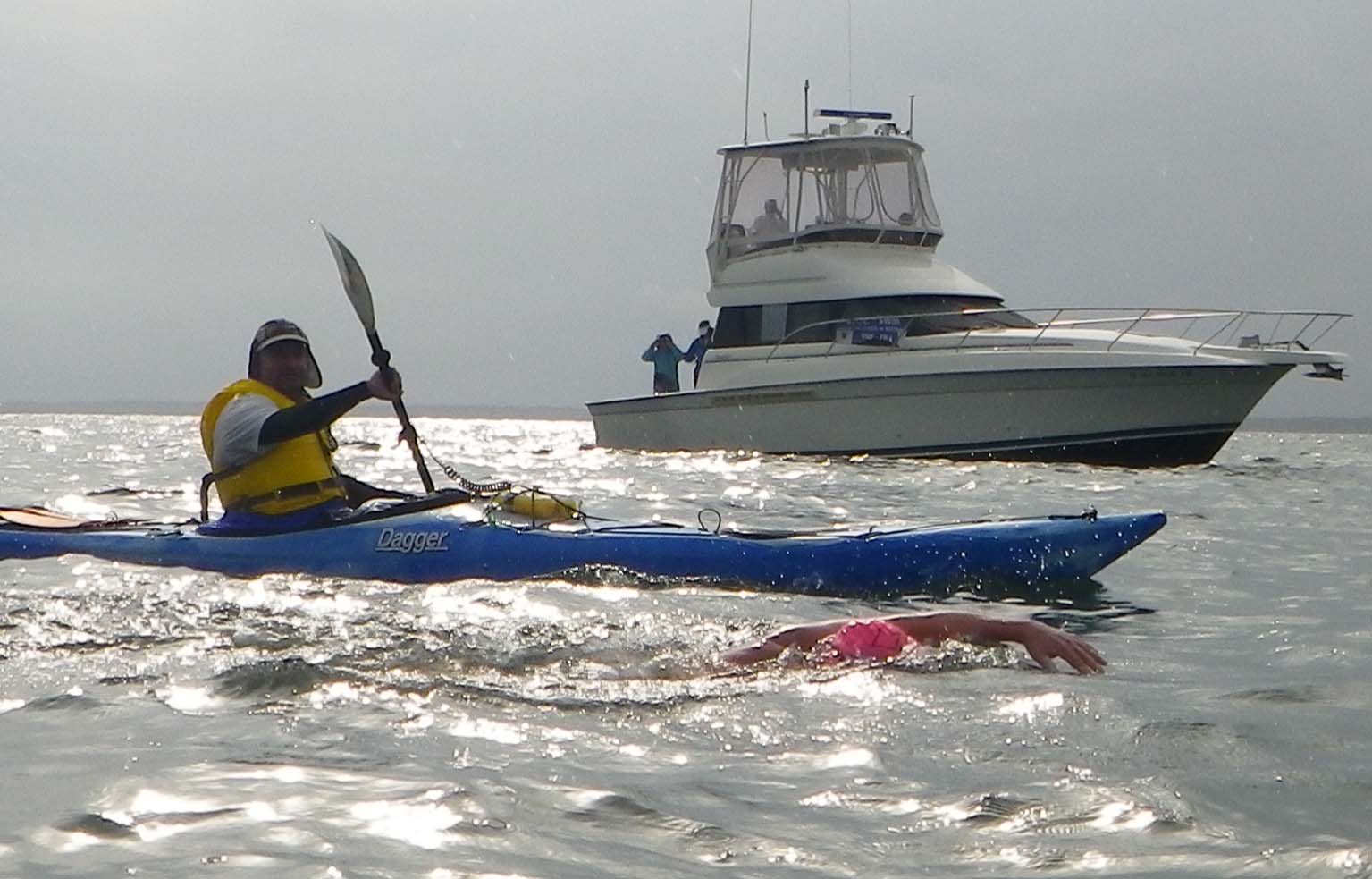
Kayak swim support, Lower Bay, New York Harbor

Looking through these and other photos that won, it seems that what’s required is not so much a technically great photo, but rather a photo of a compelling paddling scene—as it should be! All three of my successful photos show paddling situations that, to most Paddling.net readers, will be a bit out of the ordinary. As it happens, they are all urban photos, taken in New York Harbor. But if ever a seal hauls up on my kayak deck, or an eagle perches on the bow, I’ll be sure to submit that photo. And you should too!

A Blaze of Fall Color by Kayak: A Photoessay

By Vladimir Brezina

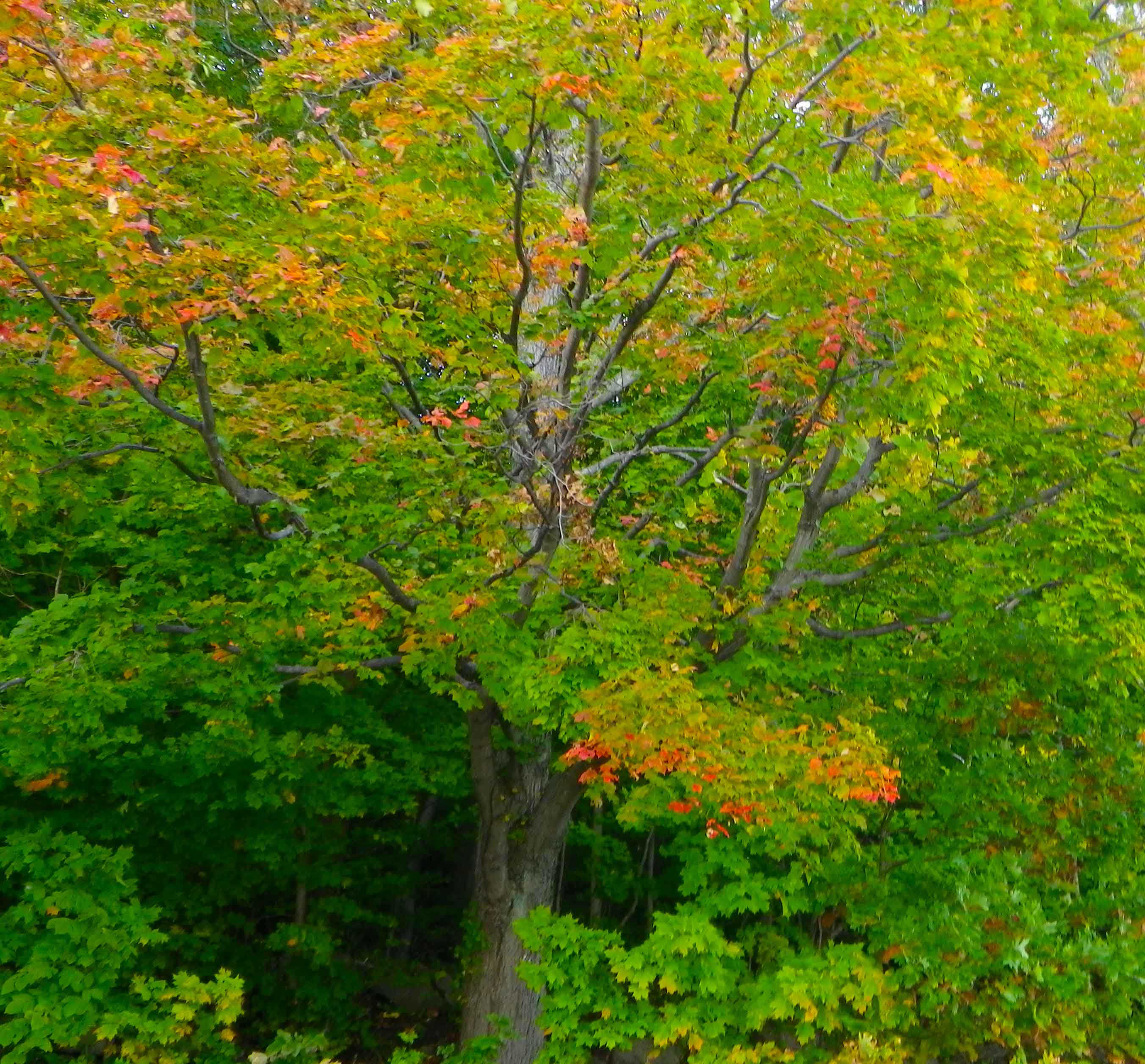
In New York City, the leaves are only just starting to turn. But farther north along the Hudson the fall colors must be well advanced.

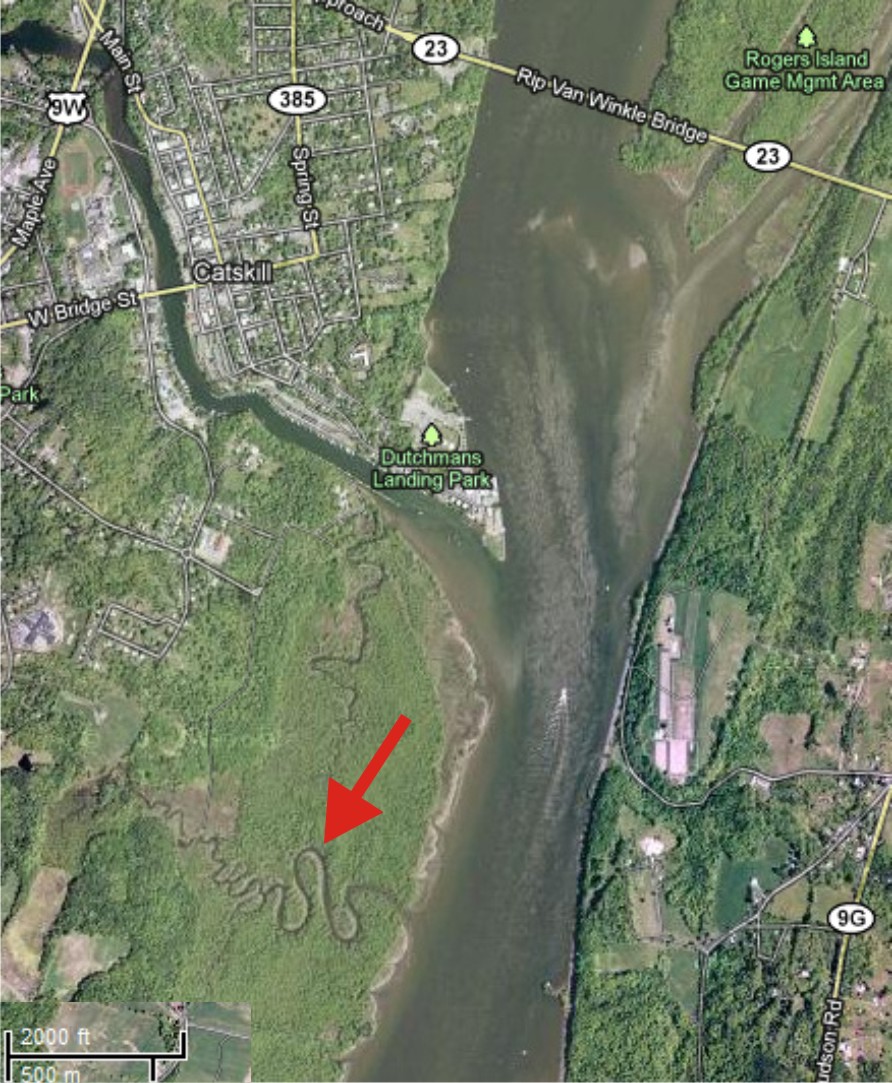
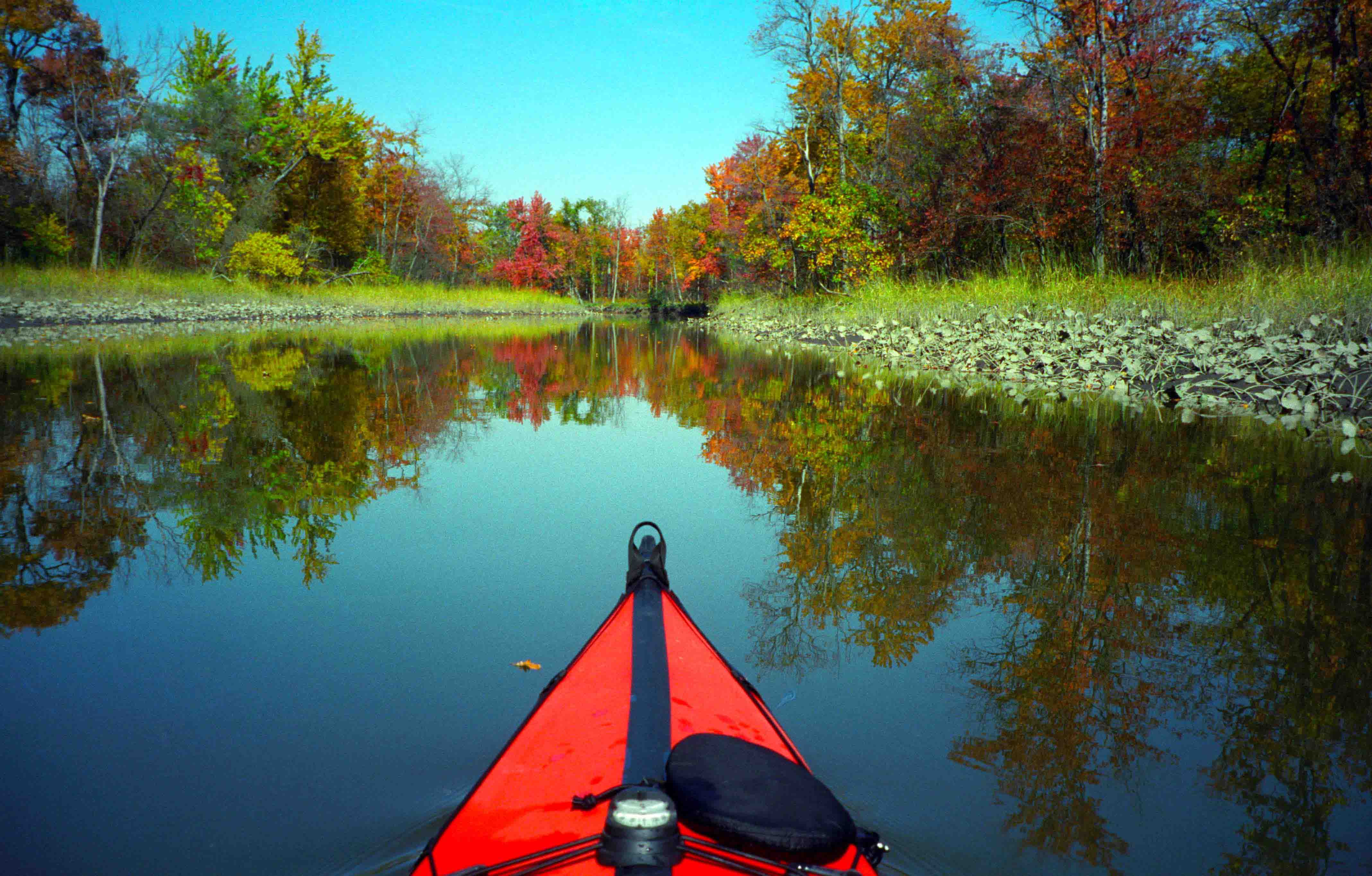
For a number of years I used to go by train with my folding kayak to see the fall colors in the stretch of the Hudson just south of Albany, near Catskill and the town of Hudson.  In Ramshorn Creek, a little winding creek off the Hudson just south of Catskill, I saw, about this time in October one year, the best fall colors ever—a vivid profusion of yellows, oranges, reds, purples, reflected in the green-brown waters of the creek against a crystalline fall blue sky.

It doesn’t look like I’ll have time to go up there this year. So here are some photos from that memorable trip. Even though photos can’t do the real experience of such colors justice, they do give some idea…

Continue reading on full-width photo page —>

Touched By Fire: An Early-Autumn Kayak Trip Along the Palisades

By Johna Till Johnson
Photos by Vladimir Brezina

Autumn is a time of melancholy, of dreams and mists. It’s also a time of intense beauty—and a reminder that everything in life is transient.

That’s particularly true when it comes to catching the leaves turning along the Hudson: Bare hints of color one day, blazing the next, and then fading—all in the space of a week or two.

For New York City kayakers with day jobs, the challenge is that the currents are right for a weekend trip up the Hudson only once every two weeks—which means there are only two October weekends to catch this ephemeral color.

The first weekend with a daytime flood current was October 15-16. Either weekend day would have worked, but since I’d just gotten back from an intense week of traveling, Sunday was the better fit. Plus, Saturday’s winds were pretty severe—predicted and ultimately proving to be over 20 knots. So we agreed to go Sunday.

By then, the winds had calmed somewhat. Vlad and I set off on a crystalline, perfect, early-autumn day.

Continue reading

Where We Like to Land on Sandy Hook

By Vladimir Brezina

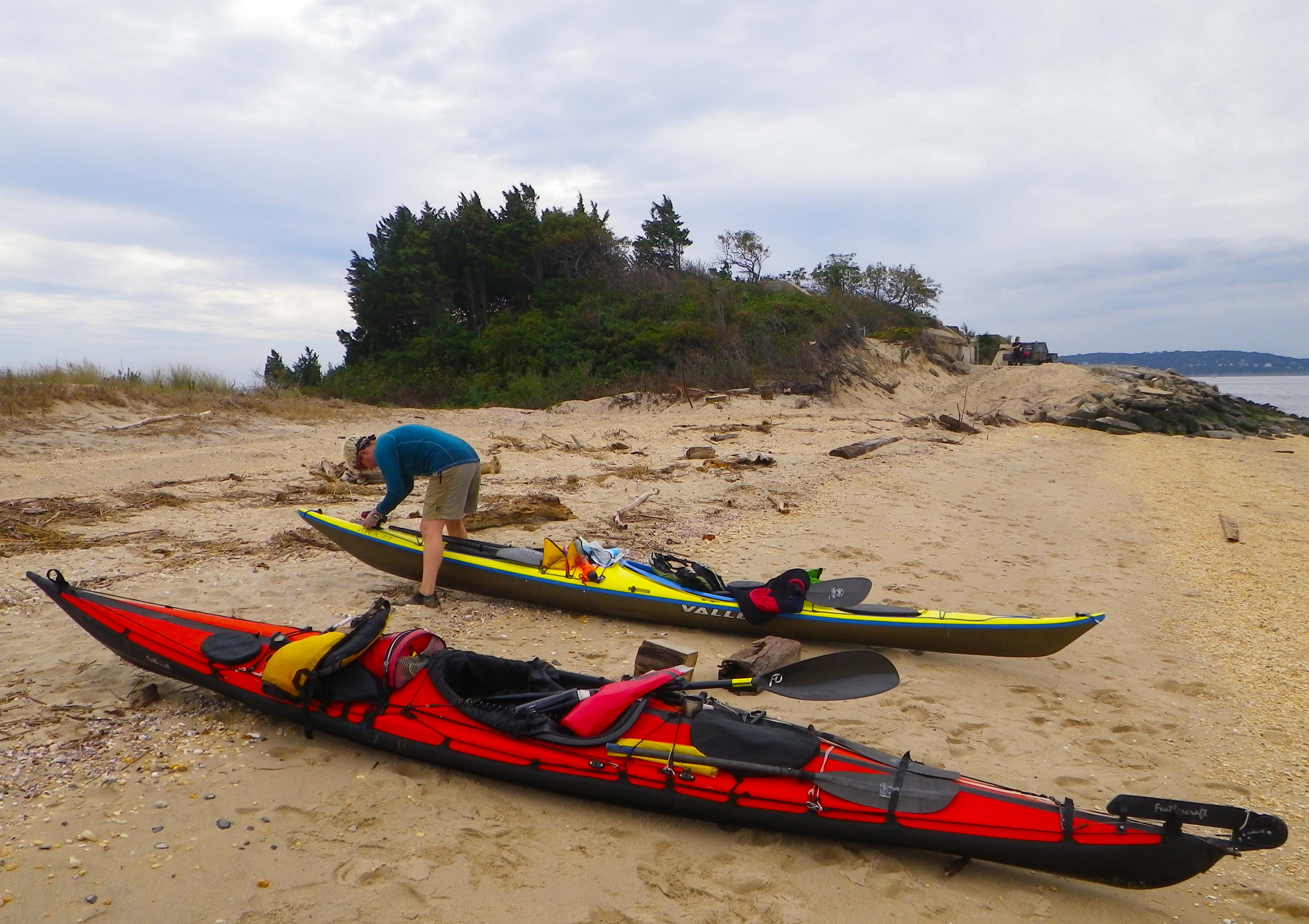
Sandy Hook, NJ, a long thin finger that reaches out across the Lower Bay toward New York City, is an irresistible destination for a kayak trip from the city. But once Sandy Hook is off the bow, where to land?  The perfect landing site can be elusive.  Landing is nowhere actually difficult on Sandy Hook—there is a broad sandy beach almost all the way around (although the ocean side can have significant surf).  But in most places it’s a featureless beach, offering no shade in the summer nor shelter from the wind in the winter. Parts of the beach may be off-limits for one reason or another.  And besides, we want to have lunch in a picturesque spot, rich both in local sights and sounds and views of the landscape.

There is such a spot on Sandy Hook. A mile and a half down the bay side, right on the beach, there is an overgrown hillock—almost a little island, no more than a few hundred feet across, that is cut off from the rest of Sandy Hook by a salt marsh that floods at high tide.  That’s where we like to land on Sandy Hook.

Continue reading