Author Archives: Vladimir Brezina

Zooming in on Planet Earth

By Vladimir Brezina

I just can’t resist those satellite images!

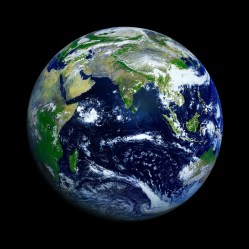
Following the Blue Marble and its more recent recreations, there are now some amazing new images of the Earth out on the Internet.

These images were taken by cameras aboard Elektro-L 1, a  Russian weather satellite in a geostationary orbit ~35,700 km above the Earth’s equator. Every 30 minutes, the satellite’s cameras create a 121-megapixel image at an unprecedented resolution of ~1 km of the Earth’s surface per pixel. The images were posted on the Planet Earth website by James Drake, who obtained them from the Russian Federal Space Agency and stitched them together into various time-lapse movies.

Some of the movies, such as the one above, attempt to show approximately true color. Others use infrared wavelength information to highlight vegetation in orange.

Various movies, zoomed in on different geographical regions, are available on YouTube or at the Planet Earth site, which also has interactively zoomable images that offer some sense of the true resolution of the images (the movies have much lower resolution for posting on the web) and a beautiful image gallery.

News reports with more information are here and here.

“When I see these images, I perceive the planet we live on as incredibly beautiful, interconnected and alive,” Drake said. “They show the Earth for what it is, a spinning orb of metal and rock with a thin surface layer of unimaginable complexity. The fluid water and air that cover our planet are filled with intricate self-replicating fractal patterns called life. What is happening on this planet is absolutely extraordinary!”

Slightly disconcerting, however, are the ads served up by Google with the YouTube videos:

“The End-Time is Here! 2008 was God’s last warning. 2012 is economic collapse and WWIII. www.the-end.com. Ads by Google.”

And another about UFOs…

Is there something Google knows that planetary engineers and scientists don’t?

Since these ads are personally targeted, though, watch the videos and see what Google has in store for you!

Alien Life

By Vladimir Brezina

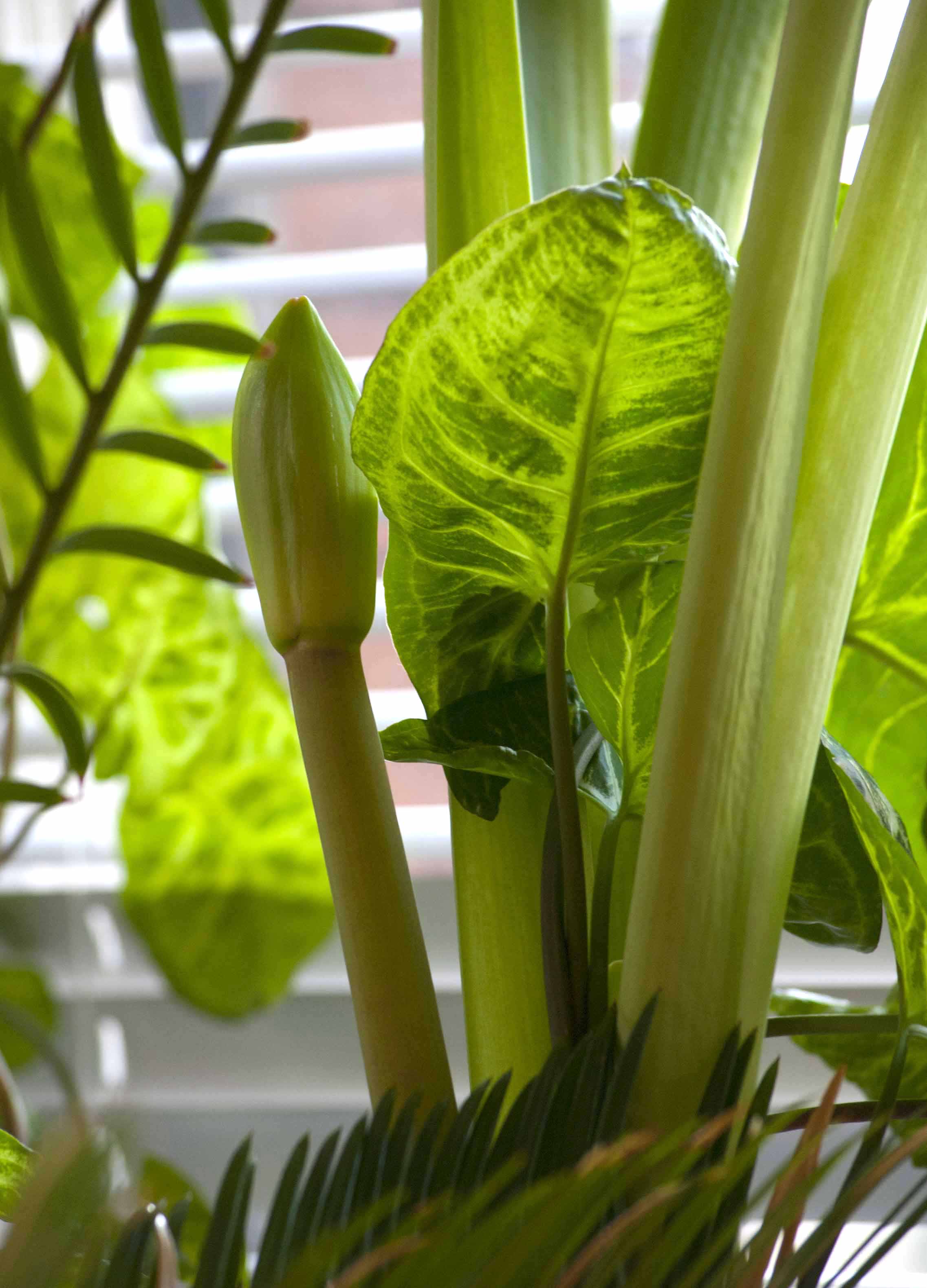
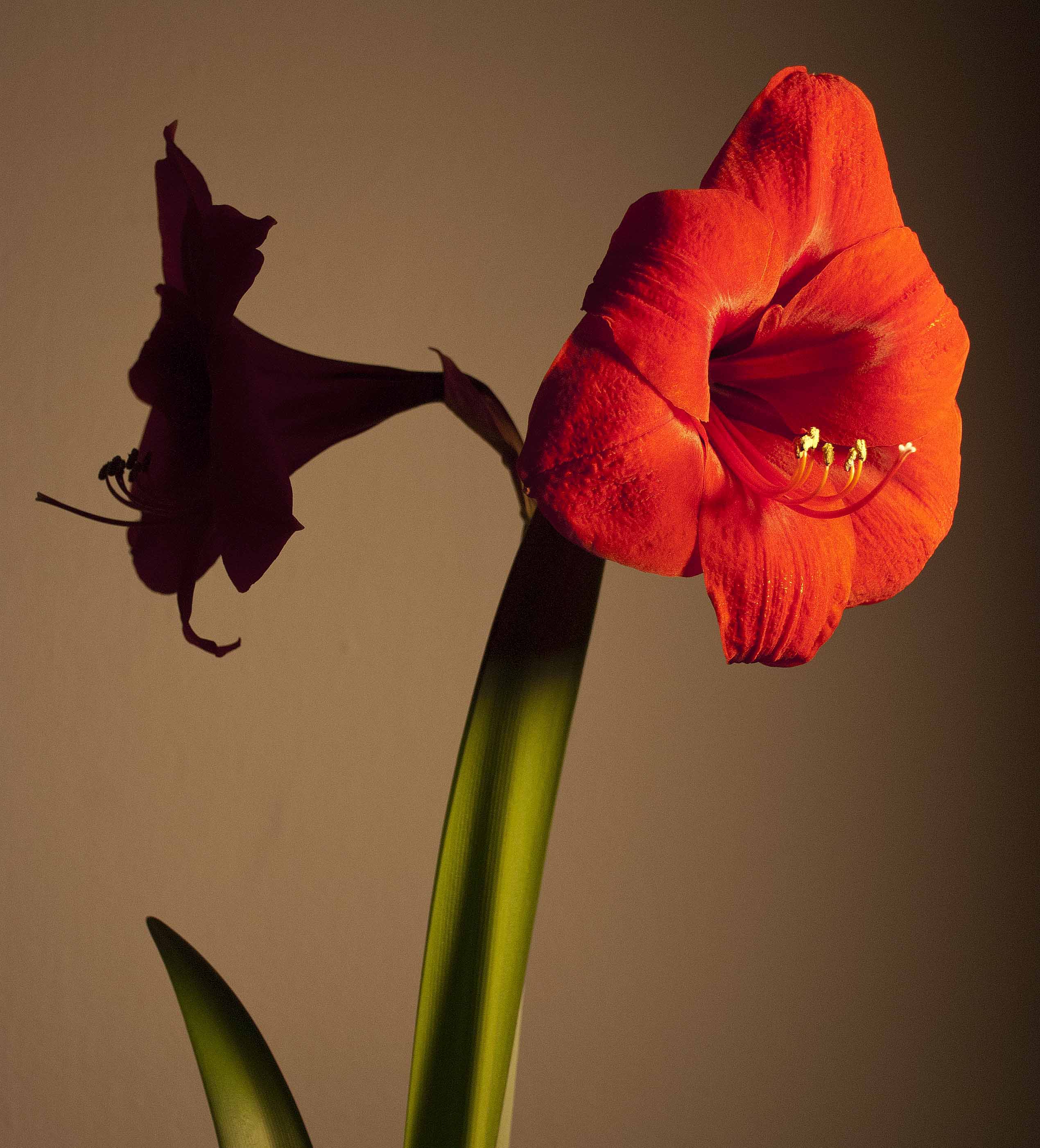
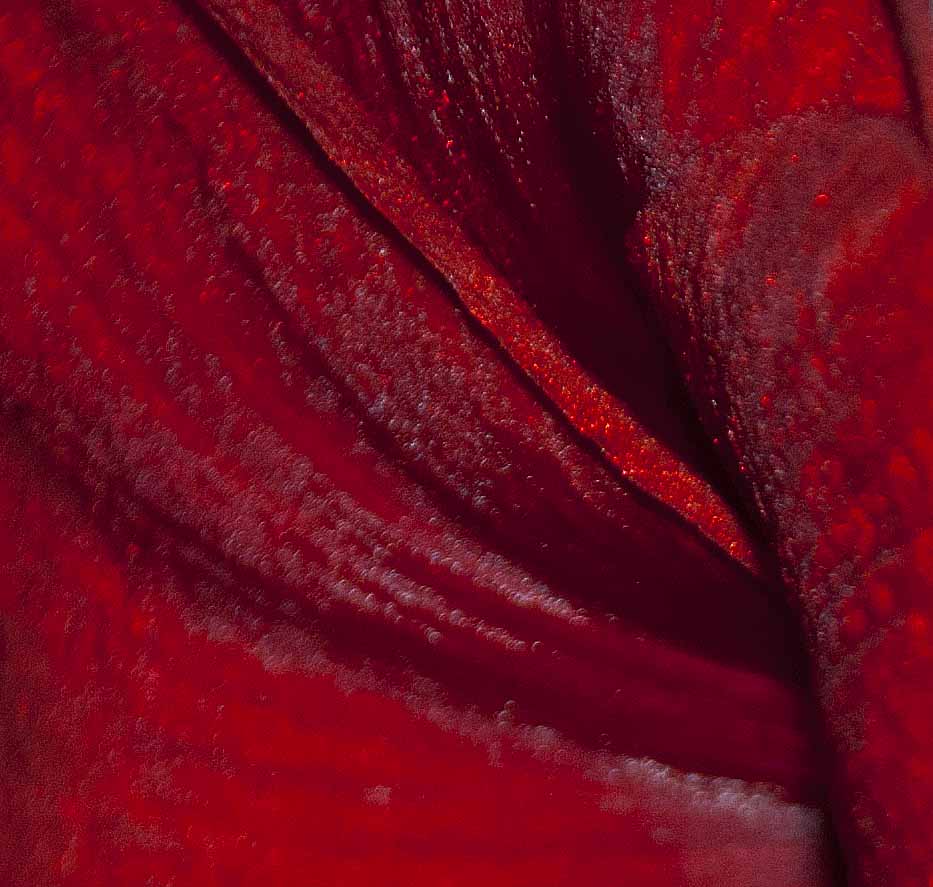
For a whole year it had been just sitting there, not doing anything much. Then, one day, we noticed that it had suddenly sprouted a pod.

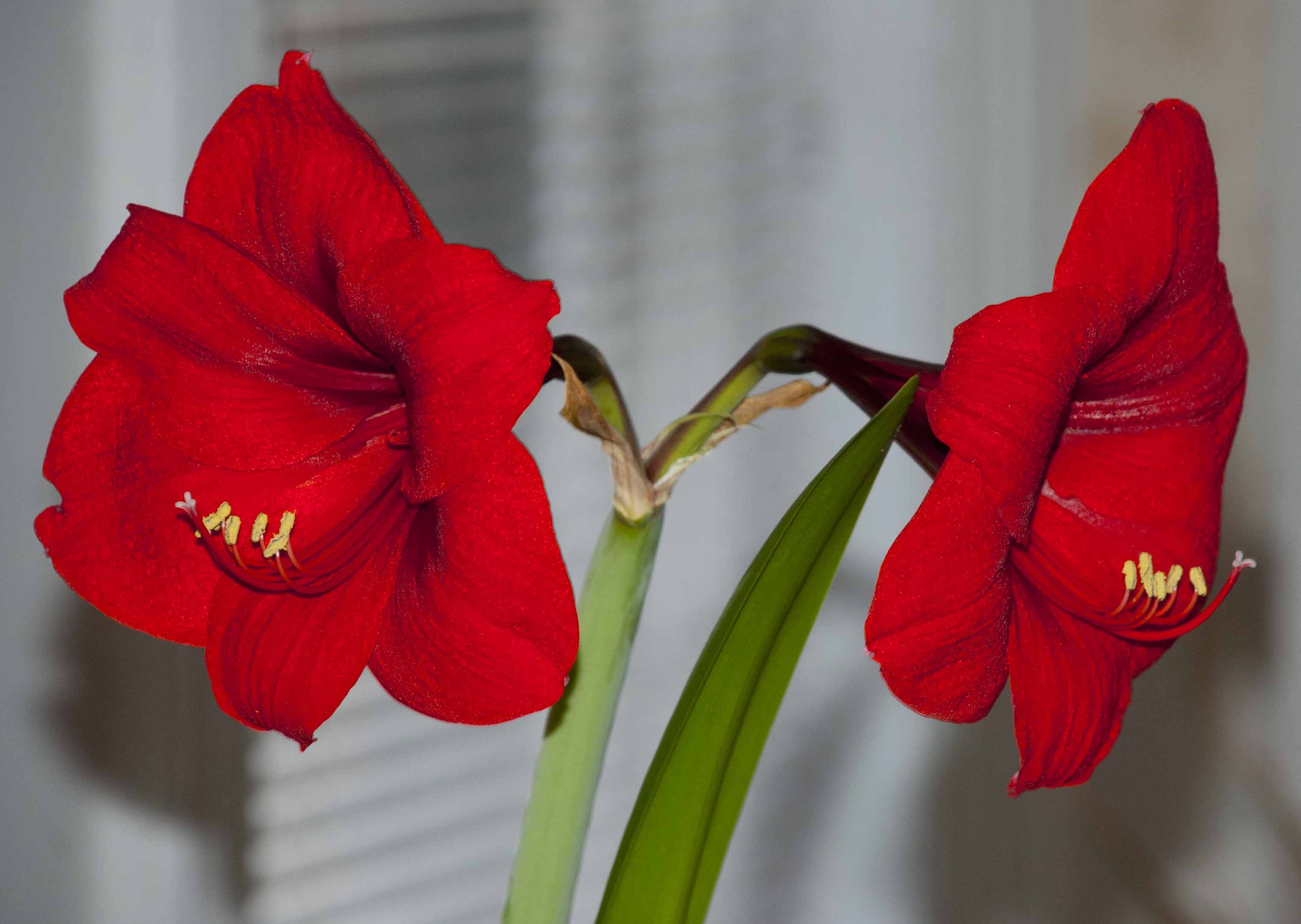
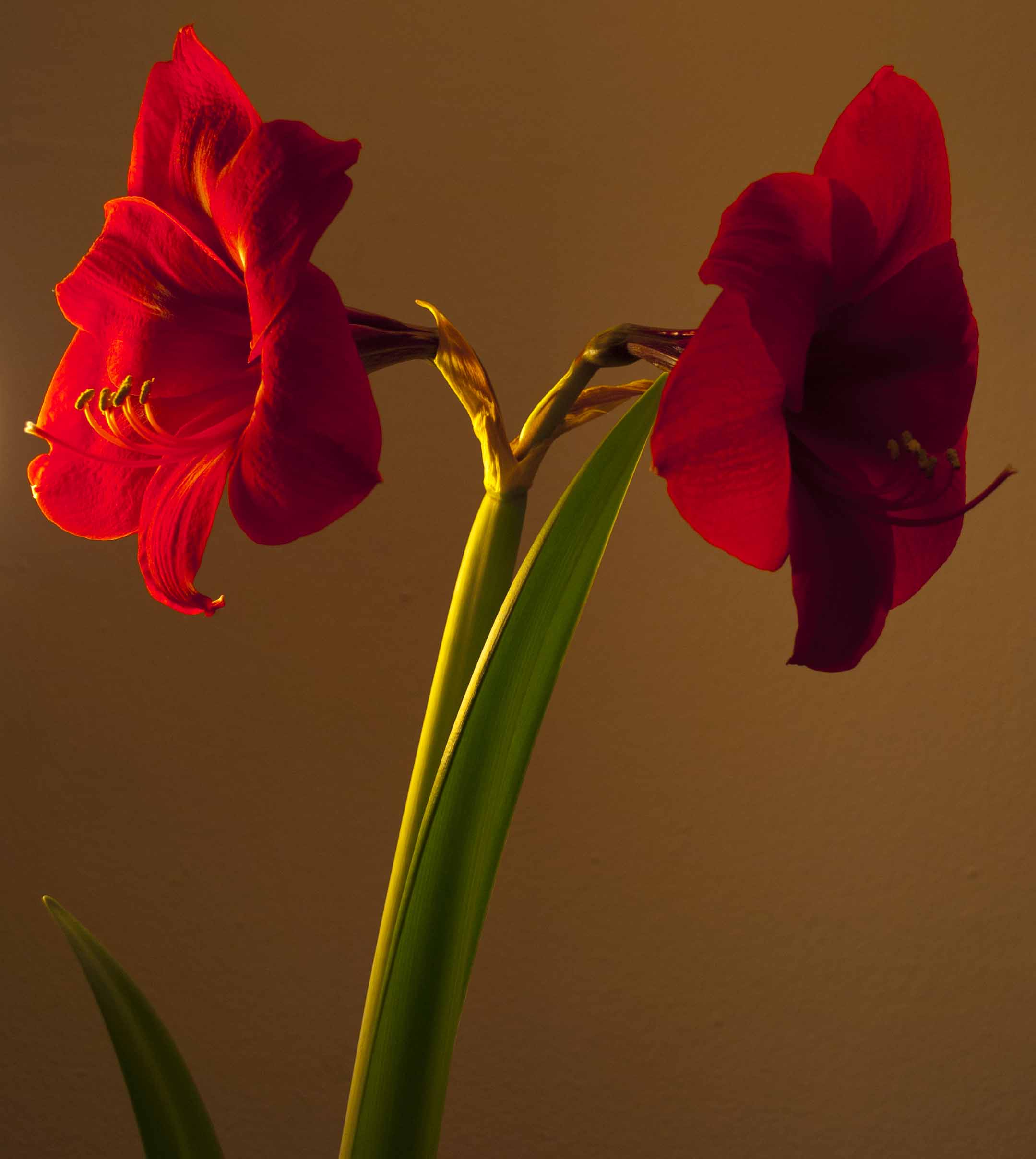
This was a couple of weeks ago. Now it’s back to its old self, just sitting there… that’s the Amaryllis flower over for another year!

More photos are here.

Weekly Photo Challenge: Blue

By Vladimir Brezina

The Daily Post‘s Weekly Photo Challenge is usually posted on Fridays. It’s now mid-day Monday… Over the weekend, I, and many other people who have been trained to eagerly anticipate the challenge, were almost giving up. In fact, to fill the absence, on Saturday night Ailsa on her blog Where’s my backpack? proposed her own alternative challenge on the theme of “Reflections“, and has been getting a very lively response indeed. My two “Reflections” posts are here and here.

Still, better late than never! This week’s official Photo Challenge is finally here, and it is Blue.

… And immediately

Rather than words comes the thought of high windows:
The sun-comprehending glass,
And beyond it, the deep blue air, that shows
Nothing, and is nowhere, and is endless.

Philip Larkin, High Windows

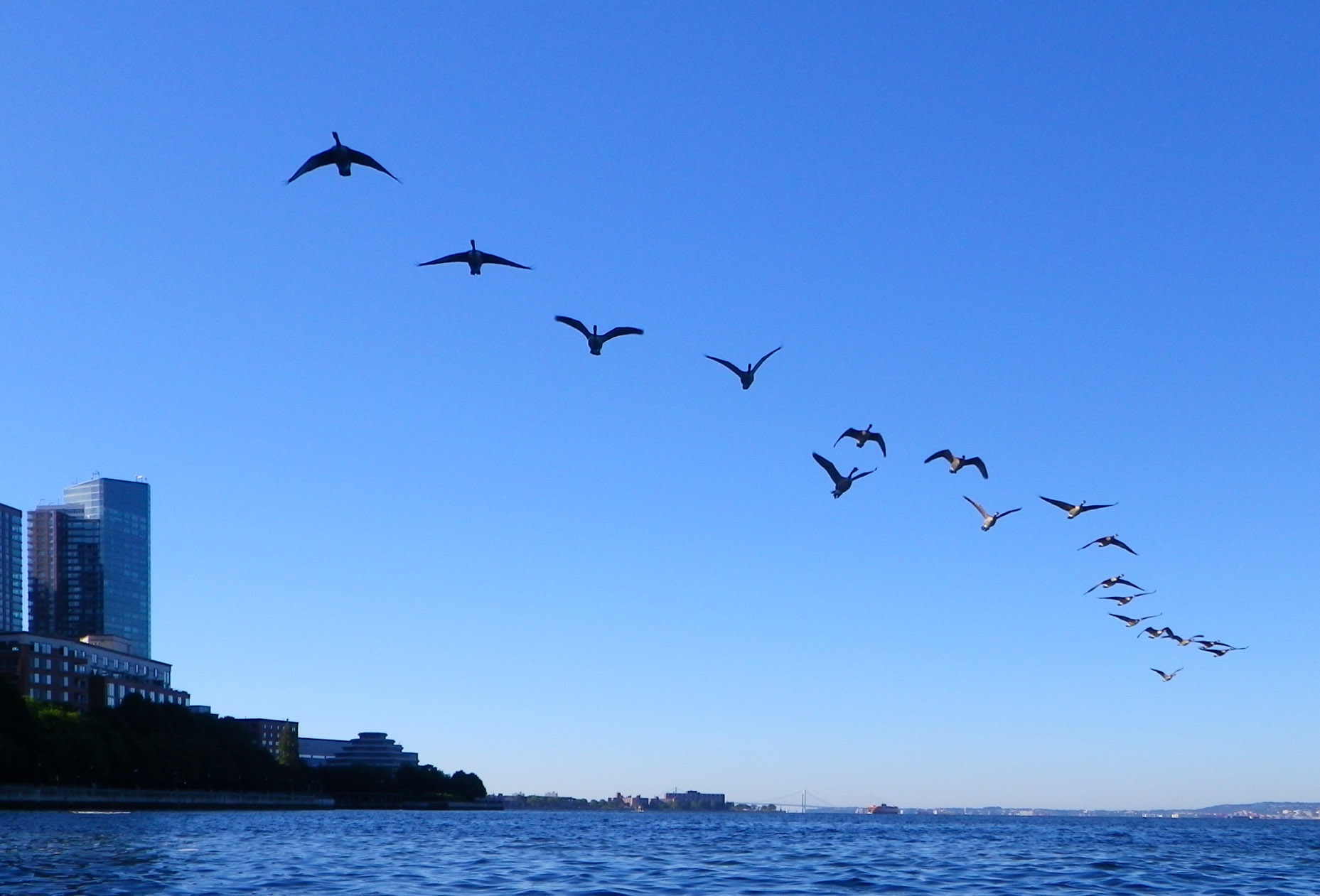
That’s it: Blue means opening up, spaces without limits, endless possibilities…

Actually, some of the photos from my “Reflections” posts, here and here, would also have fit the theme very well…

Reflections, Take Two

By Vladimir Brezina

OK, I can’t resist having another go at Ailsa‘s Alternative Photo Challenge on the theme of “Reflections“…

More photos from these places, along the Hudson River and in Long Island Sound, are here, here, and here.

________________________________________________________

Some other nice “Reflections” posts:

Reflections

By Vladimir Brezina

WordPress has not yet posted a theme for this week’s Photo Challenge… So photo-bloggers addicted to a regular weekly Challenge have impatiently begun taking matters into their own hands. Over at her blog Where’s my backpack?, Ailsa has proposed a Photo Challenge of her own, which everyone is invited to join, with the theme of “Reflections“.

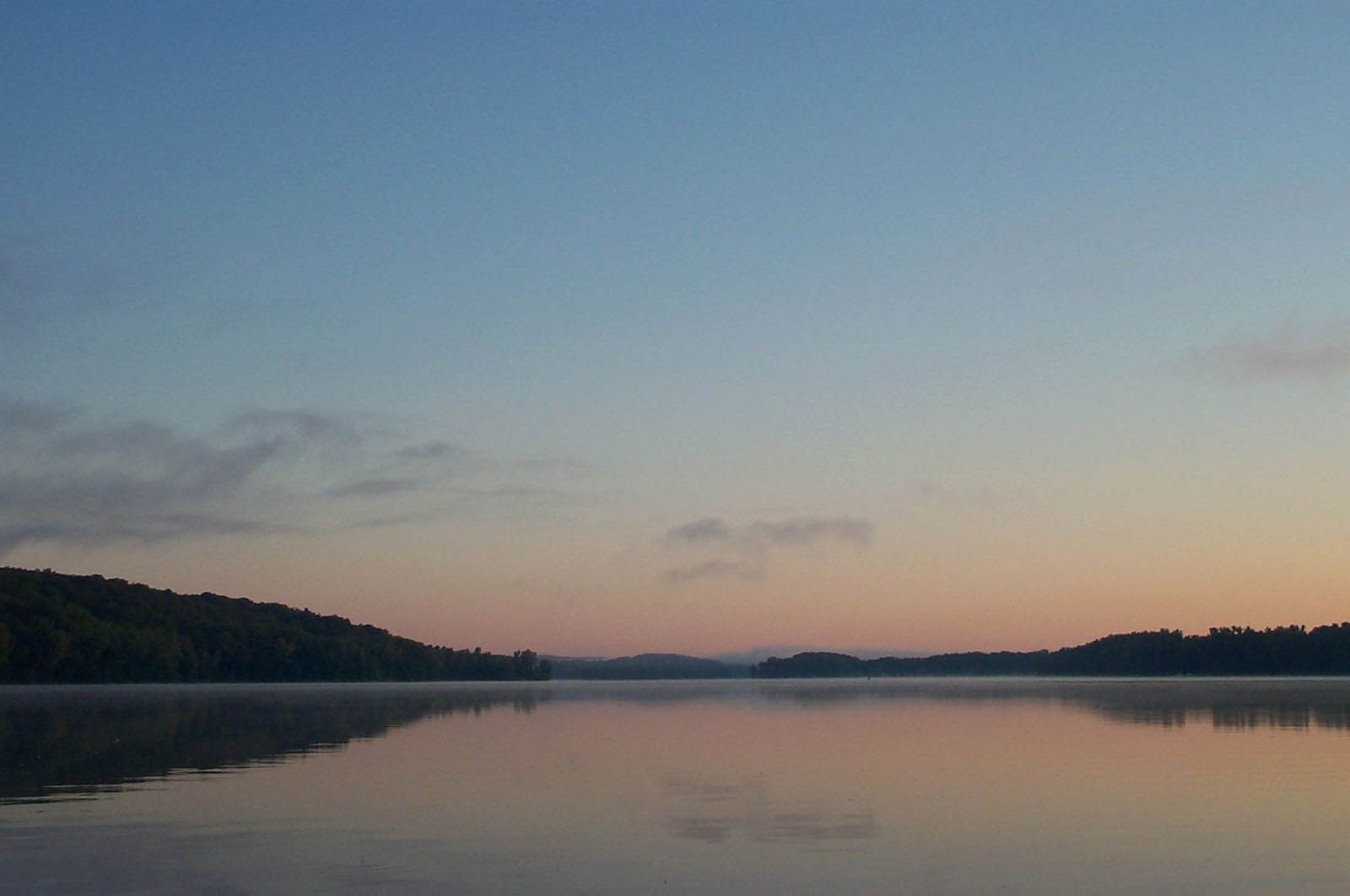
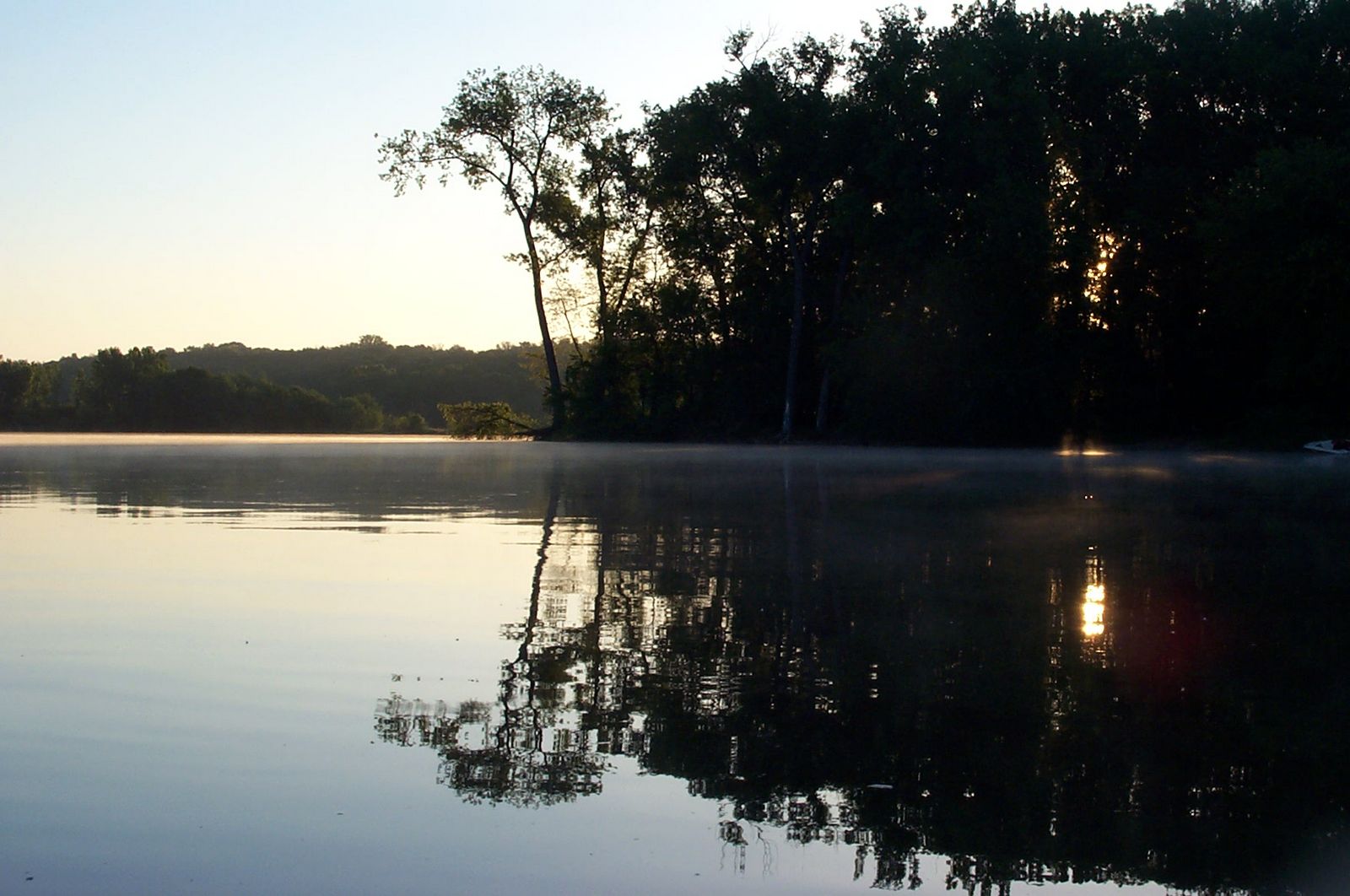
“Reflections” is a perfect theme for me. Kayaking, or just walking around after the rain as Ailsa did, inverted reflections in water are everywhere, often more intriguing and mysterious than the scenes reflected. I’ve already posted some of these water reflections here and here and here and here and here

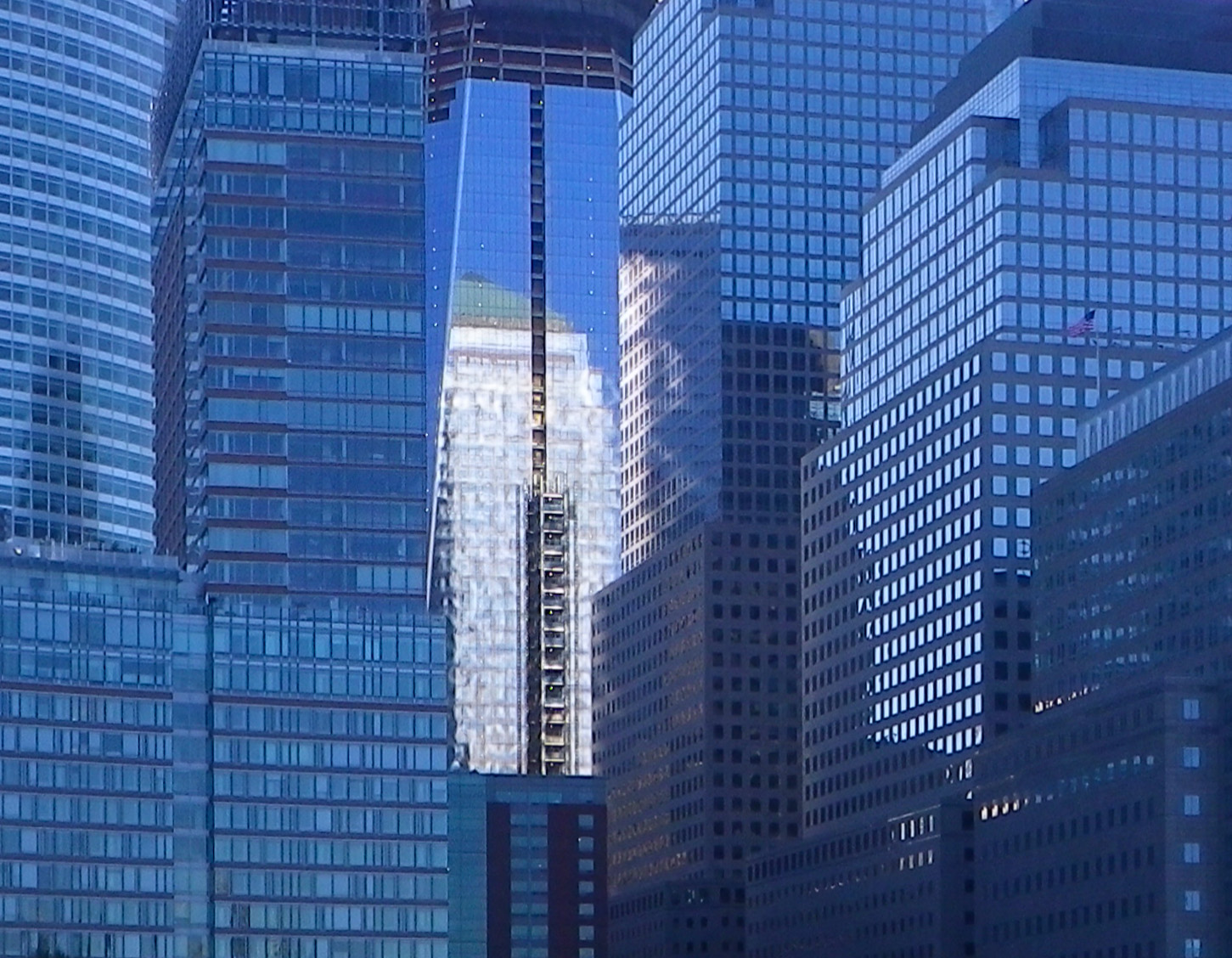
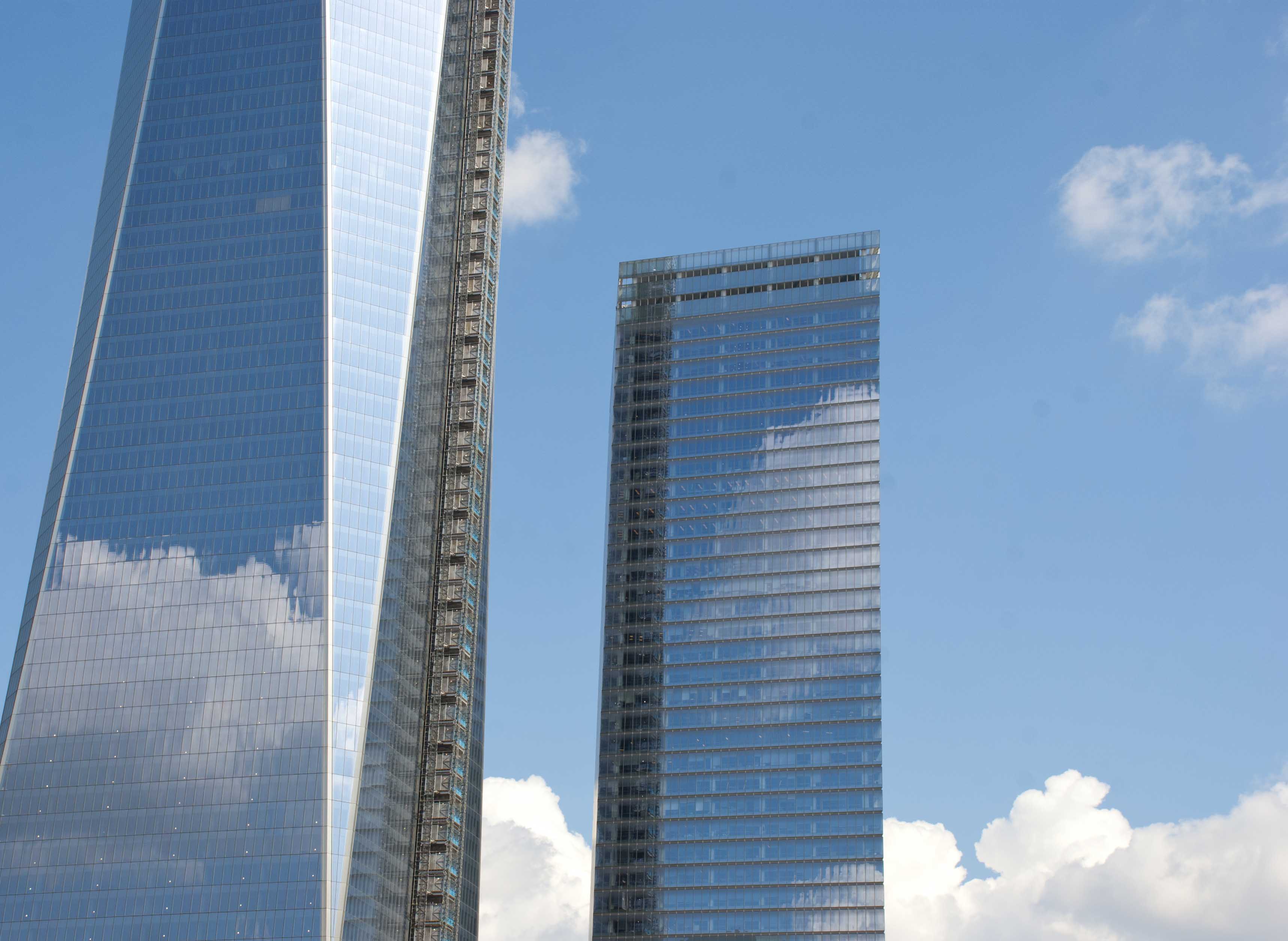
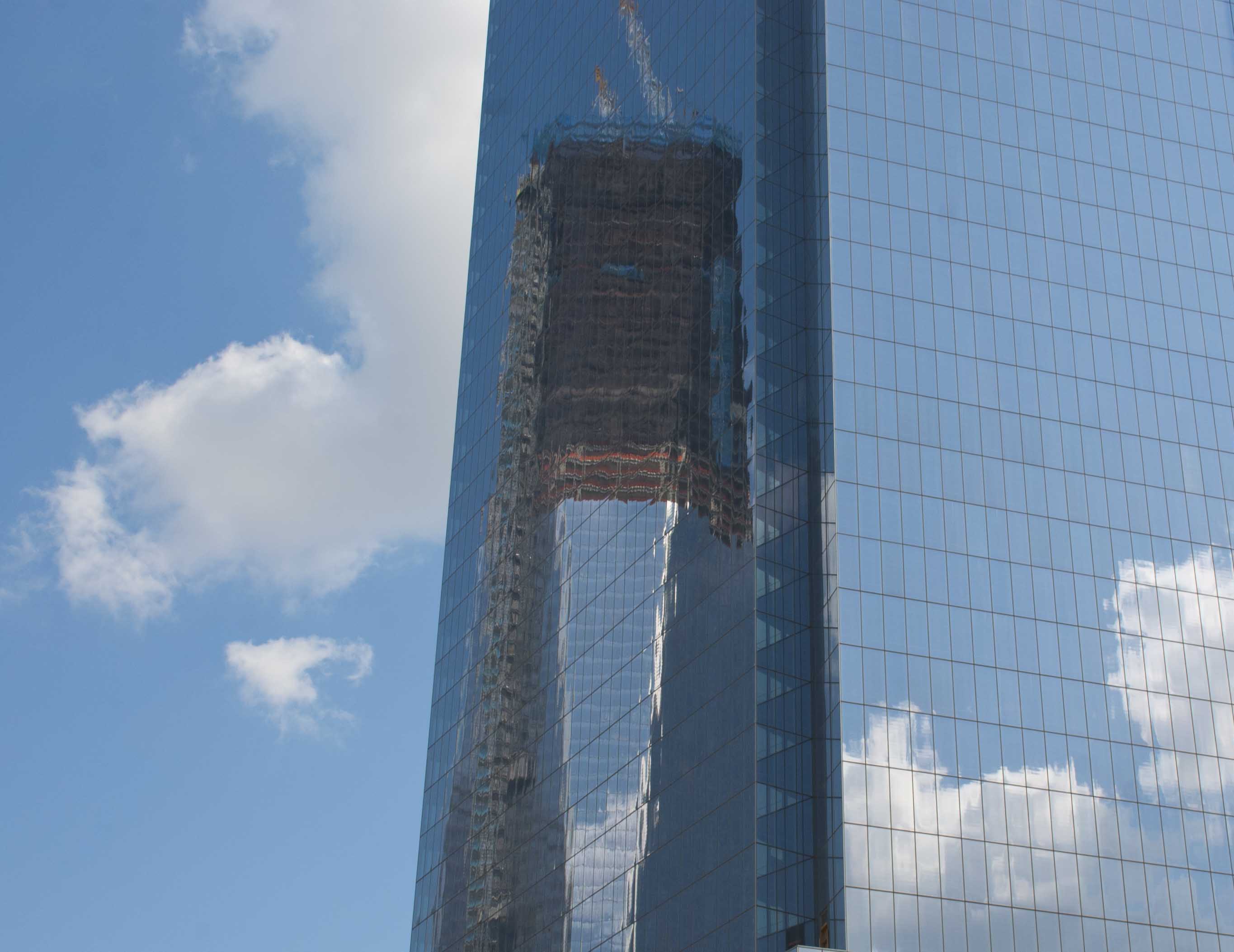
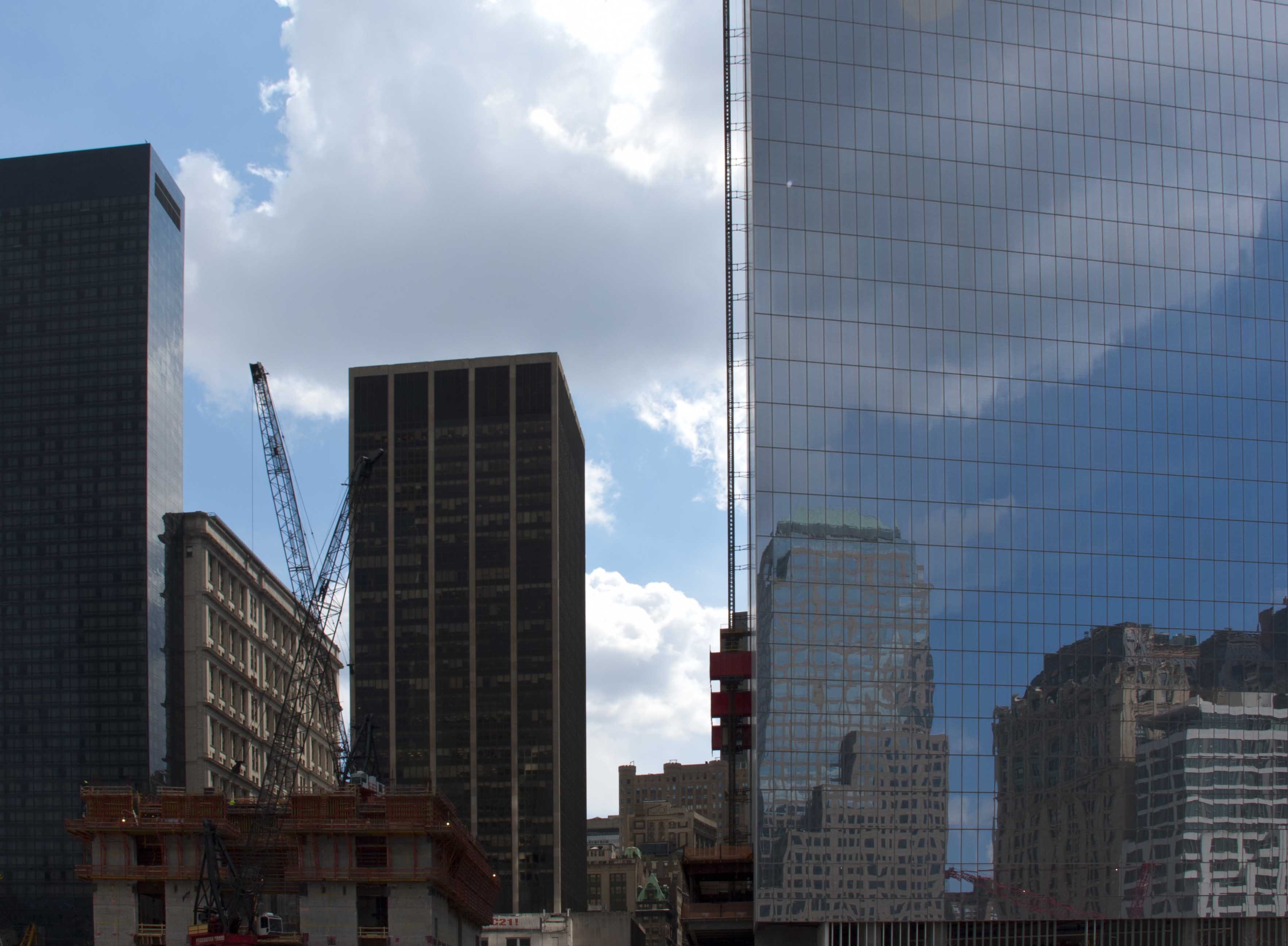
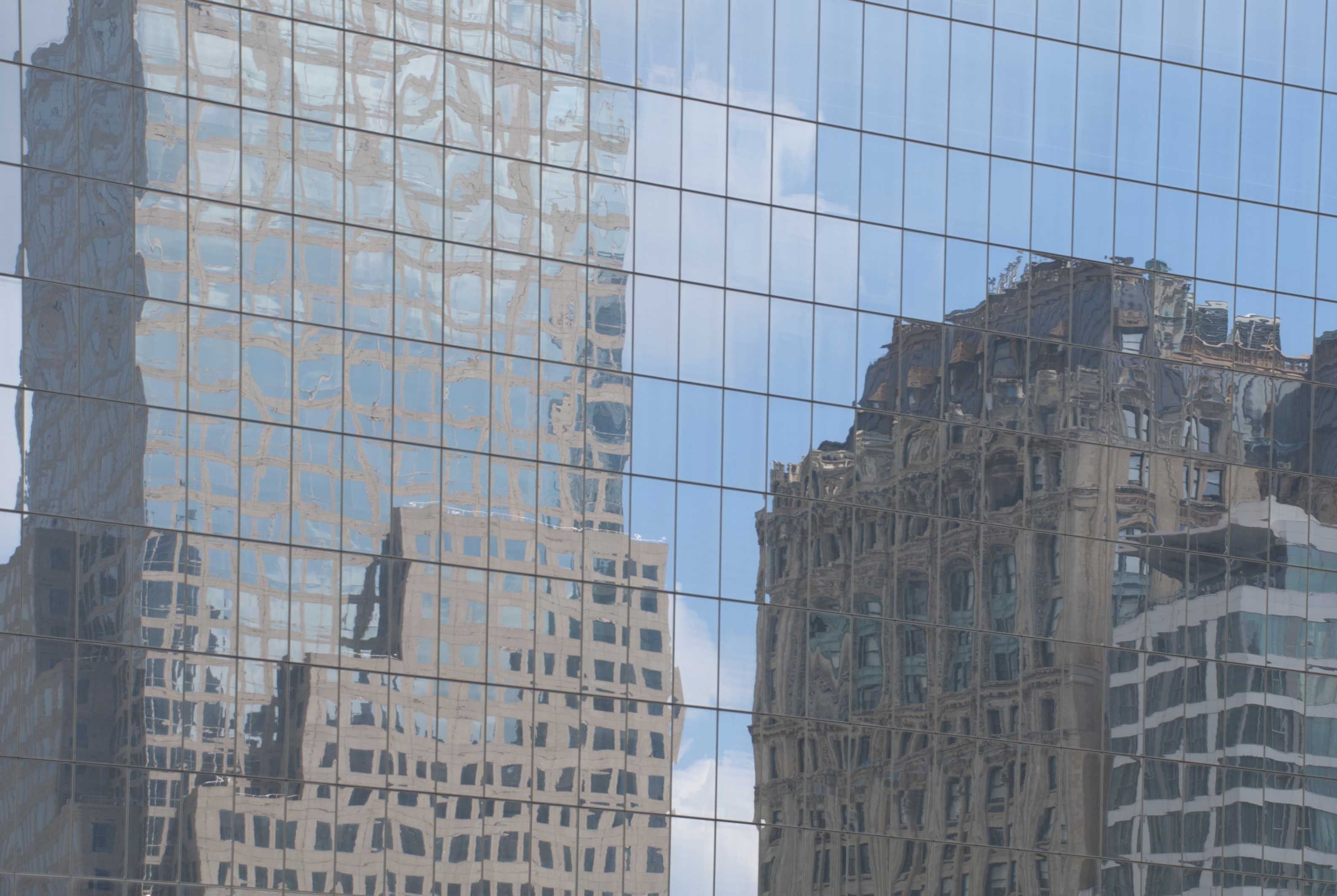
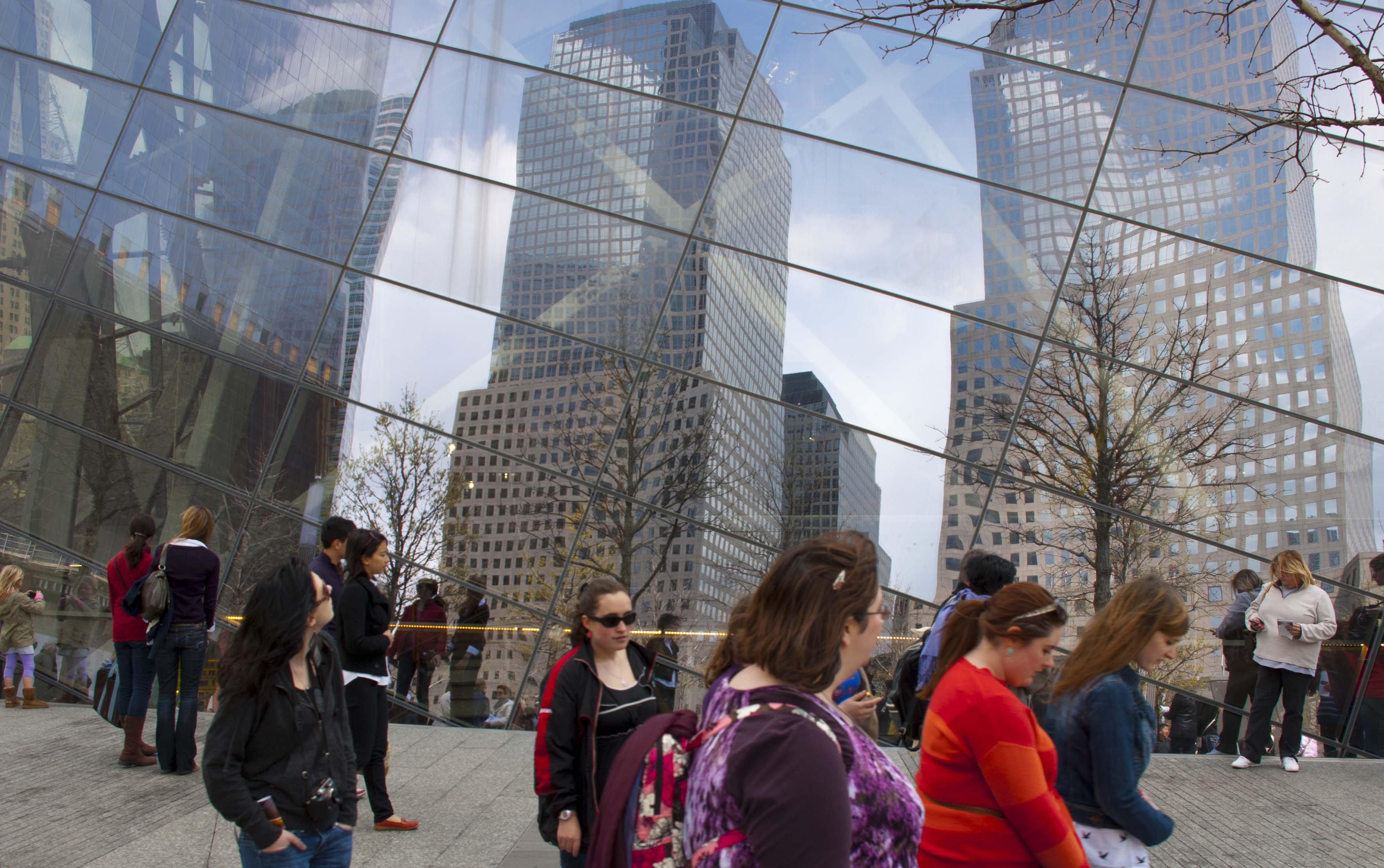
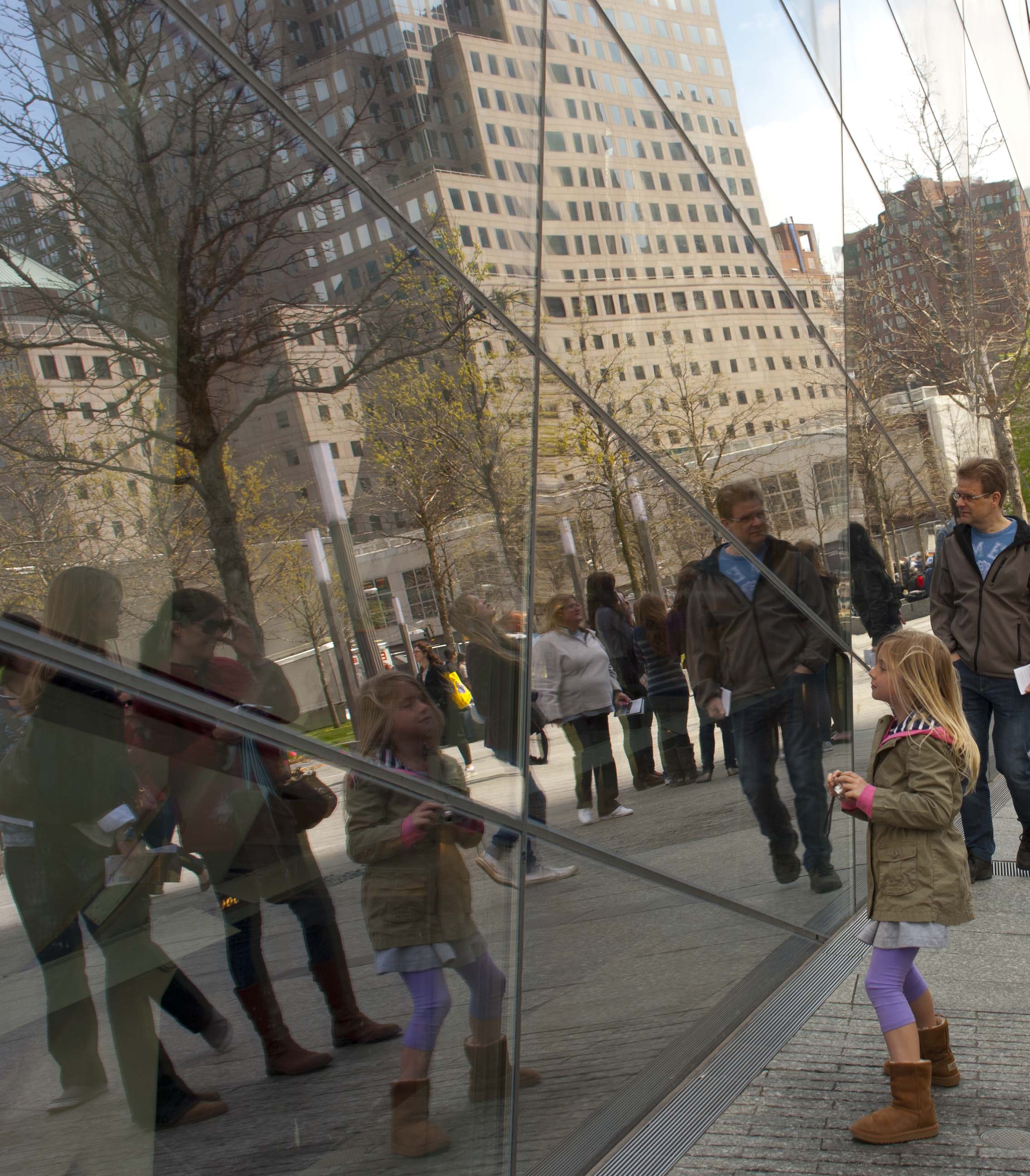
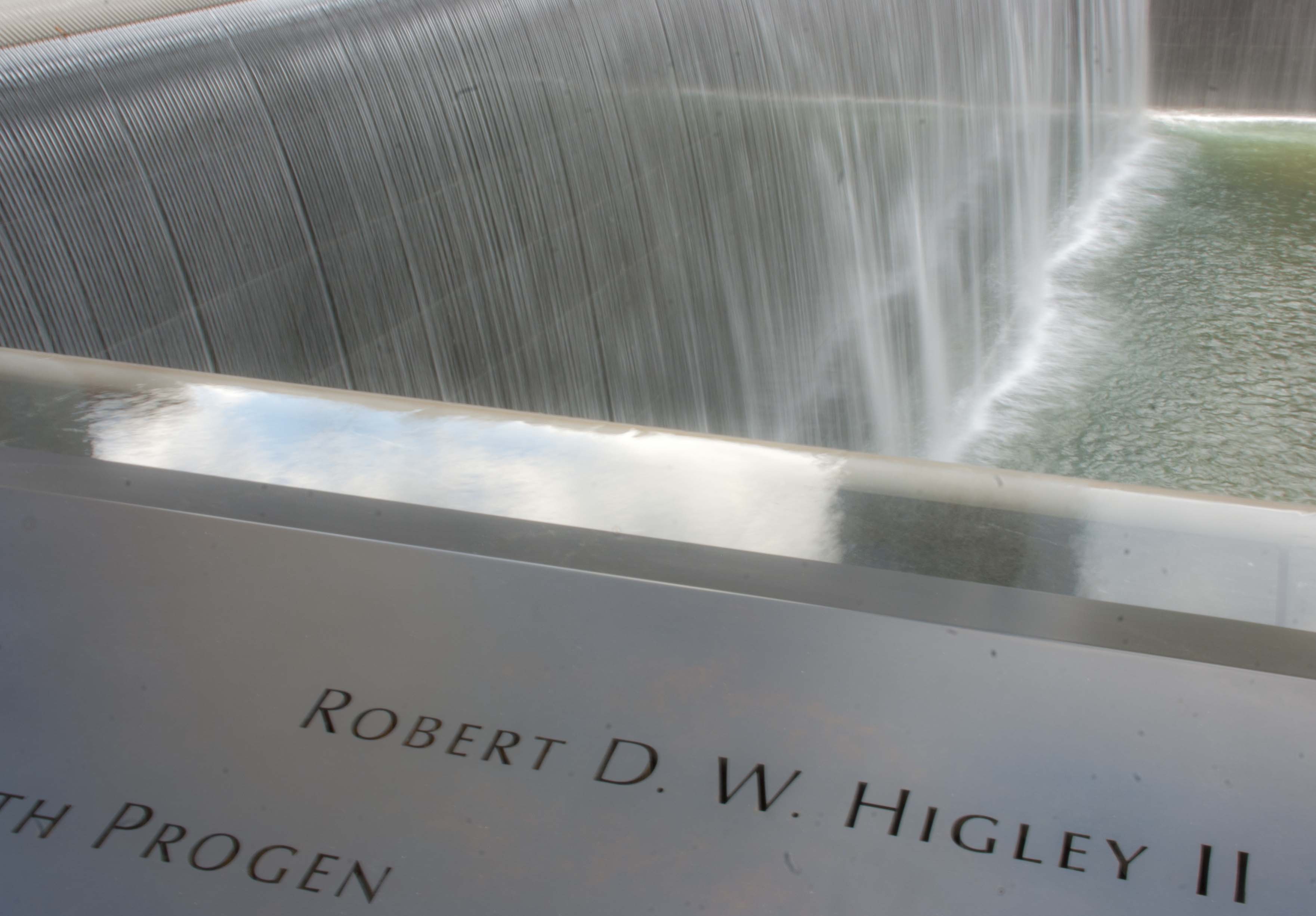
But “Reflections” also brings to mind our recent visit to the 9/11 Memorial in Lower Manhattan. The surfaces of the memorial, and the glass walls of the towers now rising all around, are full of reverberating reflections: of each other, of the clouds, of the visitors, of memories…

More photos are here.
And my second take on “Reflections” is here.

… And Once More to Sandy Hook

By Vladimir Brezina

Last weekend, the currents in New York Harbor dictated a southbound kayak trip. So we paddled, once more, down to Sandy Hook. Here is a slideshow of the highlights.

This slideshow requires JavaScript.

It was the weekend of the Supermoon. And the currents were strange. The flood on the way back to Manhattan was much stronger than usual, but the ebb on the way to Sandy Hook was paradoxically much weaker…

For Johna’s feelings toward the Staten Island Ferry, see her last post.

The individual photos are here.

One Year of Wind Against Current

By Vladimir Brezina and Johna Till Johnson

It’s hard to believe that a whole year has gone by since we published  our first post on May 9, 2011.

We have to credit Tugster with the idea. He’d asked us for a guest post about a kayaker’s-eye view on maritime traffic and life on the water. We still haven’t written that one (one day soon, Will, we promise!).

But we pondered the idea…  And meanwhile, Vlad kept taking photos, and Johna kept writing essays, until the idea of a blog was born.

Blogs are harder than they look, as anyone who writes on a regular basis knows well.

Continue reading

Queens, the Hottest Place on Earth?

By Vladimir Brezina

Queens is hot.

And so are Brooklyn, Manhattan, and the Bronx.

Staten Island? Not so much…

This post is about temperature. (Why, what did you think it was about?) Many years ago, I lived for a year in Libya, not far from a place called El Azizia. There, on September 13, 1922, a weather station recorded a temperature of 58.0°C (136.4°F). According to the World Meteorological Organization, that is the highest temperature ever measured by a weather station.

But is that really the hottest place on Earth? The hottest regions of the Earth are expected to be the deserts. (El Azizia, marked on the map below, is on the edge of the Sahara Desert.) But in deserts, weather stations (black dots on the map) are sparse. According to scientists quoted in a recent NASA Earth Observatory article, “most of the places that call themselves the hottest on Earth are not even serious contenders… The Earth’s hot deserts—such as the Sahara, the Gobi, the Sonoran, and the Lut—are climatically harsh and so remote that access for routine measurements and maintenance of a weather station is impractical. The majority of Earth’s hottest spots are simply not being directly measured by ground-based instruments.”
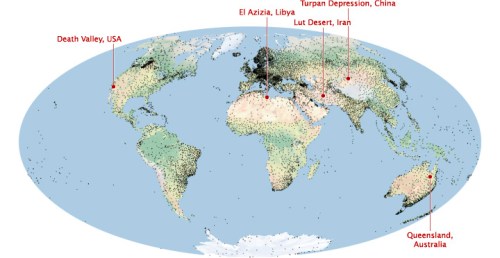
“In the remote, sparsely populated areas that are likely to be the world’s hottest, weather stations (black dots) are widely spaced.” (NASA Earth Observatory)

That’s where satellites come in. NASA operates two satellite-mounted Moderate Resolution Imaging Spectroradiometers (MODIS), instruments that (among many other things) measure the thermal radiance, the amount of infrared energy emitted by the land surface. “Since the two MODIS instruments scan the entire surface each day, they can provide a complete picture of earthly temperatures and fill in the gaps between the weather stations,” according to NASA.

One wrinkle: the traditional weather stations measure the air temperature, 1.2-2 meters above the ground and shielded from direct sun. In contrast, MODIS measures the “land skin temperature” (LST)—the temperature of the exposed ground surface. As anyone who has walked barefoot on hot sand at the beach or a hot parking lot on a sunny summer day will know, the LST can be considerably higher than the air temperature.

As expected, the regions with the highest LST readings (dark red color in the map below) are the Earth’s deserts.
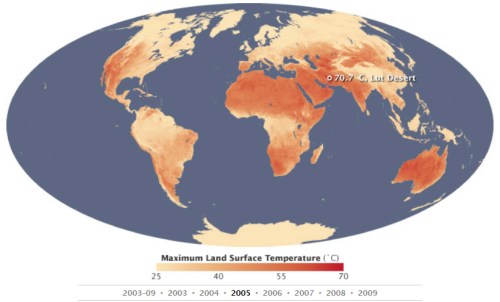
“Seven years of satellite temperature data … The Lut Desert was hottest during 5 of the 7 years, and had the highest temperature overall: 70.7°C (159.3°F) in 2005.” (NASA Earth Observatory)

Within the desert regions, the very highest readings are consistently obtained in such spots (marked on the first map) as the badlands of Queensland, Australia; the Turpan Basin of the Taklimakan Desert in China; and the Lut Desert of Iran, which had the highest annual LST reading in 5 of the 7 years 2003-2009 and, in 2005, recorded the single highest LST value ever measured, of 70.7°C (159.3°F)—more than 12°C (22°F) warmer than the official world record air temperature from Libya. What these spots have in common is that they are dry, rocky, bare of vegetation, and dark, so that they absorb, rather than reflect, the incoming sunlight.

So is one of these places now the hottest place on Earth? Not so fast. It turns out you don’t have to go to the ends of the Earth to find the hottest places. The dry, rocky, bare, and dark conditions are found, often to an even greater degree, in many urban areas with dark asphalt- or tar-covered roofs, streets, and parking lots. Consequently, as one scientist notes: “I see surface temperatures in the city that routinely exceed what you might find in the desert.”

Take the “urban desert” of our very own Queens, New York City.

Queens urban desert (NASA Earth Observatory)

Using portable infrared radiometers (for better spatial resolution than that available from the satellite images), scientists have been measuring LST values in New York City, including at the Con Edison building in Queens (indicated above). On such black rooftops in mid-summer—as shown below for a few days in August 2010—they have observed temperatures as high as 77 to 82°C (170 to 180°F), more than 10°C higher than ever recorded in the Lut Desert.

“Temperatures in cities can rival the hottest desert. Using sensors installed at the Con Edison building in Queens, NY, scientists compare the surface temperature of black, white, and “green” (vegetated) roofs. The black roof can be up to 30°C (54°F) hotter than a green or white roof.” (NASA Earth Observatory)

These high temperatures contribute to the city’s heat island effect and to the oppressiveness of summer days and nights that is only too well known to urban residents.

How can these high temperatures be reduced? As the graph above shows, a black roof is much hotter than a green or white roof, or, best of all, a vegetation-covered roof.

Installing a plant-covered roof is the ultimate technique to combat urban heat because it adds a combination of slight shading and a lot of cooling moisture. …But even a simple step like painting black roofs white—increasing the albedo, or reflection of light—can reduce temperatures dramatically. …White synthetic surfaces and paints were found to reduce peak rooftop temperatures by 24°C (43°F) compared to typical black rooftops.”

So, “widespread installation of white roofs, like New York City is attempting through the NYC CoolRoofs program, could reduce city temperatures while cutting down on energy usage and resulting greenhouse gas emissions.”

But in the meantime, Queens is super-hot!

______________________________________________________

Take a look at the NASA Earth Observatory articles on which I’ve based this post (a three-part article beginning here, and another post here) for additional information.

Update May 9, 2012: Looks like Toronto is way ahead of New York City in green roof installation!

Weekly Photo Challenge: Unfocused

By Vladimir Brezina

This week’s Photo Challenge is Unfocused.

Returning home after a few drinks, it’s sometimes hard to get the eyes to focus.

Supposedly, it was in such a state that Li Po died trying to embrace the reflection of the moon in the water…

Continue reading

Once More Round Manhattan

By Vladimir Brezina

When the tide or the weather doesn’t cooperate or we simply can’t think of any other trip we’d rather do, we default to paddling round Manhattan. It’s our version of the run round the park. Yet no matter how many times we repeat it, each time we see something new. Manhattan and its waterways look different on a cold, dark day in January and on a mild gray day in March. And they look different again on a beautiful, bright blue sunny day at the end of April: here is a slideshow from yesterday’s Manhattan circumnavigation.

This slideshow requires JavaScript.