Category Archives: Art

Windfall

By Johna Till Johnson

windfall-three-birds-crop-1-effects

Three Birds Enjoy a Windfall on a Summer’s Day
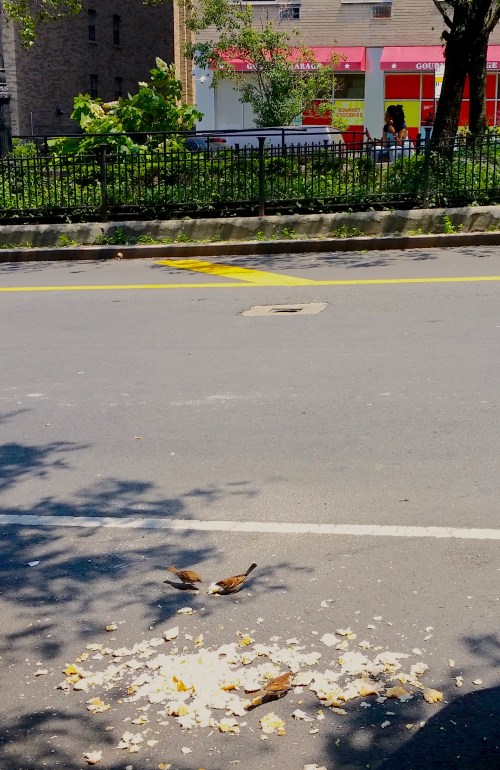
Every so often, something wonderful comes into your life unexpectedly. You didn’t wish for it, or ask for it–it just appeared, providing you with great and wholly unanticipated joy.

For these three birds, the sudden appearance of breadcrumbs (perhaps a loaf from the grocery store across the street) must have represented the purest sort of windfall. Who knows who left the bounty, and why?  But there was no mistaking their happiness as the birds pecked away with great animation.

It’s a happiness I felt, too, when my greatest windfall appeared. Knowing Vlad was so unexpected, so out of the ordinary run of my life, that I couldn’t have conceived of it before it happened. Now that he is gone, there is indeed a “before” and “after” in my life–but not the usual kind. For most who have suffered a loss, the boundary between “before” and “after” is the loss.

My “before” and “after” is marked by meeting Vlad, not by losing him.

Before I met him, I looked at life in a prosaic and utilitarian way. Yes, twinklings and inklings of beauty crept in–sometimes I would pause on a summer’s morning, overtaken by feel of the balmy air and the rustling of bright leaves.

But I harbored the sneaking suspicion that appreciating beauty was something you grew out of. Proper adults didn’t forget their responsibilities and concerns just to gasp in wonder at the V of migrating geese across a brilliant blue sky. And they certainly didn’t go off for days or weeks in a kayak just to lose themselves in the briny air and expanse of ocean. Kayaking was something you fit into your days, not something you built your days (let alone life) around.

Vlad changed all that. Although his passion was science, his life was poetry. He sought–and found–the beauty in all things. And he was happiest spending days and nights in that marathon pursuit. Whether it was hunting down an elusive signal in the lab, or following a waterway to see where it led, his life was a full-throated, unabashed pursuit of beauty.

His legacy to me, and to all who knew him, was showing by example how to upend the usual conventions. Instead of fitting science, art, and poetry into neat boxes in your life, you spent your life exploring them, and following where they led. (And yes, love as well. He loved as he did all things: wholeheartedly and with great generosity.)

That legacy–of love, beauty, poetry, and the willingness to lose oneself in them–that legacy is my windfall. The lines from Tosca recurred to me in the hours and days after his death:

Vissi d’arte, vissi d’amore,
non feci mai male ad anima viva!

I lived for art, I lived for love
I never harmed a living soul!

Before I met Vlad, those lines made no sense to me. Afterwards…ah, afterwards was entirely different. Meeting Vlad was my windfall.

I Used to Hate Spring…

By Johna Till Johnson
Photos by Vladimir Brezina

April puddle

April is the cruelest month, breeding
lilacs out of the dead land, mixing
memory and desire, stirring
dull roots with spring rain.

—T.S. Eliot, The Waste Land

I’ll admit it: I used to hate Spring.

Why “admit”? Because from what I can tell, most people are thrilled by lengthening days, soft fragrant breezes, and the sight of new flowers pushing up through the fresh grass.

In New York, Springtime is especially noteworthy. Everyone takes to the parks. Lovers canoodle. Pets frolic. And we walk around with goofy smiles and say unexpected things to each other, like “Please,” and “Thank you” and “After you!”

So what’s not to love?

Continue reading

More Fun with Easter Eggs

By Vladimir Brezina

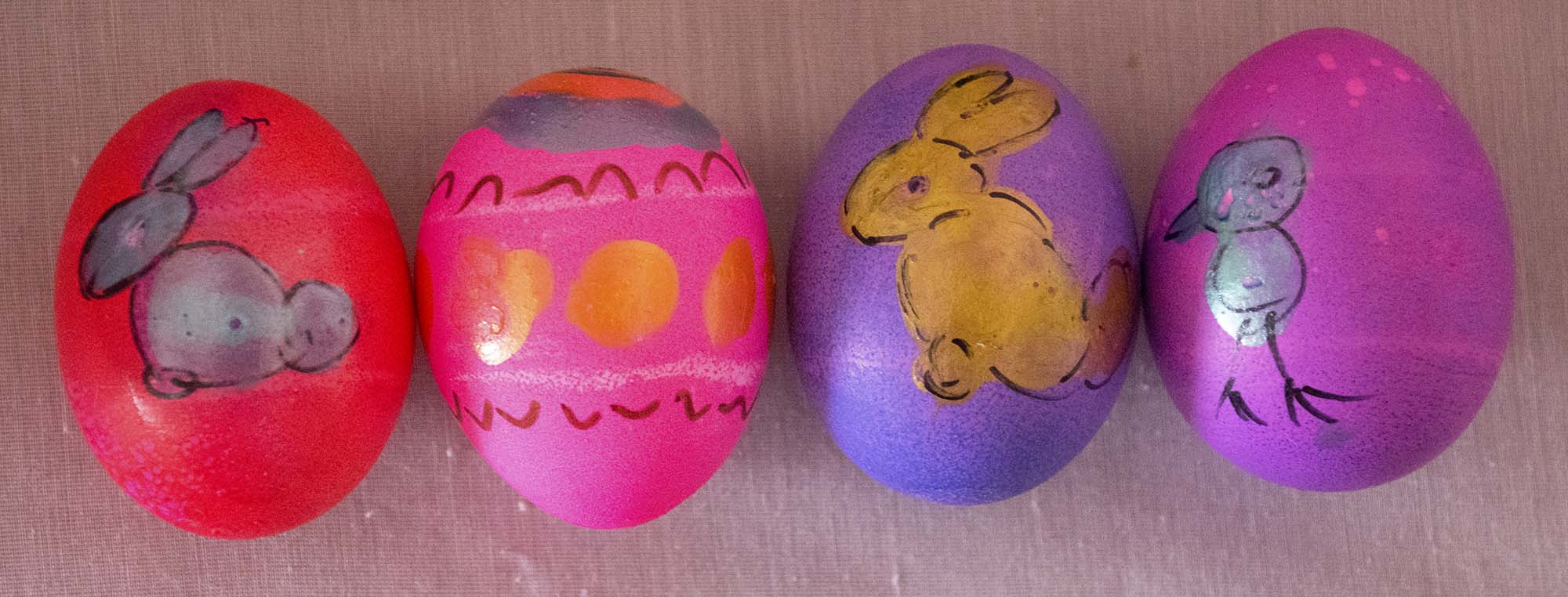
The solid colors of the PAAS Easter-egg coloring kit, while very suitable for serious scientific investigation, were really just a little too plain by themselves. Fortunately the kit also included four paint-on colors and a couple of brushes. So I had a go.

Now, I can draw a stork carrying a baby as well as anyone… on a piece of dry, flat paper. But it wasn’t quite so easy on the wet, slippery egg. The paint was taking forever to dry, and guests were coming in an hour…

This is what I ended up with:

Painted Easter eggs 1 Painted Easter eggs 2 Painted Easter eggs 3

As you can see, I somehow gravitated toward fertility symbols—funny how that happens at Easter with the onset of Spring. I did think of including a few goats and maybe the great god Pan—or just naked female figures—but there wasn’t time. Maybe next year!

Halloween Postmortem, Part II

By Vladimir Brezina and Johna Till Johnson

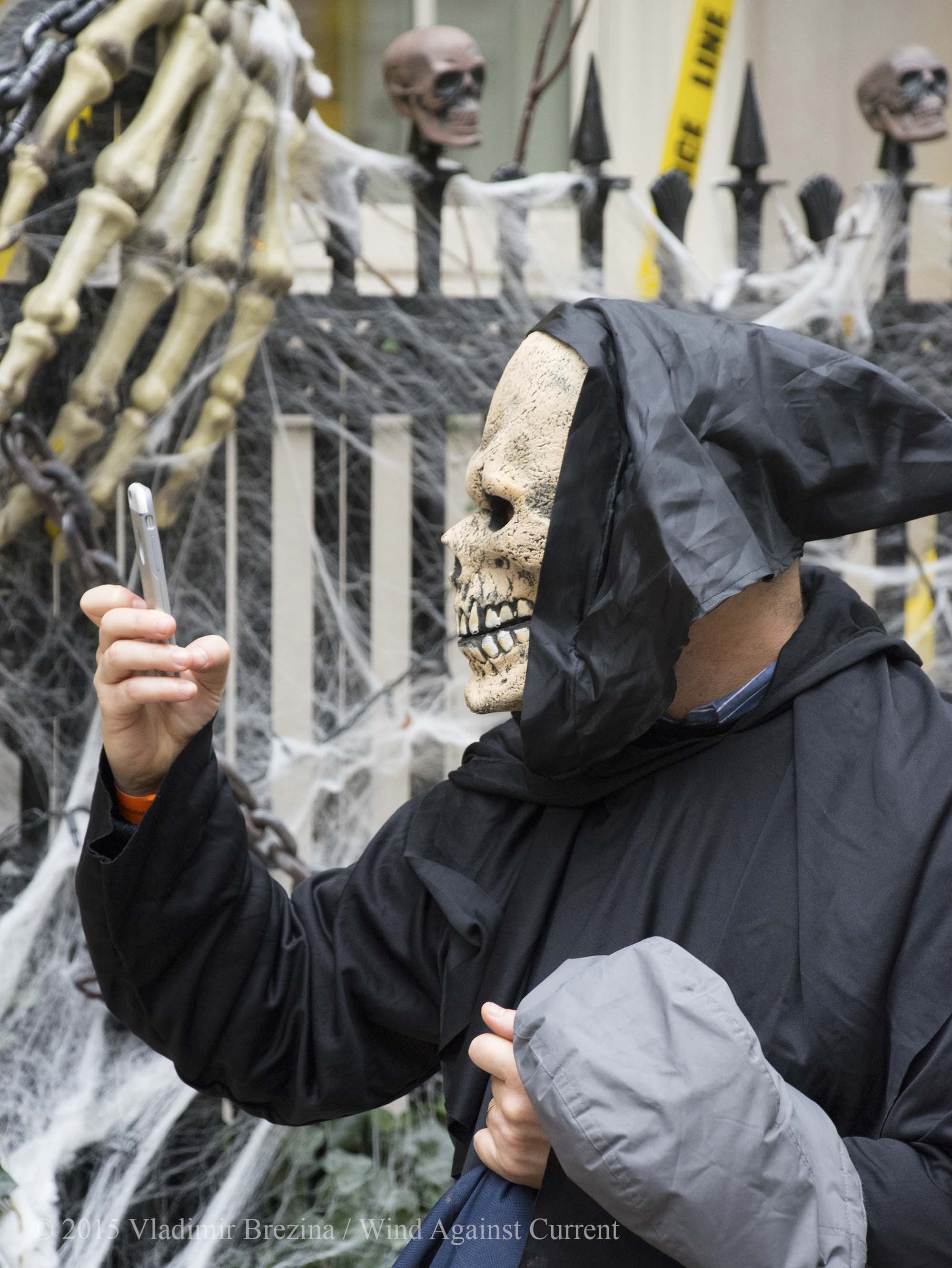
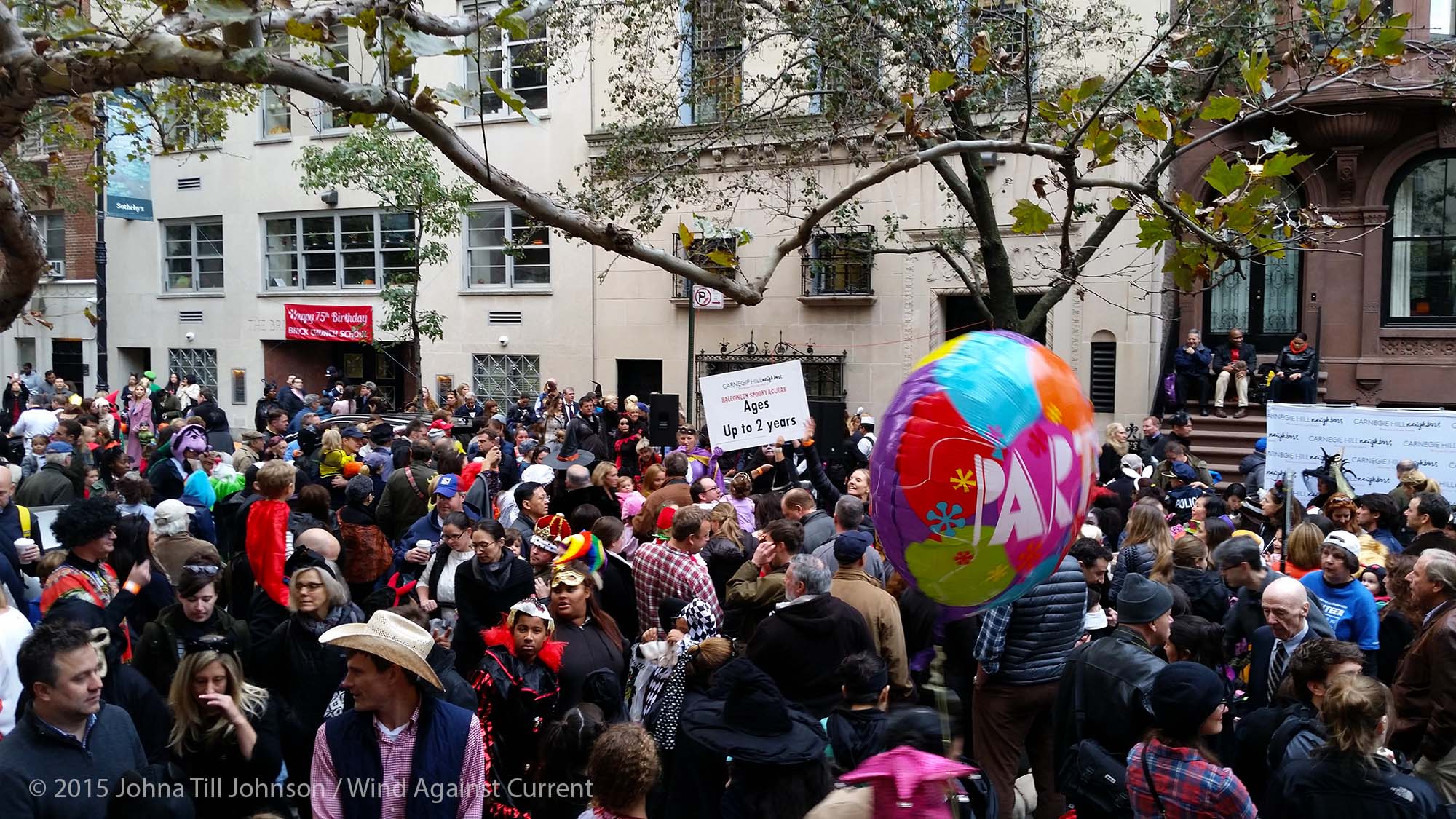
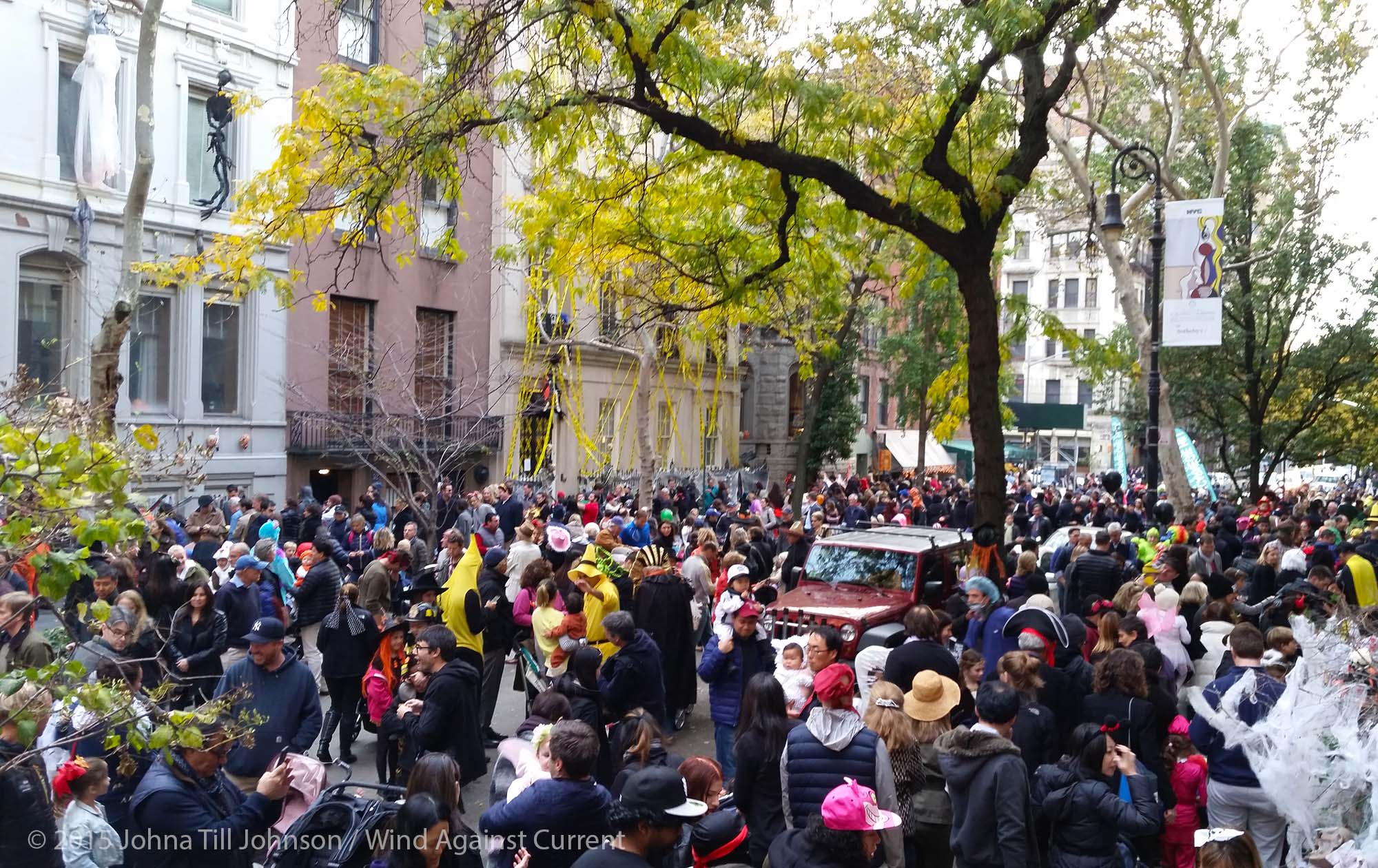
Even skeletons check their cell phonesThis year’s Halloween decorations were plenty scary. But in our neighborhood, they’re just the backdrop: Every year, Carnegie Hill Neighbors, the local neighborhood association, puts on “Spooktacular”, a Halloween block party that features entertainers (including a lively DJ/MC playing dance music) and a costume contest—and of course trick-or-treating, with lots, and lots, and LOTS of candy!

Whole families show up in costume, including mother, father, kids, pets, and—this being the Upper East Side—nanny. (For those who don’t know, the Upper East Side is home to financiers, top lawyers, and other Masters of the Universe.)

The party is open to the whole neighborhood, and it seems to be getting bigger, and better, each year.  (Here are the photos from 2011, 2012, and 2013.)

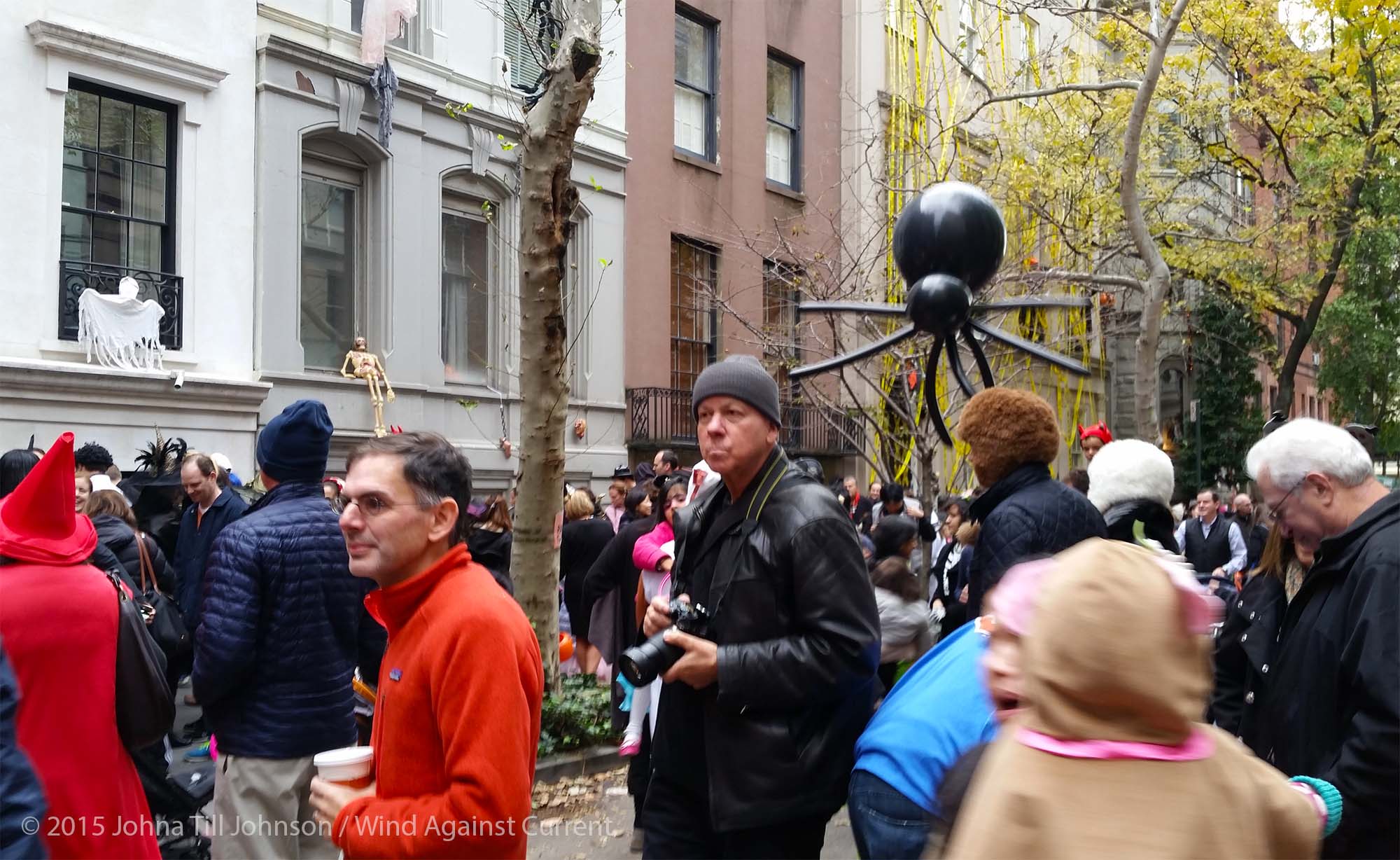
Looking left... and looking rightVlad in the crowd

The photographer stalking his prey (while being stalked by a giant floating spider)…

.
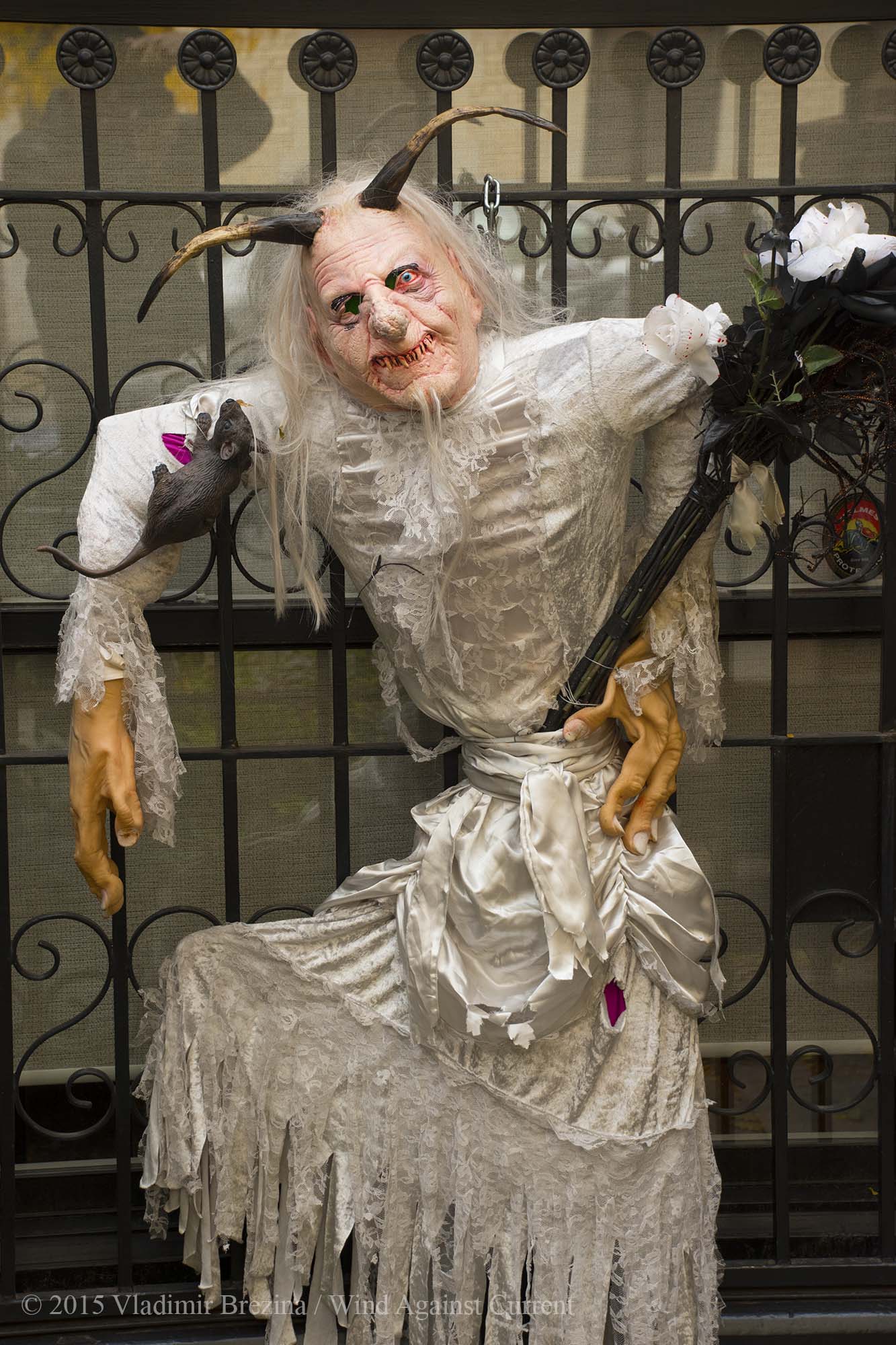
… and here are some of his photos:

Continue reading

Halloween Postmortem, Part I

By Vladimir Brezina

Halloween decorations 2015 4Halloween 2015 is over—and it was quite a party! So much so that I didn’t even have time to post my photos of the Halloween decorations—if that is the right word—seen this year in our neighborhood on the Upper East Side of Manhattan.

Some of the old favorites made return appearances (here are the photos from 2011, 2012, and 2013), but there were many imaginative, even artistic, new additions. Many of the residents of our neighborhood obviously feel a strong need to keep up with the Joneses, no effort or expense spared, in this department as in many others… The huge crowds of trick-or-treating kids loved it all, of course!

(click on any photo to start slideshow)

Even more photos are here.

Part II, with photos of the costumes at the Halloween block party itself, is coming soon!

Frame

By Vladimir Brezina

For this week’s travel-themed photo challenge, Ailsa wants Frame.

Frame

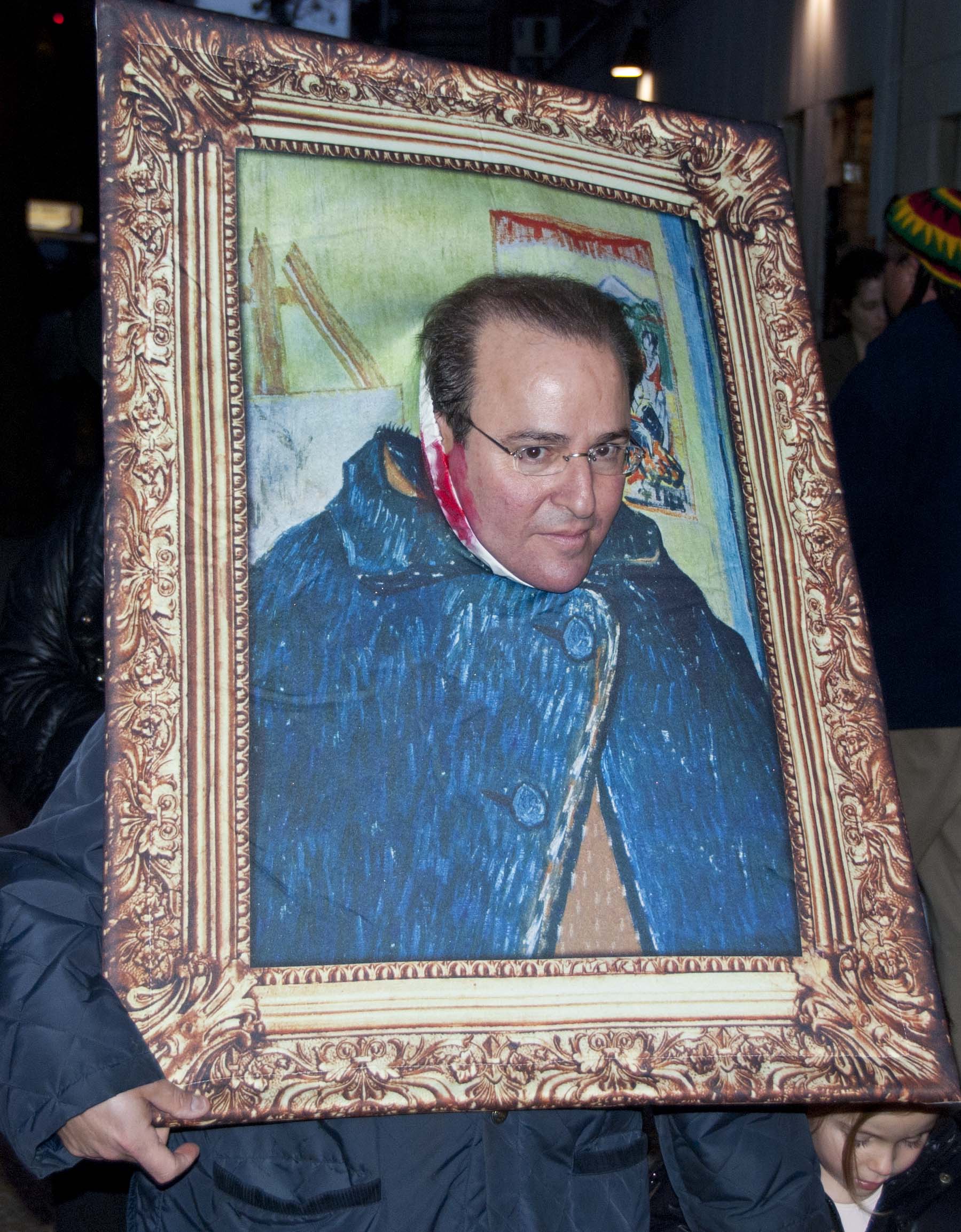
Someone thought this was a good idea for a costume for our annual Halloween block party in 2011. What were they thinking?

We’ll see what tonight’s party brings. Happy Halloween!

Off-Center

By Vladimir Brezina Double Off-Center, from Halloween 2012.

Double Off-Center A contribution to Ailsa’s photo challenge this week, Off-Centre.

The Power of Art

By Johna Till Johnson

Washington Square Park 1

It is so beautiful I must show you how it looks,” wrote Vincent Van Gogh in a letter to his brother. In the margin of the letter, he scribbled a quick sketch of what was so beautiful: a streetlamp at twilight.

I’ve never considered myself much of an artist. In fact, I’ve gone so far as to say I don’t understand the artistic impulse: I don’t know where it comes from, or how artists know what to create, even though I respect and admire the life-changing power of art.

But one of my favorite explanations is from a book written in 1938: “Art is a feeling of love and enthusiasm for something… in a direct, simple, passionate, and true way you try to show this beauty in things to others.”

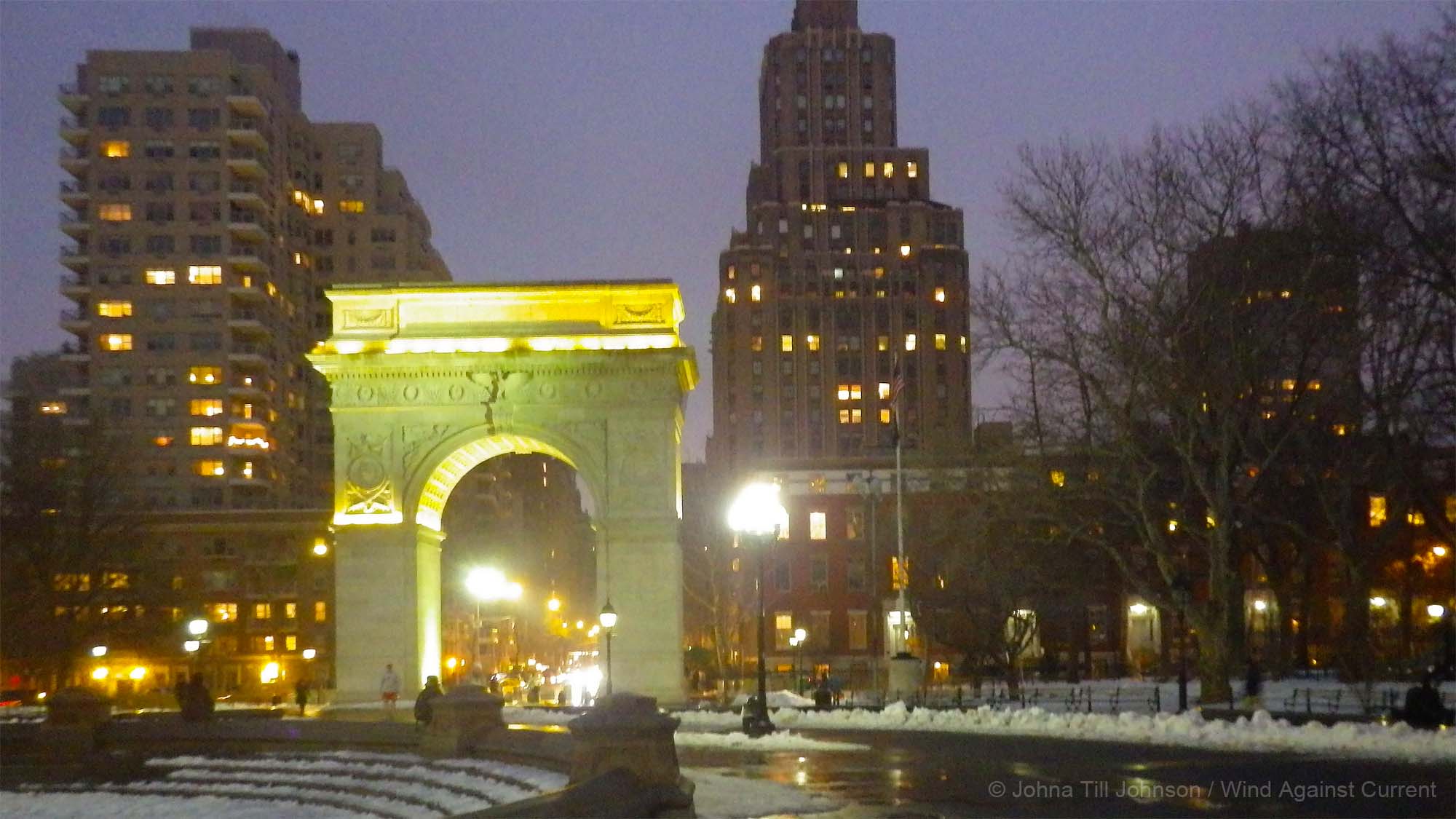
That’s exactly what I felt walking home through Washington Square Park a few nights ago. As twilight fell, and the streetlights cast their rosy glow over the snow, the quote above popped into my head. It was so beautiful I had to share it. With Vlad’s editing assistance, I was able to capture and convey some of the magic.

Washington Square Park 2

That unexpected surge of artistic sentiment made me remember how much I loved the book, and its author. The book is If You Want to Write, by Brenda Ueland.

When I first read it, many years ago, I found it inspirational, but a bit cloying. I have to admit that my perception was colored by “time bias”—that sneaking suspicion that everything in the past was quainter and less sophisticated than today. I mean, 1938? They didn’t even have iPhones! What could someone from that distant era have to say that’s meaningful about art in the 21st century?

Washington Square Park 3

And I’ll also admit that I found the persona of the author a bit, well, twee: A little-old-lady writing teacher out in Minnesota. (Never mind that in 1938 she was a vibrant and passionate woman of 47—the photo on the book jacket was a spry, but wizened lady in 1983, so that’s how I imagined her.)

Really, weren’t all women in 1938 conventional, domestic, and limited? Not the sort of person who truly understood the bold, transformative, and terrifying power of art.

Boy, did I get that wrong! If anyone understood life, and art, it was Brenda Ueland. She lived in Greenwhich Village for many years, married, divorced (back when one “didn’t do that”), and moved back to Minnesota to raise her daughter. She supported them both with her writing, which included journalism and essays. As her Wikipedia entry says, “She lived by two rules: To tell the truth, and to not do anything she didn’t want to.”

She was a paragon of physical fitness: well into what people would call her old age, she was turning handstands, climbing mountains, and swimming long distances. (And as for that “out in Minnesota”—it’s not only intellectually vibrant but physically challenging. )

Ueland’s personal life was bold and unconventional as well. The Wikipedia entry politely notes: “By her own account, Ueland had many lovers.”

That doesn’t even begin to tell the half of it. The love of her life was Norwegian adventurer and Nobel laureate Fridtjof Nansen, with whom she had a passionate affair in the late 1920s.

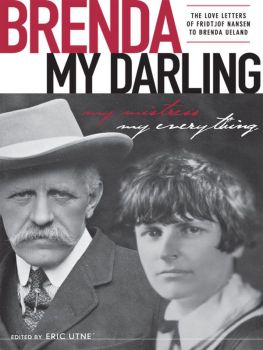
Brenda, My DarlingThe affair came to light a few years back when Eric Utne (her grandson and the founder of the Utne Reader) published Nansen’s letters to Ueland in the form of a book called Brenda My Darling. Her letters to him have been lost, but his to her were surprisingly poetic.

Nansen writes:

“Here from my window in my tower, I see the maidenly birches in their bridal veils against the dark pine wood — there is nothing like the birch in the spring. I do not exactly know why, but it is like you, to me you have the same maidenliness – and the sun is laughing, and the fjord out there is glittering, and existence is beauty!”

And that’s not all. He also sent his maiden several tasteful, but explicit, nude photographs of himself. The photographs turned the book into a minor sensation, with some—including Utne himself—questioning the decision to publish them.  The deciding opinion, as Utne relates, was the Norwegian publisher of the book, Ole Rikard Høisæther, who wrote to him that “Norwegians insist on the whole truth and nothing but the truth.”

That book thoroughly exploded any delusions I’d held. Ueland was clearly no quaint, conventional lady writer—she was a strong, powerful artist in her own right. And forget the notion that age necessarily means decrepitude—Nansen was one hot guy even in his late 60s!

Moreover, though he was known for exploration and adventure, that same sentiment enabled him to write beautifully. My takeaway from all this: Art is powerful and inspiring. Showing the beauty in things can be transformative.

And as I’ve written before, there’s a strong connection between the desire to explore and the artistic sentiment: Both have life-changing power—both for the artist/explorer, and for everyone who encounters their work.

That power is available to all of us, if we only stop and listen to that inner voice calling out: “It’s so beautiful that I must show you how it looks.”

Guest Post: The Art of Art

A few days ago we posted “Thanksgiving Musings: We’re Grateful for that Still, Small Voice…,” in which we referred to a wonderful essay by writer and adventurer Willis Eschenbach. He generously gave us permission to reprint the essay in full on our blog. Here it is. We hope you enjoy it as much as we did!

Guest Post by Willis Eschenbach

With Thanksgiving coming up, I thought I’d write about something other than science. A few weekends ago, I went by kayak across Tomales Bay from Marshall to Lairds Landing, where I lived for nine months or so when I was about twenty-five with a wonderful friend and his lady and their son. It had been fifteen years since I was last there, I’d gone for the wake not long after my friend died. I went on this trip with a long-time shipmate of mine, a gifted artist, builder, and blacksmith.

Now, there are lots of words for the gradations of friendship—friends, acquaintances, work-mates, BFFs, room-mates, colleagues, and the like. “Shipmate” means more than any of those to me. It means someone who I’ve been through some storms with at sea.

Continue reading

Thanksgiving Musings: We’re Grateful for that Still, Small Voice…

By Johna Till Johnson
Photos by Vladimir Brezina

Backlit

This is the time of year to stop, take a pause, and think of all the things we’re grateful for. For most of us, that’s family, friends, a warm hearth when it’s cold outside…

And we’re grateful for those, very much so. Particularly our friends, who have held us close recently, and whose warmth and support have reminded us of the very best that human nature can offer.

We’re also grateful for something that’s a bit harder to articulate. It’s the common theme uniting art, poetry, adventure, and the love of nature. It’s that small voice that calls to you: “Pay attention! This thought, or image, or moment, or destination is important!”

Artists know this voice. They live by it. And scientists hear its call, too. As do adventurers. It’s the call that pulls you off the beaten path, onto a new path you didn’t expect to follow, away from all your carefully constructed, sensible plans: We were going to stop and camp here, but… what’s around that next bend? We need to make it to the next waypoint, but… look, there’s a double rainbow! Time to wrap up the experiment, but… what’s going on over here?

You could say it’s the call of the unexpected, or unusual, or unusually beautiful. You could call it, as Vlad sometimes does, an esthetic sense. Or you could just note that sometimes the world, in all its strangeness and beauty, sometimes just reaches out to tap you on the shoulder and say, “Hey! Slow down! There’s something here to appreciate!”

Whatever it is, we’re grateful for that voice, and for the ability to hear it.

We were recently reminded of it in an essay about an American artist, Clayton Lewis, who was also a woodworker and sculptor, and who, by all accounts, lived by this call. Writer and adventurer Willis Eschenbach, who knew him personally, encapsulates that worldview like this:

“Clayton was an artist, and a jeweler, and a boatbuilder, and a fisherman, and a crusty old bugger. He owned three boats, all of them with beautiful lines. I was going to buy a boat once, because it was cheap, even though it was ugly. ‘Don’t buy it,’ he warned, ‘owning an ugly boat is bad for a man’s spirit.’ ” —Willis Eschenbach, November 2014

Clayton Lewis

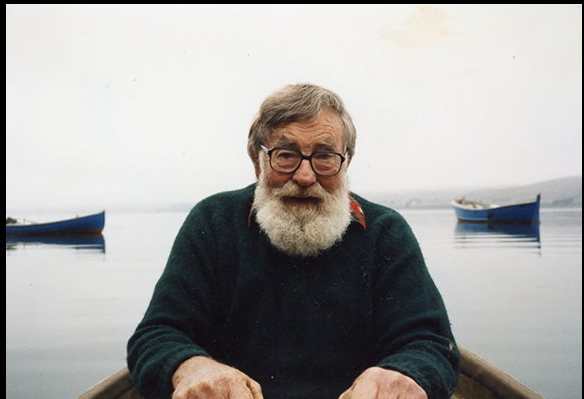
American artist Clayton Lewis (from Clayton Lewis’ website)

You can read more about Clayton Lewis, and see photos of his work, including the beautiful seaside studio he constructed, at his website. (One interesting note: He’s one of the very few artists whose bed is now in a museum!)

That voice often calls to Vlad in his photography. Here are a few examples—

(click on any photo to start slideshow)