By Vladimir Brezina
Nature Morte…
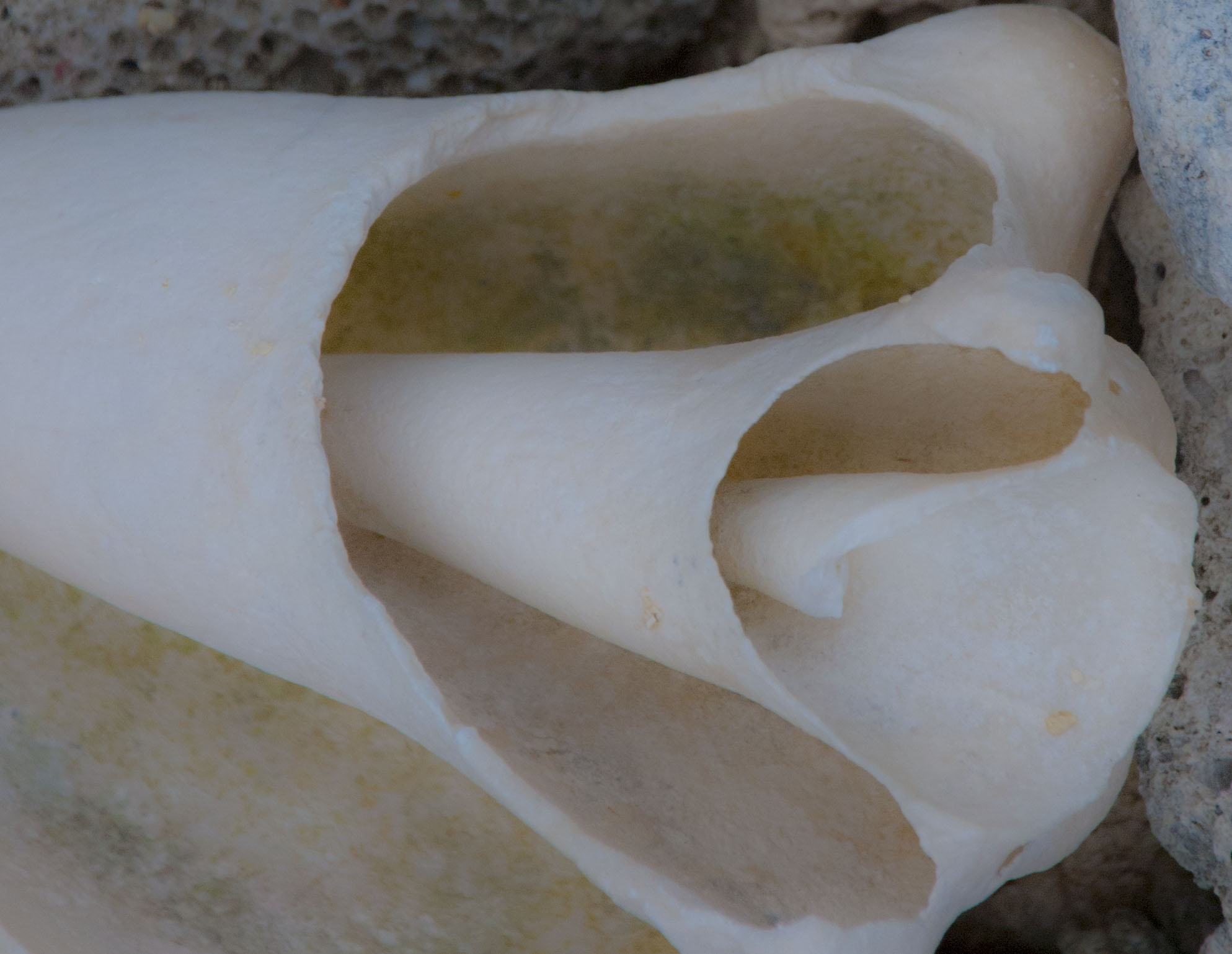
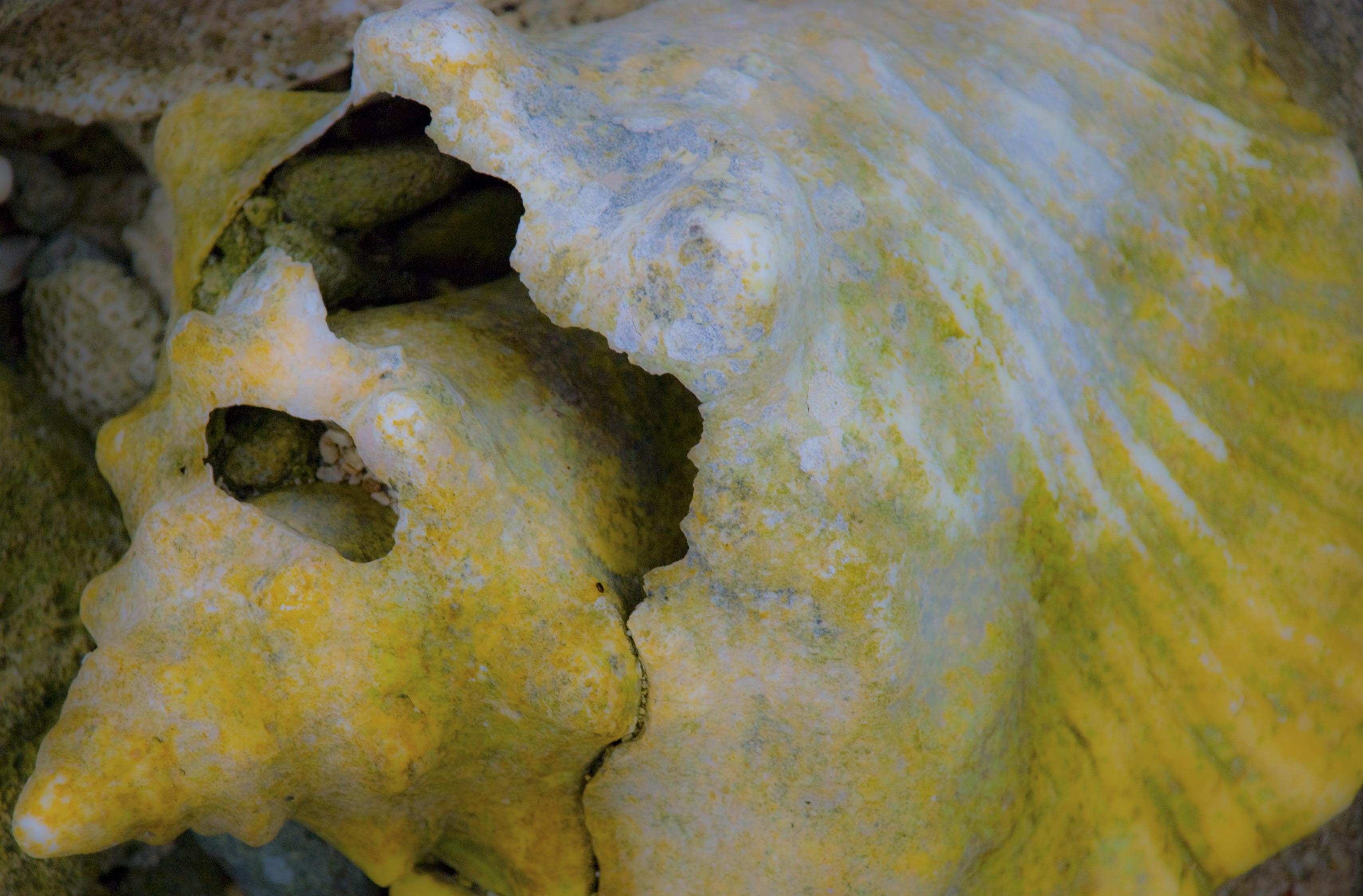
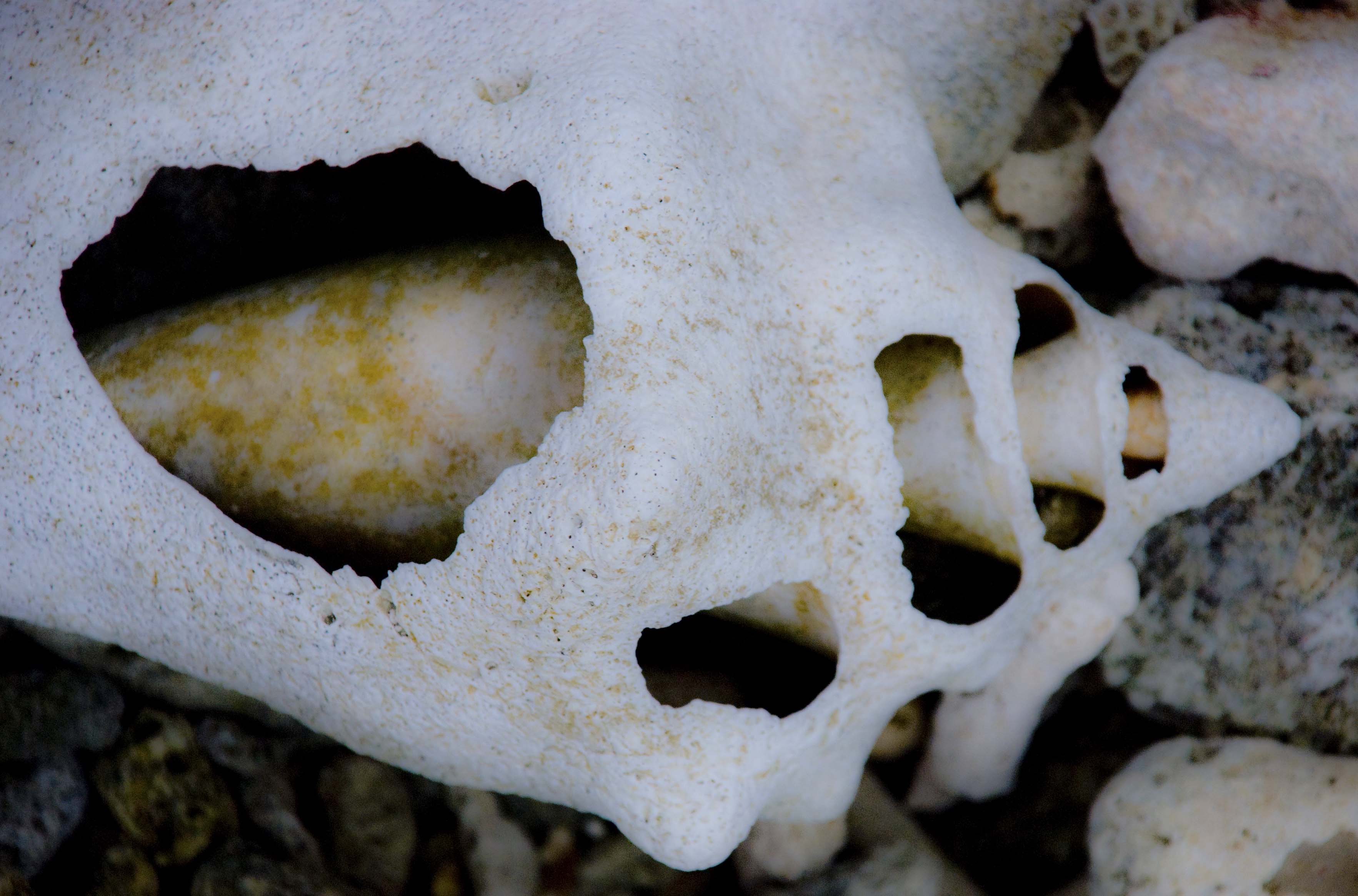

A contribution to Ailsa’s travel-themed photo challenge, Broken.

Posted in Nature, Photography
Tagged Broken, Photography, postaweek, postaweek2014, Sea Shells, Still Life, Travel, Weekly Photo Challenge
By Vladimir Brezina
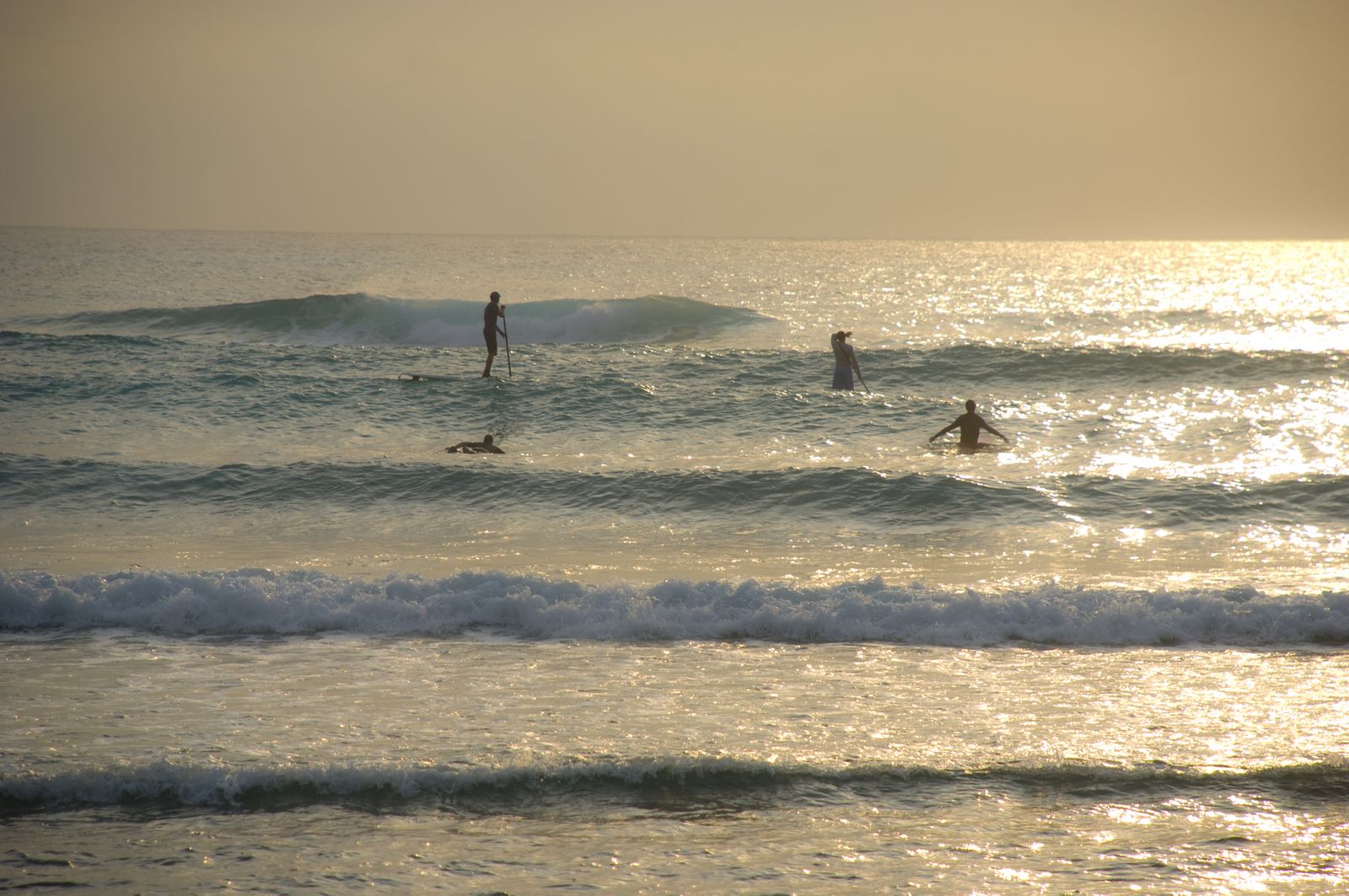
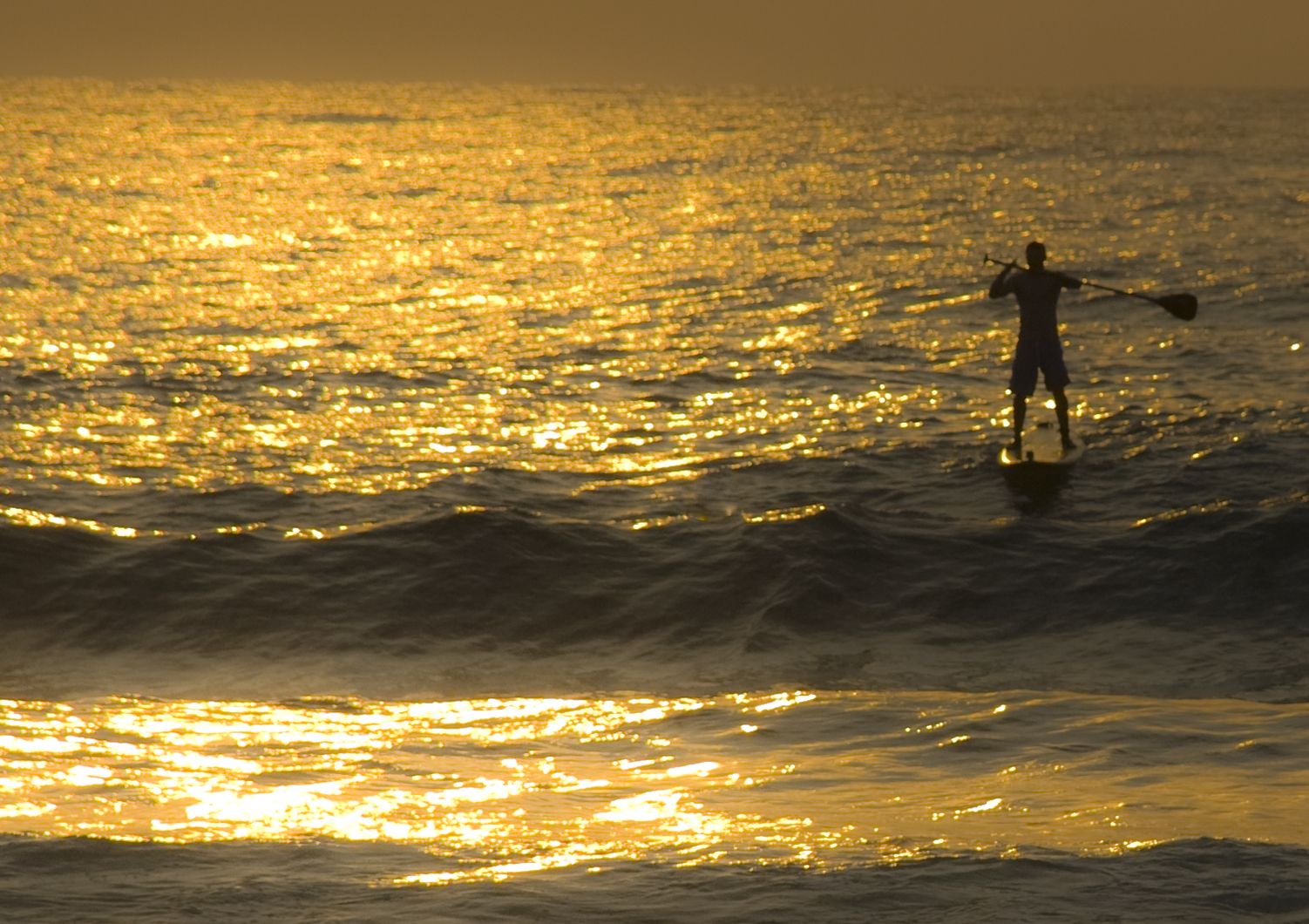
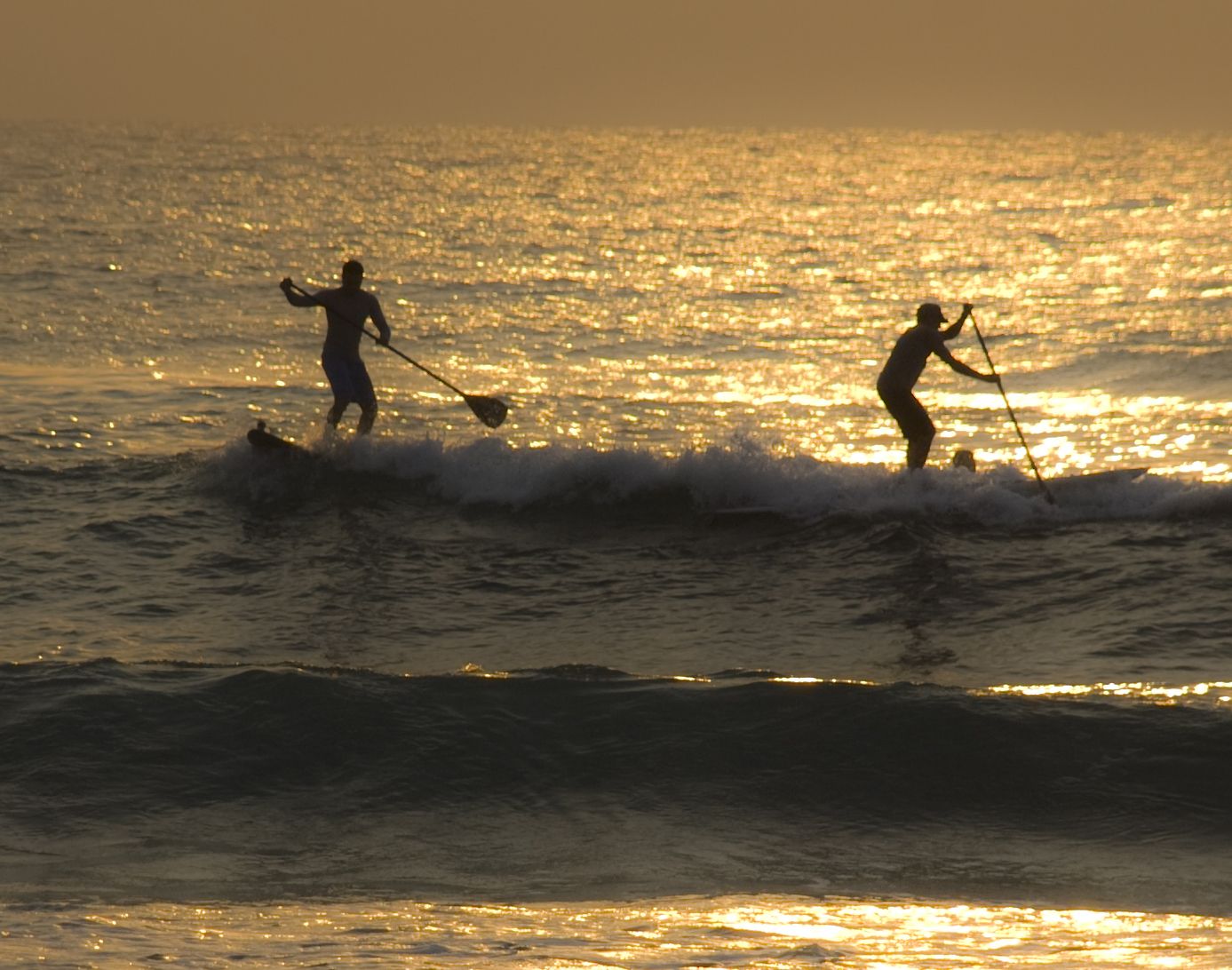
Figures in the waves at dawn… Belize, 2010.
A contribution to the past two Weekly Photo Challenges, Dreamy and Refraction.
Posted in Photography, Sports
Tagged Belize, Dawn, Dreamy, Photography, postaweek, postaweek2014, Refraction, Stand Up Paddle Board, Weekly Photo Challenge
By Vladimir Brezina
It’s that season again, a thousand little signs tell me so—

A contribution to this week’s Photo Challenge, Signs.
Posted in New York City, Photography
Tagged Halloween, New York City, Photography, postaweek, postaweek2014, Signs, Street Art, Weekly Photo Challenge
By Vladimir Brezina
The Pigeon Lady, today in Rat Park—
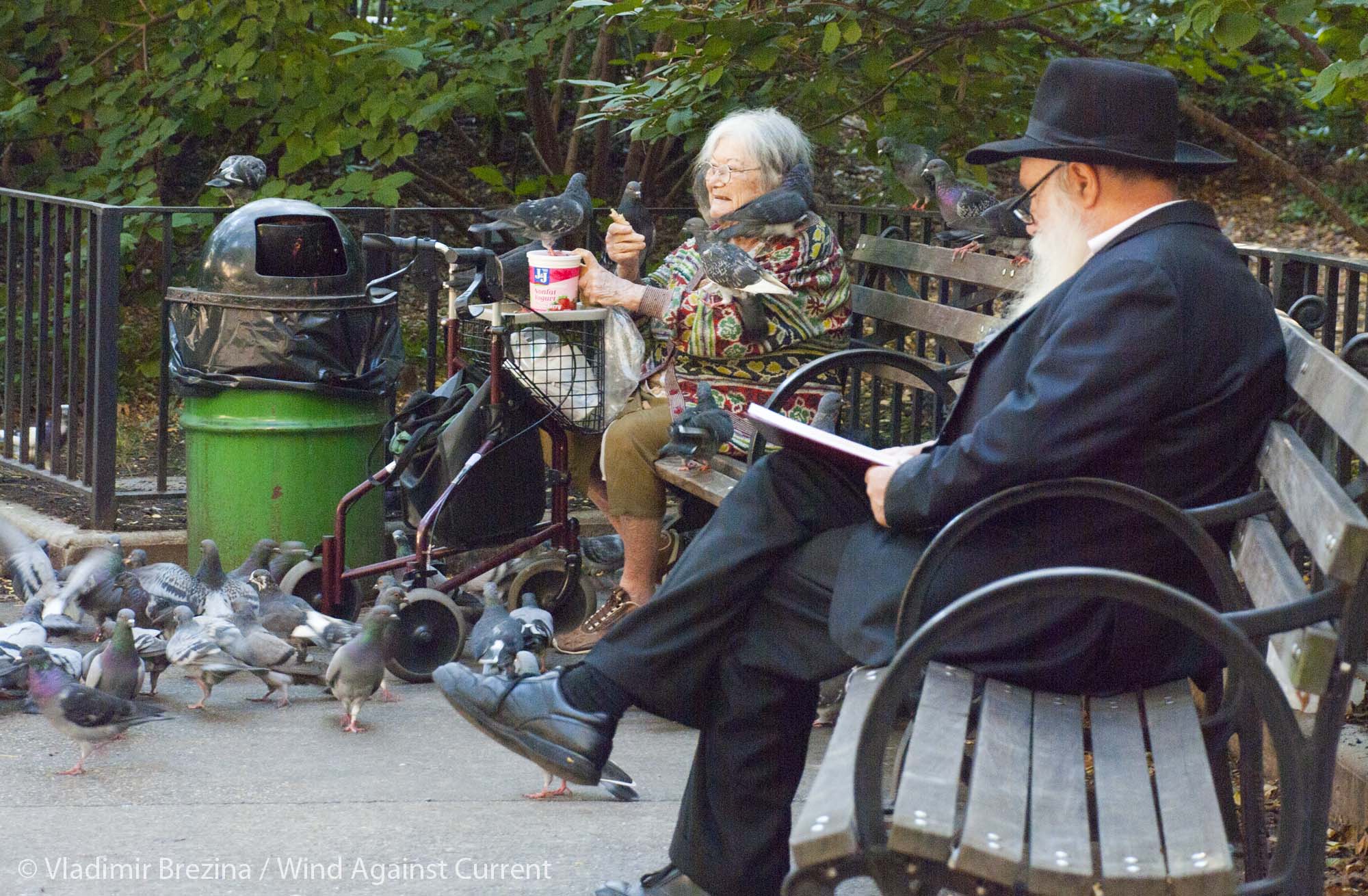

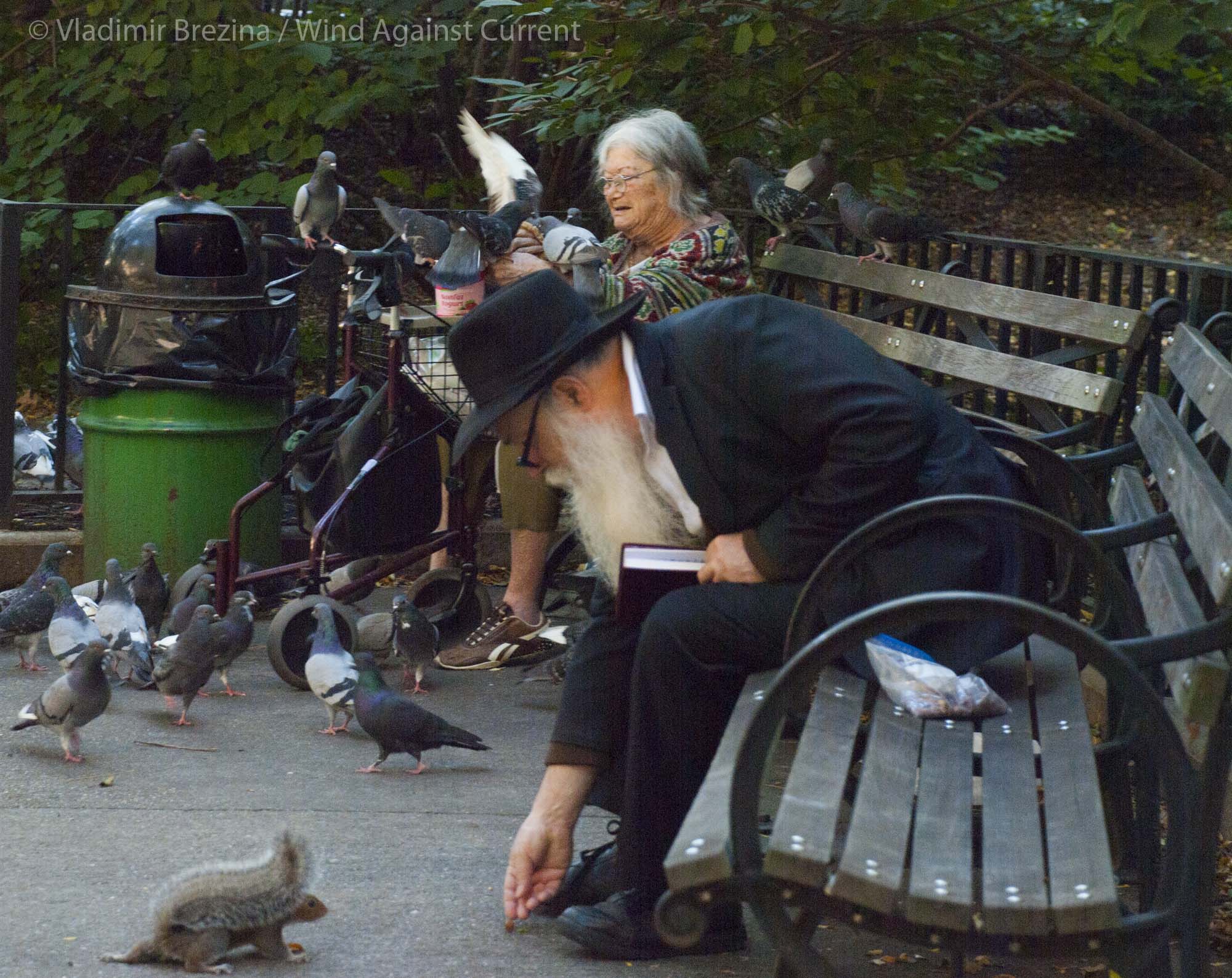
A contribution to Ailsa’s travel-themed photo challenge, Bountiful. Another contribution is here.
Posted in New York City, Photography
Tagged Animals, Birds, Bountiful, Feeding, New York City, Park, Photography, Pigeons, postaweek, postaweek2014, Travel, Weekly Photo Challenge
By Vladimir Brezina

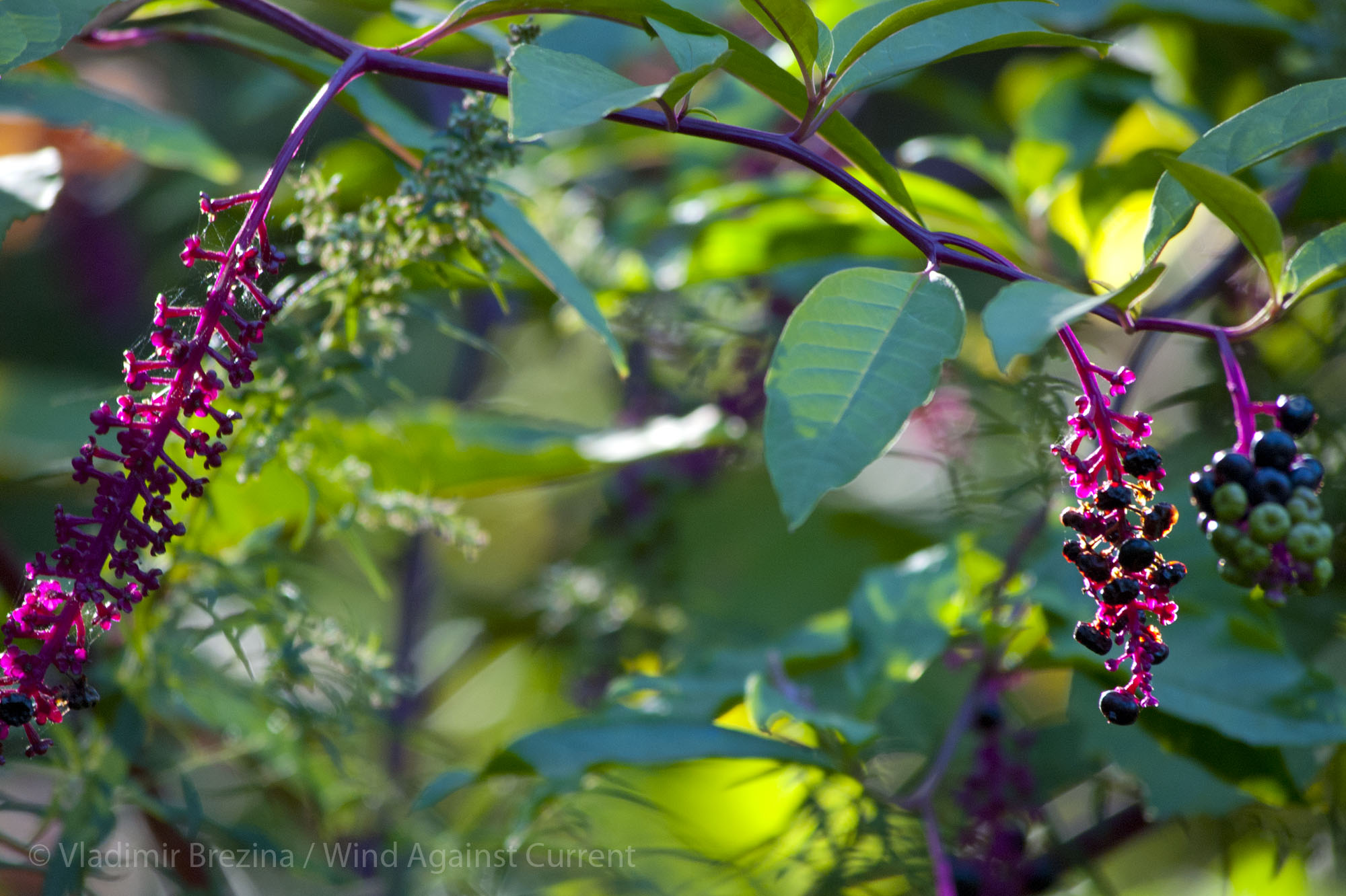

Fall 2013 in NYC’s Central Park. A contribution to Ailsa’s travel-themed photo challenge, Bountiful. Another “Bountiful” contribution is here.
Posted in Nature, Photography
Tagged Bountiful, Central Park, Fall, Fall Colors, Manhattan, New York City, Photography, postaweek, postaweek2014, Travel, Weekly Photo Challenge
By Vladimir Brezina
… Fall is definitely on its way.


(Click on any photo to start slideshow. In Manhattan’s Central Park, September 27, 2014.)
Posted in Nature, New York City
Tagged Autumn, Central Park, Fall Colors, Manhattan, New York City, Photography
By Johna Till Johnson
Photos by Vladimir Brezina and Johna Till Johnson

Barge approaching Hell Gate Bridge
It’s hard to believe the Hell Gate Bridge is almost 100 years old.
98, to be exact: The bridge first opened on September 30, 1916. I’ve written about my love for the Hell Gate three years ago, in my birthday greetings to the Bayonne Bridge.
But it’s worth summarizing again why I feel so strongly about the Hell Gate. As I wrote then:
I love bridges. I’m not entirely sure why. Partly it’s the look of them: They seem almost alive, taking off in a leap of concrete, stone, or steel, somehow infinitely optimistic and everlastingly hopeful. Partly it’s their function: Bringing things together, connecting people and places that were previously divided. And of course, bridges often cross moving water—another of my favorite things.
But though I love them all, some bridges in particular hold a special place in my heart.
Many years ago I worked north of New York City (in Connecticut and later in White Plains). The hours were grueling—some days I’d leave my apartment at 5 AM and not return until 11 PM. Sometimes I drove, but I preferred to take the Metro-North train. I relished the peacefulness of the scenery rolling by.
As we crossed the Harlem River, I’d catch sight of one bridge in particular, a study in contrasts: graceful, soaring, yet solid, composed of two steel arches with slightly different curvatures, so they were closer together at the top of the arch and wider apart at the bases, anchored in solid stone towers.
The rising sun would touch this bridge and (so I thought) paint it a lovely shade of rosy pink. The memory of that beauty was often the nicest part of my day.

Hell Gate Bridge at sunrise, seen from our window
But for years, I didn’t know what the bridge was called, or even where, exactly, it was. All I knew was that the sight of it reliably brightened my mornings.
One day I happened to mention the bridge to my father, a retired naval officer who had once been stationed in New York City, but now lived hundreds of miles away.
He recognized it immediately from my description: “That’s Hell Gate Bridge,” he said. An odd name for a structure of such harmonious beauty! I hadn’t heard of Hell Gate before, and my dad explained it was where the Harlem River joined the East River. Hell Gate was a treacherous body of water characterized by converging currents and occasional whirlpools that had been the doom of hundreds of ships over the past several centuries.
“As a young ensign, I was on a ship that went through Hell Gate,” my father said. “But I don’t recall that the bridge was pink.” That would have been in the late 1940s; I can’t recall for certain what kind of ship he told me it was, but my memory insists it was a destroyer.
Many years later, I’ll not forget the thrill I had the first time I passed under the bridge, in a far different vessel: My trusty yellow kayak, Photon.

We paddle under the Hell Gate Bridge (photo by Johna)
As for the bridge’s color, I later learned my dad was right. The bridge was painted “pink” (actually a color called Hell Gate Red) only in 1996—but the paint has faded to a pastel rose, as you can see.
When doing further research, I learned that:
I also learned that the Hell Gate Bridge was so perfectly engineered that when the main span was lifted into place, the adjustment required was a mere half-inch!
Happy birthday, you beautiful creature. You haven’t aged a bit!
Posted in Architecture, History, Life, New York City, Science and Technology
Tagged Hell Gate, Hell Gate Bridge, New York City
By Vladimir Brezina
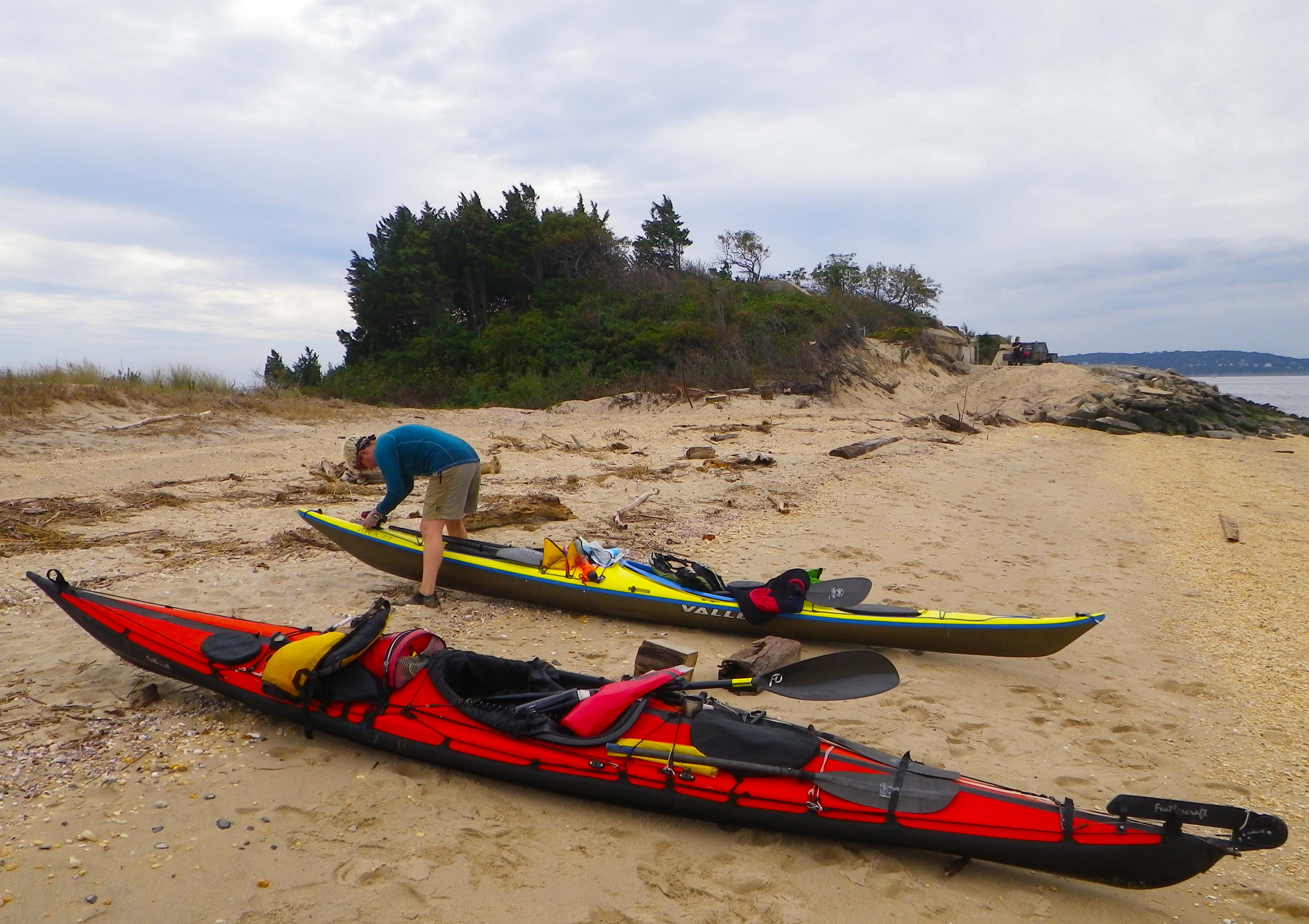 Paddling out from Manhattan for the day, we often find ourselves heading south to Sandy Hook, NJ. Our favorite spot to land there, about half-way down the bay side, is a picturesque little “island” of wooded high ground that rather improbably rises above the otherwise flat Sandy Hook
  landscape. (Indeed, it is man-made, being the overgrown concrete ruins of an early 20th-century military installation, Battery Arrowsmith.) Separating the “island” from the “mainland” of Sandy Hook is a salt marsh.
Whenever we land at the “island”, we always take a few minutes to walk round to the back, to the edge of the salt marsh. We go there to observe a mass display of invitation.
The marsh is fringed by a zone of bare, or sometimes sparsely overgrown, ground. Looking down closely, we see that the ground is studded with holes, large and small.
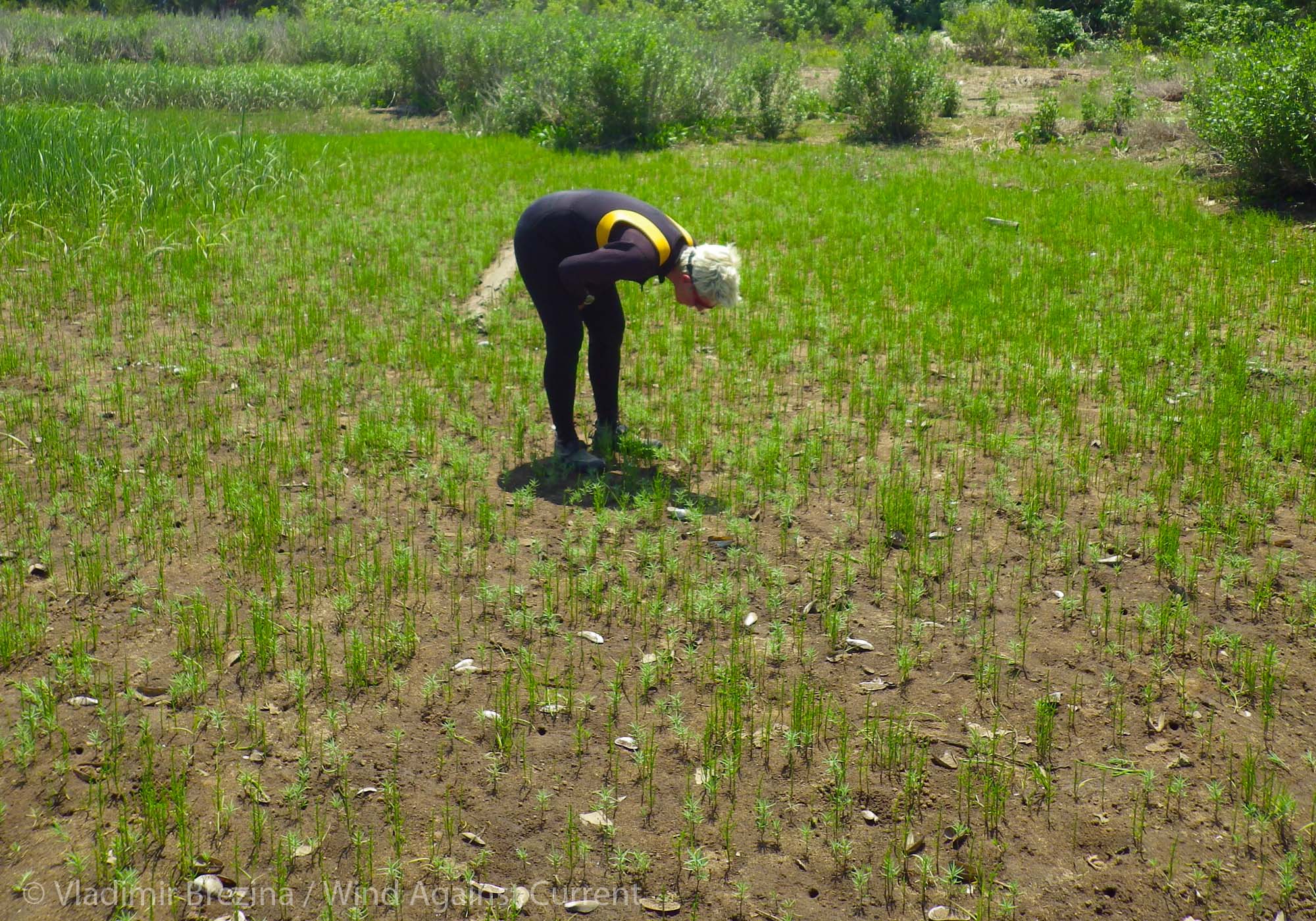
At first, standing there, we see nothing remarkable.
But within a minute or two, we glimpse, here and there, a furtive movement. Then more and more, and soon there is movement all around—movement of a curiously stereotyped sort.
Each hole is occupied by a fiddler crab.

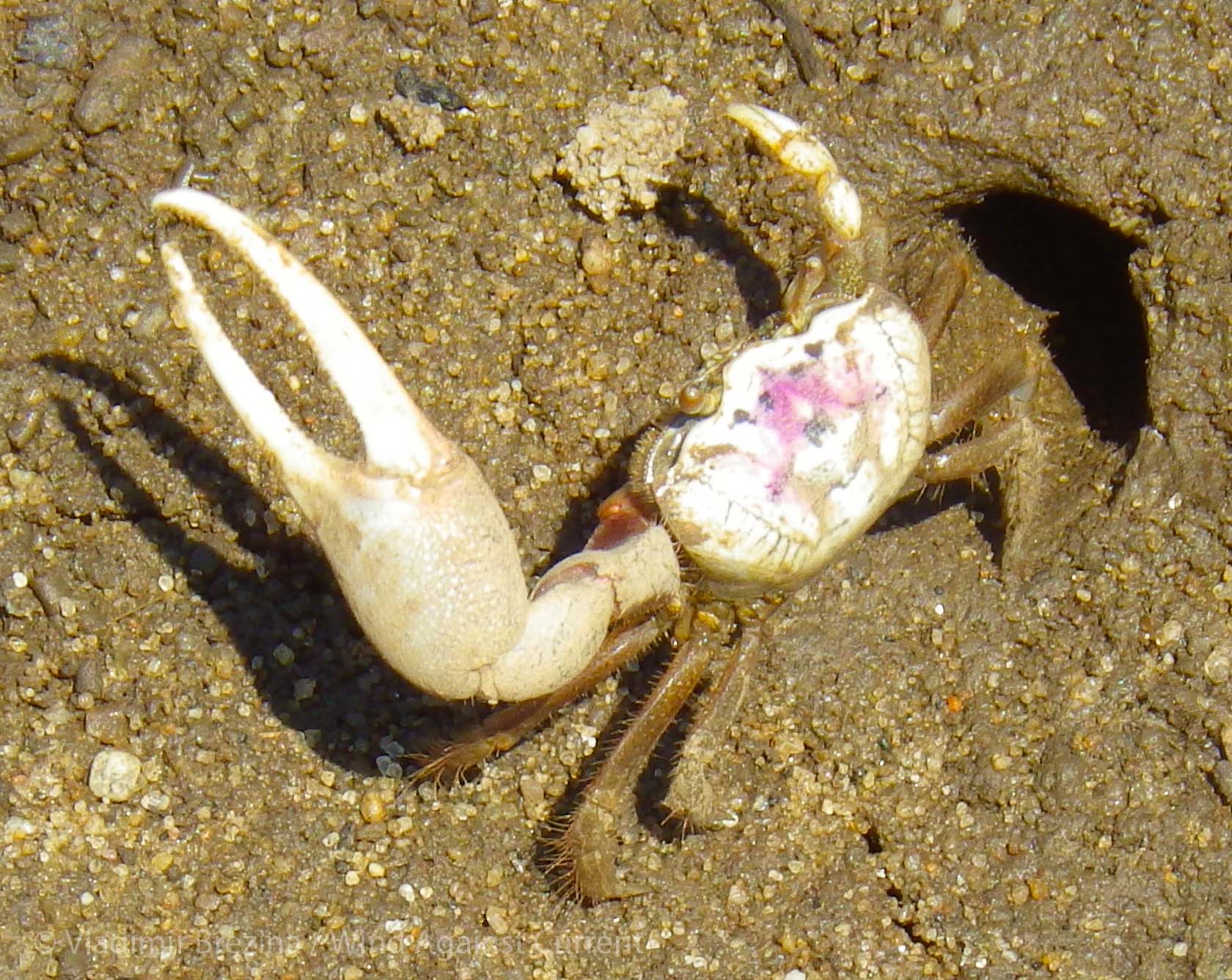
There are both male and female crabs. They are easy to distinguish—the males have one greatly enlarged claw. And they use this claw in a characteristic courtship display. They stand next to their holes and repeatedly raise their large claws, inviting the females to enter.
It is quite a sight to see the whole area come alive with hundreds of crabs all raising their claws simultaneously in their inviting gesture…
(A contribution to Ailsa’s travel-themed photo challenge, Inviting.)
Posted in Nature, Photography
Tagged Animal Behavior, Animals, Crab, Fiddler Crabs, Inviting, Photography, postaweek, postaweek2014, Sandy Hook, Travel, Weekly Photo Challenge
By Vladimir Brezina
We love to kayak around NYC at night!
(For one thing, we paddle faster at night…)


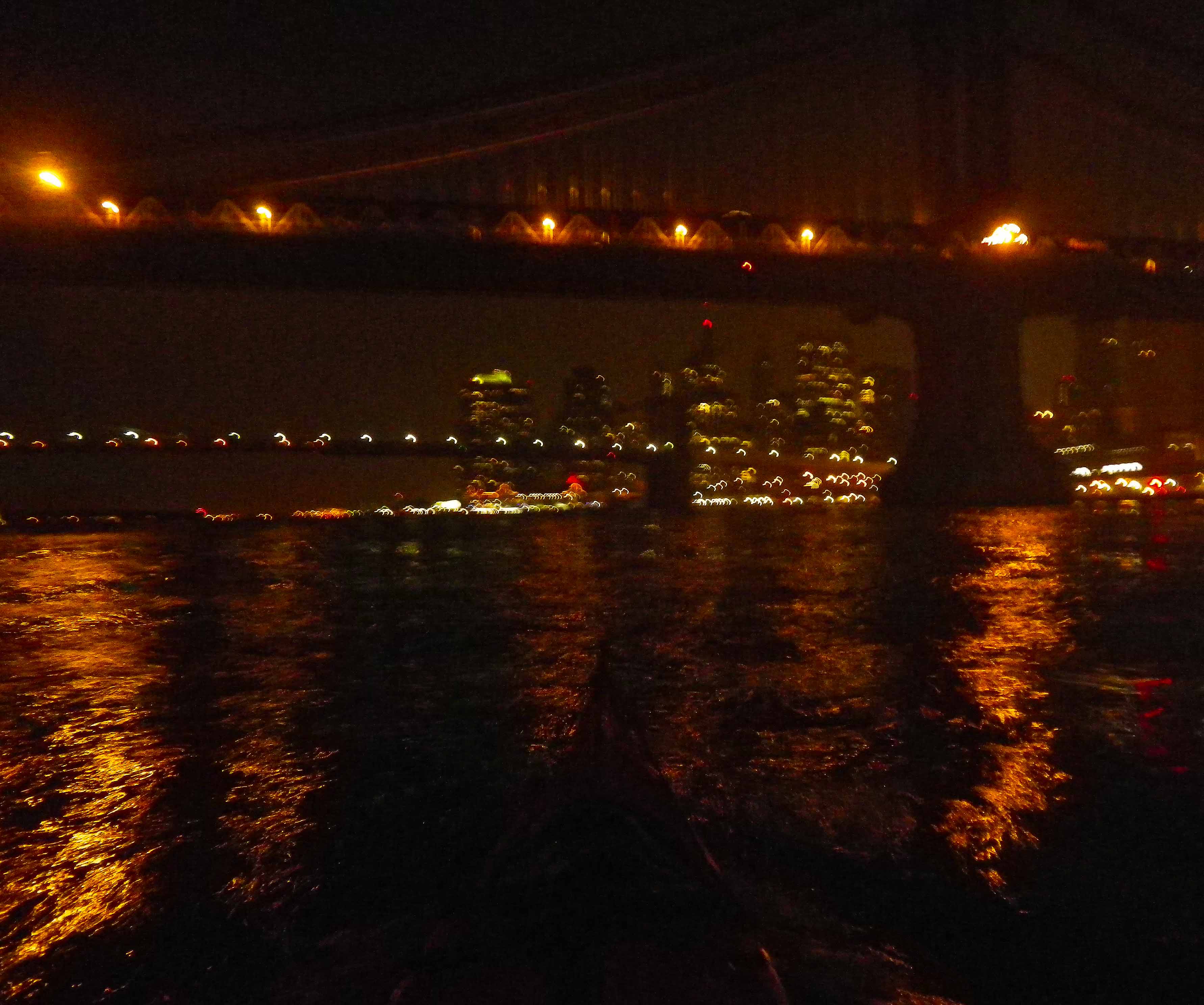
A contribution to this week’s Photo Challenge, Nighttime.
By Johna Till Johnson
Occasionally a news story really resonates with me. This is one: An Indian spacecraft called Mars Orbiter Mission (MOM) has just reached orbit around the planet Mars.
And the achievement is astonishing on many fronts: It’s the first time in history that any country’s spacecraft has made it on the first attempt. At $74 million, the effort cost less than making the movie “Gravity”—and almost 10 times less than the US’s NASA Mars mission.

Scientists and engineers cheer as MOM reaches Mars orbit (Photo: Reuters)
And, as with the NASA effort, some of the top scientists and engineers involved are women. There’s something symbolic in “Mother India”—which is linguistically, culturally, and even genetically the ancestor of many of us of European descent—sending a spacecraft called MOM to Mars.
I’m really proud of our Indian sisters and brothers for pulling this off. And I’m psyched to see so many saris involved in the celebration.
MOM, we did it!
Posted in Science and Technology
Tagged India, Mars, Mars Orbiter Mission, Space, Space Exploration


... kayaked the waters around New York for more than 15 years in his red Feathercraft folding kayak. He was originally from (the former) Czechoslovakia and lived in the U.K. and California before settling down in New York. He was a neuroscientist at the Mount Sinai School of Medicine in New York City. He died in 2016.

... is a kayaker and technology researcher at Nemertes Research. She's an erstwhile engineer, particle physicist, and science fiction writer. She was born in California and has lived in Italy, Norway, Hawaii, and a few other places. She currently resides in New York City.
 | Johna Till Johnson on Where We Like to Land on Sandy… |
| Canada to Key West P… on “A Bizarre Boating … | |
 | Eunice Miller on A Meditation on Gratitude |
 | Harry on A Meditation on Gratitude |
| Johna Till Johnson on A Meditation on Gratitude |
| Harry Itagaki on A Meditation on Gratitude |
 | Love is still the an… on Travel Theme: Signs |
 | David McLean on Where We Like to Land on Sandy… |
 | davidloh24 on Endless Reflection |
| Paddle Log: North Mo… on Circumnavigating Monomoy | |
 | Brian on Long Island Kayak Circumnaviga… |
 | Andi the Slime on Yellow |
 | Mark S on The Dry Salvages |
 | Dudi on Everglades Challenge, the Days… |
 | Francie Chew on The First Leg! |


Other Awards

 Wind Against Current