Sculling for Support

By Johna Till Johnson
Photos by Vladimir Brezina

Even though I’ve now passed the BCU three-star exam, I’ve decided to spend this summer working on boat-maneuvering skills. Truth is, while I’m pretty strong at some aspects—like group management, comfort in wind and waves, and basic navigation—I could use some improvement in boat-handling.

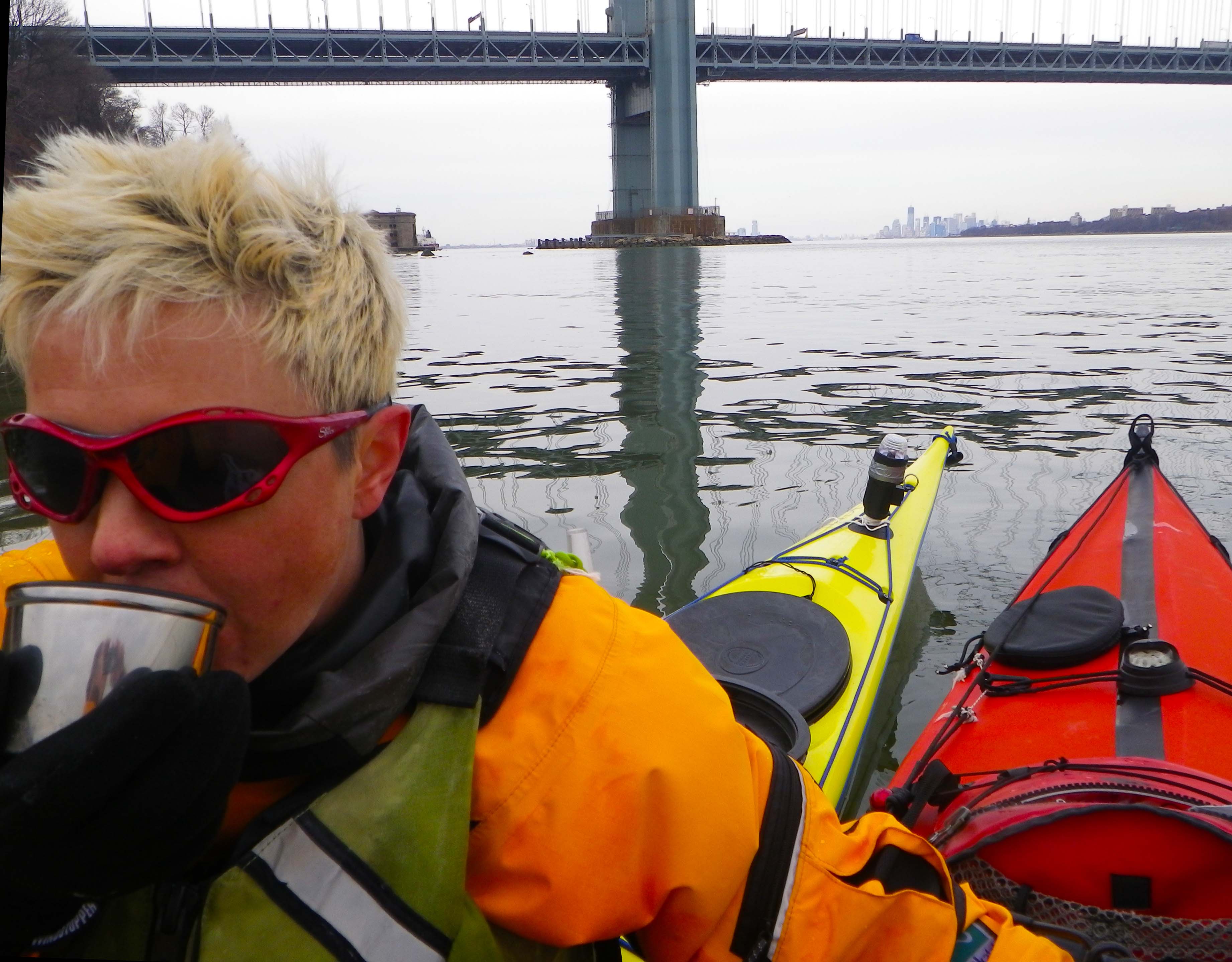
So a few days ago, I was practicing sculling for support in the Pier40 embayment.

Sculling for support entails putting the boat on edge, leaning out over the water, and staying upright by slowly sweeping the paddle blade back and forth parallel to the side of the boat.

My friend Adam is fantastic at it—he can lean out almost horizontal to the water. Me, not so much. But I’m learning.

IMGP4458 cropped small

Sculling for support: lean and sweep

Part of the challenge is that to do it correctly, you really need to send the boat off-balance. As one of my coaches put it succinctly, “If you want to know whether you’re doing it right, stop sculling. If you capsize, you were doing it right.”

IMGP4463 cropped small

To do it right, you want to be out over the water…

It’s kind of an interesting maneuver, because it’s strictly intentional. Unlike bracing, turning, or rolling, you don’t do it as a reaction to a particular incentive, like being about to capsize, needing to change direction, or having actually capsized.

You have to make the choice to scull for support.

And when do you choose to scull for support?

On our recent Manhattan circumnavigation, I found myself wondering exactly that.  We had just passed the Battery and were in the lower East River, where the shift in currents, combined with the wakes of ferry boats and other commercial vessels was making the water exceptionally choppy, as usual.

“Hmm…” I thought to myself. “When would I actually use sculling for support?”

Obviously, the purpose of the stroke is to stay upright while stationary in treacherous water. But when might that particular scenario arise? As a sea kayaker, I’m usually focused on moving forward.

And that goes double in treacherous water.  Momentum equals maneuverability—my natural response to instability is to paddle the boat faster so I can get maximum maneuverability.

When would I possibly want to simply remain upright in place?

Just then, Vlad called called out, “Hold up! Let’s wait until the ferry docks!”

And there I was, attempting to remain stationary in three-foot waves.

The lightbulb went off. When, indeed?

I immediately started in with my newly-practiced skill, and stayed comfortably upright while the ferry did its thing.
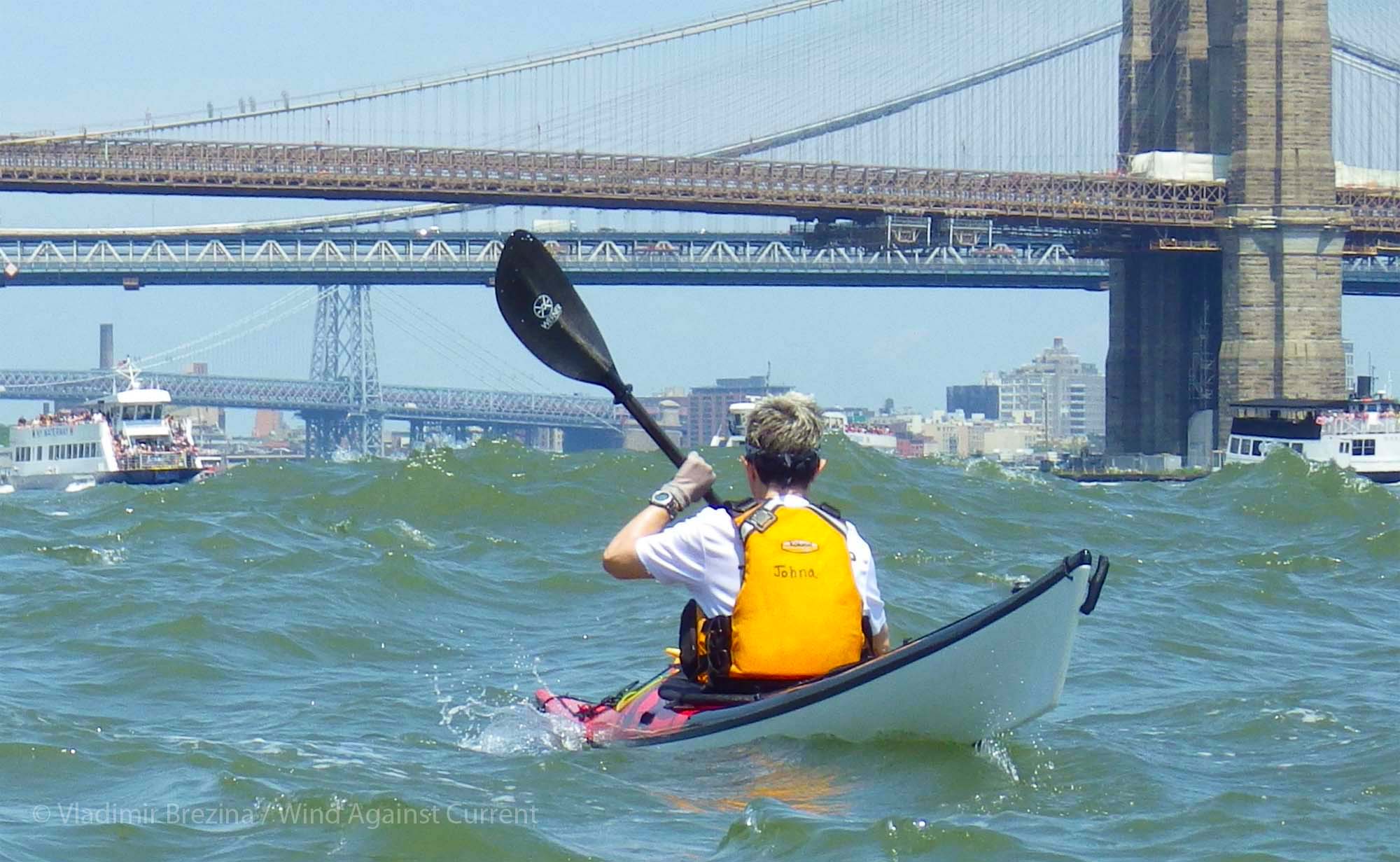
Holding for ferries

Holding for ferries…

IMGP4357 cropped small

… in three-foot chop

Funny: All these years I knew in the abstract what sculling for support was for. But it took until that day to recognize when to use it!

Travel Theme: Motion

By Vladimir Brezina

Ailsa’s travel-themed photo challenge this week is Motion.

In expectation of what will likely be a hot summer here in NYC, here’s some cool, refreshing beach motion from last year—

DSC_0549 cropped smallDSC_0565 cropped small

On the Jersey Shore, August 2012.

Weekly Photo Challenge: Nostalgic

By Vladimir Brezina

This week’s Photo Challenge is Nostalgic.

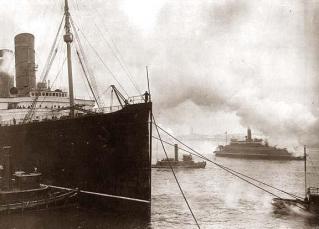
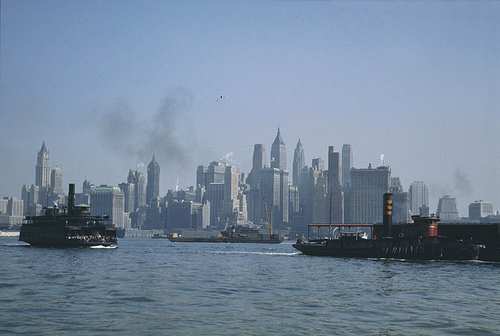
LUSITANIA-Harbor-New-YorkKayaking through New York City’s waterways and becoming aware of the maritime traditions of the harbor, it’s hard not to become nostalgic about its bygone days, reflected in the numerous wrecks of ships, some of them over a hundred years old, that lie here and there in the harbor.

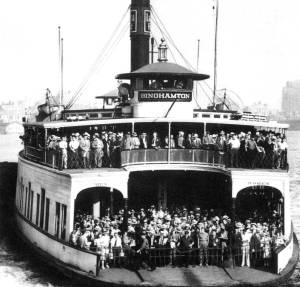
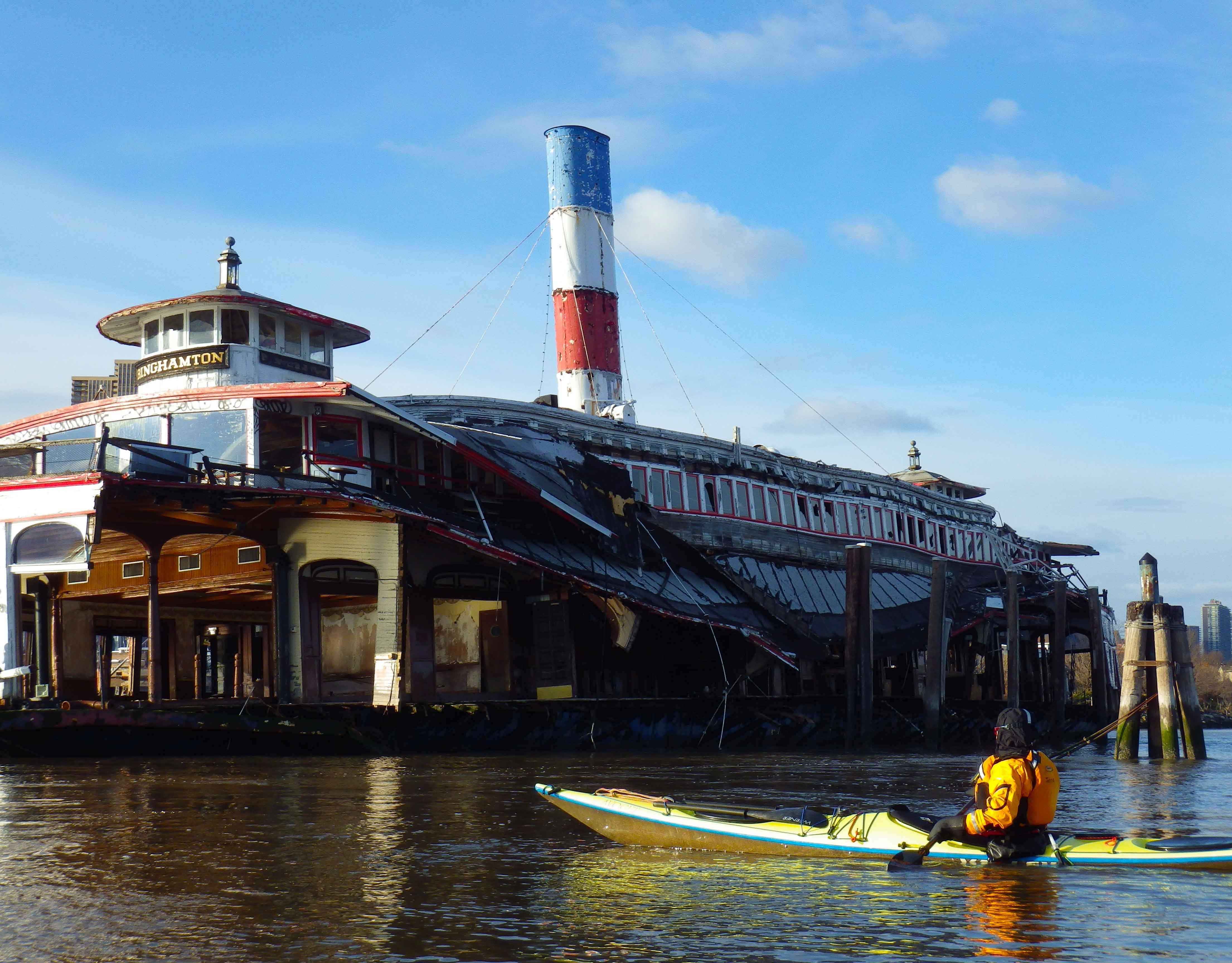
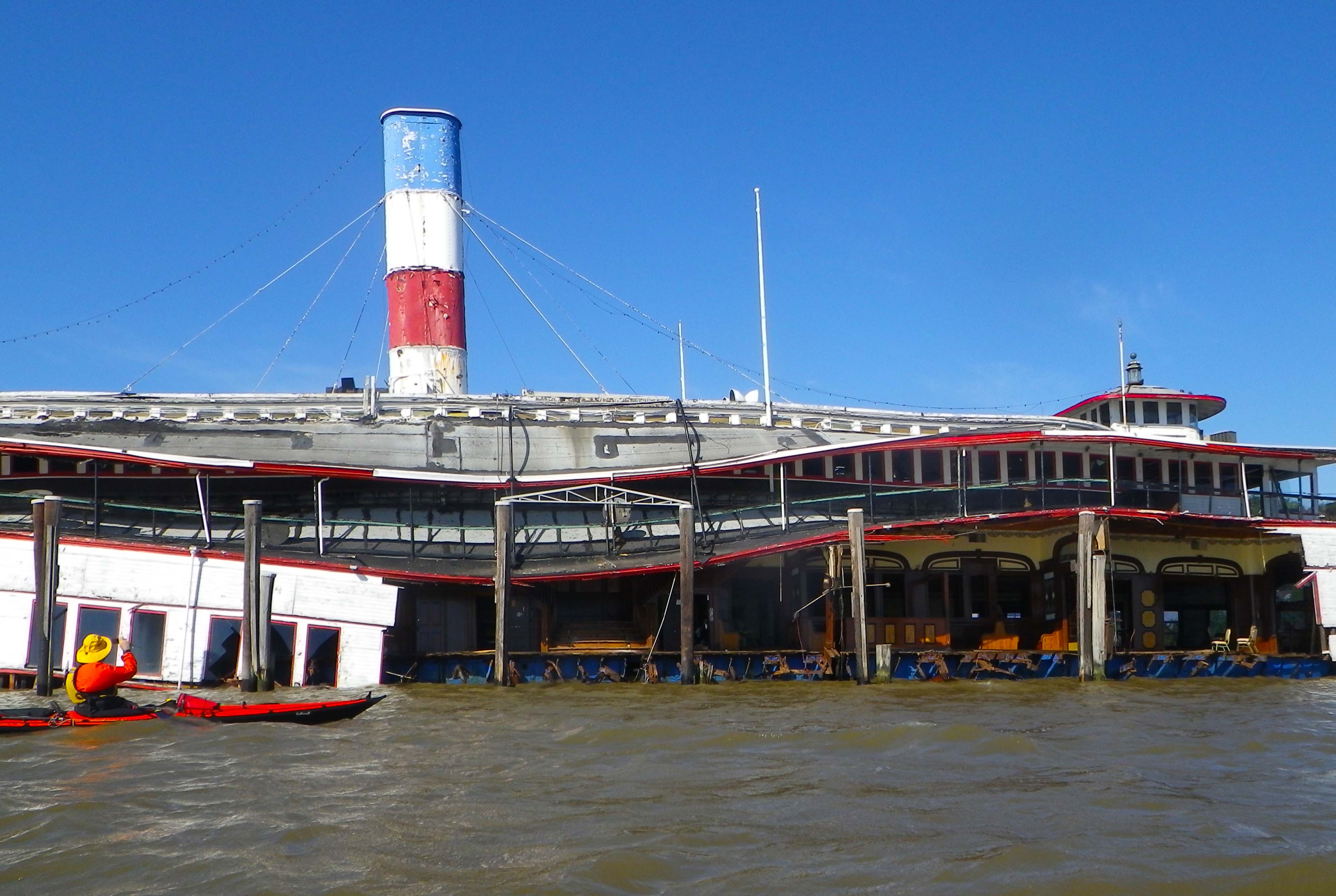
A case in point is the Binghamton, a 1905 steam ferryboat—the last of many—that has reached her last resting place, as it now clearly is, on the New Jersey side of the Hudson at Edgewater.

BINGHAMTON_ NNS_Hull_49_Page_03_Image_0001The Binghamton operated as a cross-Hudson ferry, making a mile-long trip back and forth between Hoboken and Manhattan, continuously from 1905 to 1967, when the last ferries were forced out of business (until their recent renaissance) by competition from the Hudson tunnels and the George Washington Bridge.

BINGHAMTON_ NNS_Hull_49_Page_06_Image_0002

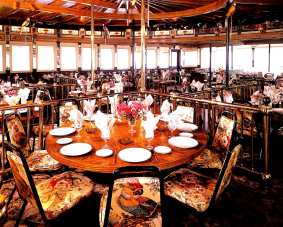
BINGHAMTON_ NNS_Hull_49_Page_09_Image_0003Binghamton was then converted into a floating restaurant. The restaurant closed in 2007, and since then Binghamton has awaited a new use.

From Wikipedia:

The Binghamton is significant as possibly the last surviving steam ferry still afloat built to serve New York Harbor, the birthplace of commercial steam navigation, the birthplace of the double-ended steam ferry, and an area whose development was profoundly shaped by the introduction of vessels of this kind.

Indeed, The US Department of the Interior added Binghamton to the National Register of Historic Places in 1982.

Bill Lee has written a loving, detailed essay on her history, and Tugster has posted a series of photos (here, here, and here) that give a good idea of her interior as it was until quite recently.

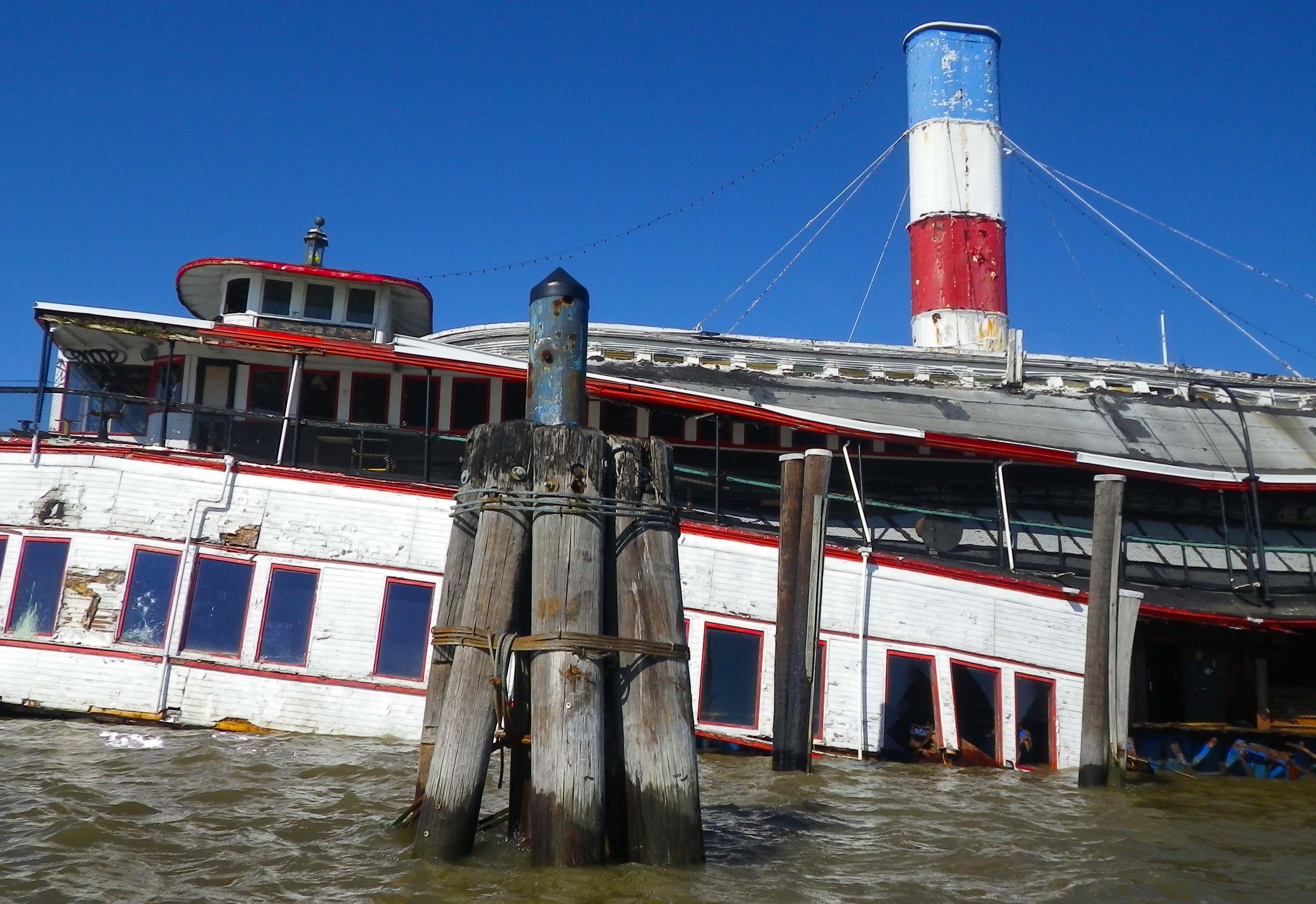
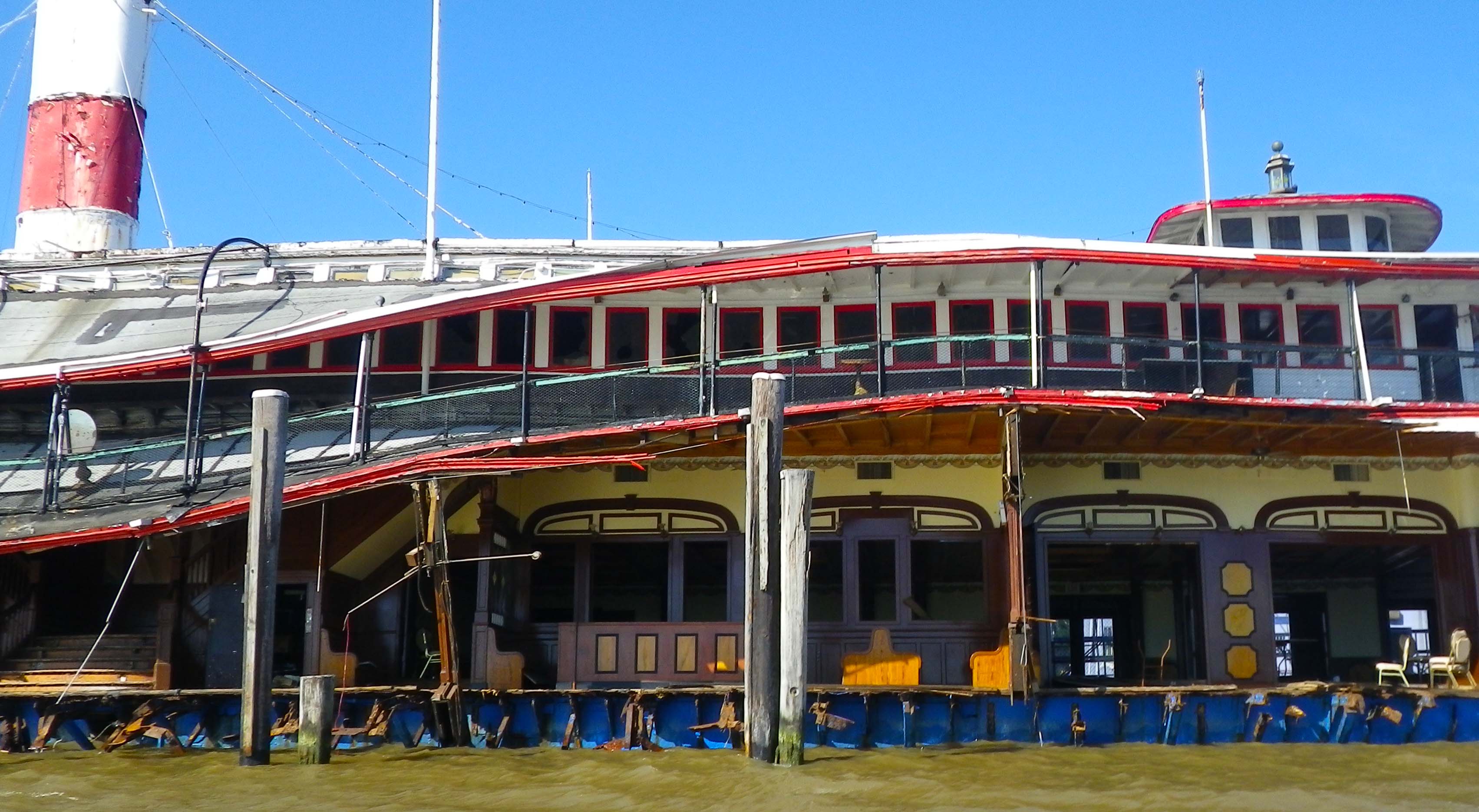
Bill Lee’s essay ends when Binghamton‘s future still looked promising. Unfortunately, in 2011 Hurricane Irene greatly accelerated her progressive deterioration, and last year Hurricane Sandy finished the job. Binghamton no longer floats, but is resting on the bottom.

May 2013

Every time we paddle past, we see greater decay. Now an entire side of the boat is down, giving us dramatic views into the inlaid wood and stained glass of the interior—all ruined now. Water sloshes back and forth through the interior spaces with each passing wave.

March 2013IMGP4261 cropped smallBinghamton 2Binghamton 3

A reminder of the transience of beauty…

Celebrating the Fourth

By Vladimir Brezina

Last night, with martinis in hand, we went up on the roof of our building to watch NYC’s Independence Day fireworks.

Conditions were not ideal for photography. From our building on the Upper East Side, it is several miles to where the fireworks were fired off in the Hudson River. At the last minute, we were chased away by the building staff from the part of the roof that offered the best view. Where we ended up, among a crowd of our neighbors, the tripod had to be so precariously balanced on a narrow ledge that it became a bipod. Directly in front was a pipe obstructing the view. The remote control failed to work…

Still—

(click on any photo to start slideshow)


.

A Perfect Summertime Manhattan Circumnavigation

By Vladimir Brezina

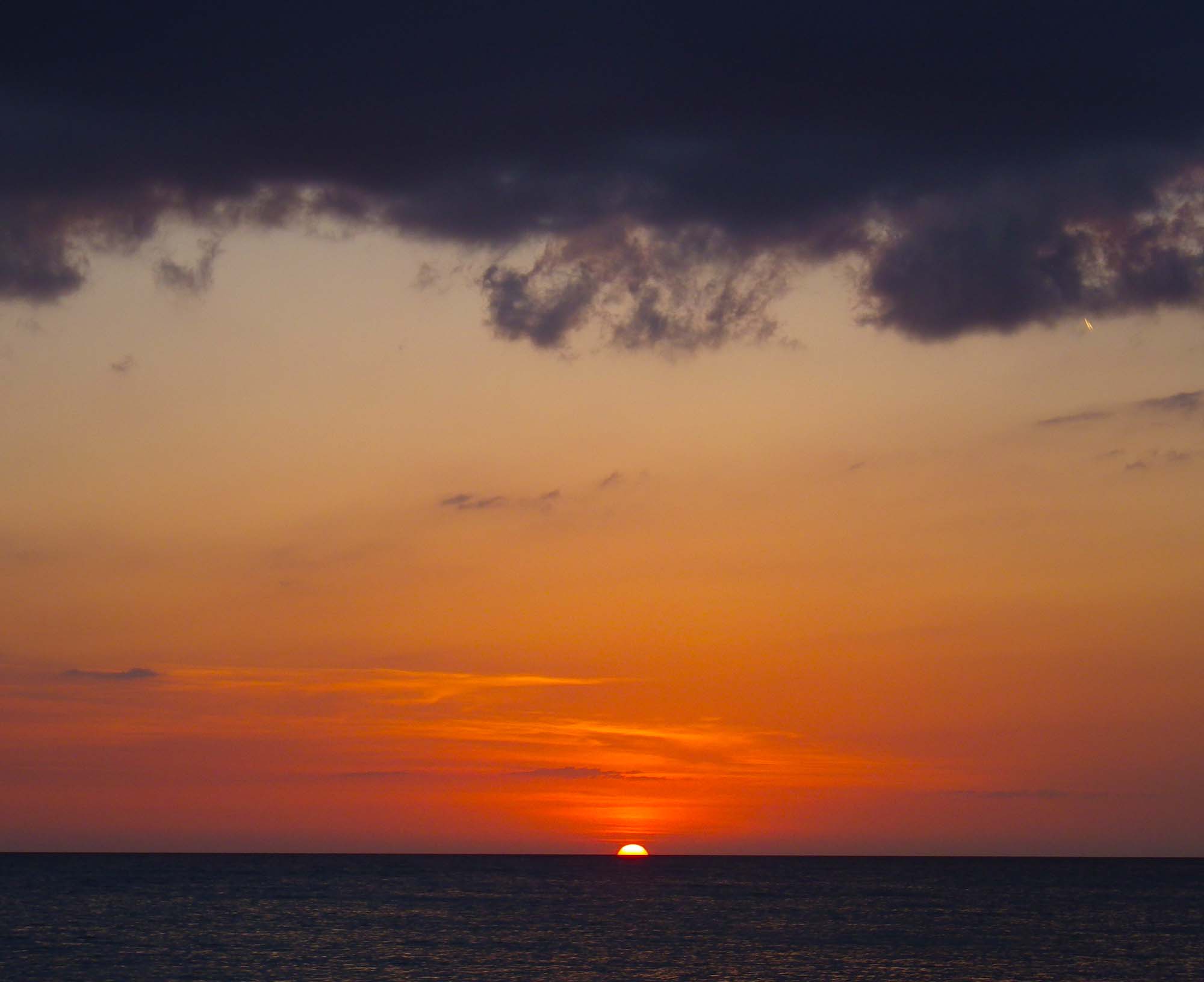
A Manhattan circumnavigation is the classic trip of New York City kayaking. No two Manhattan circumnavigations are the same. After having done a couple of hundred of them, probably, I can safely say that. And last Saturday’s was one of the best. It had it all—perfect summer weather, a variety of marine traffic to liven things up, a few exciting waves, a secret cove with ripe mulberries, and as a finale, a spectacular sunset…

Here are the photos. (Click on any photo to start a slideshow.)

.
These and other photos from the trip are here.

Mulberries!

By Johna Till Johnson
Photos by Vladimir Brezina

IMGP4390 cropped smallI looked behind me.

Vlad had disappeared.

Both those things were somewhat unexpected. Normally Vlad paddles slightly ahead of me, or we keep pace. But the sun was high and he was uncharacteristically lagging behind, and I thought maybe the  heat was getting to him.

He was on the far side of the Harlem River, over to the East.  And last I’d checked, he’d been paddling away from me, towards the low, almost insignificant, pedestrian bridge that connects Wards and Randalls Islands.

Now he’d disappeared under the bridge. I followed across the Harlem River to see where he was headed. In the several dozen times we’ve circumnavigated Manhattan together, we’ve never gone under that bridge. Never even discussed it. I wondered what had prompted him to do so today.

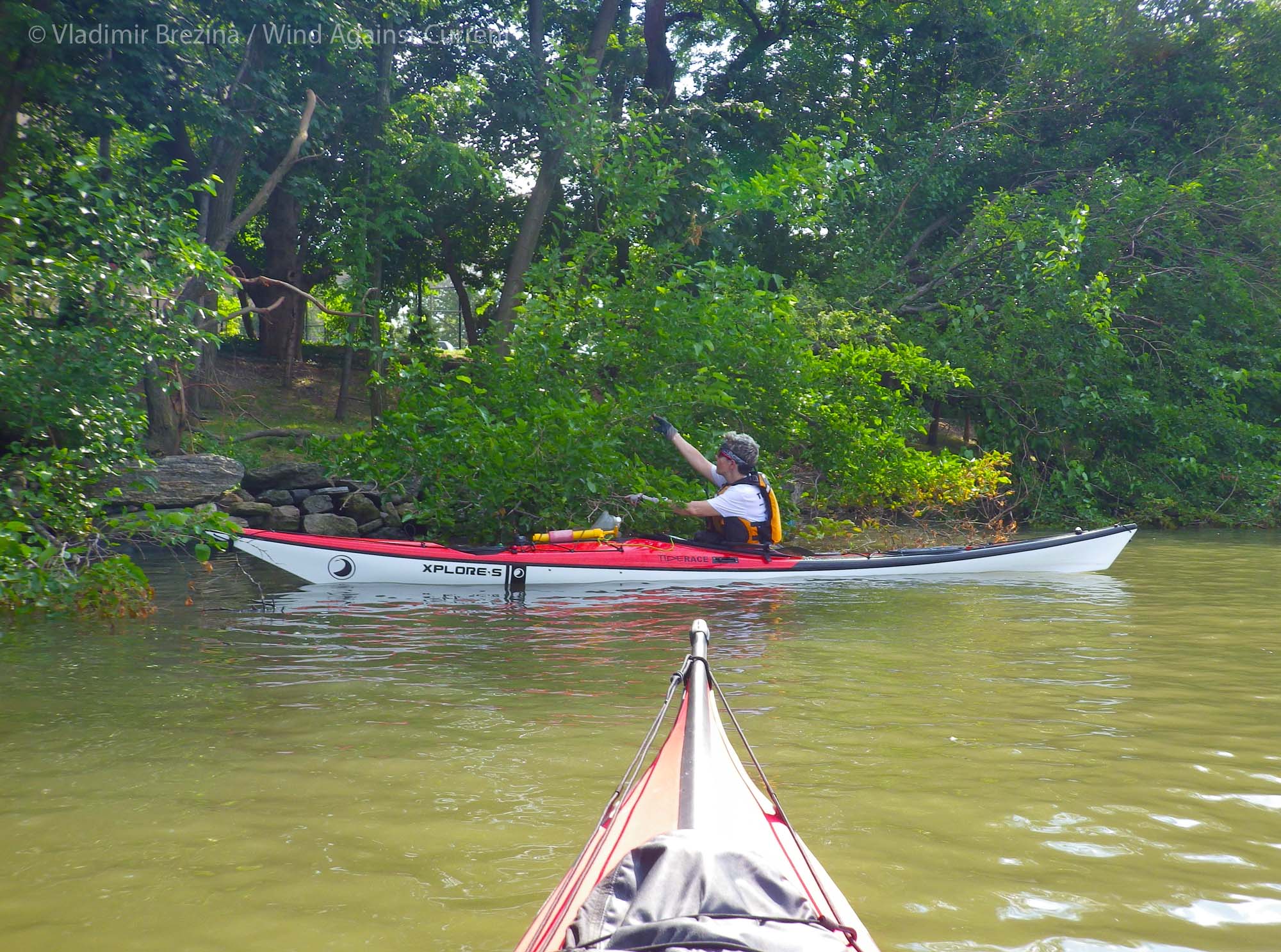
When I caught up with him, he was stopped, looking curiously at the reeds and marshland in the little cove that opened up past the bridge.

“What made you decide to come in here?” I asked.

“There’s a place where mulberry trees grow right down to the water. You can pick mulberries right from a kayak,” he said. “Erik Baard has been writing about it for years.” (Most recently here.)

Mulberries? From a kayak?

I looked around. Sure enough, I’d passed several green trees whose branches nearly touched the water. But none of them looked like berry trees.

I paddled closer to Vlad. He explained that we were in the remnants of what used to be Little Hell Gate. It was the strait between Wards and Randalls Islands that, just like “big” Hell Gate still is today, was once an open passage, with fierce tidal currents. But when Robert Moses built the Triborough—now the RFK—Bridge in the 1930s, he joined Wards and Randalls Islands together by blocking off Little Hell Gate at one end to turn it into the placid backwater that we’d entered today.

But what about those mulberries?

We paddled closer to the green trees and inspected them. It didn’t seem like there was anything much… but wait…  what was that?

IMGP4388 cropped small

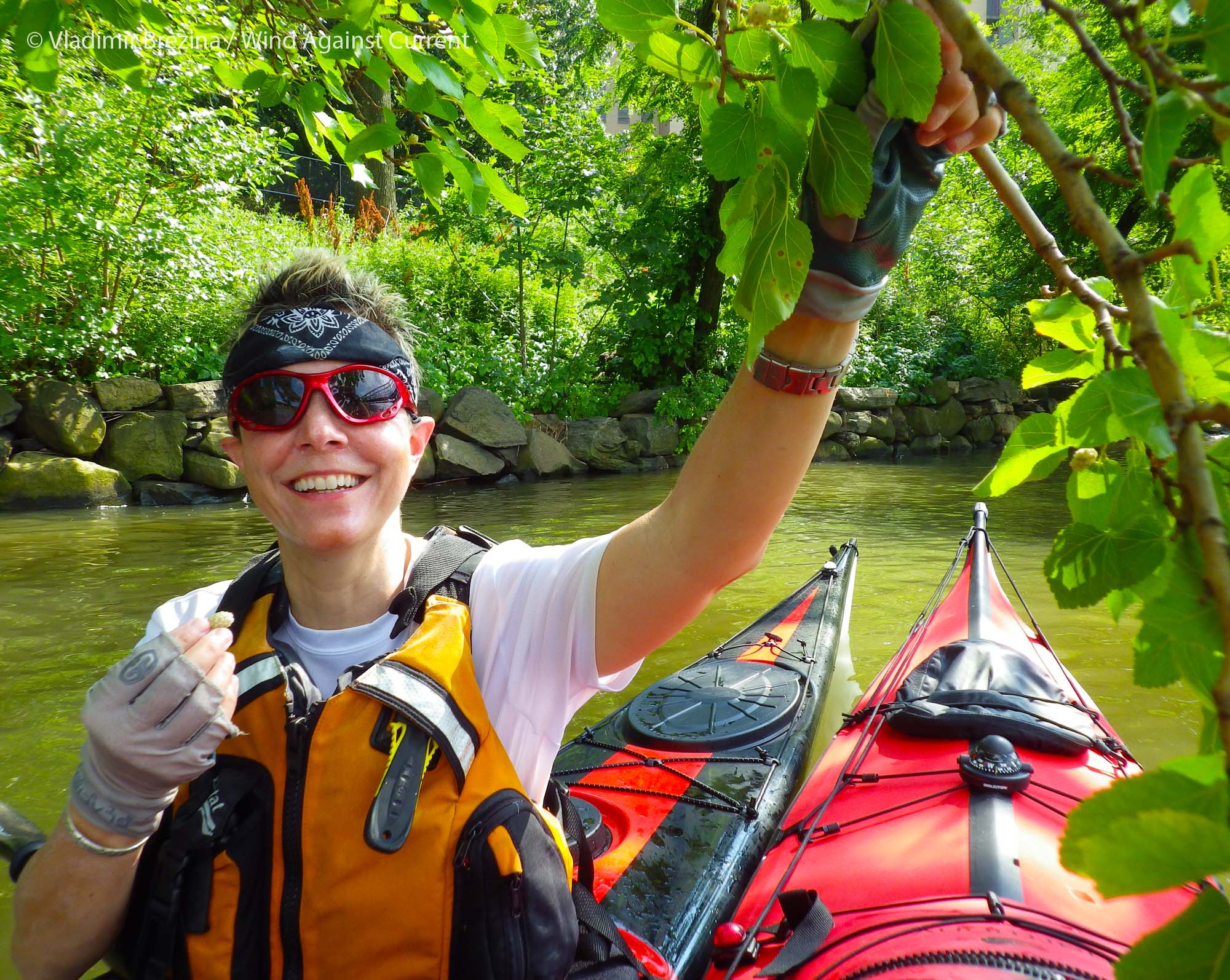
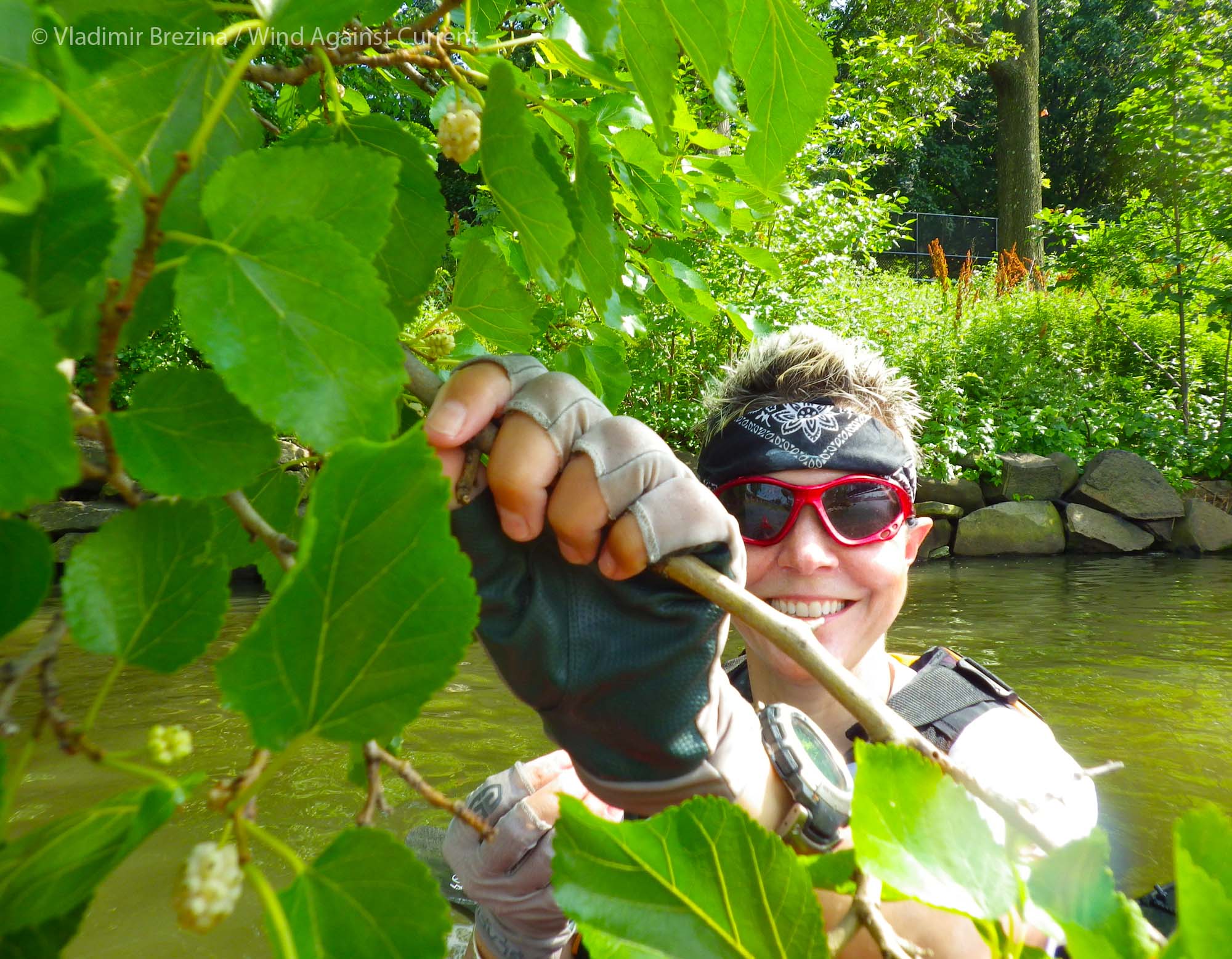
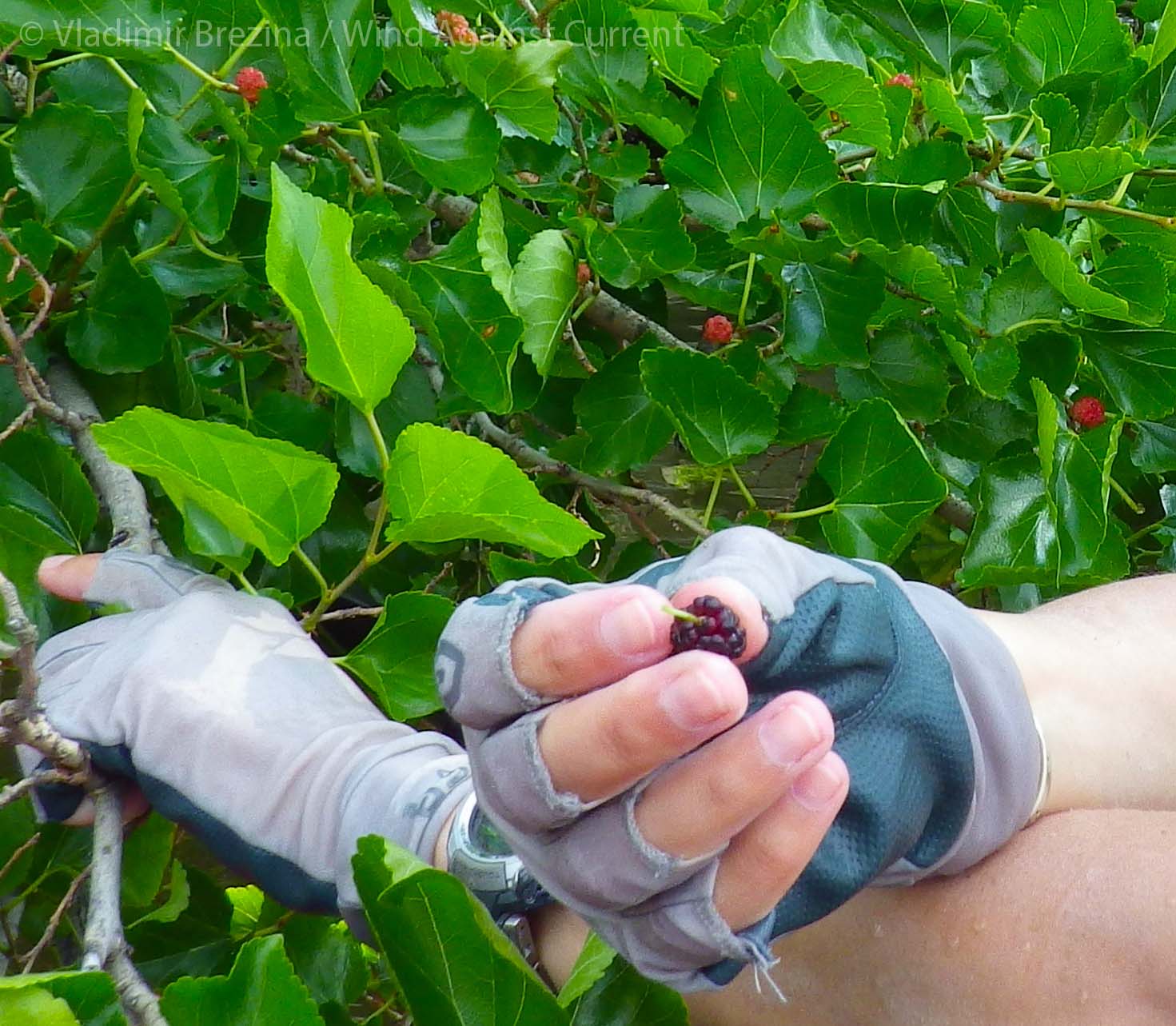
A splotch of white against the foliage. Sure enough: White mulberries!

And ripe, too. And surprisingly sweet.

IMGP4391 cropped small

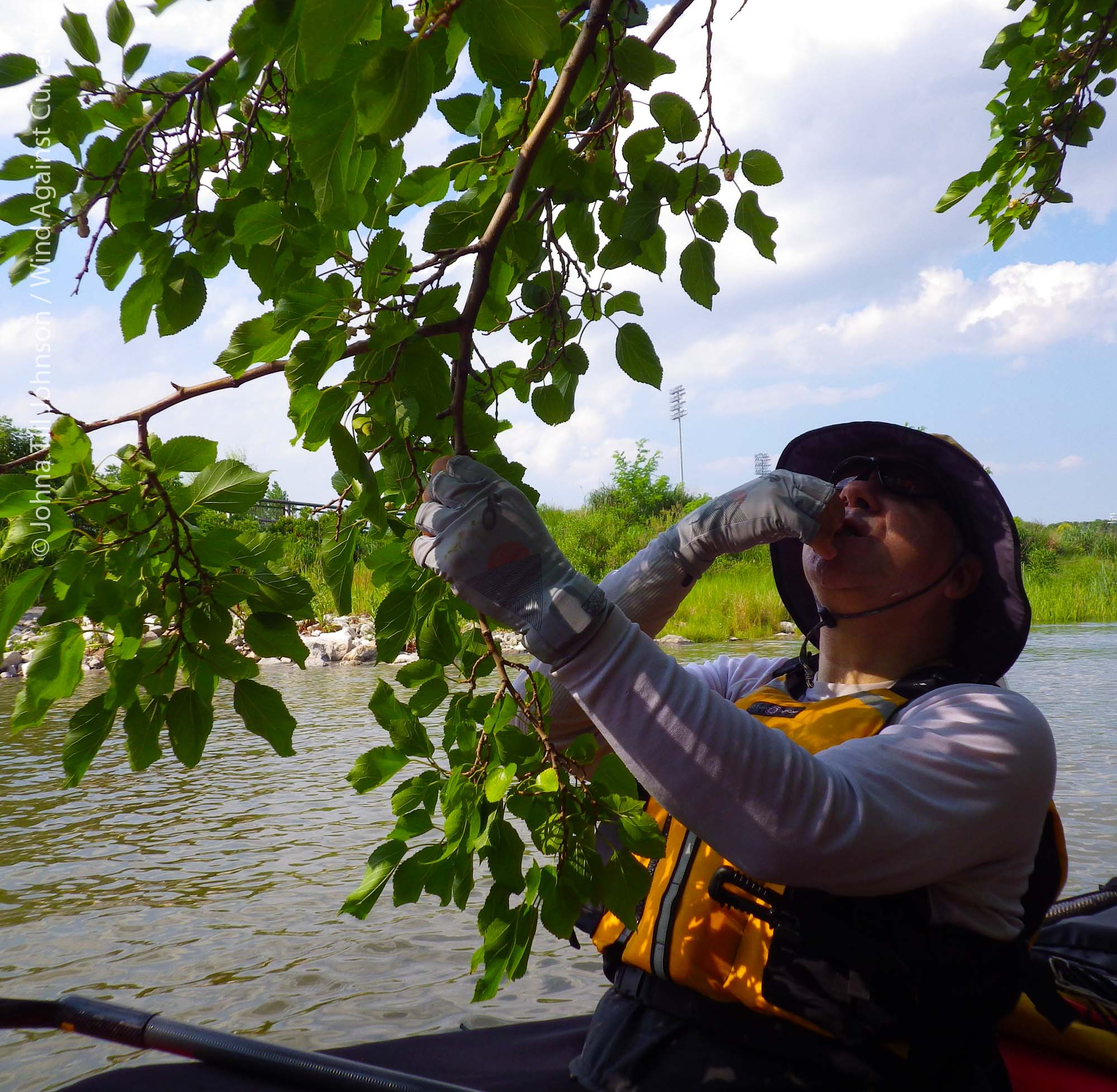
Laughing with delight, we plucked and ate the berries. There were plenty of them—because who else could reach those berries except for kayakers?

IMGP4399 cropped small

“Erik mentioned there were some red ones, too,” Vlad said. We looked at some of the other trees. Wait… what was that? A flash of pink?

IMGP4407 cropped small

IMGP4408 cropped small

We paddled closer, and sure enough, caught sight of some dark-purple mulberries against the green. (The pink ones were semi-ripe).

IMGP4410 cropped small

More mulberries!

And there are more to come, judging from the quantities of unripe and semi-ripe berries. We hope to be back in the next few weeks to repeat the experience, when the tides are once again right.

Mulberries!

Travel Theme: Sculpture

By Vladimir Brezina

IMGP2678 cropped smallAilsa’s travel-themed photo challenge this week is Sculpture.

Her own examples start with man-made sculptures, but conclude with her “favourite sculptures [that] come from the natural world… sculpted by wind… and water…”

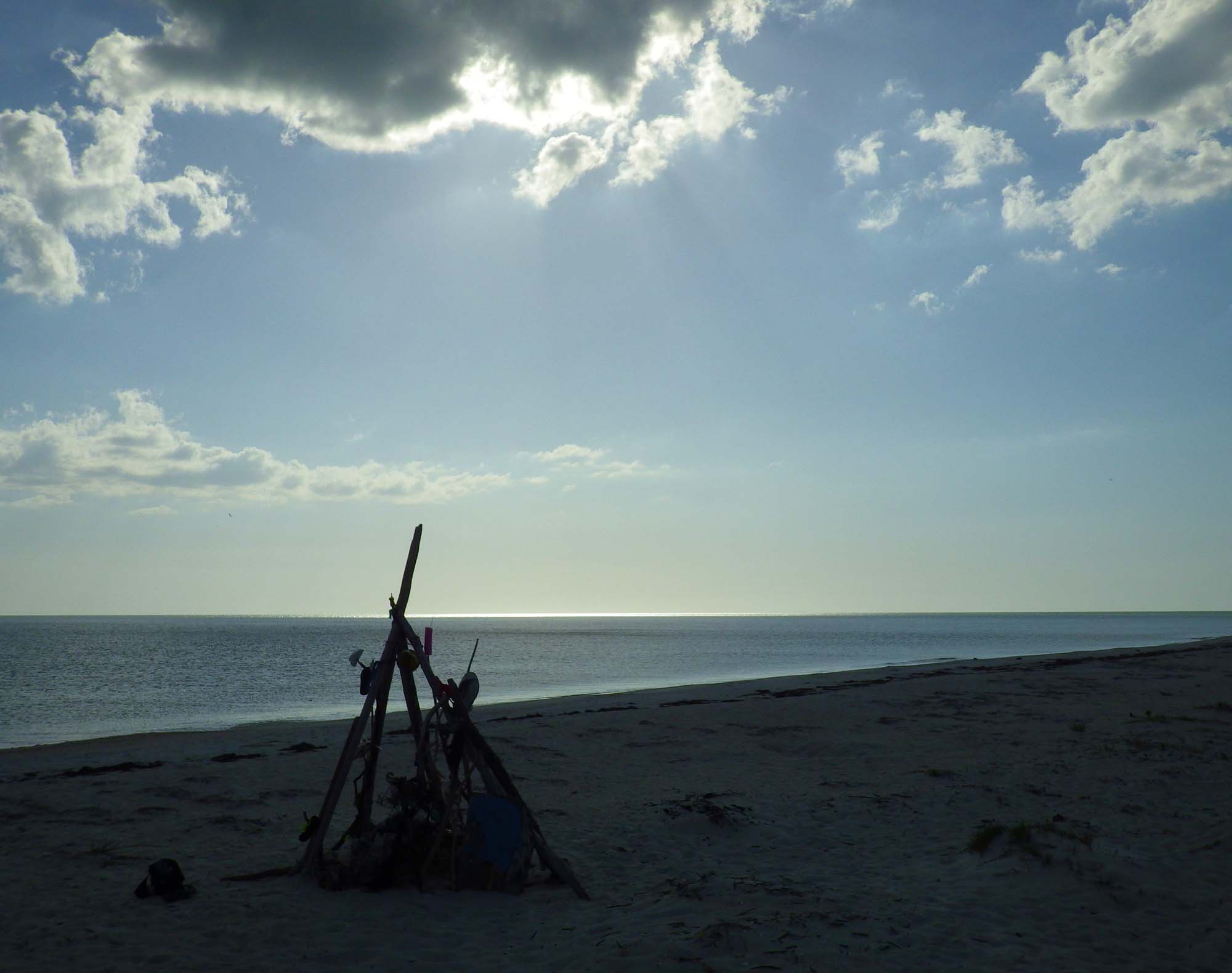
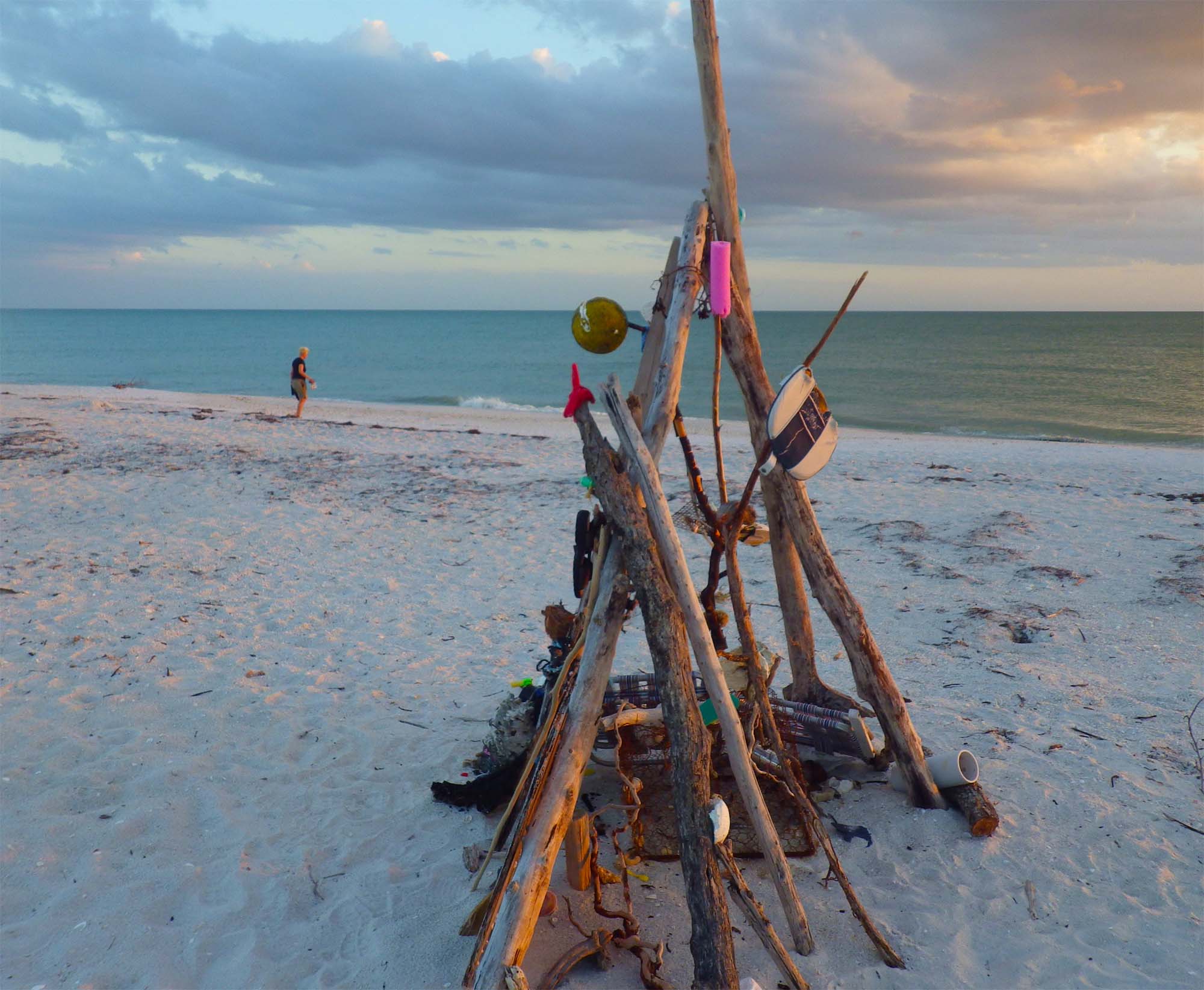
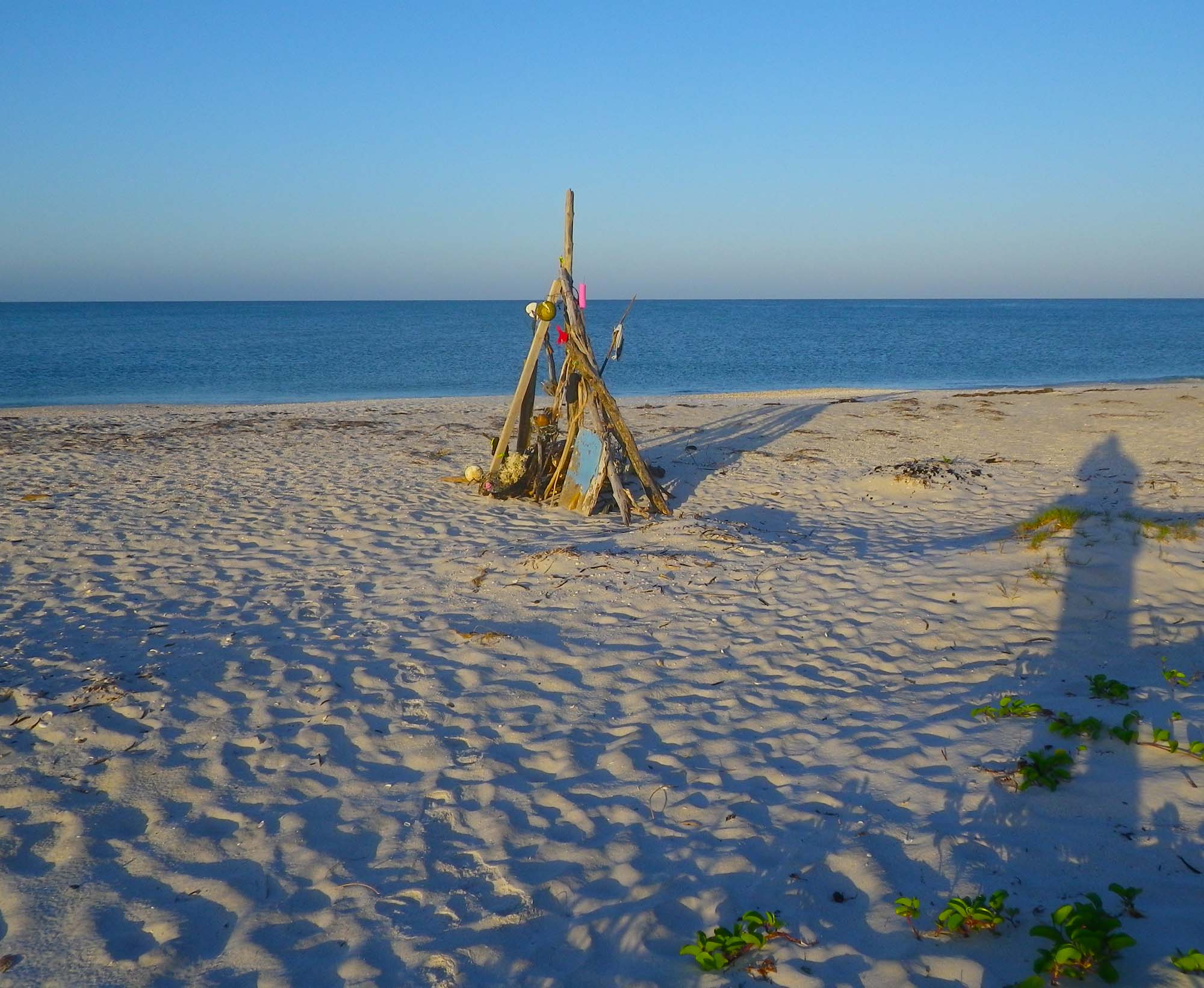
Here is a sculpture that we came across recently that seems poised between the two worlds, being both man-made and sculpted by natural forces, wind, water, and sun…

IMGP2532 cropped smallIMGP2635 cropped smallIMGP2766 cropped smallIMGP2751 cropped smallIMGP2799 cropped small

And in the morning…

IMGP8345 cropped small

On North Captiva Island, Florida, during our kayak trip down the Gulf Coast of Florida in April (see here and here).

And speaking of beach sculptures, check out this one, courtesy of our friends 2 Geeks @ 3 Knots!

Weekly Photo Challenge: Companionable, Take Two

By Vladimir Brezina

This week’s Photo Challenge is Companionable. One interpretation was here; here’s another one.

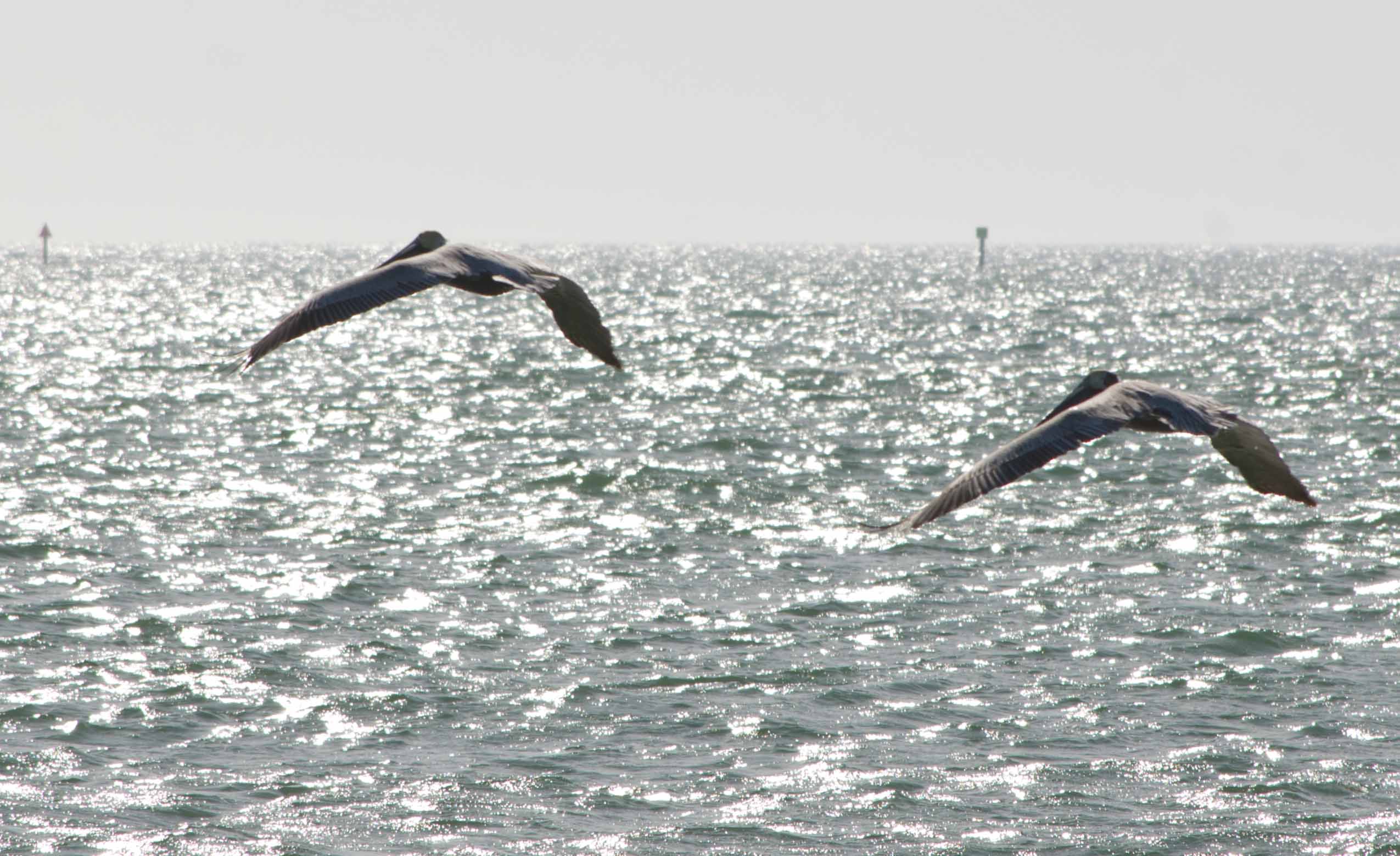
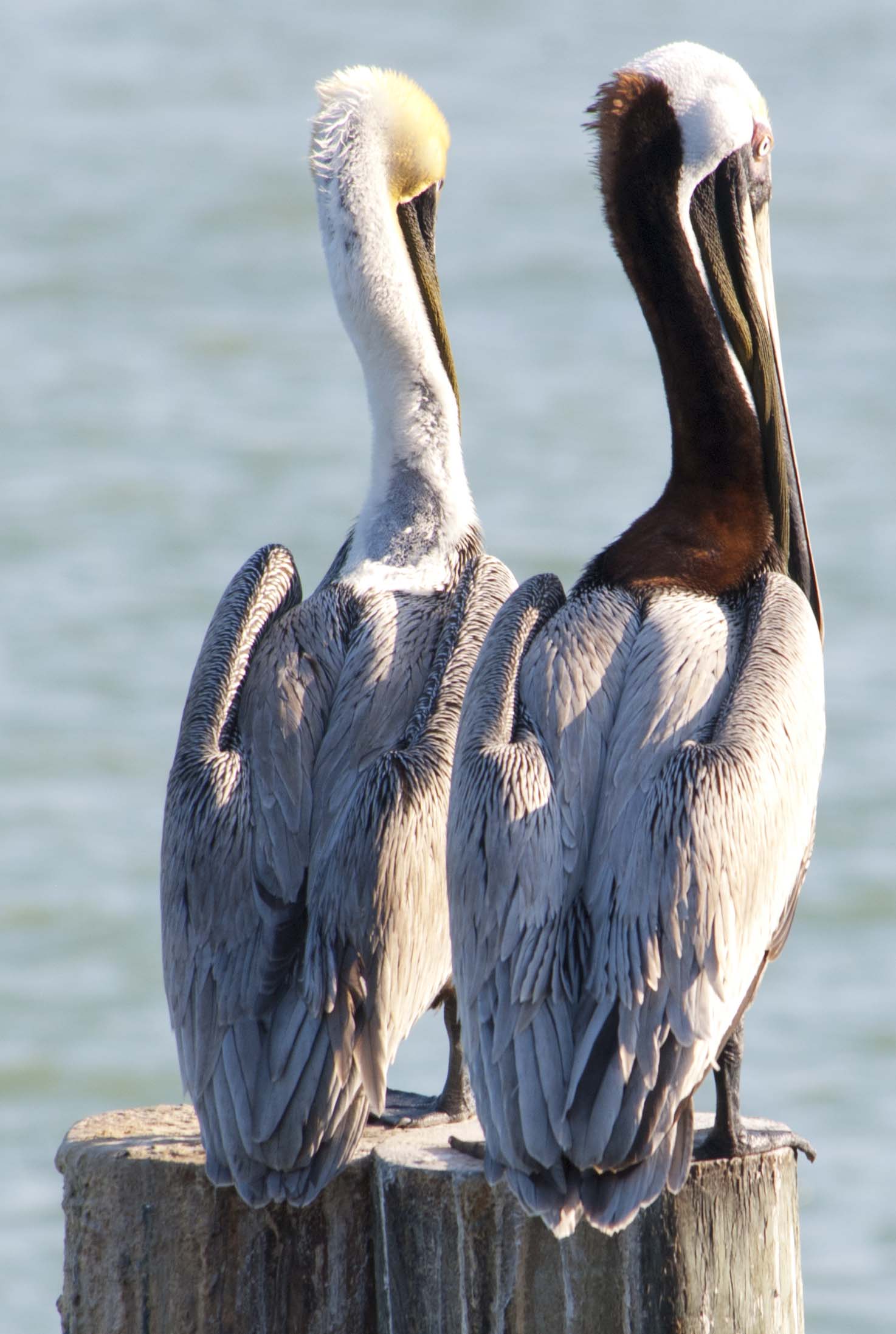
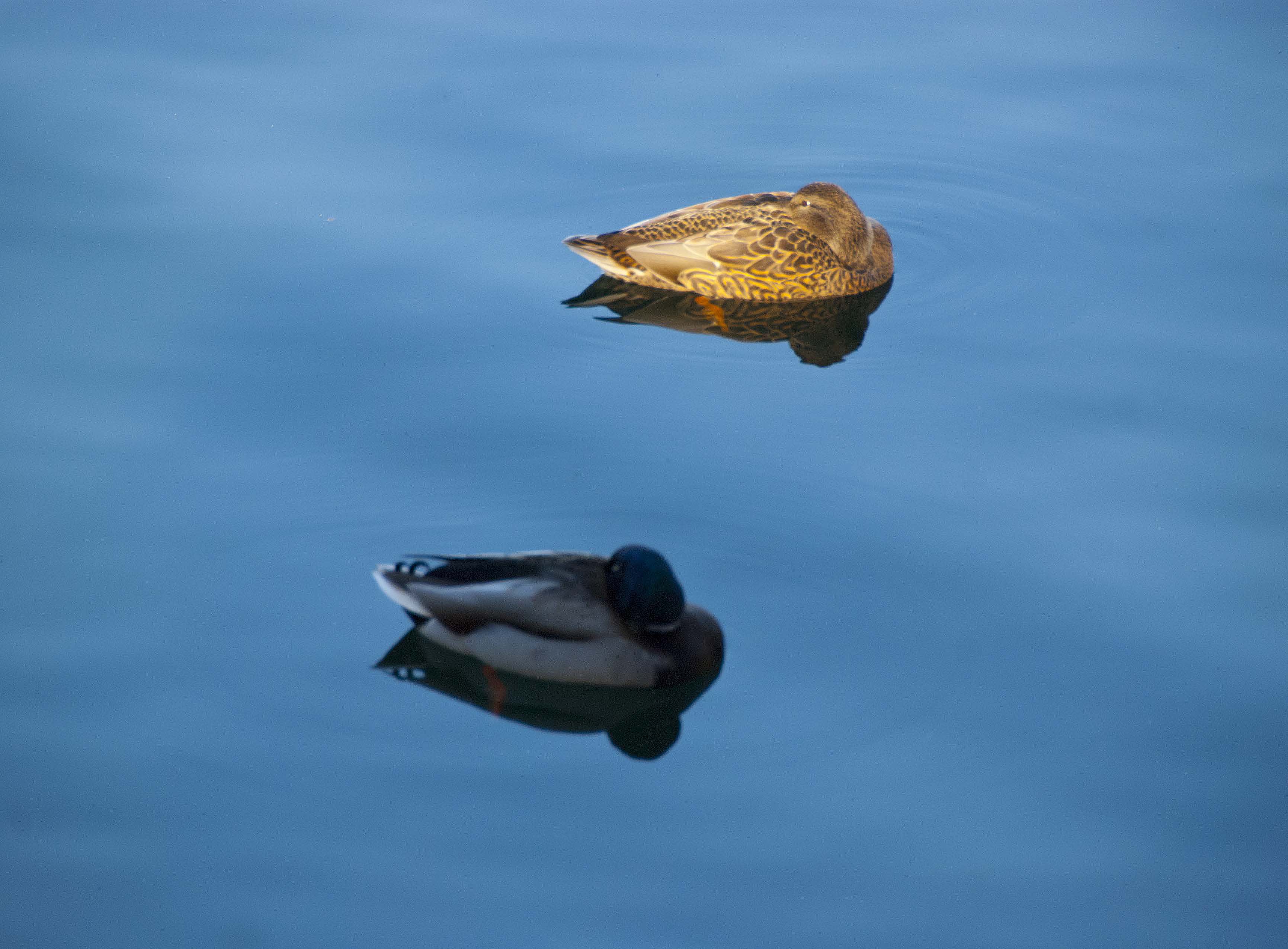
In the bird world, as in the human—

Companionable
DSC_0043 cropped small

Companionable
DSC_0240 cropped small

CompanionableDSC_0534 cropped small

Companionable
DSC_0146%2520cropped%2520small

NOT companionableDSC_0499 cropped small 2

Weekly Photo Challenge: Companionable

By Vladimir Brezina

This week’s Photo Challenge is Companionable.

Rafted up companionably for lunch…

IMGP4486 cropped smallIMGP1105 cropped smallIMGP5105 cropped small

Another interpretation of “Companionable” is here.

Yay Coney Island Mermaid Parade!

By Johna Till Johnson
Photos by Vladimir Brezina

DSC_0865 cropped small

“Yay, kitty cat!”  the little girl in front of us yelled. The woman in the parade stopped and smiled. She was wearing a brown fur costume—perhaps too warm for this sunny June day—and a button nose. Whiskers striped her cheeks.

DSC_0370 cropped small“She’s a friendly sea lion,” another woman said. Of course! The friendly sea lion danced over to the line of kids. “Would you like to pet my flippers?” she asked.

Shyly, the kids did. Then they went back to shouting at the weird, wacky, and wonderful array of costumed creatures before us: “Yay bunny rabbit!” “Yay green lady!” “Yay guy on stilts!”

We were at the Coney Island Mermaid Parade, an annual festival celebrating Coney Island (“America’s Playground”)—and more generally, celebrating Brooklyn, New York City, sunshine and summer, the ocean, gays, straights, recovery from Sandy, families, friends, and fun.

It almost didn’t happen this year. Hurricane Sandy devastated Coney Island, and the not-for-profit that has run the parade since 1983, Coney Island USA, was over $100,000 in the hole. The nonprofit used to get most of the funds to put on the parade from its museum and performance studio, which was demolished by Sandy.

In a last-ditch attempt to keep the parade going, Coney Island USA launched a Kickstarter campaign—which netted over $117,000. Enough to keep the show going on.

DSC_0609 cropped smallAnd enough to generate a wonderful sense of celebration. Coney Island is back, bigger, better, wackier, and wilder than ever. This year’s parade really spotlighted the reinvention of Coney Island from nostalgic landmark to au-courant hotspot—perfectly blending the traditional and the cutting edge. (Exhibit A:  The only float sponsored by a national brand was sponsored by Pabst Blue Ribbon—the lowbrow canned brew favored by Brooklyn hipsters everywhere. Go figure!)

The kids in front of us had certainly gotten the message. They loved everything about the parade, and weren’t shy about asking the paraders to perform: “Burn some rubber!” they shouted at the vintage cars, glittering in the early-summer sun. (The drivers obligingly did.)

DSC_0620 cropped small“Play your horn!” they shouted at a saxophone-wielding participant. (He did.) And of course, “Over here! Over here!” they shouted at the paraders who tossed beads, candy, and toys at the onlookers.

.

DSC_0795 cropped small.

And the kids didn’t seem to be too impressed by the eye-boggling array of nipple pasties, codpieces, and jiggling buttocks. Mermaids and their consorts require very little clothing, so creatively embellished nudity is one of the hallmarks of the Mermaid Parade. But it’s not something the kids seemed to care much about, one way or the other.

DSC_0654 cropped smallInstead, they applauded anything and everything, indiscriminately.

“Yay police!” they shouted out at one uniformed NYPD officer, who shot them a puzzled look, then grinned and waved.  Although the parade was well-patrolled, the officers almost seemed unnecessary—I’ve never been in a crowd that large where the overwhelming mood was so cordial and friendly. (The day of the parade is informally called by the NYPD “Coney Island’s Crime-Free Day”.)

Vlad took almost 2000 photos during the two-hour parade. See below for a gallery of the best photos.

DSC_0672 cropped small

DSC_0678 cropped smallAnd when it ended, we made our way onto the packed beach so I could dip a toe into the ocean, then headed back for the subway ride home.

At the gates to the Coney Island–Stillwell Avenue subway stop, we got one last surprise: As we went to add more money to our metro cards, a cop waved us through the open gates next to the turnstile. “Subway’s free today,” he said.

“Yay, police!” indeed.

And YAY Coney Island Mermaid Parade!

Continue reading