Category Archives: Life

Afternoon Jaunt to “Chromium Beach”

Chromium Beach Sunset

By Johna Till Johnson

They call it  “Chromium Beach”, not entirely in jest.  Back in the first half of the 1900s, a company called Mutual Chemical contaminated swathes of New Jersey with hexavalent chromium. One of those areas was in Liberty State Park, the green area to the west of the Statue of Liberty and Ellis Island, where there’s a lovely sandy beach on the Hudson shore.

Chromium Beach is a popular destination for Manhattan kayakers, due to its proximity, its topology, and the scenic views it provides. It’s close enough to be an easy afternoon trip (assuming the currents are in your favor), and the beach landing is in calm, protected water.

And the views! Oh, the views!

Manhattan

So it was a reasonable destination for the first day of December. I hadn’t paddled from Pier 84 in months, and was missing the bustle and churn of paddling in the New York waterways.

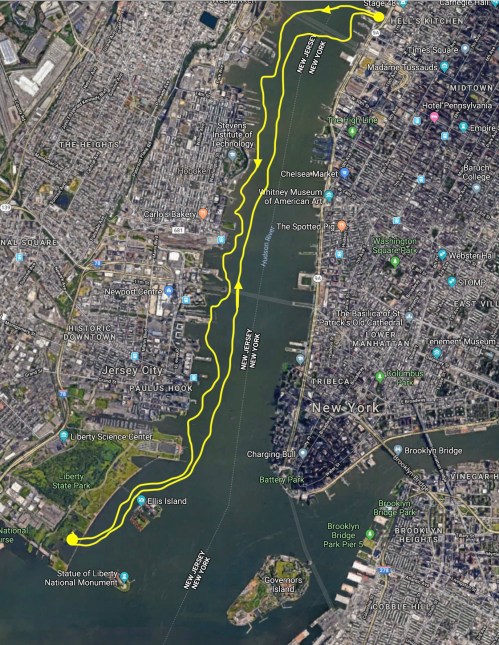
I set south around 12:15 with no clear destination in mind. By my calculations it was almost exactly slack, so I crossed over to New Jersey shore and wound my way down, hoping to use the back-eddy to combat the anticipated adverse current. My plan, such as it was, was to keep paddling until either the current or my inclination caused me to turn around.

There was still a reasonably strong ebb,  so I glided downriver at a fairly  rapid clip. The maritime radio was on, with the crackle and calls of a busy day on the water: “See you on two whistles, Cap’n?” “That’ll be fine! Two whistles.” “Okay, have a good day, Cap’n!”

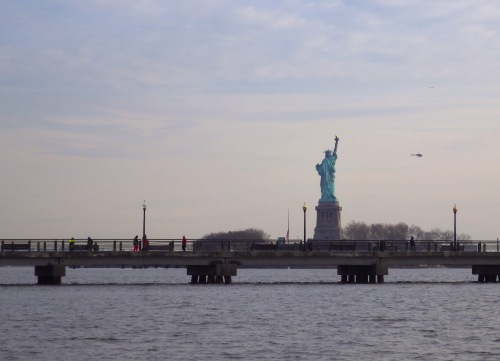
I zipped under the bridge connecting Ellis Island to the New Jersey mainland. It was newly re-opened to kayak traffic after the 9/11 security closures, and I savored the opportunity to go around the calmer back waters to the west of Ellis and Liberty Islands.

A ghostly memory surfaced: Early one summer morning,  Vlad and I had stopped at a sandbar near the beach on the way to points south.  The sun was just rising, and baby hermit crabs had left tracks on the sand. I remember saying, “Look, Vlad, crabs!” (One of his research studies used crabs as subjects, and he was fascinated by the creatures.) For a moment, the air seemed touched with the shimmering golden promise of that morning.

Statue of Liberty and Helicopter

Then the golden memory faded, and I was back in the reality of a gray, chilly winter day. There was no wind, and the water was calm, but brisk (temperature around 42 degrees). The air wasn’t much warmer. I was glad for the wool I was wearing under the drysuit.

My stomach growled, and the thought of hot cocoa took shape. I’d brought a thermos of it, and it seemed like a delightful idea to stop on Chromium Beach for a hot drink and a look at the view.

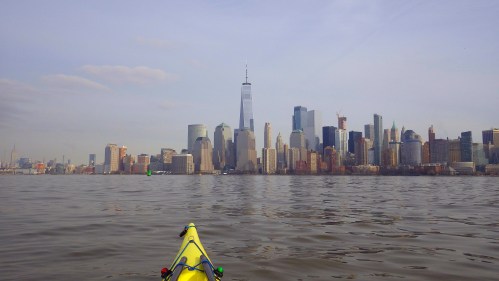
The late-afternoon light tinged the sky peach and gilded the skyline of Manhattan. Behind me: trees, grass, and parkland. In front of me: the lapping waves and some of the most iconic images in the country.

Soon after, I was back in the boat and heading North, keeping a sharp eye out for ferries. The flood was late and a bit sluggish, but the growing momentum gave a nice assist, and soon the skylines of New York and New Jersey were streaming by.

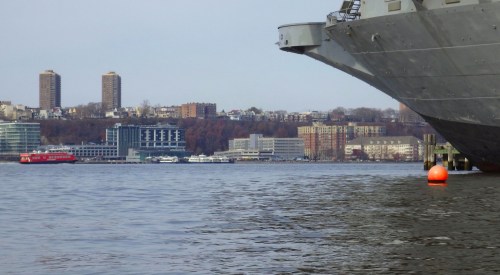
Pier 84 at Launch

I arrived back at Pier 84 at 3:45, happy and satisfied. It had been an ordinary trip. But no paddle is truly ordinary. Even the most prosaic is touched with magic!

Trip details:
Paddle Name: Chromium Beach 12-01-18
Craft: Photon (Valley Avocet)
Paddle Date: Dec 01, 2018
Paddle Launch Point: Pier 84, Manhattan Paddle
Launch Time: 12:15 PM 
End Point: Pier 84, Manhattan (went down to Chromium beach behind SOL and back)
Paddle End Time: 3:40 PM
Distance Traveled: 11 nautical miles
Time Paddling: 3.25 hours
Time Stopped: 10 minutes (cocoa on beach)
Average Pace: 3.38 knots

Vlad Photos

Yellow Submarine Paddle 24

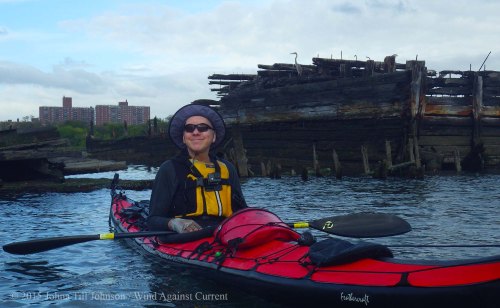
Satisfied with our visit… a great blue heron keeps watch on top of the wreck behind (photo by Johna)’

By Johna Till Johnson

As the season fades towards winter, I find myself combing through memories, both physical documents and online.

I don’t know why I started a post called “Vlad Photos” or what I meant to say when I created this draft in early 2017.

There were no words, just photographs.

So here they are, with words added.

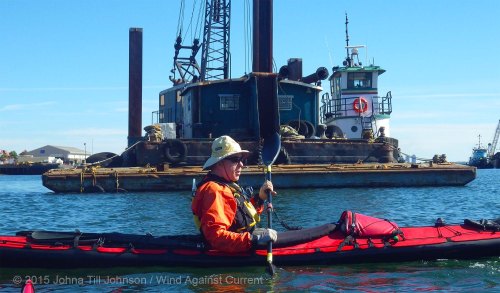
The 2015 kayaking photos were from our penultimate paddle, New Jersey Weird and Wonderful.  (The last paddle was a circumnavigation of Manhattan in November 2015. Fortunately neither of us had any idea it would be the last!)

New Jersey Weird and Wonderful 24

24. Time to paddle on (photo by Johna)

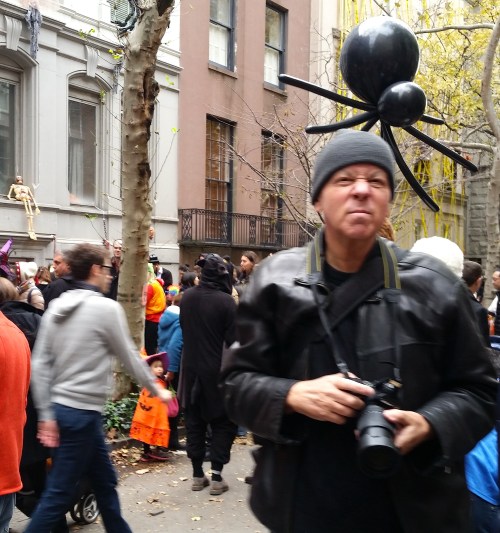
This is Halloween 2015. He was taking photos at the Carnegie Hill Halloween Spooktacular; the photos are here.

Vlad making faces

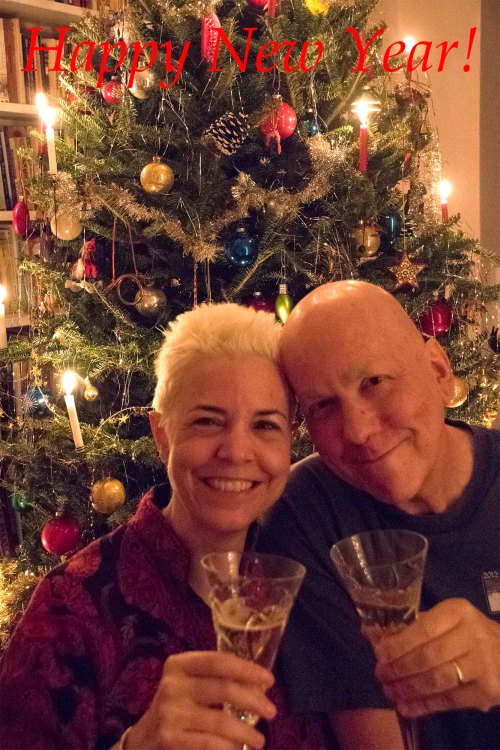
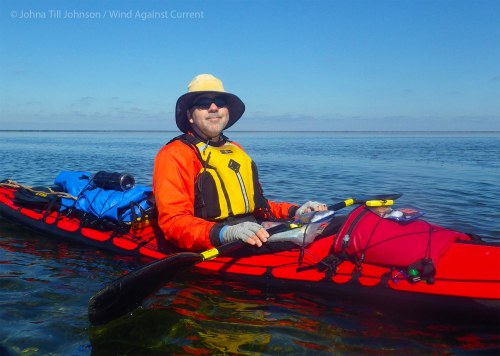
This was Christmas 2015/New Year 2016, our last Christmas together. By then we had some inkling of the difficulties to come, but you can see how happy we were nonetheless…

DSC_0033

And then there were the photos from earlier, even happier times.

I can’t recall when the photo below was taken, but I want to say it was a springtime camping trip on Long Island Sound in either 2011 or 2012.

I can tell it’s a camping trip because of the gear on Vlad’s back deck; his boat is capacious enough that under ordinary circumstances during a day trip he would never have needed the back deck. And he’s wearing a jacket, which means the weather was cool. Also the thermos on top was for hot tea—a staple for our cold-weather paddles.

I don’t know why the caption reads “more or less intact”; the conditions are so calm. Perhaps there was a storm earlier?

In any event, his tolerant half-smile says, as it often did, “Oh all right, go ahead and take my picture!”

I loved the way his expressions and body language telegraphed his mood.  I could tell from a quarter-mile away whether he was enjoying a paddle (usually the case) or feeling out of sorts. Here he was having a splendid time, except for having to stop paddling while I took the shot!

Vlad (photo by Johna)

Vlad still more or less intact (photo by Johna)

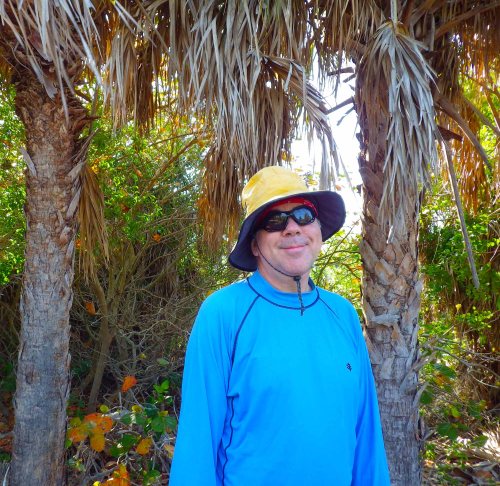
And this is one of my all-time favorite photos of him.We were on Egmont Key during our first shakedown cruise for the Everglades Challenge. I don’t remember why, but he looked at me with such sweetness as I took this…

IMGP1503 cropped small

Under the cabbage palms at Egmont Key

Halloween 2018

Black roses

By Johna Till Johnson

Vlad loved Halloween.

He enjoyed the sense of manic festivity, the candy, the preparations…but most of all the opportunity  for taking dramatic, colorful photographs.

It used to be my favorite holiday, but last year I couldn’t bring myself to go out—too many memories. This year, I was ready: A friend and I went to the Carnegie Hill “Spooktacular” block party, which Vlad and I had attended almost since its inception.

“This is what Halloween is supposed to be like!” she exclaimed as she watched the whirl of trick-or-treating children, set to the booming beat of the party’s DJ.

Ghoul

Holding Hands

Littlest Angel

M14

Masque

NYPD 2

Portrait

Rainbow Dancer 1

Rainbow Dancer 2

Rainbow Dancer 3

Skeleton trio

Sweetie

Treats for all


Rain and Sunshine on the Connecticut River

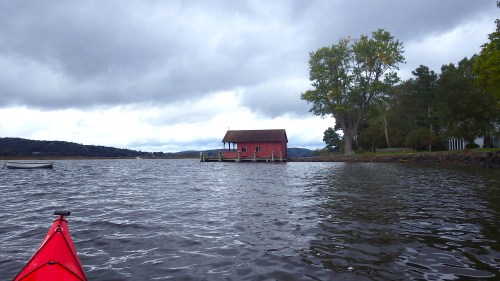
Boathouse on the Connecticut River

By Johna Till Johnson

I’ve never understood why people don’t like to paddle in the rain.

Wind? Sure. Once it’s over about 15 knots sustained, it’s not a paddle, it’s an endurance test. Even a steady 10-knot breeze can create substantial “chop” and bouncy conditions, which you might or might not be in the mood for. (I usually am).

But rain? You’re afraid you might… get wet or something?

Come on, people!

Kayaking is a water sport. If you’re doing it right, you’re wearing clothing that keeps you warm whether you’re wet or dry. That’s actually kind of the point: frolicking in the waves and rain with impunity.

So the steady drizzle on a recent Saturday morning didn’t bother me a bit.

I loaded Cinnamon, my little red Gemini, on top of the car in the parking lot of my mother’s retirement community in Connecticut. I was visiting for the weekend, to enjoy dinner with the “Friday night girls”, a group of fascinating women in their 90s, spend time with my mother…and of course paddle.

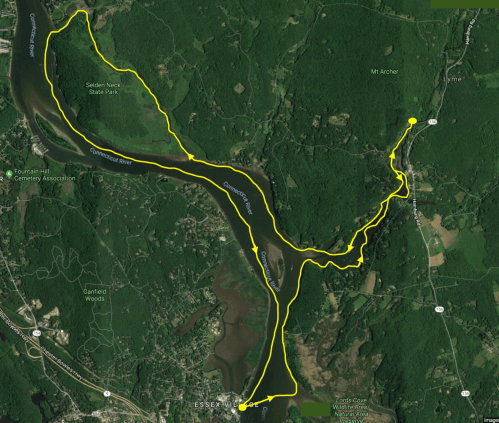
I haven’t yet found a great source of current information for the Connecticut River (if you have one, please let me know in the comments!) so I winged it based on the tides, making the simplifying assumption that slack would fall at or around high and low tides.

High tide would be about 3 PM, so if I launched at noon, that would give me a good three hours of flood, assuming high tide and slack coincided.

Or, actually, of minimal ebb current. One of the sites I’d found (and later, frustratingly, lost) warned in big letters: “There is no flood in the Connecticut river.”

In other words, it was a proper river, not a tidal estuary like the Hudson.

So I wouldn’t count on a flood. I’d cross over to the Eastern side and meander up the side of the river, staying out of the current and exploring the little coves I’d passed before.

If the current wasn’t too strongly against me, I’d paddle up Selden Creek, a peaceful wonderland that wended its way through the reeds and rocks, and eventually rejoined the Connecticut River up north.

By 11:45 I was at the charming little boat ramp in Essex. It took just a few minutes to unload and gear up, and as hoped there was street parking within eyesight of the ramp.

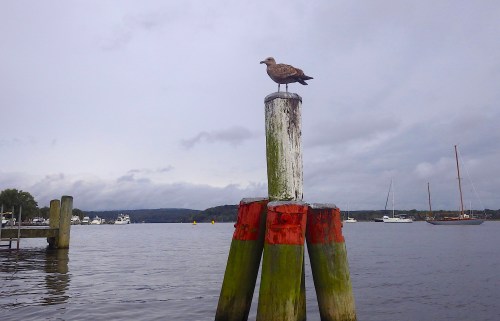
Seagull eyes me warily

By 12:15 I was launched.

As forecast, the rain had subsided, but clouds roiled overhead. It was the tail end of Hurricane Michael, which had headed well out over the north Atlantic to the northeast, but whose effects could still be felt. Fortunately the wind was minimal; a few gusts up to 10 knots, but the rest a fresh northerly breeze.

As I pulled out of the marina, I passed close by a seagull perched on a piling. Atypically, it didn’t move as I stopped for a photograph. It just regarded me warily out of one eye.

My guess at the current seemed correct. Though there wasn’t much ebb, there definitely was no current against me crossing the river.  Some sailboats skidded by like white leaves born on the breeze.

Sailboats and grey skies

The far shore was festooned with rocks and reeds. Soon I came to one of my favorite landmarks, a red wooden boathouse jutting out on the water. As I paused for photographs, I noticed the tide was quite high. Surely there had been a few more feet of clearance last time?

The thought disappeared as quickly as it came.

But it would be back…

Cinnamon finds some friends!

I took my time paddling up the river’s eastern shore, watching for rocks and breathing the cool, fresh air. It was unseasonably chilly, in the high 40s, but even with the wind bearing down from the north, the effort of paddling kept me warm. Then I turned right and headed into the little embayment I’d noticed before.

My plan was to explore it. The chart called it “Hamburg Cove”, but it was more than just a cove. There was a sheltered marina, and then a creek meandered off to the right, into the hills.

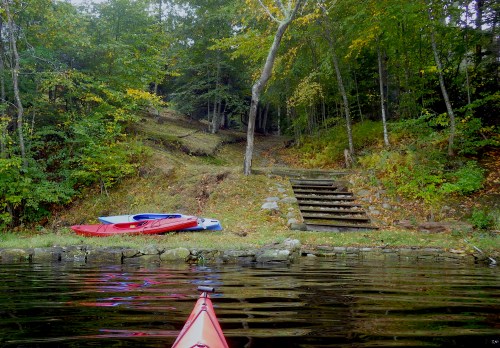
Almost of her own volition, Cinnamon hugged the rightmost shore. There was a splash of color on the green bank that seemed to exert a magnetic pull. Cinnamon nosed right up: Two little kayaks, one red, one blue, huddled in a companionable pile.

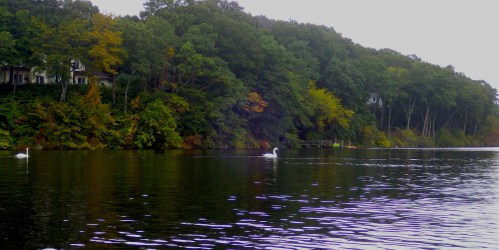
We continued on. Suddenly a flash of white caught my eye. Two swans were gliding noiselessly on the calm green water.

Swans and autumn foliage

I didn’t dare come up close (swans can attack) but took as many shots as I could.
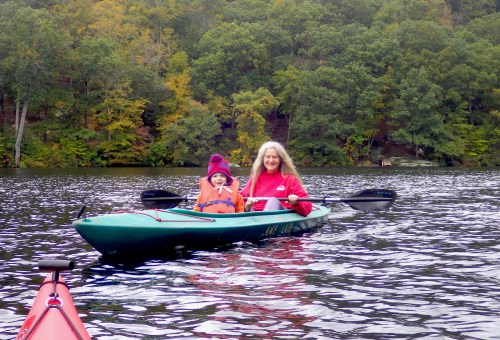
Farther along, another creature appeared, gliding almost as silently: A woman in a canoe, with a small child in front. I gasped with delight. They seemed like an apparition, the woman ageless, with flowing gray hair, and the little boy bubbling over with incandescent delight.

Mimi and Lucas

She was Mimi. The boy was Lucas. And she let me take their picture.

I continued on. There were boats moored at marinas, shabby-chic in the early fall colors. The water widened, then narrowed, then widened again.

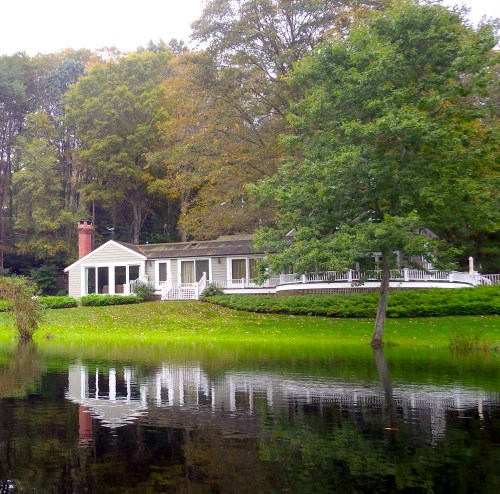
I went around a bend and stopped to take a shot of a house on the water…

High tide

…whose front lawn was almost submerged.

Hurricane Michael’s impacts reached far. The hurricane that had recently devastated parts of North Carolina had reached all the way up into inland Connecticut. Wow!

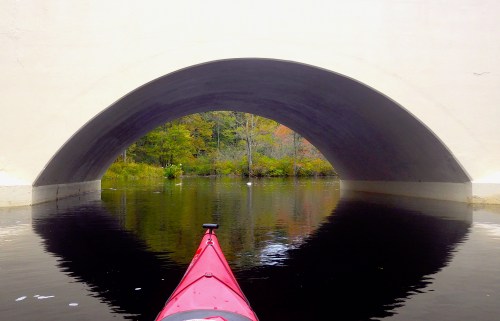
Ahead, the water narrowed. There was a beautiful white-gold bridge with three arches spanning the creek. I paddled underneath, stopping only for the classic “kayak entering a bridge” photo.

Bridge and tunnel… :-)

On the other side, the current seemed to have turned. Little flecks of foam drifted towards me. Current… foam… there was probably a waterfall ahead!

I kept paddling, through the ever-narrowing creek. Tree limbs draped over the water, and rocks poked up, the current rushing and roiling against their sleek heads.

I came to a big rock, sluiced with roaring water. The creek turned sharply right, and beyond it was… whitewater.

Even my nimble Gemini wasn’t truly a whitewater boat, I concluded. Maybe there was a waterfall past the rock—but I would wait to see it another day.

With a little difficulty, I turned around amidst the rocks and rushing water, and sailed back down the creek, carried by the current. I passed the boathouse where I’d seen Mimi and Lucas, waved at the swans (still gliding majestically) and proceeded along the north shore until I popped back out into the main river.

I turned northward once more.

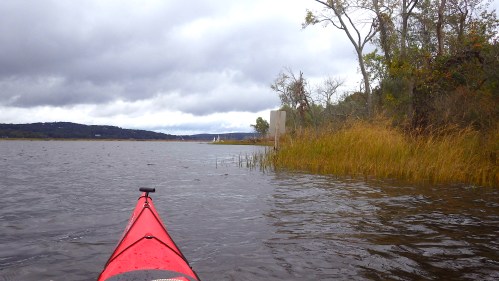
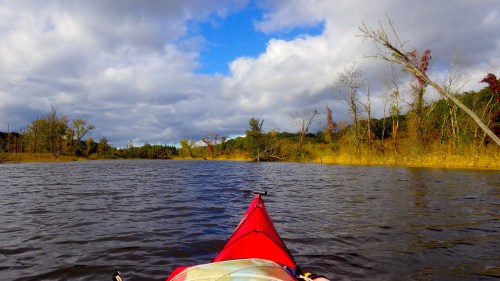
River, sky, reeds…

My destination was the mouth of Selden Creek, a calm and peaceful path that paralleled the river to the east, carving off the island of Selden Neck State Park. Last time I’d missed this entrance, so I scanned the shore carefully.

Sure enough, the weather continued to brighten, and before long I found the entrance to Selden Creek, marked by golden reeds and a bright patch of sky.

Selden Creek has a different personality from the rest of the river. It’s calm and peaceful, with few signs of human habitation: just water, reeds, trees, rocks, and sky. It’s a “vacation inside a vacation”… a peaceful oasis inside the journey.

Cinnamon meandered slowly through the reeds, as the sky slowly cleared and the sunlight broke through. The current against us was getting stronger; the flood had evidently begun. I checked my watch a bit nervously—would I get back to the boat ramp before dark? I’ve paddled after dark alone before, but this time I’d promised my mother I’d be home by dark, and we had restaurant reservations.

The entrance to Selden Creek

I stopped near the northernmost point of Selden Creek  for a quick bite and drink of water, without getting out of the boat. Then a quick paddle west and Cinnamon and I rejoined the main Connecticut river, now bathed in sunlight.

The flood was much stronger, and the boat fairly flew downstream. We passed a rescue vessel towing a motorboat. I thought of the book I’m reading, The Grey Seas Under, by Farley Mowat, about a Canadian salvage vessel in the 1940s. It gave me a new respect for this small towboat on the placid Connecticut River.

Rescue at sea

The trip down was fast, with a ripping current, and I rounded the corner to Essex boatramp just after five, as I expected.

At rest

We pulled ashore. Cinnamon looked jaunty on the dock, but appeared faintly sorry the trip had ended. Next time, little boat.

Working quickly, I unloaded my gear. The Connecticut River Museum was having its annual gala that night, and although I was on the public road, I didn’t want to block traffic.

A couple strolled by on the pier above me. The man was quite interested, and asked a few questions about the boat. The woman looked skeptical.

“Was it nice out today?” she asked.

It had been lovely, I assured her. Her face wrinkled in disbelief. “But it was raining!” she protested.

I just laughed.

Home port

Trip details:

Paddle Name: Connecticut River 10-13-18
Craft: Cinnamon (red Valley Gemini SP)
Paddle Date: 10-13-18
Paddle Launch Point: Essex Boat Ramp
Paddle Launch Time: 12:15
Paddle End Point: Essex Boat Ramp
Paddle End Time: Approx 17:15
Distance Traveled: Approx 15 nautical/17 statute
Time Paddling: 5 hrs
Average Pace: 3 kt

Autumn Sunrise

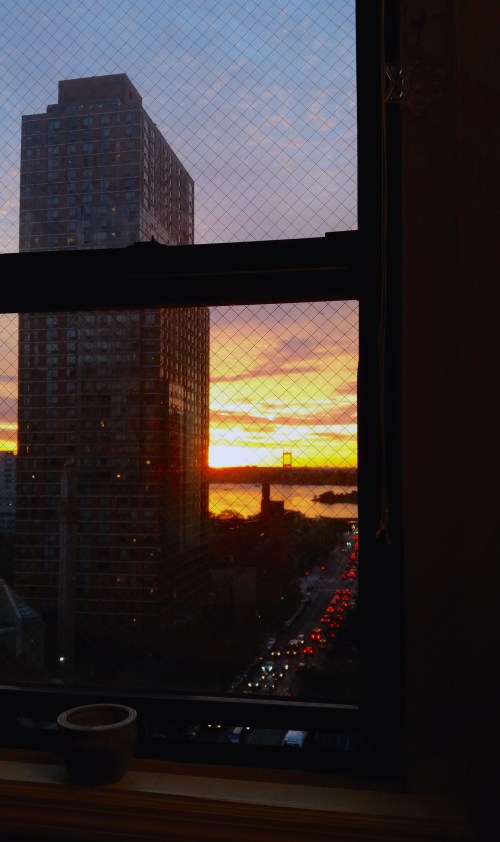
Upper East Side, 10-26-18


By Johna Till Johnson

Twice a year I can watch the sun rise.

It happens in late fall and early winter—around early November and again in February—as the Earth tilts away from, then towards, the Sun.

The sunrise migrates Northwards and hides behind the big building on the left in December and January. It peeks out again in February on its Southward path, an early sign of Spring to come.

Sometimes a sunrise is more than a sunrise. These words from a poem by Adrienne Rich spring to mind:

Though your life felt arduous
new and unmapped and strange
what would it mean to stand on the first
page of the end of despair?

Rebirth: Amaryllis


By Johna Till Johnson

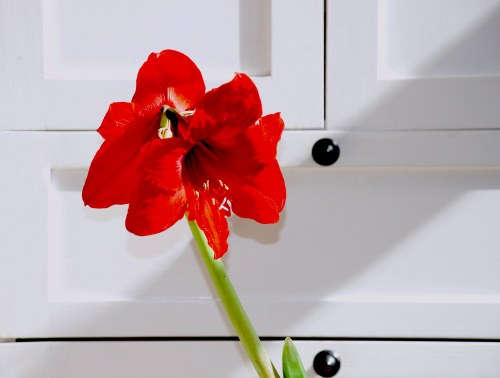
Vlad had an amaryllis that he loved.

It was a constant source of surprise and delight to him. He chronicled its astonishing growth. And he often used it as a photographic subject.  He loved its extravagant color and brilliance, strange voluptuous shape, and the way it always chose its own time to surprise us.

After he died, I treasured and cared for it, along with all the other plants we’d shared.

Then came the Great Fungus Gnat Plague.

If you don’t know about fungus gnats… you’re lucky. True to the name, they’re little gnats whose larvae can damage or kill houseplants by attacking their roots.

Every plant got infested. I spent a couple of weekends treating soil (one way to kill fungus gnats is to bake the soil; another is to spray with toxic chemicals) and repotting plants. When the dust settled, every plant was safely repotted in dry, gnat-free soil—except one.

For whatever reason, the amaryllis had gotten the brunt of the attack.

The outer layers of its bulb had rotted, and the bulb itself seemed dead. I mourned, and prepared to throw it out.

But a friend advised cleaning it off and putting it in the refrigerator.  She told me the cool darkness sometimes helped them to recover.

I took her advice and promptly forgot about it. Well, not entirely: occasionally I would notice it as I reached down for something-or-other, and think, “I’ve got to do something about the amaryllis.” But it made me too sad to think about, so I did nothing.

Then one day I reached down… and saw the amaryllis had grown a stalk!

It was pale, like albino asparagus, and bent, forced sideways by the refrigerator shelving.

But it was recognizably a flower stalk, and…

… was that a tiny bulb at the tip?

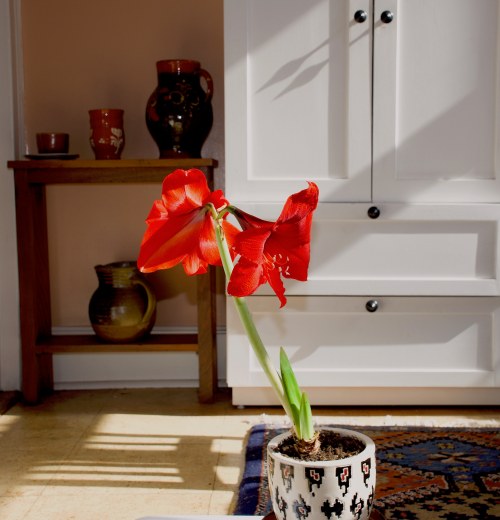
Barely able to contain my excitement, I repotted the amaryllis in clean, dry soil, watered it thoroughly, and placed it in the sun.

I didn’t have long to wait.

Within a couple of days the stalk had turned a vibrant green, and the bulb began to open. And here she is, back to her full glory, with two brilliant flowers glowing crimson in the early-autumn sun!


The Red Herring Rides Again!

Ron Ripple in the Red Herring

By Johna Till Johnson
Photographs by Ron Ripple

It was a cold rainy day last May when I bid farewell to Vlad’s beloved folding kayak,  the Feathercraft Red Heron, which we called “Red Herring”.

Brian and I had spent two futile weekends attempting to dismantle the boat, but unfortunately the aluminum skeleton had fused, and the boat would no longer come apart. And it had to be moved—New York Kayak Company was shutting its doors at the end of the month after a quarter-century of operations at Pier 40.

So as Brian began to hacksaw the aluminum poles, I cried silently, my tears mingling with the rain. It seemed like the end of everything.

Not just Vlad, but the Red Herring, Feathercraft itself (which went out of business the month Vlad died) and New York Kayak Company were vanishing into history.

Except Red Herring wasn’t vanishing.

It was headed to Oklahoma, where its new owner, a professor named Ron Ripple, wanted it for a trip to Alaska. (He needed a folding boat to take on the plane from Oklahoma.) I’d also sold him the tiny K-Light, Vlad’s first-ever boat, which I had paddled for our first Florida Everglades Challenge shakedown trip.  It fit Ron’s wife Ellen perfectly, and I was glad my “Baby Vulcan” had  found a happy home in Oklahoma.

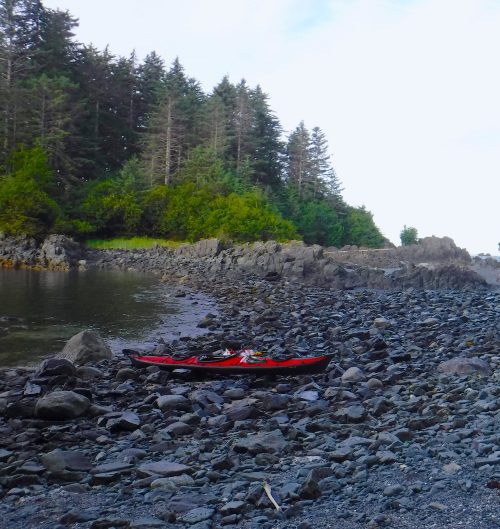
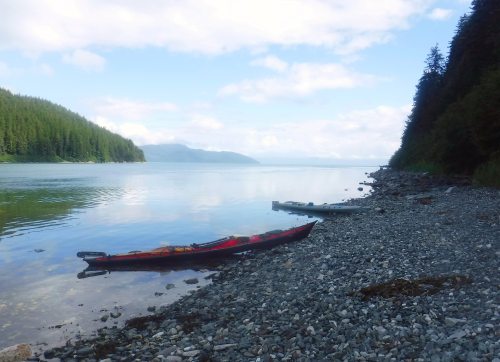
Red Heron on Esther Island

I’d kept Ron apprised of the Herring’s state, including that we’d hoped to dismantle it, but if not, we’d ship it as best we could. He hoped he’d be able to machine the missing parts.

That didn’t happen. Ron wasn’t able to get the boat fixed in time for the Alaska trip. But he went anyway, with another boat, and was particularly happy to be able to re-connect with one of his oldest paddling partners.

We stayed in touch sporadically, glad to have found kindred kayaking spirits. I vaguely remembered he’d made plans to paddle with his friend again this year, in Glacier Bay, Alaska.  He also said something about having been able to repair the Red Heron.

Earl Cove on Inian Island

And then I got these photos, along with a note from Ron:

“Here are a few photos from the trip with the Heron.

The first one is the beach of my first camp site on Esther Island at the mouth of Lisianski Strait while I was solo.

The second is at our camp site in Earl Cove on Inian Island, which sits between Cross Sound and Icy Strait.

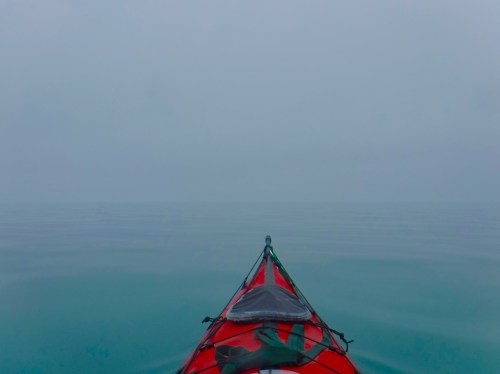
And the third is setting out into the fog on our last paddling day heading across Icy Strait from Pt. Adolphus to Gustavus.

While the water appears very calm, there were very dynamic eddies, boils, and swirls that moved our kayaks substantially; about 2/3 of the crossing was in the fog using GPS and deck compasses.

It was a great trip, and the Heron performed exceptionally. I am very happy with the Heron, and we are already planning next year’s trip.”

Red Heron in fog on Icy Strait

I cried again, but this time with happiness.

The Heron has found an owner worthy of it—and together they will go on many more exciting adventures.

Adventures In Glacier Bay (Red pointer marks approximate location of photos)


The Cat that Found Me

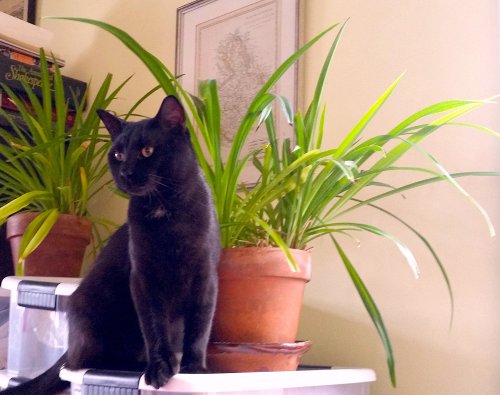
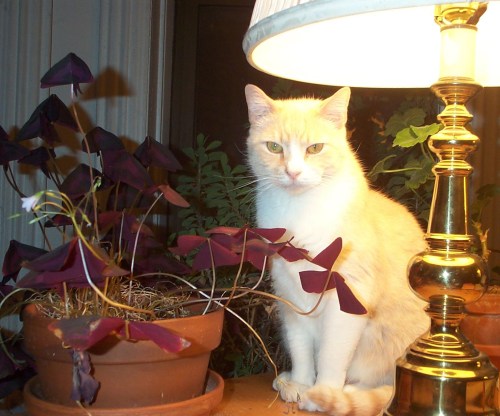
Mully and Spider Plants

By Johna Till Johnson
Photos by Johna Till Johnson and Vladimir Brezina

“You don’t go out and get a cat, ” Vlad would say. “The cat will find you!”

He’d had three cats that he loved dearly: Sergei, April, and Clara. They were memories of happier times, when he’d lived in the first throes of romance with his then-wife in a New York apartment. I don’t think I ever knew how Sergei found him, but April and Clara were abandoned kittens that his wife discovered crying in the street, and which adopted her on the spot.

That marriage ended, and one by one the cats grew old and died. He buried each of them in Central Park (which of course is highly illegal.)

He told the story hilariously: “There I was, in a black leather jacket and skullcap, carrying a shovel and a dead cat in a duffel bag. Its feet were sticking out, already stiff with rigor mortis. It was the middle of the night–I don’t know why the cops never stopped me!”

But it was laughter tinged with sadness, as the last vestiges of his once-happy existence ended and he remained alone in the apartment that had once been vibrant with life. Not coincidentally, that was when he began to take ever-longer kayak excursions, and ultimately met me.

So it was natural that we discussed getting a cat together. I’d had cats for most of my life (despite being allergic), and we both thought a cat would be the perfect addition to our household.

Just one problem: Vlad’s adamant stance that you don’t get a cat. The cat gets you.

And unsurprisingly, given the amount of time we spent on the water, no cat managed to find us.

After Vlad died, I sometimes thought about getting a cat. But I live in a high floor in an apartment building with a doorman: how was a cat going to find me?

Online, as it turned out, just like so many things in this world.

Despite Vlad’s death, I’ve stayed engaged in the Facebook cancer forums that were so helpful to us while he was alive–in no small part because people dealing with cancer are some of the funniest, most honest, and best people around. Cancer has a way of stripping the superficial and extraneous out of people’s souls. If it doesn’t destroy you, it leaves you with a greater appreciation of the world’s beauty–and a much lower tolerance for daily B.S.

One of my forum friends had been keeping us all entertained with her online saga about a feral black cat that appeared on her deck one day this spring.

She promptly named him “Mully”, after a nearby brewpub, Mully’s Brewery.  Over time, Mully went from showing up to be fed to sleeping in a crate that she put out for him.  He allowed himself to be petted, gingerly at first, then with full enthusiasm (and a throaty purr).

In short, he adopted her.

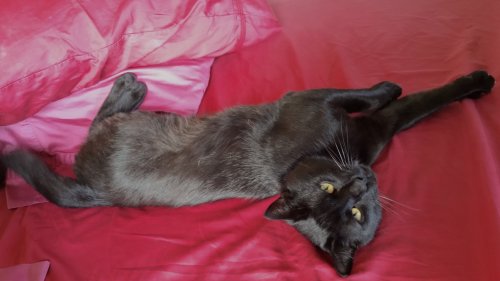
Mully on Bed

Just one problem: The family already had five dogs and another cat, and my friend’s husband, not unreasonably, put his foot down when it came to a seventh animal.  Mully could  be a “porch cat”, nothing more.

My friend started looking for a permanent home for him, with no luck. For several weeks he continued living on the porch.

Then one day he disappeared.

Mully reappeared days later, sick and bleeding. He had puncture wounds in three of his paws and was running a fever. He’d come back to the only place of safety and care that he’d ever known, begging for help. (The puncture wounds, we found out later, were from some kind of attack. Whatever creature had gone after him, Mully had fought back fiercely.)

My friend took him to the vet, where they treated his wounds and infection, dewormed him, and vaccinated him. When he came home, she put him in the guest room, against her husband’s wishes.

“Porch cat” had become “guest room cat”.

But the situation couldn’t last. Mully had to go. The husband was adamant.

My friend posted again on Facebook, asking for any takers for an “indoor-only cat”. She explained that he’d already exhausted several of his nine lives, and needed to spend the rest of them indoors.

Indoor-only? I could do that, I thought, as I read her post.

The only problem: how to go get him? She lived 200 miles away, in southern Maryland. Moreover, I’d be out of town for several weeks, and not able to pick him up.

We made tentative plans for me to drive down on my first free Saturday. Then I ended up unexpectedly spending that weekend in Los Angeles, and we missed the date.

The husband wouldn’t budge. My friend couldn’t keep Mully any longer. He had to be out of the house that week, no more extensions.

She made plans to send him to a foster  home. “Unless,” she wrote, “You could pick him up Friday?”

I couldn’t, but by this time neither of us were willing to give up. She came up with a plan: She’d bring the cat up to her daughter’s on Friday, and I’d pick him up from there on Saturday.

That’s how I found myself on a sunny summer morning, driving down the familiar stretch of I-95 once more, this time in pursuit of the cat that found me.

I realize I’d fallen in love with him long before that day. “How is our Mully?” I’d written, earlier that spring. And “I think I love this cat,” another time. Not only was he adorable, but his feistiness and spunk were undeniable.

And with everything that he’d survived, his sunny and loving disposition was still intact. When I met him for the first time, he crawled into my lap and began to purr, nestling his face into my arm.

Vlad was right: The cat finds you.

Sergei (RIP) Photo by Vladimir Brezina


Tampa Bay Crossing

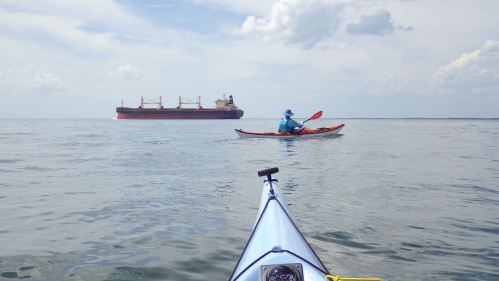
Jenn and cargo ship on Tampa Bay


By Johna Till Johnson; music and video by Jennifer W. Call

It was Jennifer’s first open water crossing.

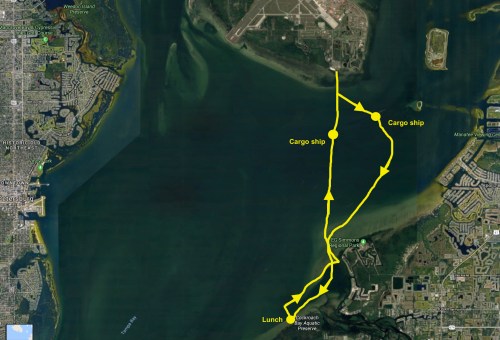
We were heading across Tampa Bay on a sunny spring Sunday. Our nominal destination was Cockroach Bay to the southwest, around eight nautical miles away. But really, the goal was to paddle in some open water, spend time together, and see how we functioned as a team.

I glanced to the left.

Jenn was slightly farther away than I’d like, but otherwise she seemed fine, cresting a wave with confidence. We’d been in open water for about half an hour, and conditions had picked up a bit. The current was coming from the southwest with the flood, as anticipated, but it didn’t seem to be too strong. The wind, predicted from the same direction, was inexplicably coming from the east. (Florida rules: Expect the unexpected!)

The route

But I was happy about that, because it generated some nice bouncy wind-against-current waves for Jenn to try her skill on.

The prediction had been for “light chop”, but the waves were a bit more than that. Maybe two feet, with the occasional swell to three. Before we’d left I’d reminded Jenn to brace into the waves if she felt unsteady. The reminder seemed almost unnecessary. Although a relatively novice paddler, Jenn seemed to know exactly what she was doing, and she’d completed the Sweetwater symposium training in February with flying colors.

That’s where we met, in fact. Some of the Sweetwater folks had suggested to her that she meet me: “You two think a lot alike,” they’d told her.

We did. From the moment our two Subarus parked next to each other and she leapt out with an infectious smile, I knew we’d be friends. Another single woman, with a Subaru and a Valley boat on top, and a passion for endurance athletics? Yes!

So it made perfect sense for me to fly down to Tampa, where Jennifer lived, two months later for a kayak-camping trip. The grand plan was to complete the Everglades Challenge in 2019 together. But before we did that, we’d have to see if we could get along, and paddle together.

So far things were looking good. Jennifer had accepted my ever-changing work schedule with good grace, even when it cut into our plans. And the night before, we’d had an absolute blast.

Jenn had suggested we camp on the grounds of MacDill Airforce Base, where she worked. She was currently in a civilian role, but was a retired Naval officer, like my father.  So we had that in common.

Meals ready to eat: Complete with candy!

The night before, we’d arrived just before sunset (in time for the mosquitos to come out in full force). We set up our tents (or rather, her tent and my bivvy sack) and broke out dinner: Military “ready to eat” meals (MREs). Jennifer had been curious about them: “In the Navy we didn’t have MREs, we had C-Rations,” she explained.

The difference? MREs come with a self-heating pack: Just add water, and a chemical reaction causes the pack to heat up and warm the food inside. (Clearly a very bad idea in a ship to have devices that explosively heat up upon contact with water, as Jenn pointed out).

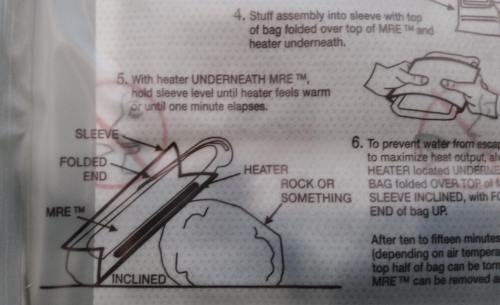
So with eager curiosity, we extracted the all the little packets, and took a close look at the very detailed instructions.

What was this? Step #5 was just a diagram of the MRE packet propped up against… “A rock or something.”

Honest-to-god, that’s what it said! I couldn’t stop laughing.

“Rock or something”? Ooookay!

The MREs turned out to be delicious, and we soon trundled off to bed (another point of commonality: We both like to go to bed early, and wake up early).

The next morning, we drove the short distance to the boat ramp and began loading up. A young couple drove up with a trailer and a fishing boat; we exchanged pleasantries.

When they asked, I mentioned we’d be crossing Tampa Bay in our kayaks. They gaped, and asked: “You can do that?”

I pointed out that the original kayakers went out in far bigger seas, in freezing weather. Still, it made me feel a tad more adventurous.

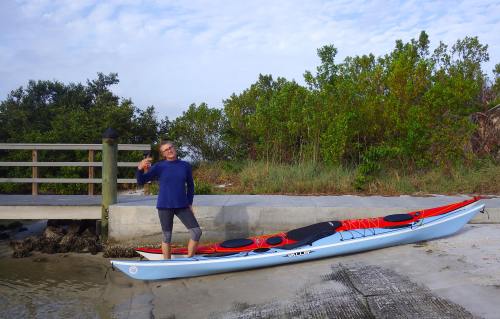
Jenn getting ready to launch

We launched, and I made another pleasant discovery: Jenn’s knowledge of marine navigation was rock-solid, as befitting a former Naval officer. We were using her boats (she had two Valley Etains) and they both had compasses, which she’d installed herself. We’d picked 180 degrees as our point of navigation, to account for the current, which would tend to push us east.

We paused to let a giant cago ship pass, then set into the channel. And here we were out in the middle of the channel, with choppy, occasionally cresting waves.

I glanced over at her again. She looked fine, but just in case.. I mentally calculated how long it would take me to get to her if she capsized. Longer than optimal, but I’d be paddling with the current, and in warm water, the danger of hypothermia is remote.

We paddled through the chop, and kept going. Ahead of us, the shoreline began to grow larger. We’d made it across the bay!

The chop slowly eased, and I drew closer to Jenn. “How’d it go?” I asked, expecting her to be exuberant. She certainly hadn’t seemed to have had a care in the world.

Instead, she smiled warily. “I was a bit… concerned!”

Concerned? This was a woman who’d guest-piloted an F-18 at near-supersonic speeds? Who had first picked up a paddle a few months ago, and was now cresting waves with confidence?

Then I thought back to my first open-water crossing, across New York harbor. By then I had already been paddling for a couple of years. But still when the swell picked up, I, too, was a bit… concerned.

Jenn had acquitted herself spectacularly well. 

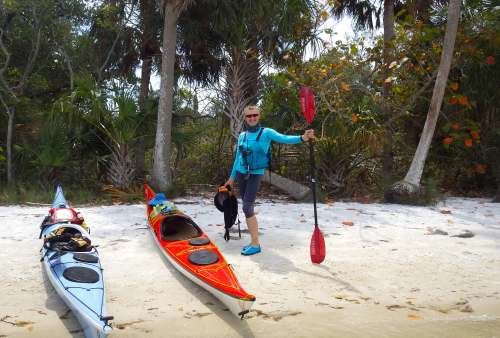
Jenn voguing at our lunch spot

The rest of the day ran like an advertisement for Florida paddling. The wind quieted down, and the water shimmered like molten metal. It was cool enough to be comfortable, but the sun behind the peek-a-boo clouds scattered light everywhere. We stopped on an inviting beach for lunch and a photo shoot.

After lunch, we explored the mangroves behind our beach, then turned our bows for home.

A skirt, but not exactly a high-fashion one!

The crossing back was as calm as the crossing over had been choppy; the only excitement was when we had to decide whether to cross in front of the cargo ship that appeared suddenly in the distance. We decided to wait—good thing, as it turned out.

Jenn on mercury water

We reached our campsite later that afternoon, tired but happy. Jenn had her first paddling blisters—first of many, I warned her—and they made an interesting contrast to the calluses she had from rock climbing.

We took a walk to shake out the stiffness, and treated ourselves to ice cream at the camp store. Then we rigged up a three-way clothesline in a cluster of trees—a “triline”, as Jenn pointed out. (I was delighted by the quirkiness and practicality).

The “triline”

There was just one catch. Even though we’d carefully rinsed out our clothing in the showers, it looked like it was due for a second rinse: Clouds loomed ominously, and off in the distance, thunder growled.

We puttered around the campsite getting ready to prepare dinner. And sure enough, as we were ready to start, the skies opened in a torrential downpour.

What to do?

Jenn’s apartment was just five minutes away. But we were here to camp!

We decided to stick it out, but cook under the eaves of the shower/laundry room, where there were benches.

So we chatted and ate our MREs, listening to the rain drumming on the roof overhead and trying not to think about what it would be like in our tents under the thundering waterfall. Would we be in for a wet, uncomfortable night?

The rain refused to let up, so we walked back to tents in the downpour.

As luck would have it, at the exact moment we said goodnight to each other and unzipped our shelters… the rain stopped.

Snug inside the bivvy sack, I enjoyed the luxury of looking up at the slowly-clearing sky, the fresh night air cool against my face.

The next morning we were up before dawn.

“Look!” Jenn whispered suddenly, pointing.

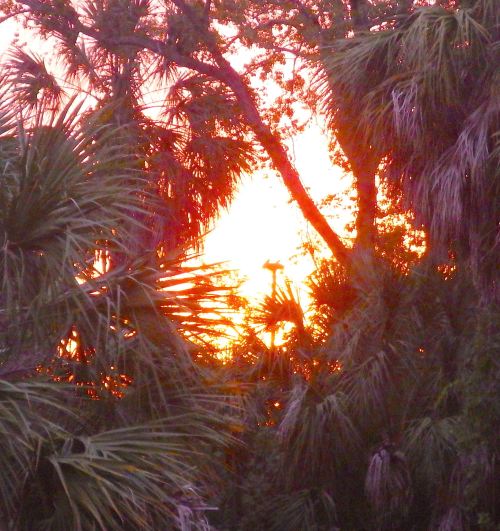
There, in a space perfectly framed by palmettos and trees, was an osprey nest against the rising sun, was an osprey nest, with both parents inside.

We took photos and smiled at each other. It was a hopeful omen.

And it had been a wonderful couple of days.

Ospreys at dawn; photo composition by Jenn W. Call

Jenn likes to make videos of her adventures! So this short clip will give you a sense of the trip. (Special bonus: Yours truly dissolving in giggles over the “rock or something”). Turn the sound up so you can hear Jenn’s original musical composition.


Mitsuwa…And More

Sunset at Pier 84

By Johna Till Johnson

Maybe this isn’t such a great idea.

I’m sitting on the dock at Pier 84 on a sunny—but cold—Sunday afternoon in early spring.

I’m wearing a drysuit, and my feet are in the seat of my kayak, which is bobbing up and down with the wake-driven waves.

The dock is around18 inches above the waterline, and I’ve just remembered that I’ve never been able to get into my boat from the dock unaided before.

It’s a tricky launch. The boat has a habit of getting caught under the dock’s overhang and slammed into it by the waves (there’s a nasty crack on the hull that I think resulted from such a crunch). Between the height and the waves, there’s a good risk of unbalancing and landing in the water. Every other time there’s been someone around to steady the boat for me—and I’ve needed it.

A further thought occurs to me: I’ve never actually paddled solo in winter weather before.

I’ve done an 8-day solo kayak camping trip in Florida’s 10,000 islands. I’ve solo-circumnavigated Manhattan. But it’s always been in warm water.

Right now, despite the wetsuit and several layers of insulation, I have maybe an hour or two of survival after capsizing in the 40-degree water.

More importantly, my hands, which are uncovered, will go numb after about four minutes—which makes getting back into the boat a challenge unless I manage a flawless roll.

And climbing back up onto the dock could be a nonstarter if I happen to fall in while getting into the boat.
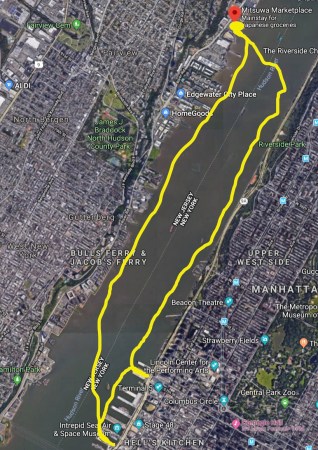
To Mitsuwa and back (est 9 nautical miles)

Yeah. Maybe this isn’t such a good idea.

But at the back of my mind the knowledge gnaws at me: If I don’t launch now, I will probably give up on solo winter launches from this pier. It’s too easy to find excuses for what you’re afraid of.

And that’s not something I’m willing to give up on. Not just yet.

So I’m sitting with my feet in the boat, feeling it bob up and down, waiting for my heart rate to drop and my hands to stop sweating. I have time. All the time in the world. I just need to relax and think things through.

After a bit, I realize: Why do I never have trouble getting out of the boat onto the dock?

Instantaneously, the answer comes: Because I keep my weight low and throw my body belly-down on the dock. I look ridiculous and ungainly, like seal flopping up onto land, but it works.

And if it works for getting out… it should work for getting in!

I roll the idea around in my head.

Yeah.  Yeah. I can do this!

So I flip over onto my stomach and slide my feet into the cockpit, keeping as balanced as possible, with my weight on my hands on the dock. When I feel my center of gravity move out over the water, I slide into the boat, as neatly as a knife going into its sheath. The boat barely wobbles.

Elation. I did it!

I push off from the dock and begin tucking my storm cag over the coaming.

Just then, my radio crackles to life, announcing the Norwegian Breakaway, the cruise ship that usually launches from Pier 88 on Sunday afternoons.

At Pier 84, right next to the Intrepid, I’m going to be in a prime location to watch it go by. I paddle slowly forward in the embayment, and take several pictures as the Breakaway slowly appears, colorful and majestic, flanked by a NYPD vessel. To complete the photo opportunity, a NY Waterways taxi arrives on the scene.

The Norwegian Breakaway… and companions!

An auspicious sendoff, I decide, and paddle out into the Hudson.

Earlier, I’d encountered a group of hardy kayakers and paddleboarders, who warned there was tug-and-barge activity just north of me on the Manhattan side. So I decide to cross over to the New Jersey side and paddle north.

My notional destination is Mitsuwa, the Japanese grocery store located a few miles up on the Jersey shore. It has a convenient beach and is known to be paddler-friendly, with spacious restrooms and a plethora of tasty groceries and restaurant options.

But I’m not sure I’ll make it that far, and I’m not sure I’ll even bother to get out if I do. The goal today is simply to launch, paddle for a bit, and get back onto the pier in one piece. If I accomplish that, I’ll have proven to myself that I’m able to solo paddle in winter.

I’m traveling with the current, but the flood is never strong in the spring—the snowmelt from upstate overpowers it. There’s also a strong and steady northern wind—about 15 knots, I calculate. Enough to create a little wind-against-current chop, and to slow down my progress.
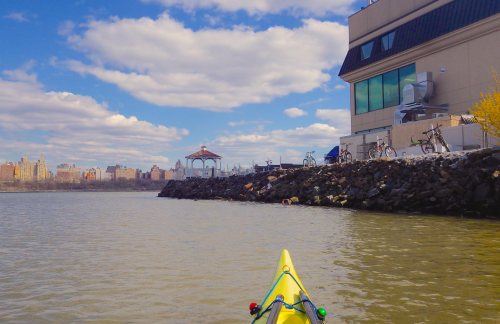
Bicycles and blooming forsythia

I slowly wend my way up the New Jersey shore, mourning a bit for the wreck of the Binghamton,  which left this world just after Vlad did. It’s strange how attached you can get to an inanimate object with which you have no direct connection. And it’s hard to escape the sense of loss as I think of the many things that now live on only in my memory…

But it’s a new spring day, and the sunlight sparkles cheerfully on the waves. The forsythia’s out, I realize, and stop to snap a photo of a bush in bloom, appearing to lead a parade of bicycles. Across the river, the buildings are awash with light.

After a couple of hours of paddling, I arrive at Mitsuwa. Bobbing just off the little beach, I think to myself that there’s no reason to disembark. I’m not particularly hungry, and getting in and out of the boat just seems a bother.

But curiosity nibbles at my mind. It’s been years since I stopped here.

The last time might have been with Vlad, who refused to get out (the beach can be muddy). We had a small spat, and I left him floating in the river while I went inside for a pit stop and supplies. When I returned, we ate sushi and drank sake in the boats while the current carried us downstream. I remember how we laughed, the argument forgotten.

That was years ago, four or five at least. Was it still the same? And… I have a vague memory of tempura. My stomach rumbles. I’m decided. I paddle the boat up on the beach, threading gingerly between the pilings. I pull off my spray skirt, tuck it into the cockpit, and climb over the fence into the parking lot.
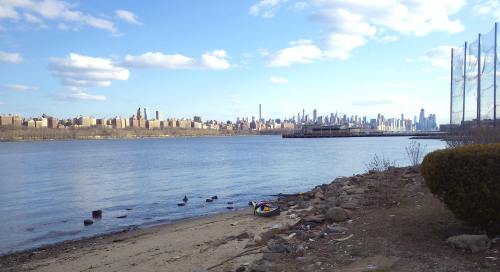
Small boat, big city

Inside, the supermarket is as clean and spacious as I remember, filled with (mostly) Japanese shoppers. But something’s different… I finally realize a row of food stalls has replaced what used to be the restroom area (temporary bathrooms are port-o-potties out front while construction finishes).

And one of the food stalls features… tempura! I place my order and wait patiently in line, making faces with the baby and his young parents in front of me. Finally it arrives, hot and fragrant.

Tempura!

I take my order outside where there are low stone tables and chairs. From here I can see the beach where my boat rests, and look at the steak house that sits out over the water. It’s not paddler-friendly, I’ve been told: Too upscale to tolerate muddy boots and smelly drysuits.

The food is delicious. As I eat, I notice the buds are out on the trees. The steakhouse has flowers in its flowerbeds. Spring is really going to arrive!

Lunch (or rather “linner”, as Vlad called that late-afternoon meal that’s neither lunch nor dinner) complete, I pack up and launch. As anticipated, the current has turned, and I’m traveling with the wind and current. I cross over to the Manhattan side and watch the shoreline ripple by. It takes me less than half the time to return that it did paddling out—about 45 minutes, compared with two hours on the trip up.
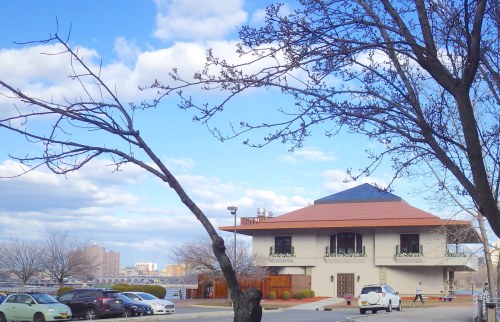
Japanese flowers

Just as I get close to Pier 84, I remember the tugs and barges the other paddlers warned me about. I assume they’ve called off work by now—it’s late on a Sunday afternoon. But what’s that ahead?
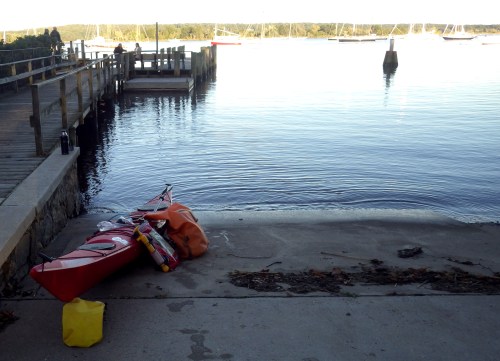
Sure enough, two turquoise tugs appear, each maneuvering a barge. They look like the Megan Ann and one of her sisters (see some footage of the Megan Ann in action here: https://www.youtube.com/watch?v=bkBjlRkwMP8)

One steams north upriver, but the other appears to be turning. Towards me? Yikes!

Fortunately it’s not—it’s heading into the embayment just in front of me.
I pull up, and wait for the tug to pull her barge out of the way.

I peek out cautiously. The tug-and-barge seem to be anchored. So I cross the embayment and continue on towards home.

I  turn into Pier 84 just under the bow of the anchored Intrepid (which never fails to thrill me—how many paddlers come home to a famous air craft carrier?). I pull up to the dock.

There’s no one in sight as I start to clamber out of the kayak. I’ve got this—getting out of the boat is easy, right?

Not so fast. I lose my balance and nearly capsize. The boat rights itself, but it’s carrying water—several inches at least, making it less stable. Slowly, cautiously, I pull myself forward onto my stomach on the dock. My heart pounds. Close call.

I’m up… but can I get the boat up, full of water as it is, without breaking it?

I pump some water out, then give up. There’s just too much. I grab the bow, and give it a pull. The boat slides up on the dock, in one piece. I flip it over and watch as it drains.

I’ve done it. Launched and landed, and made it up the river and back. In winter conditions.

I will do this again, I realize.

I stand up and look out over the water… just in time to capture a photo of the setting sun.

This turned out to be a great idea!

This slideshow requires JavaScript.