Category Archives: Science and Technology

Travel Theme: Hidden

By Vladimir Brezina

Ailsa’s travel-themed photo challenge this week is Hidden.

In our kayaks, we can poke into the most obscure corners of New York Harbor. And we do! And over the years, we’ve found there many fascinating hidden things.

Schamonchi

Many of them are remnants of the maritime and commercial history of the harbor. There are substantial ships tucked away at the ends of narrow waterways, acres of wrecks,

.

The Yellow Submarineeven a submarine…

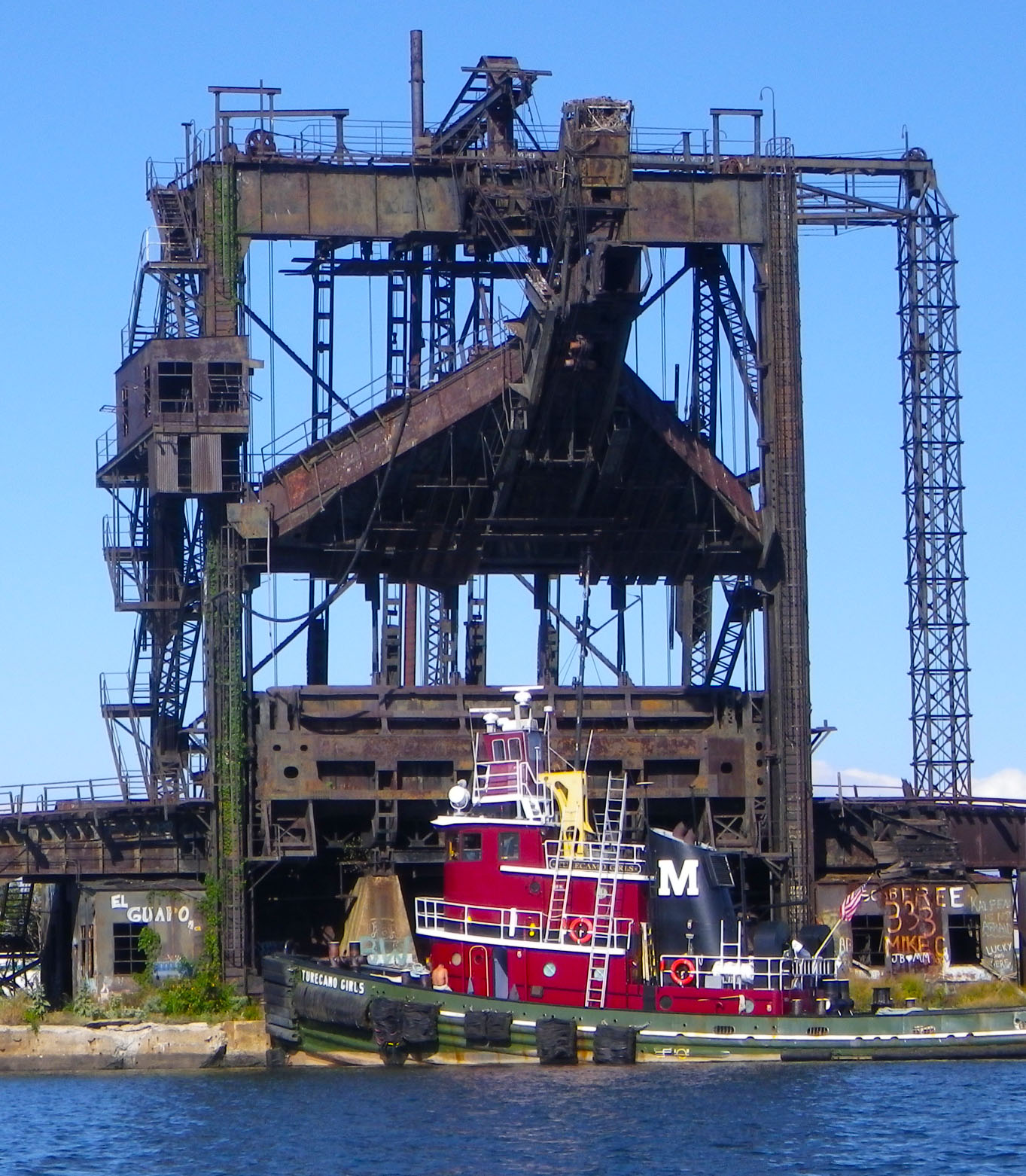
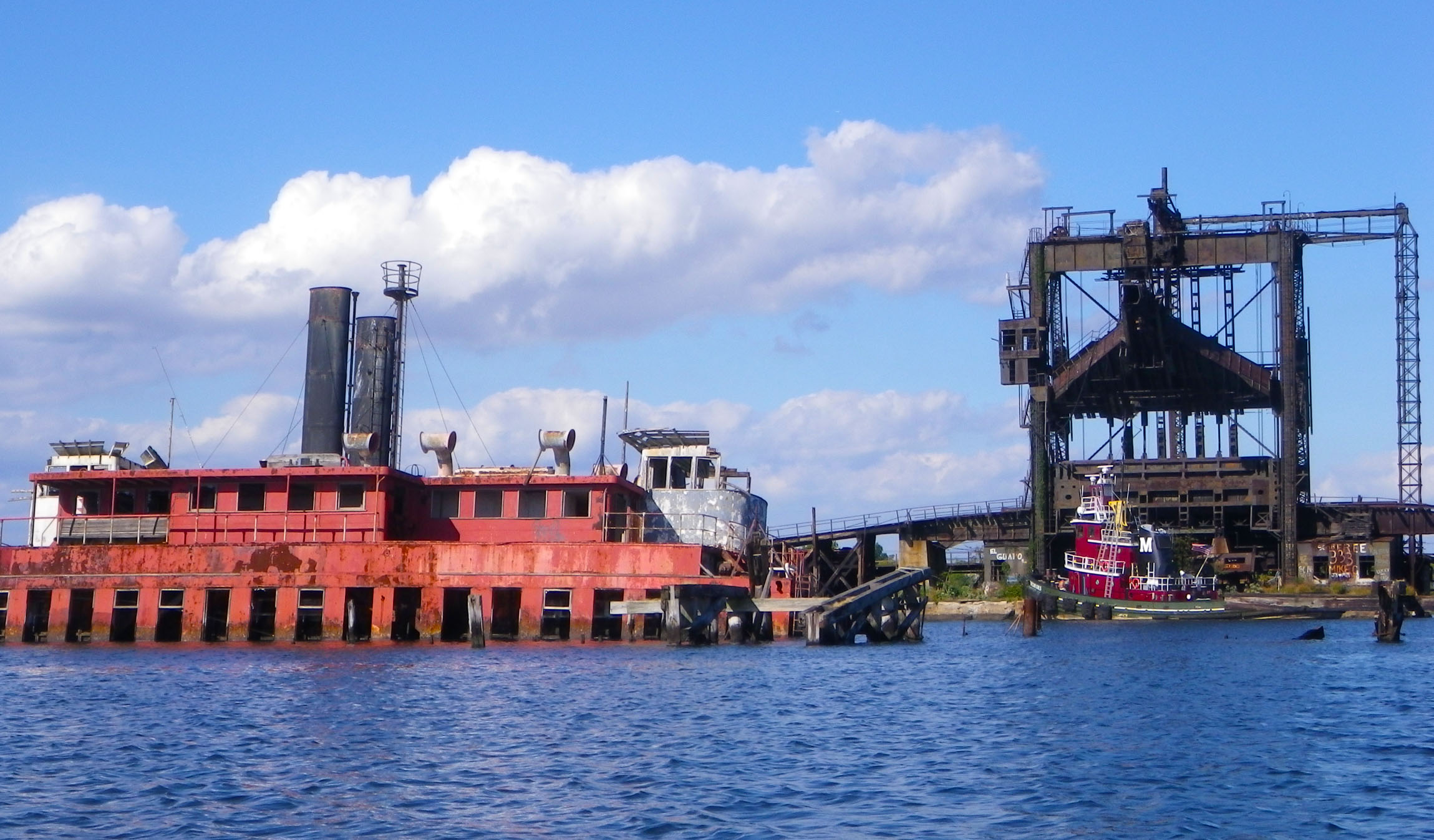
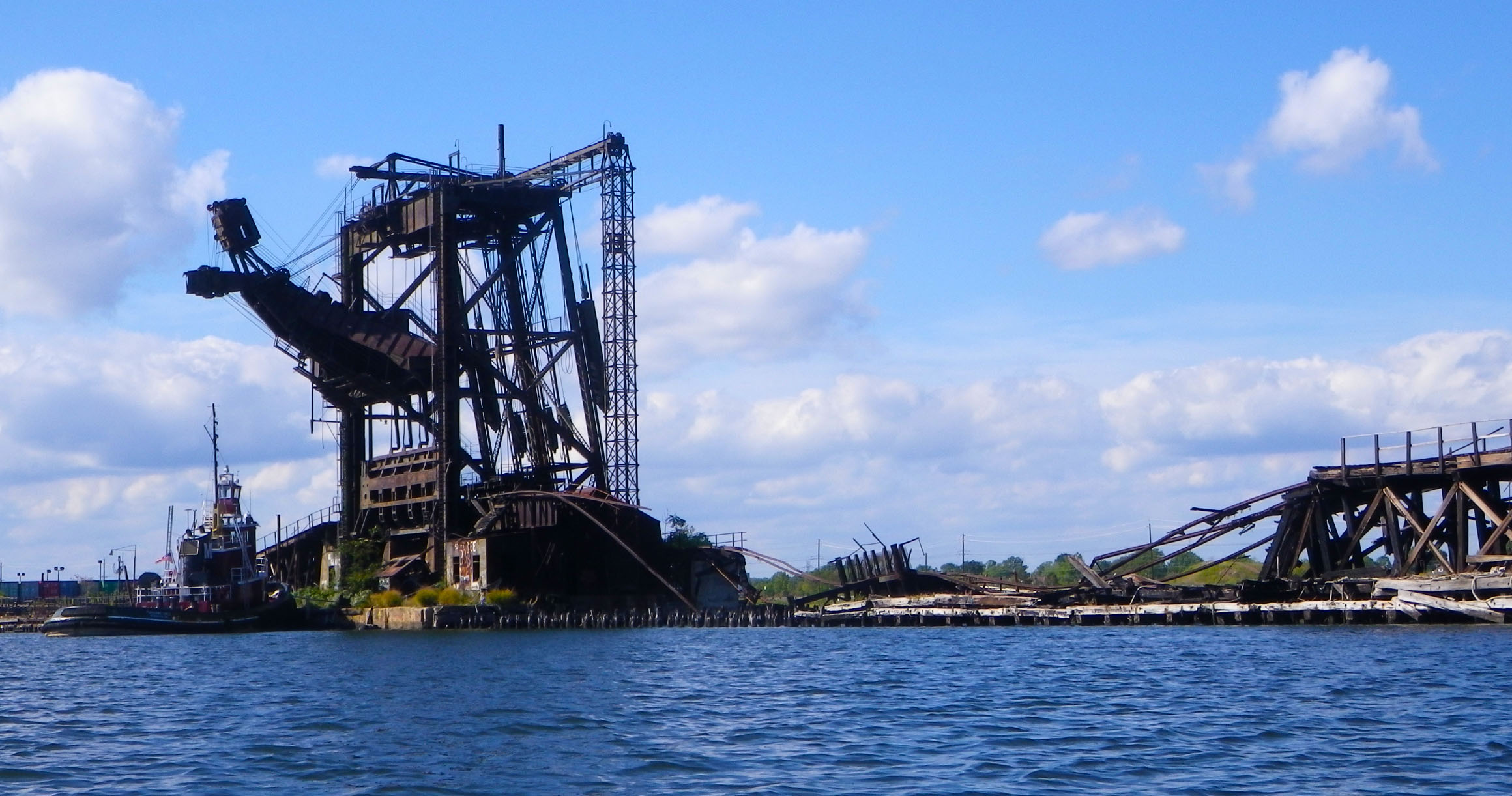
Here is another strange, intriguing structure. It’s located a little out of the way, in Port Reading, NJ, on the Arthur Kill behind Staten Island. It’s not exactly hidden—as you paddle up the Kill you can see it in plain sight from a long way off. But you have to notice it particularly, as it blends rather well into the general decayed industrial look of the shoreline. And, on the first visit, the pink wreck of the Major General William H. Hart just in front of it (in the first photo below) completely steals the show.

So, although we’ve paddled past many times, we’ve only once taken a few minutes for a closer look. This was in September 2010, when these photos were taken (since then, the structure has reportedly deteriorated even more).

At that time, we didn’t really know what we were looking at. Now that we do, we must go back for a careful inspection!
IMGP0388 cropped smallIMGP0412 cropped smallIMGP0402 cropped small

So, what is it?

It’s a McMyler Coal Unloader. Built in 1917 and operating until the 1970s—according to some accounts, until 1983—it’s the last remaining one of its kind in the New York area. Originally there were at least eight of them along the shoreline of New York Harbor, each operated by one of the railroads that brought coal in from Pennsylvania and the Alleghenies. One, described in loving detail here in a 1951 article, apparently was located on Jersey City’s Pier 18, a now completely vanished 900-foot quay extending into the Hudson River between Liberty and Ellis Islands!

In operation, an open-topped railroad car full of coal was pushed into position inside the unloader’s tower. It was then grasped by the machinery, bodily lifted up, and turned upside down so that the coal spilled down a chute into a waiting barge (moored about where the tug Turecamo Girls is moored in the photos above). The empty car was put back onto the rails and given a little shove, so that, like on a roller coaster, it rolled away by gravity down an incline while the next full car was pushed into position…

The Garden State Central Model Railroad Club has built a working model of a McMyler Coal Unloader, seen in action here:

No dainty opening of little hopper doors here. This was a crude, brute-force approach that worked. The McMyler Coal Unloader could empty a 100-ton car every minute or so, continuously. A fascinating relic of the heroic industrial age—it might have been built by giants!
Tugboat Races 2013

By Johna Till Johnson
Photos by Vladimir Brezina

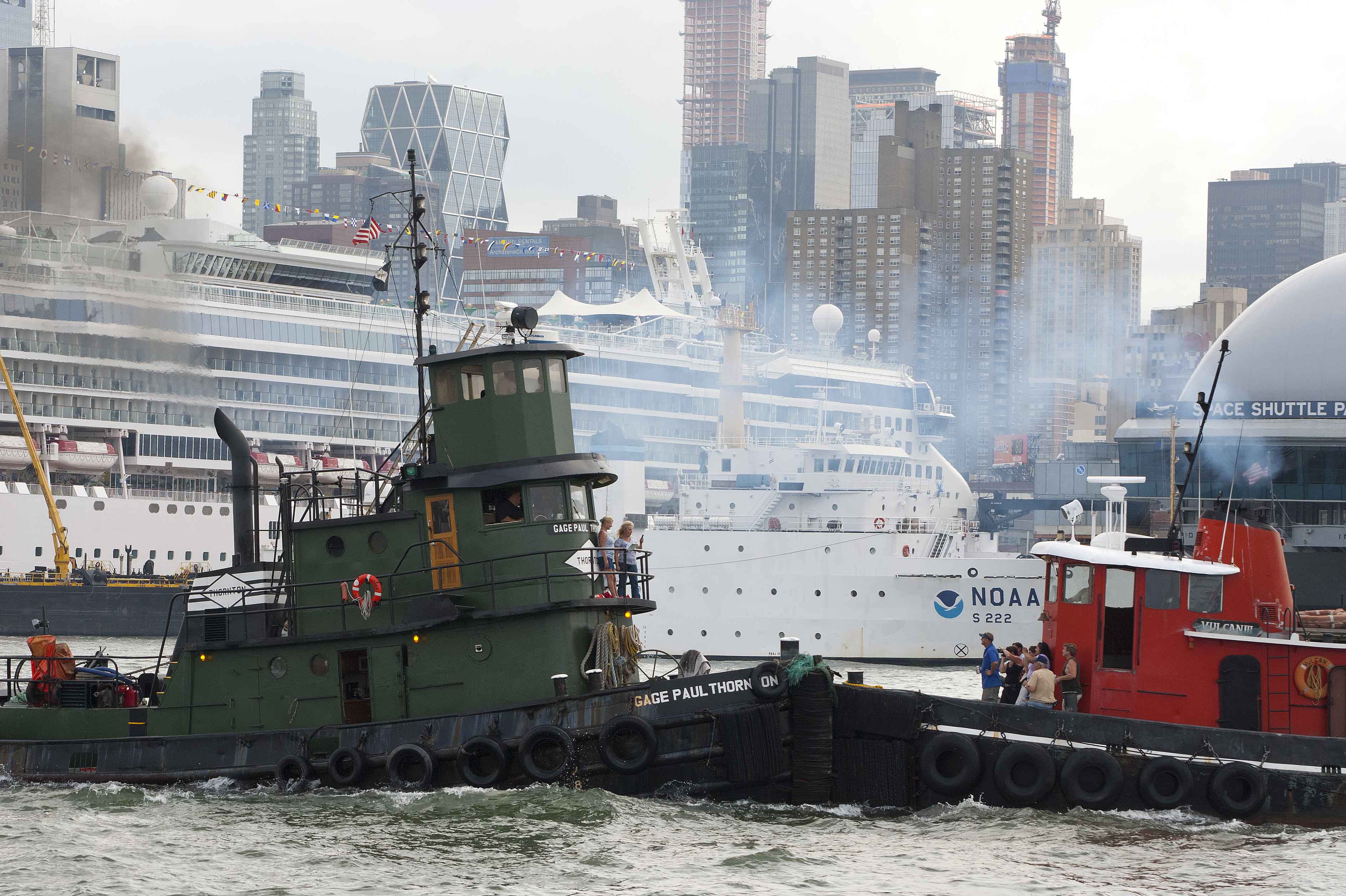
DSC_0318 cropped small

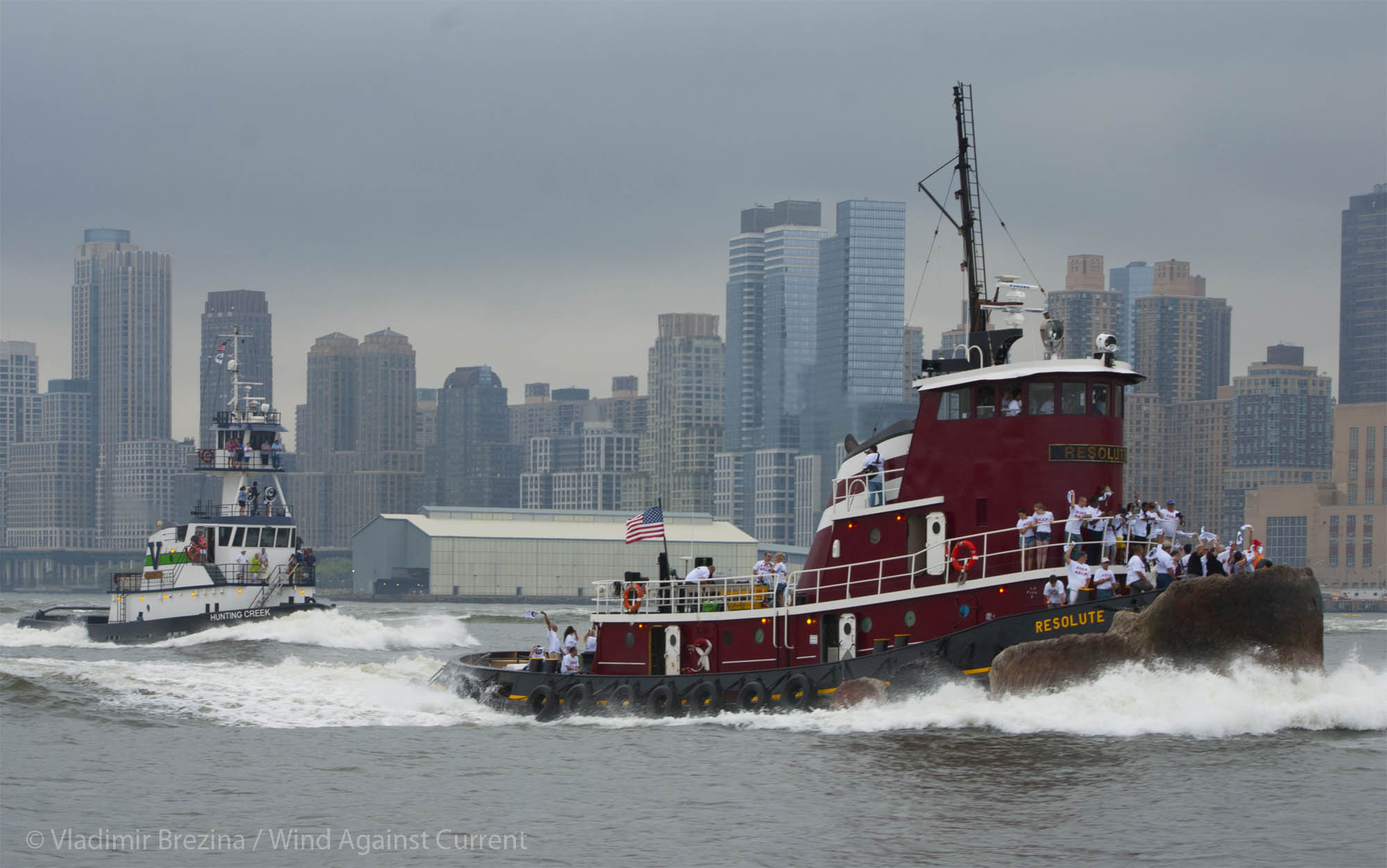
Last year, on the spur of the moment, we attended our first-ever Great North River Tugboat Race & Competition (see the writeup, “We’re Off to the (Tugboat) Races!”).

We were stunned, blown away, and delighted by the experience.

So it’s only natural that this year, we were conflicted. On the one hand, we were eager to go again; on the other hand, how could it possibly live up to the previous time?

DSC_0114 cropped small

Let’s just say… it did.

Continue reading

Happy Labor Day!

By Vladimir Brezina

… Labor Day, and (practically speaking) the beginning of Fall!

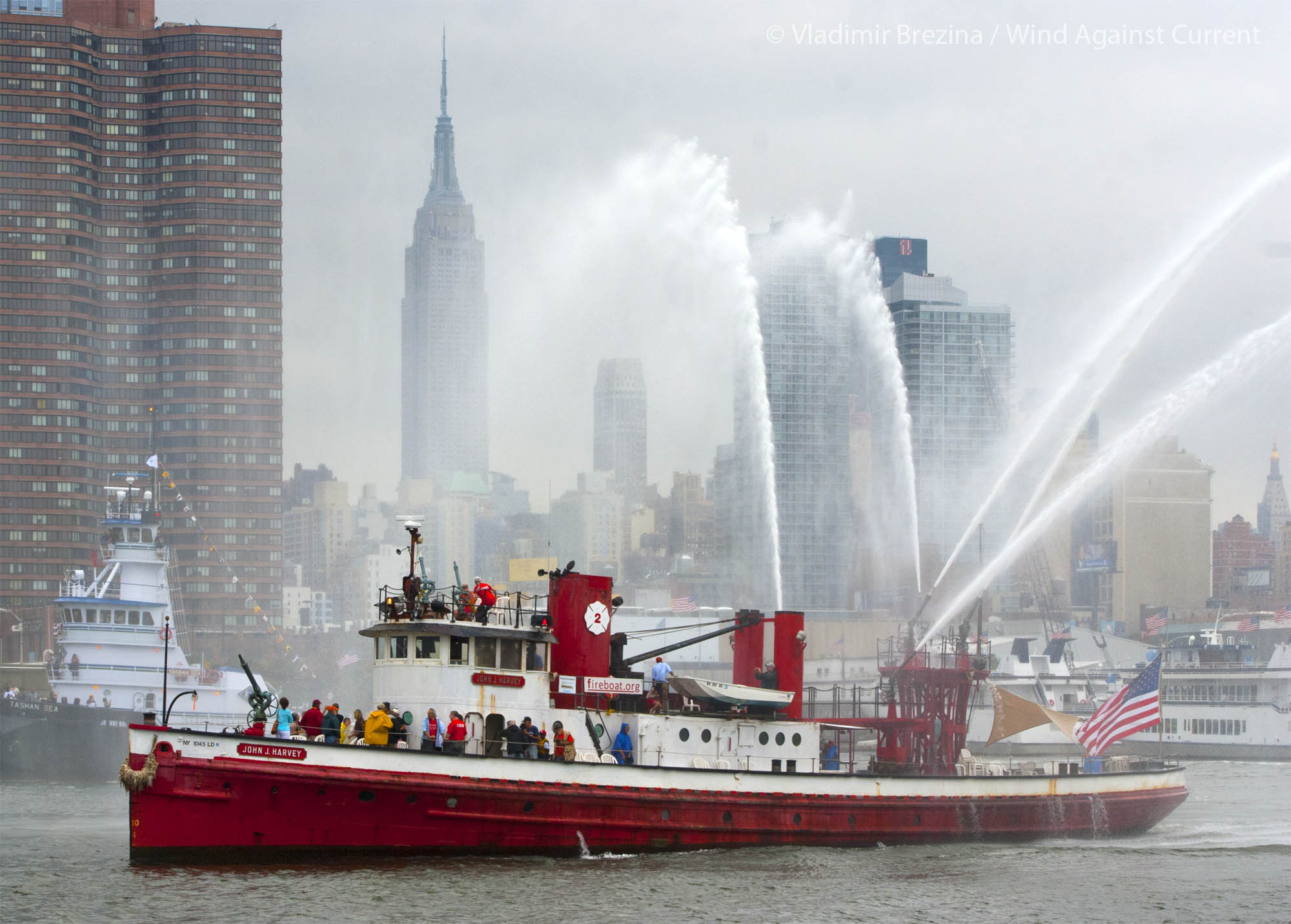
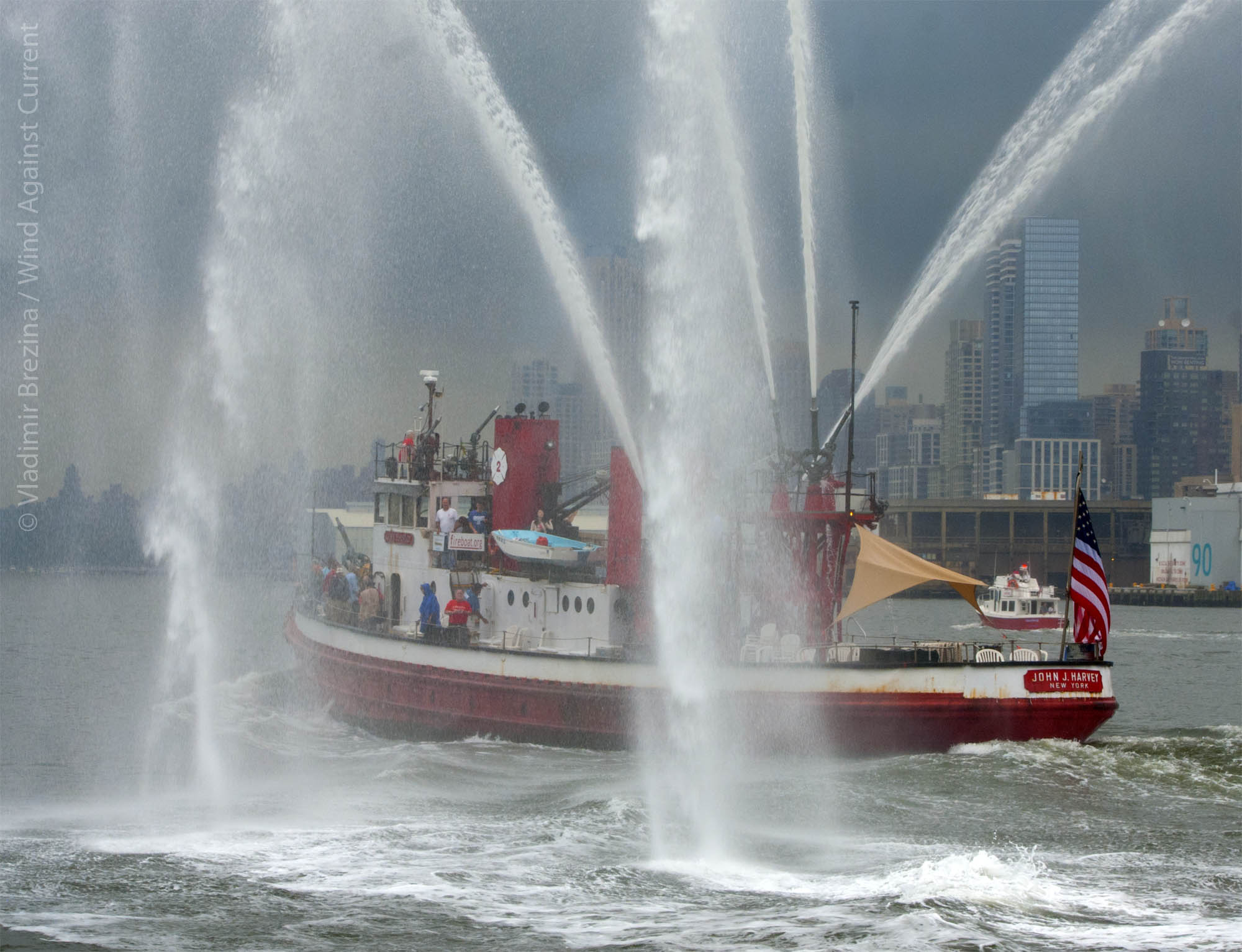
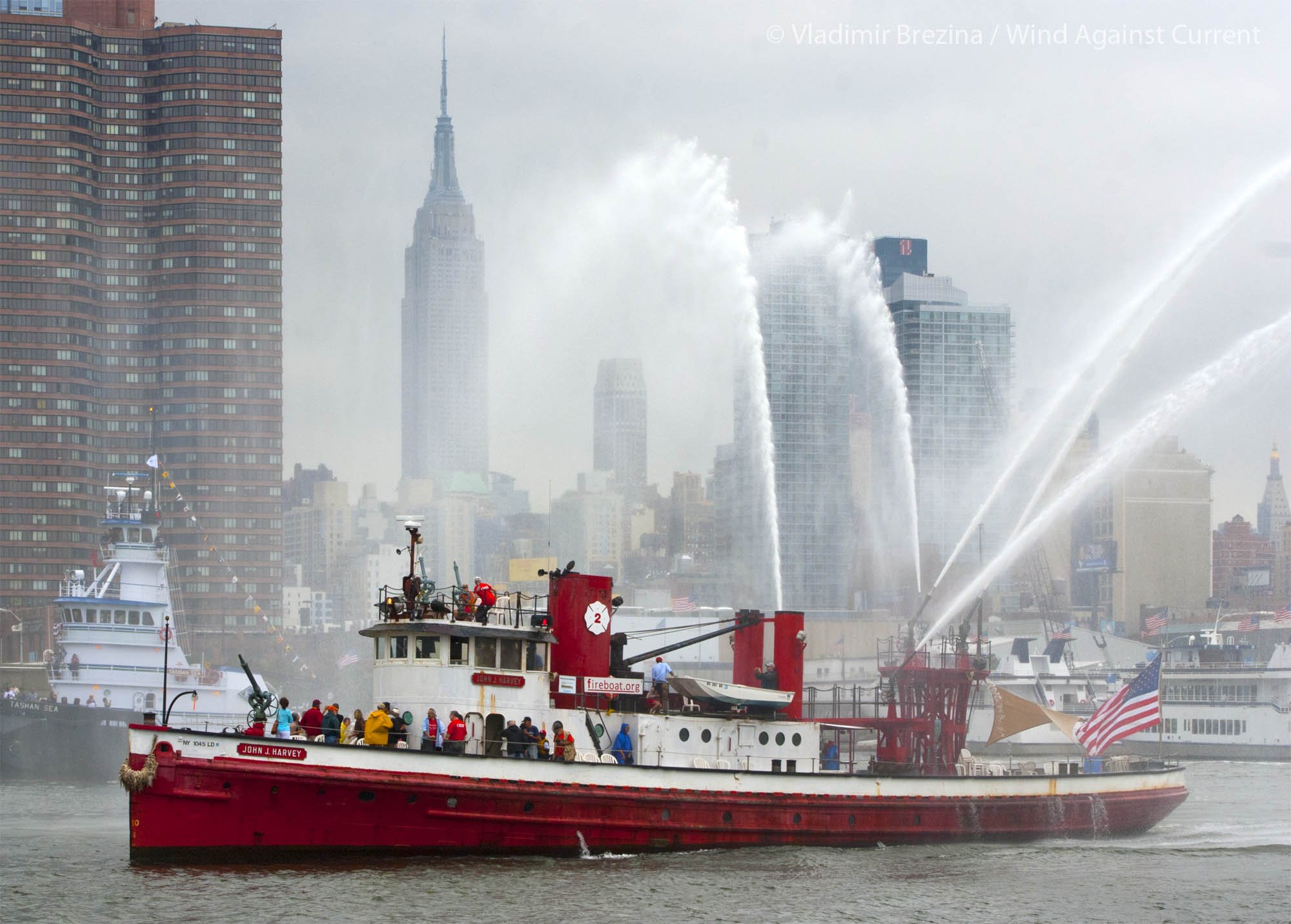
Here are a few celebratory photos taken at yesterday’s Great North River Tugboat Race & Competition. Lots more photos to come. (Last year’s are here.)

DSC_0114 cropped small DSC_0130 cropped small DSC_0139 cropped small

The Cardboard Kayak Race

By Johna Till Johnson 

Every now and then something comes along that’s just a sheer delight from start to finish.

Yesterday, it was this video of the 2013 City of Water Day’s First Annual Cardboard Kayak Race.  It features practically all of my favorite things: kayaking, engineering, competition (the thrill of victory and the cold splash of defeat), creativity, ingenuity, and whimsy. All on a beautiful summer’s day in New York!

The event was hosted by the Metropolitan Water Alliance, a not-for-profit that, in its own words, “works to transform the New York and New Jersey Harbor and Waterways to make them cleaner and more accessible, a vibrant place to play, learn and work with great parks, great jobs and great transportation for all.”

The Cardboard Kayak Race is exactly what it sounds like: Teams of competitors are each given identical materials from which they construct, and then race, cardboard kayaks. Starting materials include:

  • 10 5×5 squares of cardboard
  • 10 rolls of packing tape
  • 3 rolls of gaffer tape, and
  • a box knife

The video is long (though well worth watching—it will leave you laughing with joy!). But  if you’re pressed for time, here are some highlights:

  • The first 12 minutes feature various shots of boat construction
  • At 12:00, judging commences. You’ll meet the teams, which include the Brooklyn Bridge Park Boathouse, the NYC Watertrail Village Community Boathouse, the High School of Math, Science, and Engineering Alumni, El Centro (from Staten Island), the North Brooklyn Boathouse, the Stevens Institute of Technology, the Stuyvesant High School Village Community Boathouse, and the US Coast Guard Marine Inspectors.
  • There’s a great comment at 17:30 where the judge asks the Coast Guard team, “Which do you think is the front part of the boat?”, then adds, “I don’t want to confuse you with technical questions!”
  • The race begins at 18:18
  • There’s a nail-biter of a finish at 19:15
  • Disastrous and heartbreaking collision at 19:50
  • Dramatic capsize at 20:46

It’s all wonderful fun, and well worth the watch!

Weekly Photo Challenge: Masterpiece, Take Two

By Vladimir Brezina

Here is a Masterpiece that I think our readers, especially those with children of the right age, just have to see…

(sorry for the ad the first time you watch it, but it’s worth it!)

For details see Johna’s original post here.

We’re Off to the (Tugboat) Races!

By Johna Till Johnson
Photos by Vladimir Brezina

Sometimes the best ideas are the last-minute ones.

We’d carefully planned the Labor Day holiday weekend, balancing work, rest, paddling, and socializing, and after due consideration we’d agreed that the best strategy would be to work and run errands on Saturday, followed by a long paddle on Sunday, which had optimal currents and weather forecast.

Then Vlad said, “Would you like to go see the tugboat race this weekend?”

Well, of course! We both love everything maritime, and tugboats in particular. And we’d talked for a while about wanting to see this event—the Great North River Tugboat Race & Competition, hosted each Labor Day weekend by the Working Harbor Committee, in which a dozen or more NYC-area tugboats parade up the Hudson, race, and then engage in various contests (pushing contests, line tosses, and who knows what else). And it was all happening this weekend!

Continue reading

Sea Hare Ink Makes Lobsters See Purple

By Vladimir Brezina

This week’s Photo Challenge has got me thinking about the color Purple.

The most vivid purple that I’ve ever seen was not the purple of flowers, nor of sunsets. Rather, I see it in my lab. One of the experimental animals we work with is a large marine slug from California, Aplysia californica, popularly known as the sea hare. When disturbed, the sea hare releases a cloud of ink that has the most intense, rich purple color.

Those of a classical bent will recall Tyrian Purple, also known as Royal or Imperial Purple, a dye greatly prized in antiquity, which was made from a similar ink produced by several Mediterranean snail species:

Tyrian Purple was expensive: the 4th-century-BC historian Theopompus reported, “Purple for dyes fetched its weight in silver at Colophon” in Asia Minor. The expense meant that purple-dyed textiles became status symbols, and early sumptuary laws restricted their uses. The production of Tyrian purple was tightly controlled in Byzantium and was subsidized by the imperial court, which restricted its use for the colouring of imperial silks…

Interestingly, the purple color of the sea hare’s ink, as well as the purple tinge of its skin, actually derives from its preferred diet of red seaweed. If sea hares in the lab are fed green seaweed, their skin eventually turns green. I wonder if they then release green ink?

What is the biological function of the ink? We all know about squid, which release a dense cloud of ink (black in that case) into which they quickly vanish when danger threatens. But sea hares, despite their name, are sluggish. Their ink cloud is sparse to begin with, and when it disperses, the sea hare is still there.

It turns out, however, that the ink, together with other secretions that are released at the same time, provides a chemical, rather than a visual, defense. A 2005 paper by Kicklighter et al. analyzed the chemical composition of the secretions and their effect on attacking predators such as spiny lobsters. The secretions contain a complex mix of chemicals that elicit multiple, conflicting behaviors in the lobster. Indeed, while some of the chemicals are aversive, as one might expect, others actually stimulate lobster feeding behavior and mimic a food source.  The result is that the lobster is not just coated with sticky goo and repelled, but, if it persists, it is diverted to attack a phantom food stimulus—the inky cloud—while the real food item slips, slowly, away:

.
In multiple such sea hare–lobster pairings, Kicklighter et al. found that, if the sea hare was allowed to release its defensive secretions, it escaped from the lobster 60% of the time. But if it had had its secretory glands removed, it escaped only 19% of the time—most of the time, without its chemical defenses, it was eaten.

Reference:
Kicklighter CE, Shabani S, Johnson PM, Derby CD. Sea hares use novel antipredatory chemical defenses. Current Biology 15:549-554, 2005.

Travel Theme: Secret Places

By Vladimir Brezina

Over on Where’s my backpack?, Ailsa has posted this week’s theme for her Travel Photo Challenge: Secret Places.

_______________________________________________________

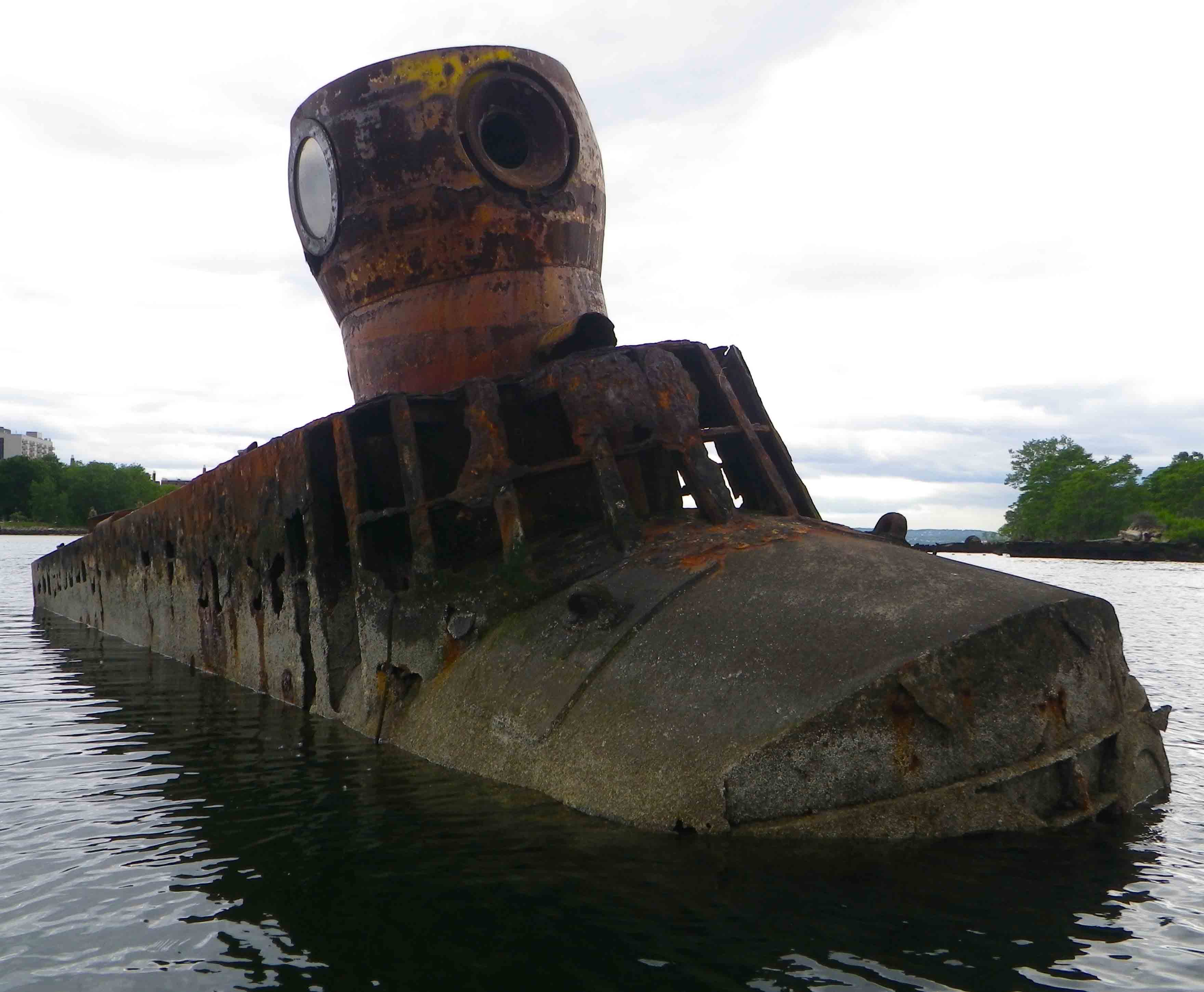
The Yellow Submarine of Brooklyn

Our story begins in 1956, with one of history’s most famous maritime disasters. In thick fog on the evening of 25 July, the Italian luxury liner Andrea Doria collided with the liner Stockholm and next morning sank off Nantucket. 52 people died.

But for others, the great shipwreck was a great opportunity. Adventurers dreamed of schemes to strike it rich through salvage (although in the end, as usual, it was the lawyers who made the serious money). And there was plenty to salvage:

The Andrea Doria was known to be bountifully loaded with such diverse items as a $250,000 solid silver statue of a mermaid; thousands of cases of liquor; tons of provolone cheese; 200,000 pieces of mail that the federal government would pay 26 cents a piece for; the ship’s bronze propellers, worth $30,000 each, paintings locked in air-tight vaults; industrial diamonds; the ship’s $6 million metal scrap value; passengers’ personal property left in several vaults and more. [From an old article in Forgotten NY, now apparently deleted.]

Among those hoping to strike it rich was a Brooklyn Navy Yard ship fitter named Jerry Bianco, who developed a bold plan: build a submarine.

Bianco believed he could build a vessel strong enough to descend to 240 feet of water, where the liner rests at the bottom off Nantucket, and could actually raise the sunken vessel by filling it with inflatable dunnage bags; when filled, the bags would lift it off the bottom or to the surface — or so the theory went.

Lest this sound crazy, Bianco did succeed in forming a corporation, selling stock, raising more than $300,000, and building a 40-foot, 83-ton submarine that passed Coast Guard inspection with flying colors, and, in October 1970, was ready to be launched.

But for want of a nail…  Bianco was chronically short of money (he painted the submarine chromium yellow, because that was the cheapest paint he could find).  Because the launch was to be paid for by the pound, he did not ballast the submarine fully, and it capsized upon being lowered into the water.

And there it has remained ever since.

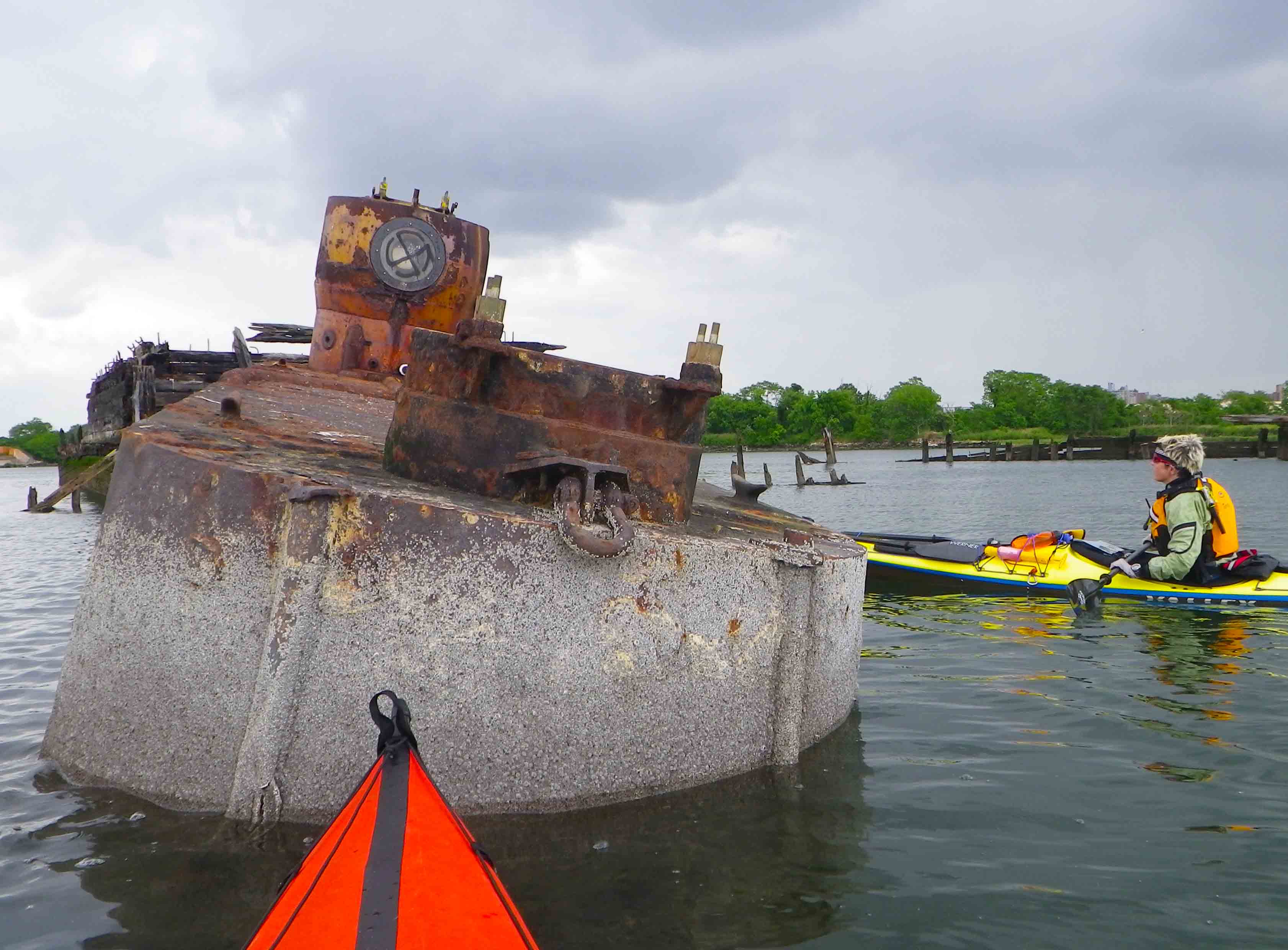
By now, not much of its yellow paint remains; it’s half-submerged, rusted, barnacle-encrusted… a modest, curiously-shaped object that nevertheless hides a fascinating history.

It’s in Coney Island Creek, a bucolic backwater of New York Harbor visited only by birds, fishermen… and kayakers! But not many know about it. We didn’t for many years. But now that we do, we visit it often. It’s one of our secret places.

These photos are from a visit just last week. The text above is partly adapted from a previous post on the Yellow Submarine. And a nice New York Times article on the submarine and its location is here.

The Ships of Arthur Kill

By Vladimir Brezina

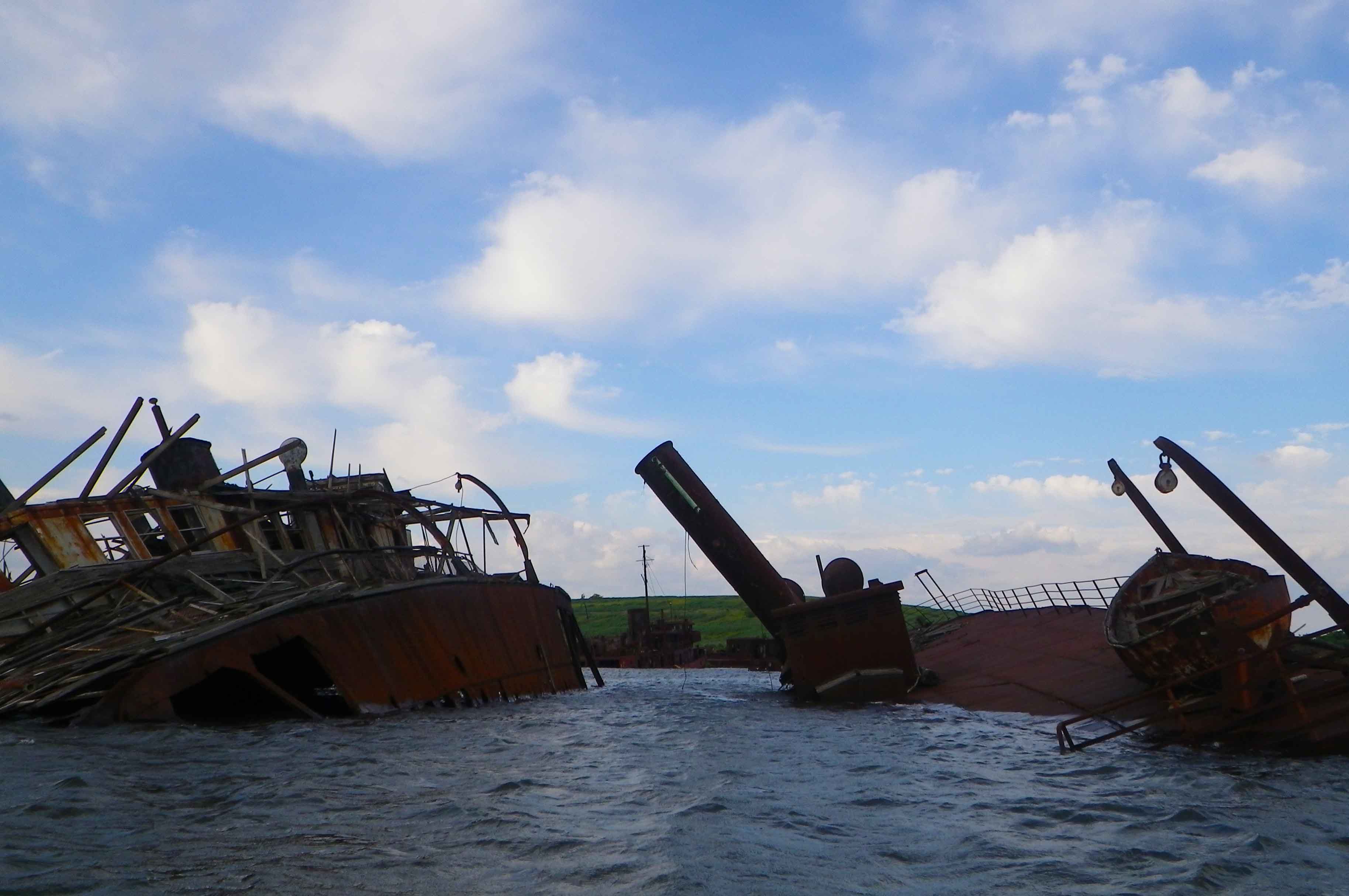
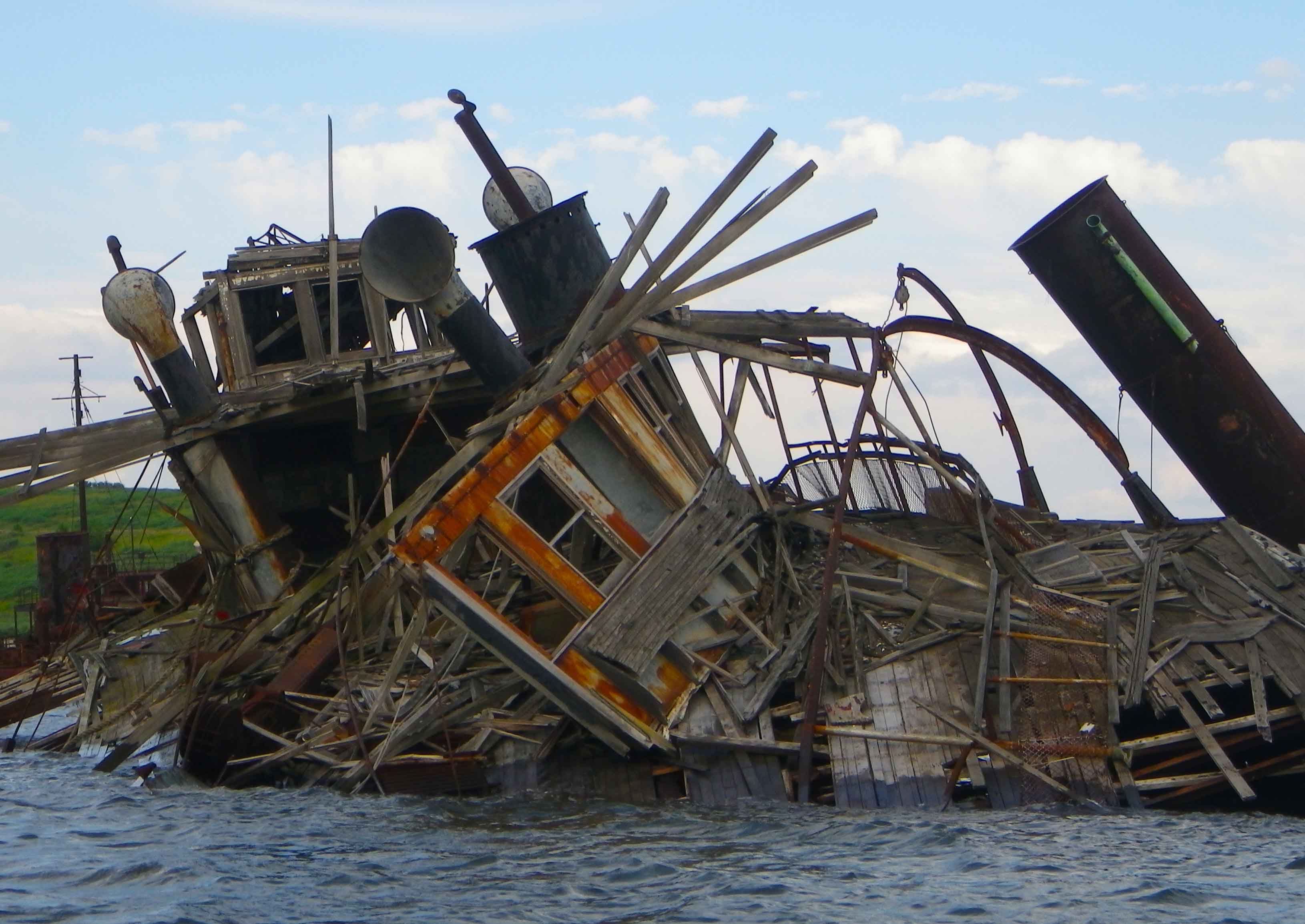
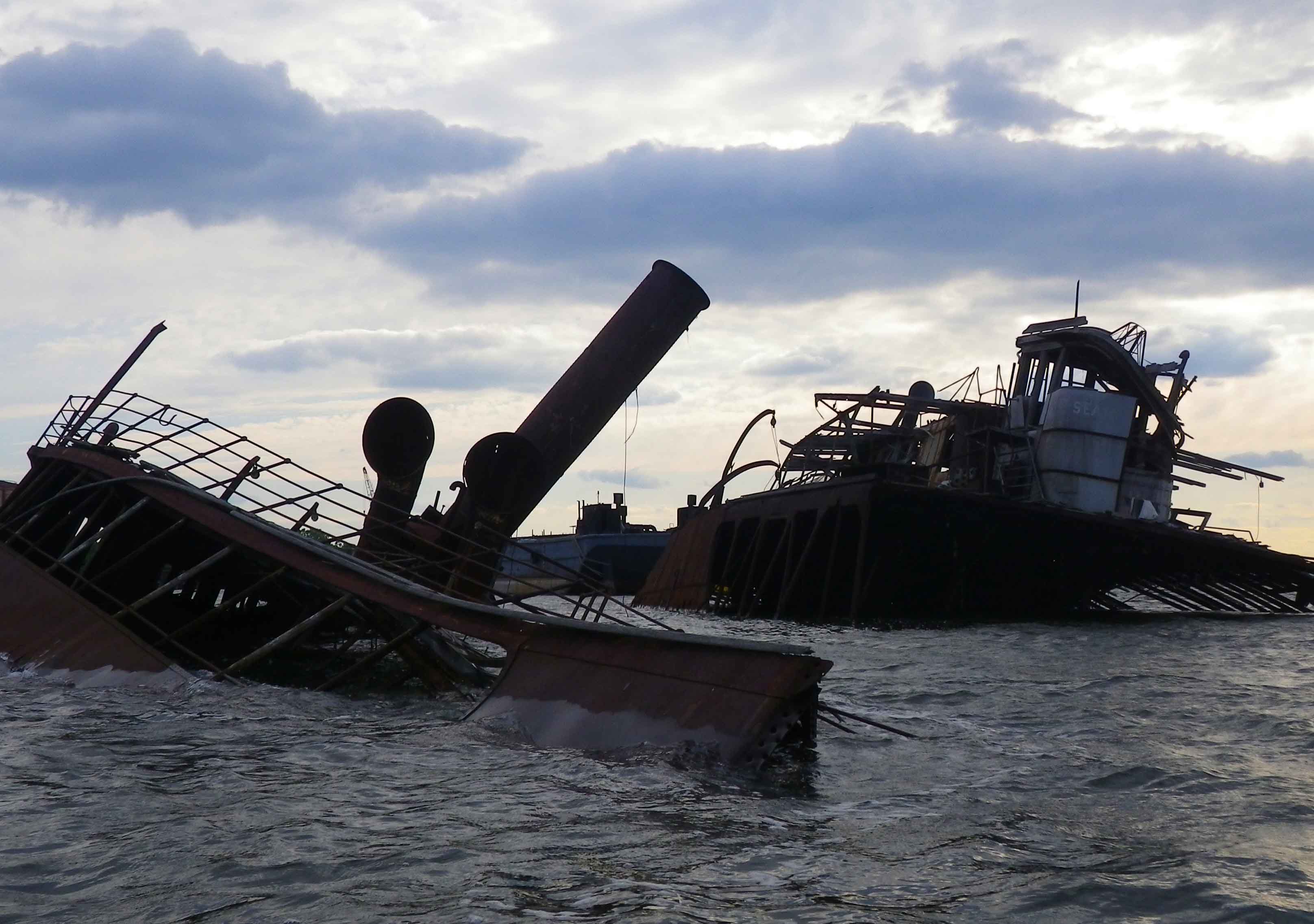
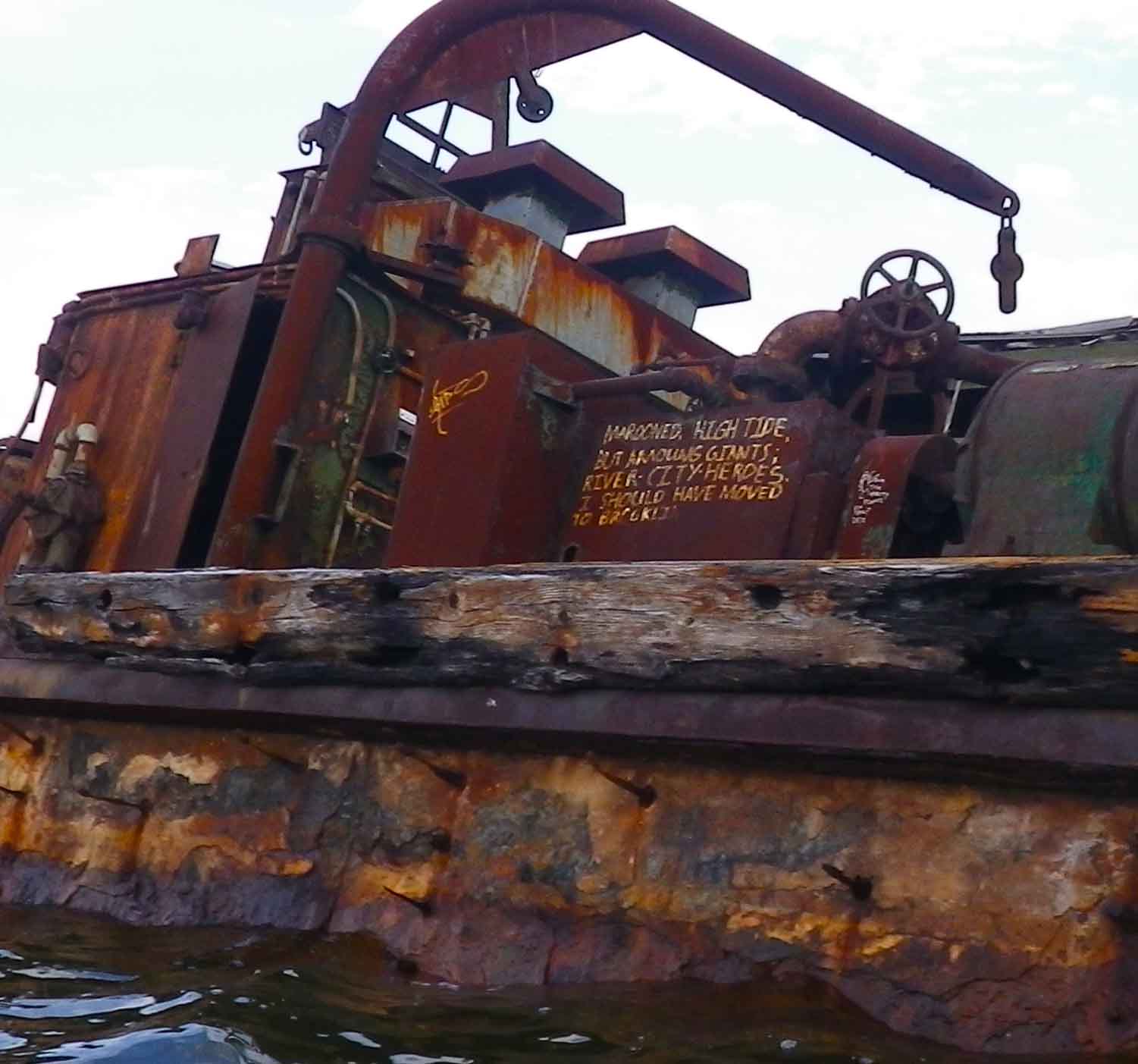
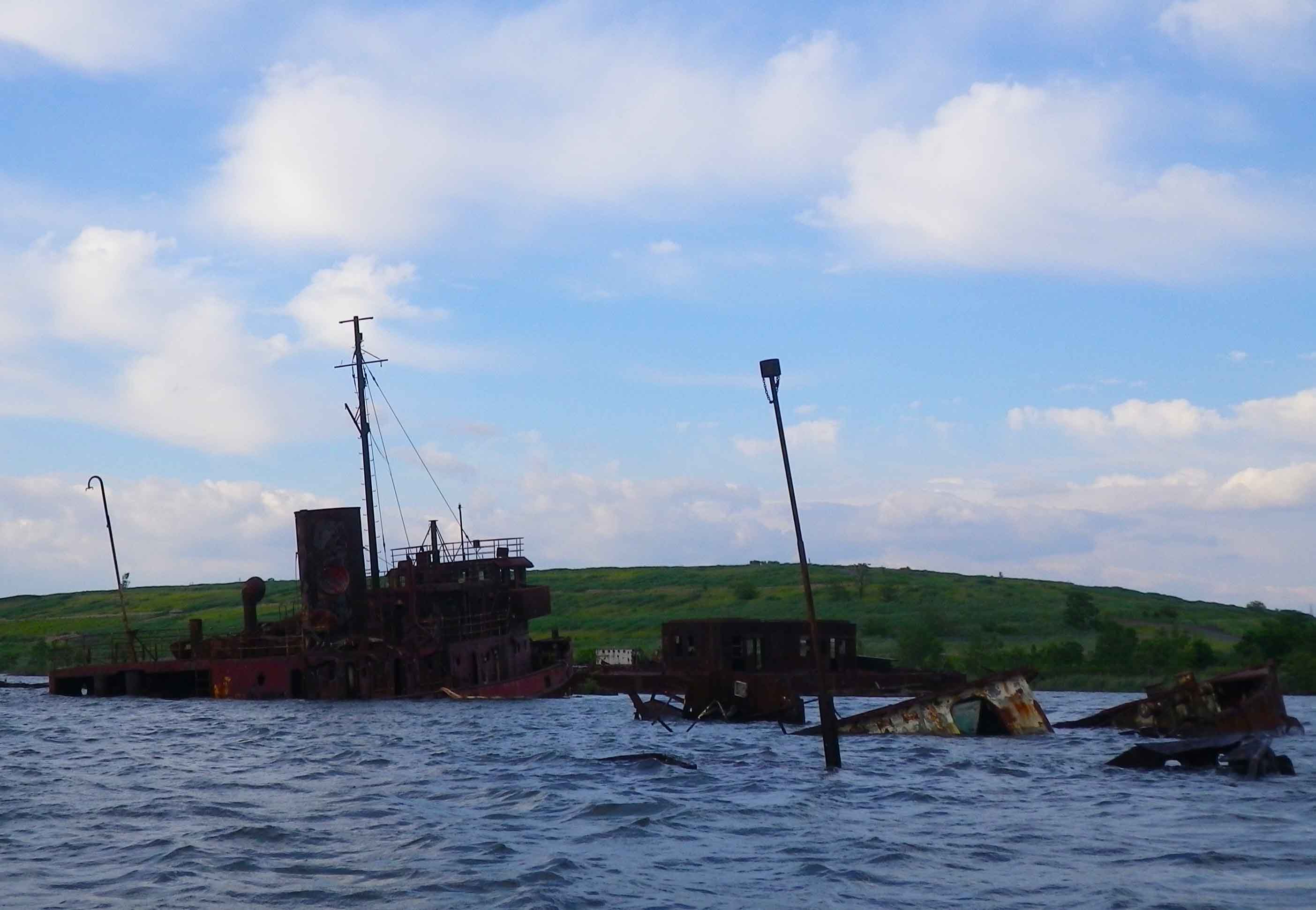
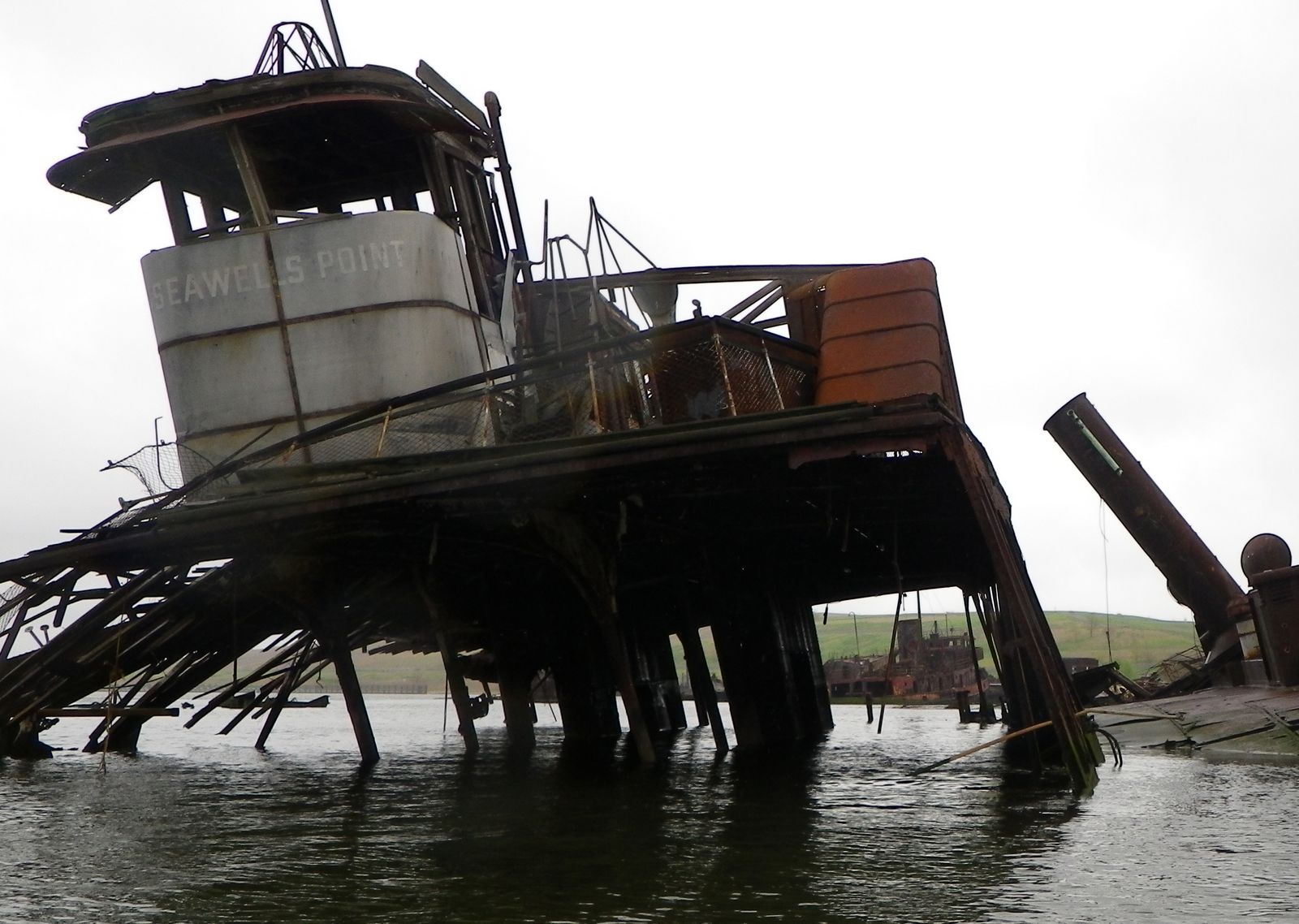
Last Saturday, in the course of a memorable kayak circumnavigation of Staten Island (slideshow forthcoming!), we passed through the Arthur Kill, the industrial waterway at the back of Staten Island. And we stopped for a short while, as we always do, at the Graveyard of Ships.

“Marooned, high tide, but among giants; River. City. Heroes. I should have moved to Brooklyn.”

.

.

.

At the back of the Graveyard rises the green mountain of Fresh Kills, the giant former landfill of New York City.

Although the old favorites are still recognizable, the Graveyard is rapidly decaying (and is also being actively dismantled, apparently). Just two years ago, this looked like this

*  *  *  *  *  *  *  *  *  *  *  *

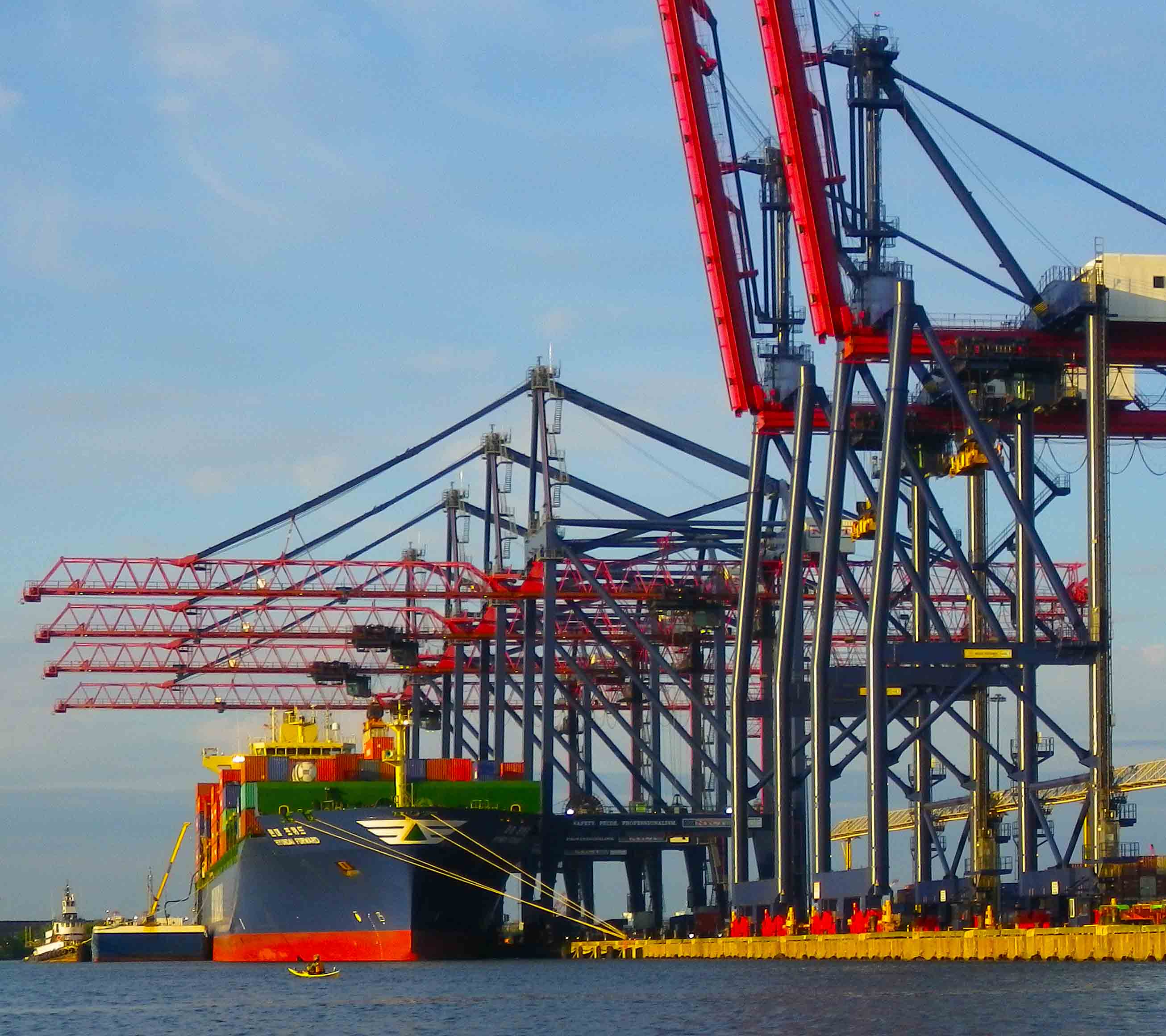
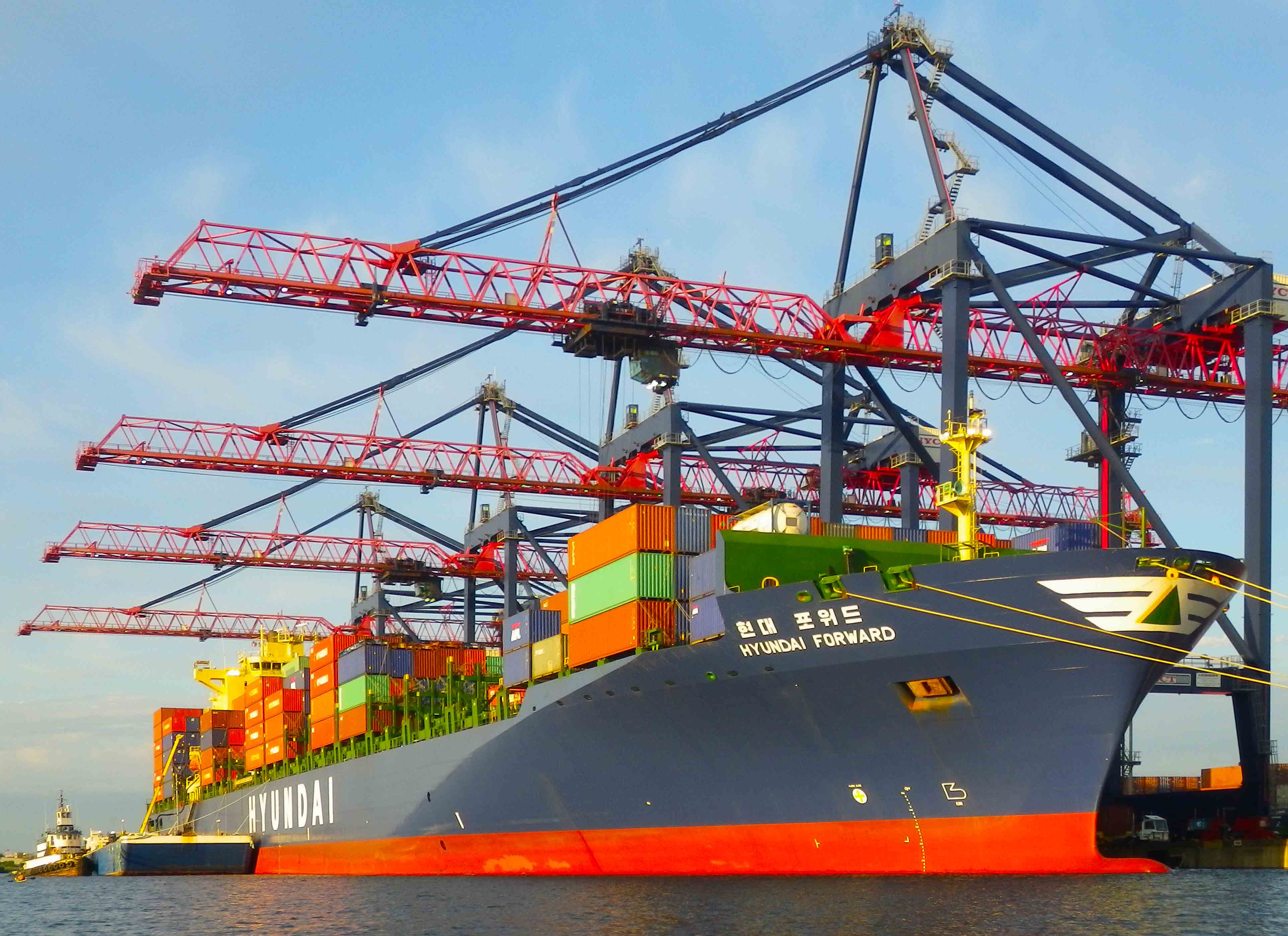
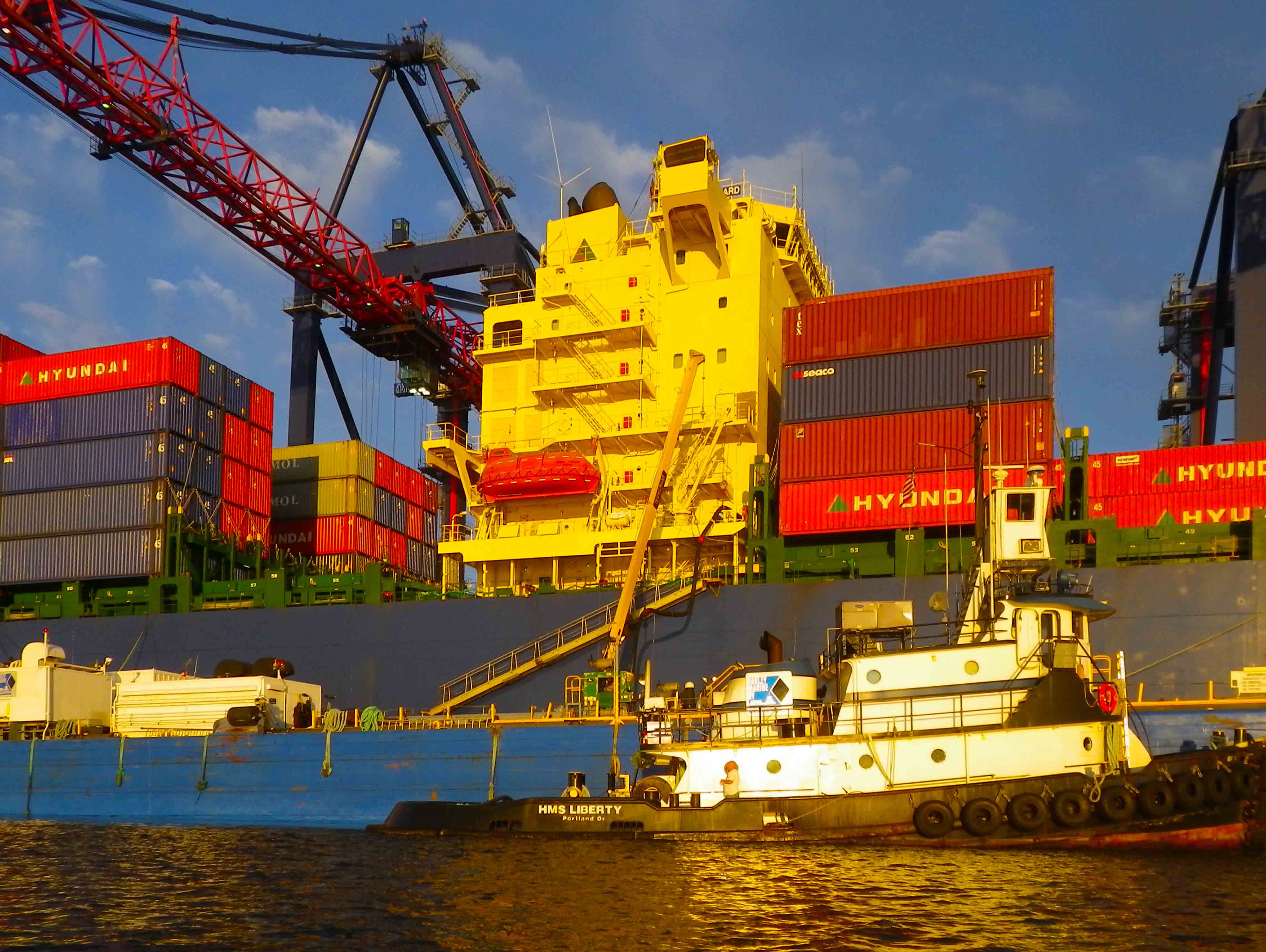
A few miles further up the Arthur Kill, by contrast, it was all vigorous activity at the Howland Hook Marine Terminal. The Hyundai Forward was being simultaneously unloaded and loaded.

(If you look carefully, you will see a tiny Johna paddling down the side of the ship in the first two photos…)

The cycle of life and death!

_______________________________________________________

Update June 10, 2012: The slideshow of the entire Staten Island circumnavigation is here.

Zooming in on Planet Earth

By Vladimir Brezina

I just can’t resist those satellite images!

Following the Blue Marble and its more recent recreations, there are now some amazing new images of the Earth out on the Internet.

These images were taken by cameras aboard Elektro-L 1, a  Russian weather satellite in a geostationary orbit ~35,700 km above the Earth’s equator. Every 30 minutes, the satellite’s cameras create a 121-megapixel image at an unprecedented resolution of ~1 km of the Earth’s surface per pixel. The images were posted on the Planet Earth website by James Drake, who obtained them from the Russian Federal Space Agency and stitched them together into various time-lapse movies.

Some of the movies, such as the one above, attempt to show approximately true color. Others use infrared wavelength information to highlight vegetation in orange.

Various movies, zoomed in on different geographical regions, are available on YouTube or at the Planet Earth site, which also has interactively zoomable images that offer some sense of the true resolution of the images (the movies have much lower resolution for posting on the web) and a beautiful image gallery.

News reports with more information are here and here.

“When I see these images, I perceive the planet we live on as incredibly beautiful, interconnected and alive,” Drake said. “They show the Earth for what it is, a spinning orb of metal and rock with a thin surface layer of unimaginable complexity. The fluid water and air that cover our planet are filled with intricate self-replicating fractal patterns called life. What is happening on this planet is absolutely extraordinary!”

Slightly disconcerting, however, are the ads served up by Google with the YouTube videos:

“The End-Time is Here! 2008 was God’s last warning. 2012 is economic collapse and WWIII. www.the-end.com. Ads by Google.”

And another about UFOs…

Is there something Google knows that planetary engineers and scientists don’t?

Since these ads are personally targeted, though, watch the videos and see what Google has in store for you!