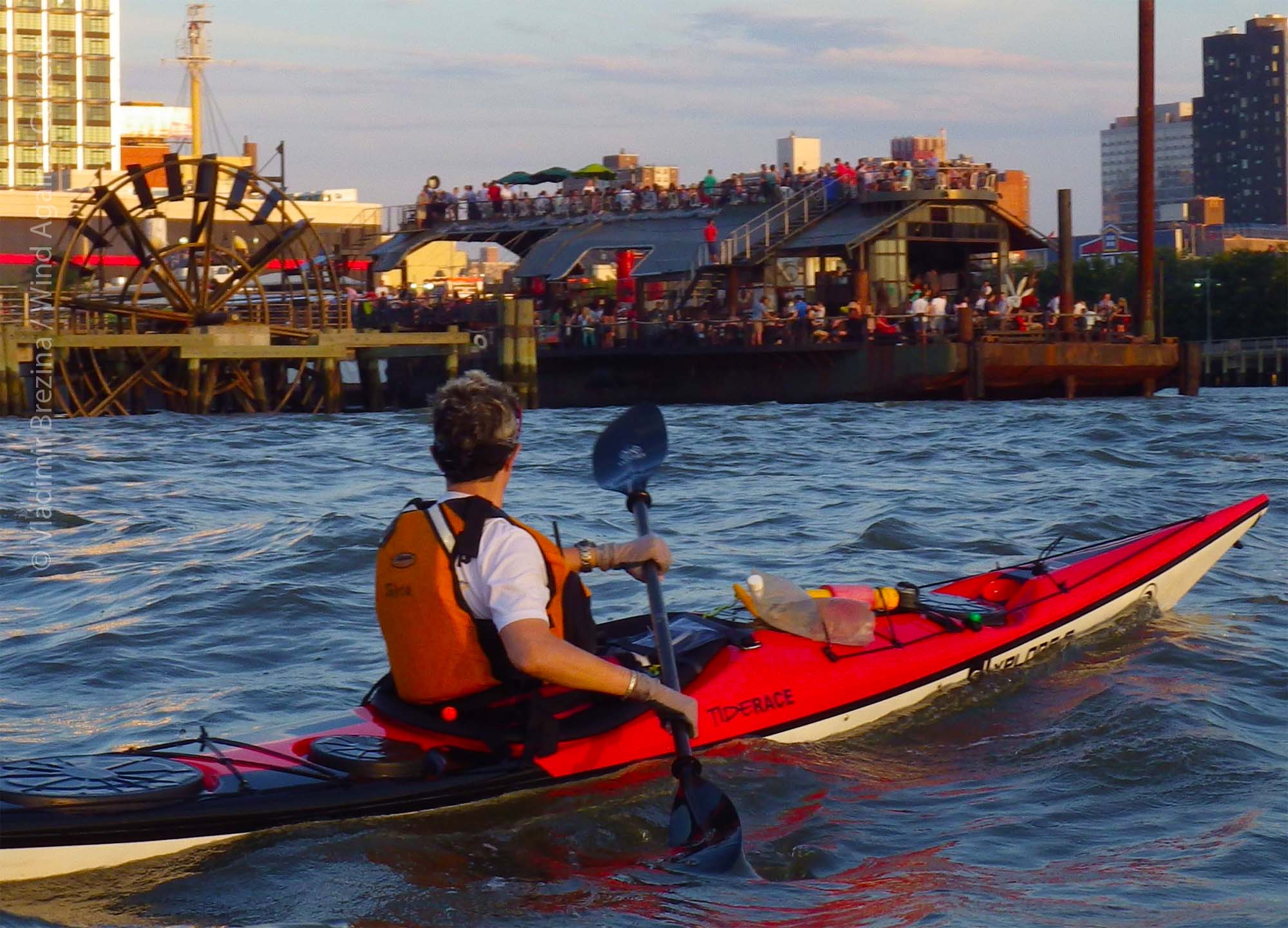
As we paddle along the Hudson River past the piers on Manhattan’s West Side, we pass there, on Pier 66, a large water wheel. Sometimes it is slowly turning as its blades dip into the tidal current that is streaming past. It is a work of art.
It is in fact Long Time, by Paul Ramirez Jonas. The concept is simple: The wheel is connected to an odometer that counts the wheel’s rotations. But the piece has large ambitions. The artist is quoted as saying he wanted to create a piece to represent human existence. “It was created with the improbable goal of marking the duration of our lives, species, civilizations and even the planet… [but] its more immediate intent is to place human existence within a geologic time frame… The wheel will rotate indefinitely until it breaks down, or the river changes course, or the seas rise, or other unpredictable circumstances stop it.”
And those unpredictable circumstances have already occurred. After only 67,293 rotations since the wheel was installed in 2007, in 2011 the floodwaters of Hurricane Sandy stopped the odometer. Repairs are not high on the priority list.
However, the wheel itself “is pretty darn sturdy. It was actually happy during Sandy, because it likes the deeper water. You should’ve seen it spinning.”
* * * * *
The Long Time wheel had to be made sturdy enough to resist, among other things, the impact of trash floating in the water. So why not go a step further, and use the rotation of the wheel to pick up the trash?
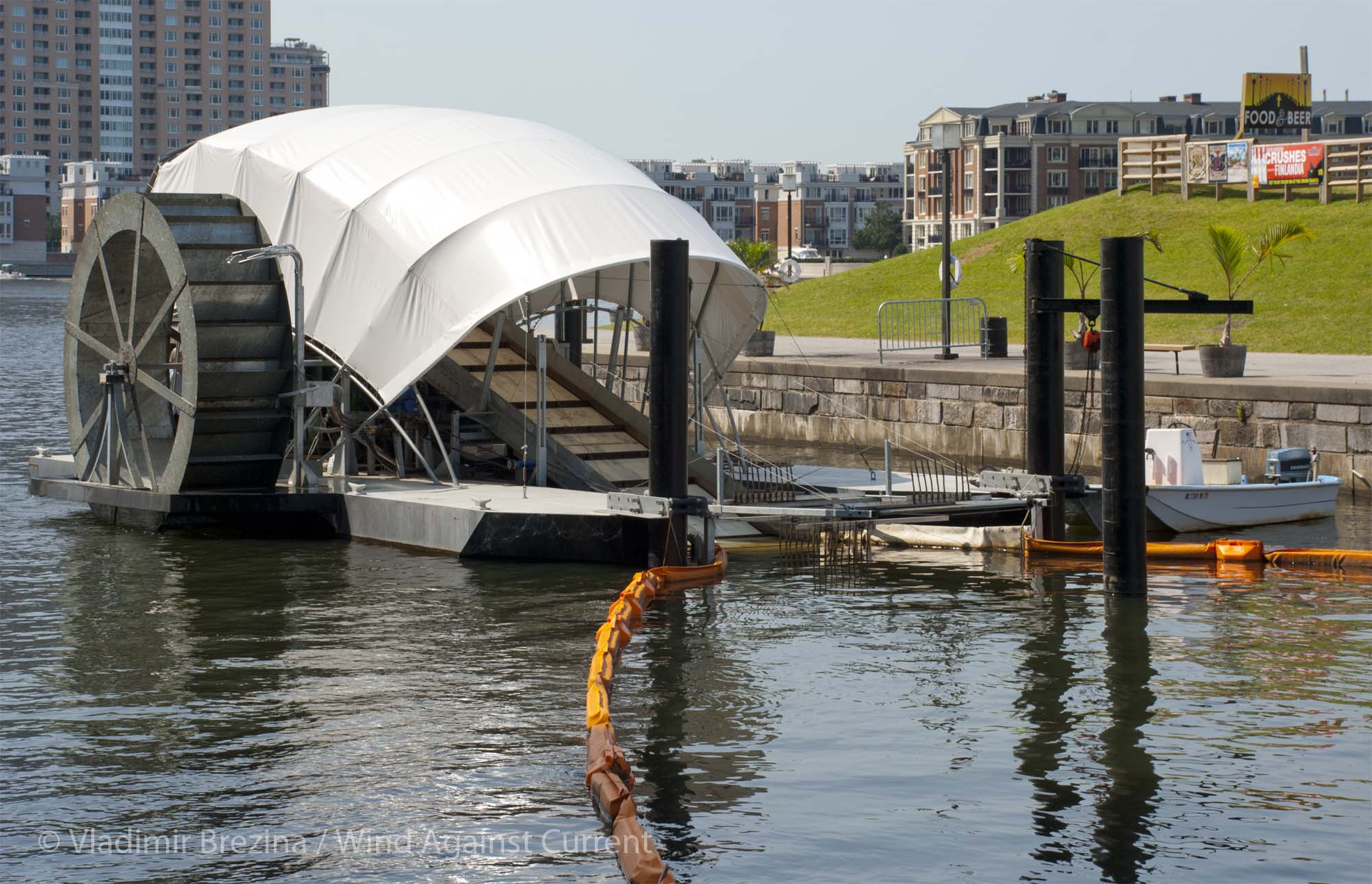
Last weekend, we visited Baltimore, Maryland. And, walking around the Inner Harbor, we spied from a distance a familiar shape—a water wheel. At first we thought that, like Long Time, it was an artwork of some kind. But when we came closer, we realized that it was something more practical.
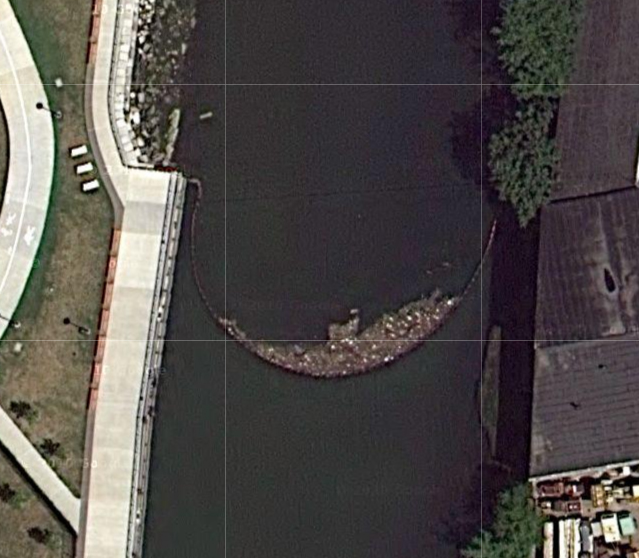
It’s mounted on a floating platform moored at the point where Jones Falls, a river that drains quite a large watershed to the north of the city—and brings down a corresponding amount of floating trash—empties out into the Inner Harbor. The river current drives the water wheel. (There is also solar power for days when the river current is too weak.) The wheel in turn drives a series of rakes and a conveyor belt. The rakes rake the trash, already concentrated by floating booms, up onto the conveyor belt, which deposits the trash into a floating dumpster. Simple!
And yes, it is also a work of art.
More detailed photos of the trash collector are here, and here is a video of it in operation:
The trash collector can collect up to 50,000 lbs of trash per day. By all accounts, although it hasn’t been operating long yet, it’s already made a very promising contribution toward solving Baltimore Harbor’s trash problem. It’s been much more effective, at any rate, than the old way of picking up the floating trash with nets from small boats. “After a rainstorm, we could get a lot of trash in Baltimore Harbor. Sometimes the trash was so bad it looked like you could walk across the harbor on nothing but trash.” Last weekend, as we walked around it, the harbor looked remarkably clean.
Much cleaner, in fact, that some parts of New York Harbor. And we can think of a number of rivers draining into New York Harbor where such a trash collector could be ideally positioned.
Take the Bronx River, for instance. It already has a floating boom to hold back the huge amount of trash that floats down the river—trash that must be periodically removed. A water wheel would do the job effortlessly.
So, let’s hope there are more water wheels, not merely decorative but also practical, in New York’s future!
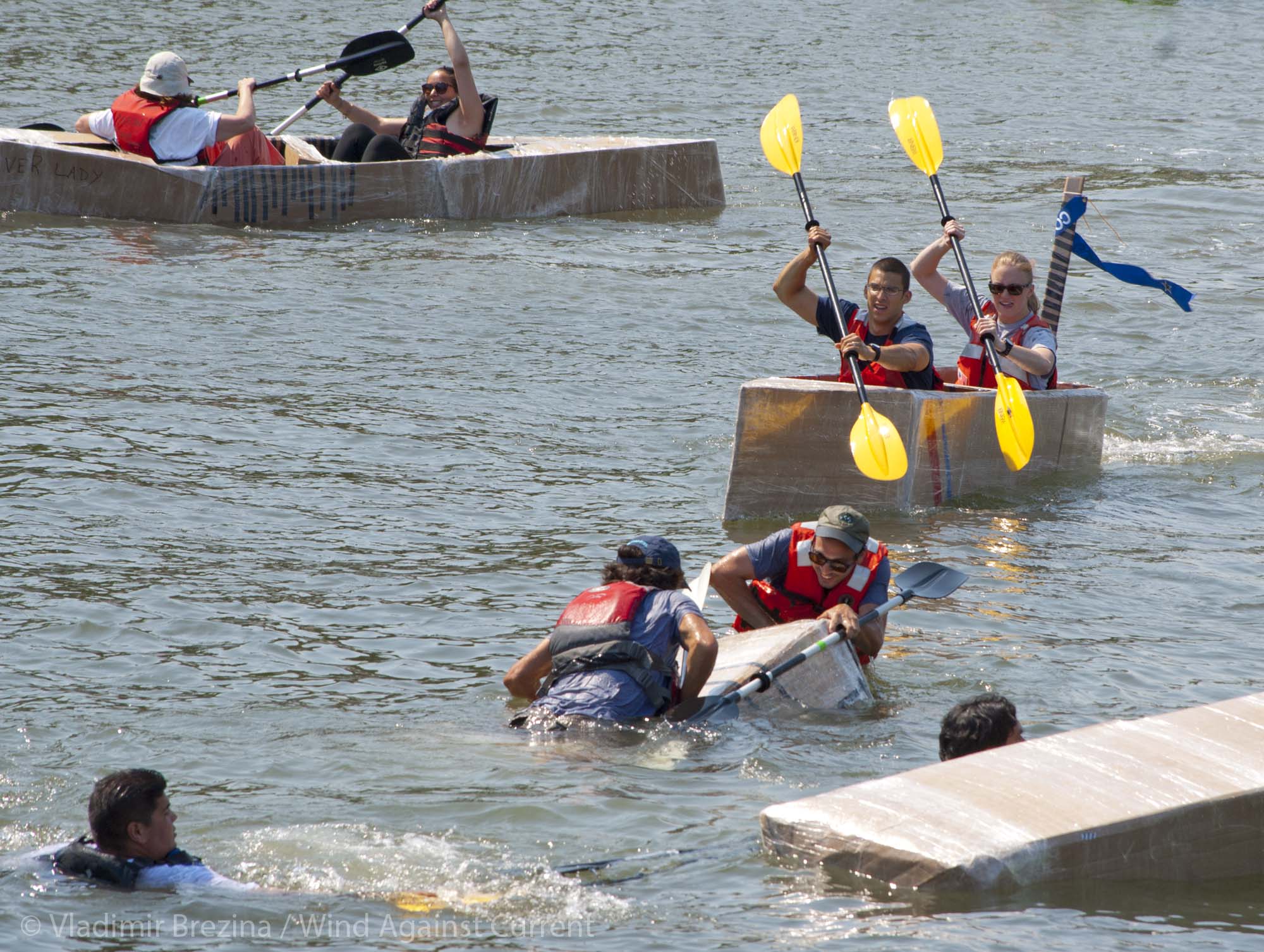
Last year, I wrote about the first annual Cardboard Kayak Race, held on City of Water Day at Governors Island. This year, I was in it!
No, it’s not what you’re thinking. We didn’t build a boat out of cardboard and then race it. But others did! And I was part of a fleet of “safety kayaks” whose job it was to rescue paddlers whose cardboard boats sank (and fish out the sodden detritus).
In Manhattan we get our share of celebrities. Some live here year-round. Many zoom by in a blaze of flashbulbs and applause.
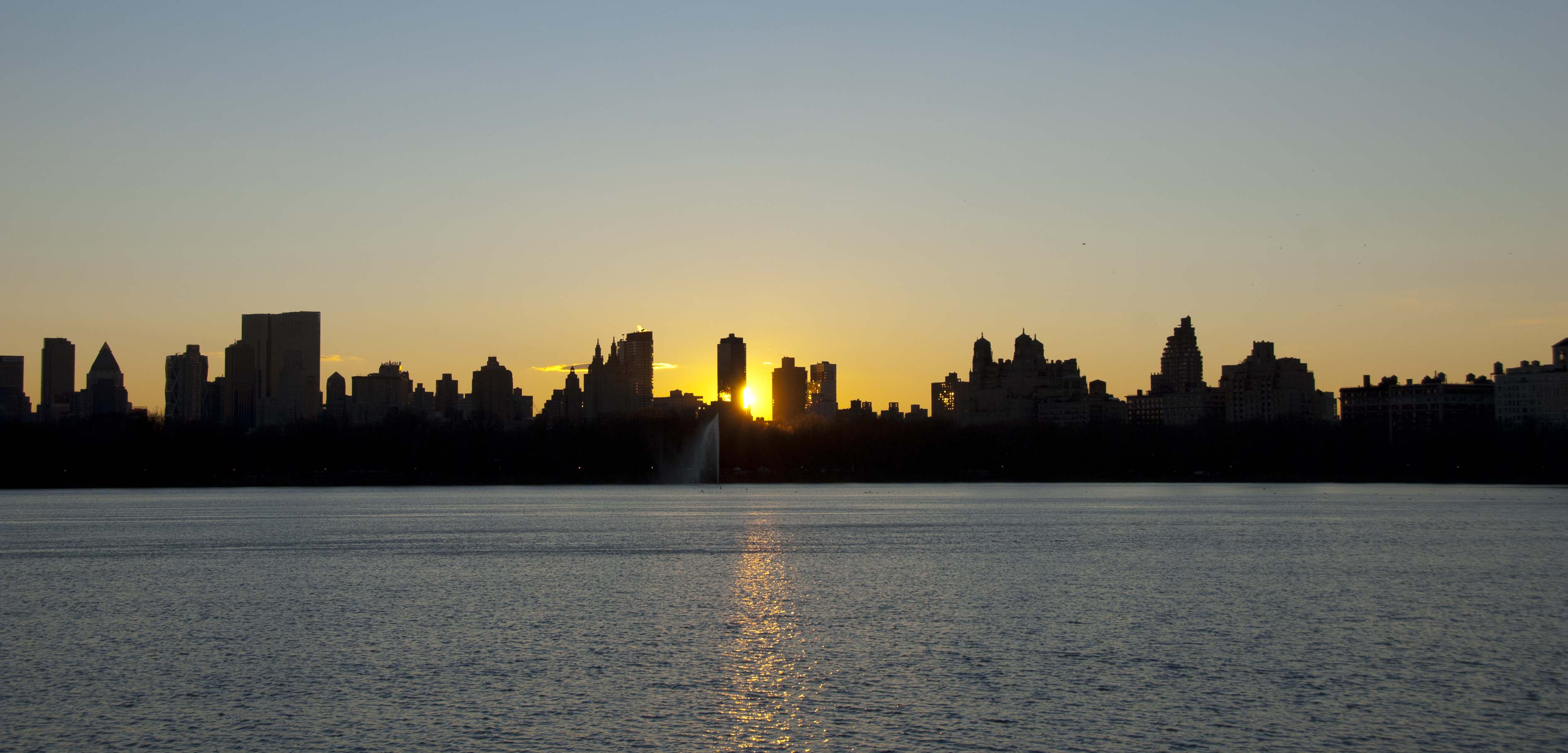
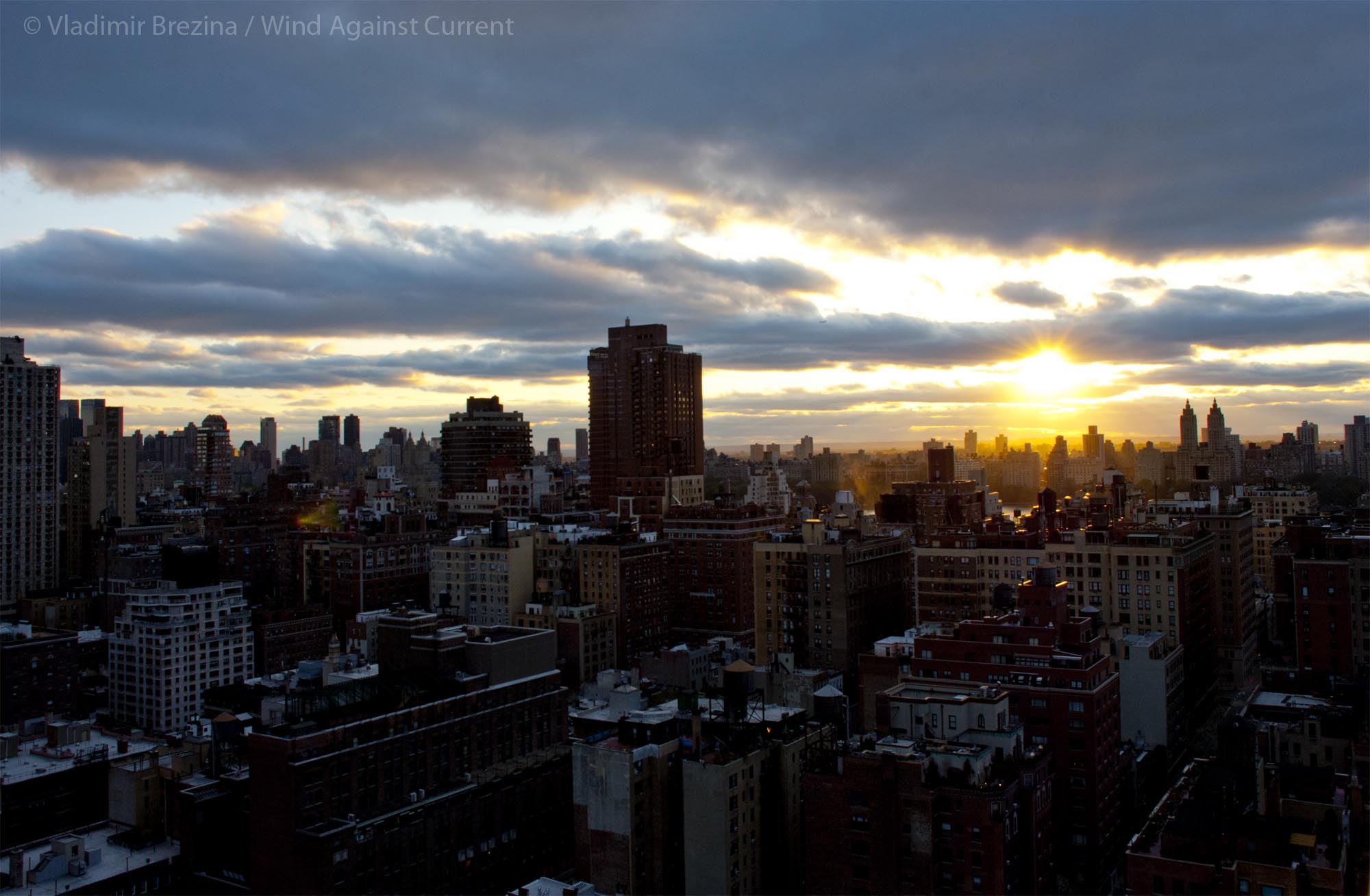
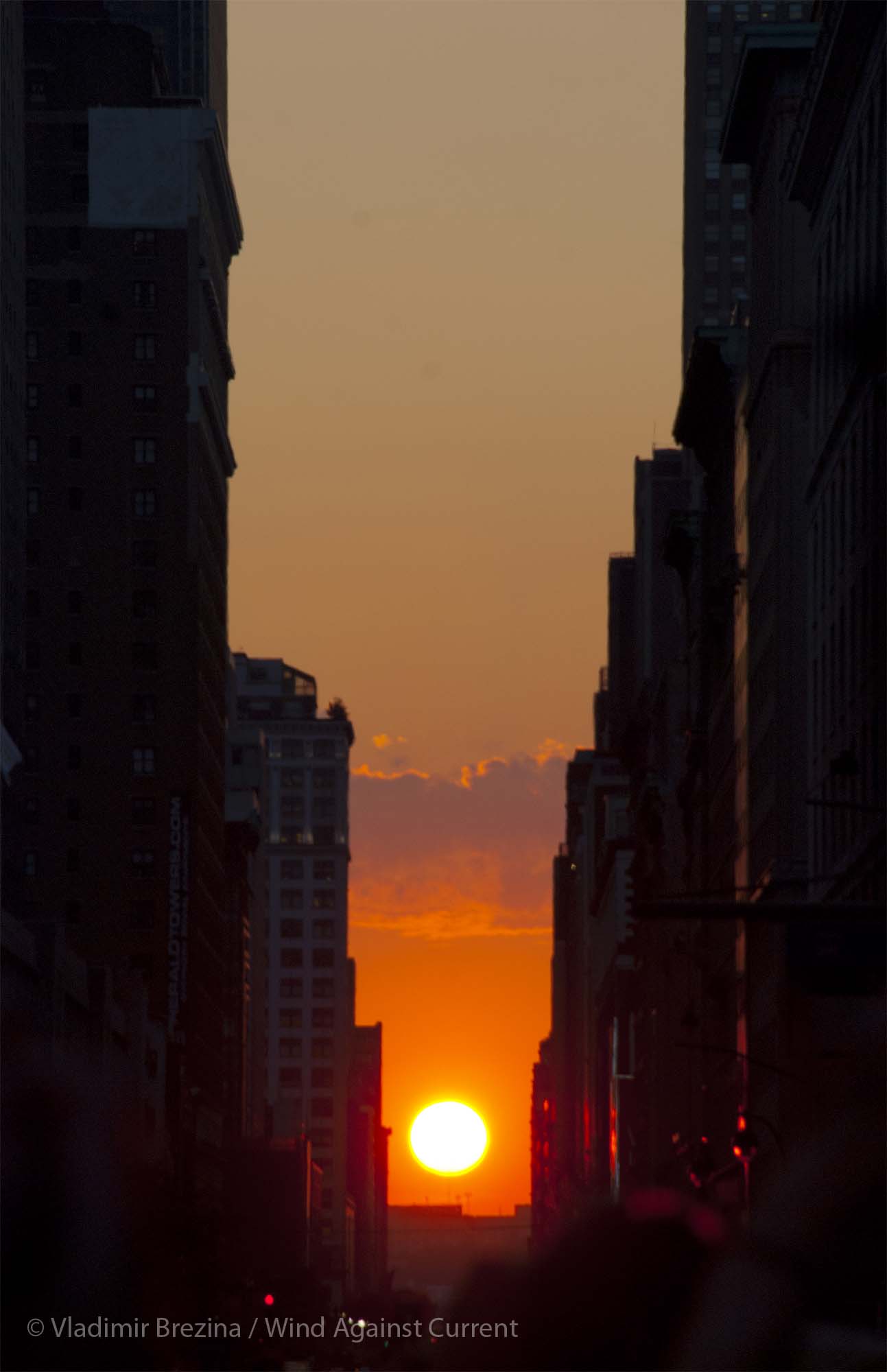
And some show up reliably every day, unapplauded, but make a celebrity entrance a few minutes out of the year. That’s what happens at Manhattanhenge. Twice a year, roughly three weeks before and after the summer solstice, the setting sun lines up precisely with the east-west streets of Manhattan’s street grid.
It’s a well-known phenomenon, and has become more so with each passing year. Photographers gather at major intersections, awaiting that perfect moment when the sun touches the horizon, framed precisely between buildings on either side. For a moment or two, the sun is a celebrity.
I’ve heard about it, and Vlad has taken pictures of it many times. But this year was the first time I’d actually experienced it.
“A ticket to see fireworks? Don’t you just, uh, look up?” That was my friend Kathy’s comment when I mentioned Vlad had made the long, hot trip downtown in a thunderstorm to pick up our tickets for the fireworks.
Normally, she’d be right: For the past few Independence Days, we’d gone up on the roof, or just looked out from our window on the 17th floor. Even in New York, some things are free!
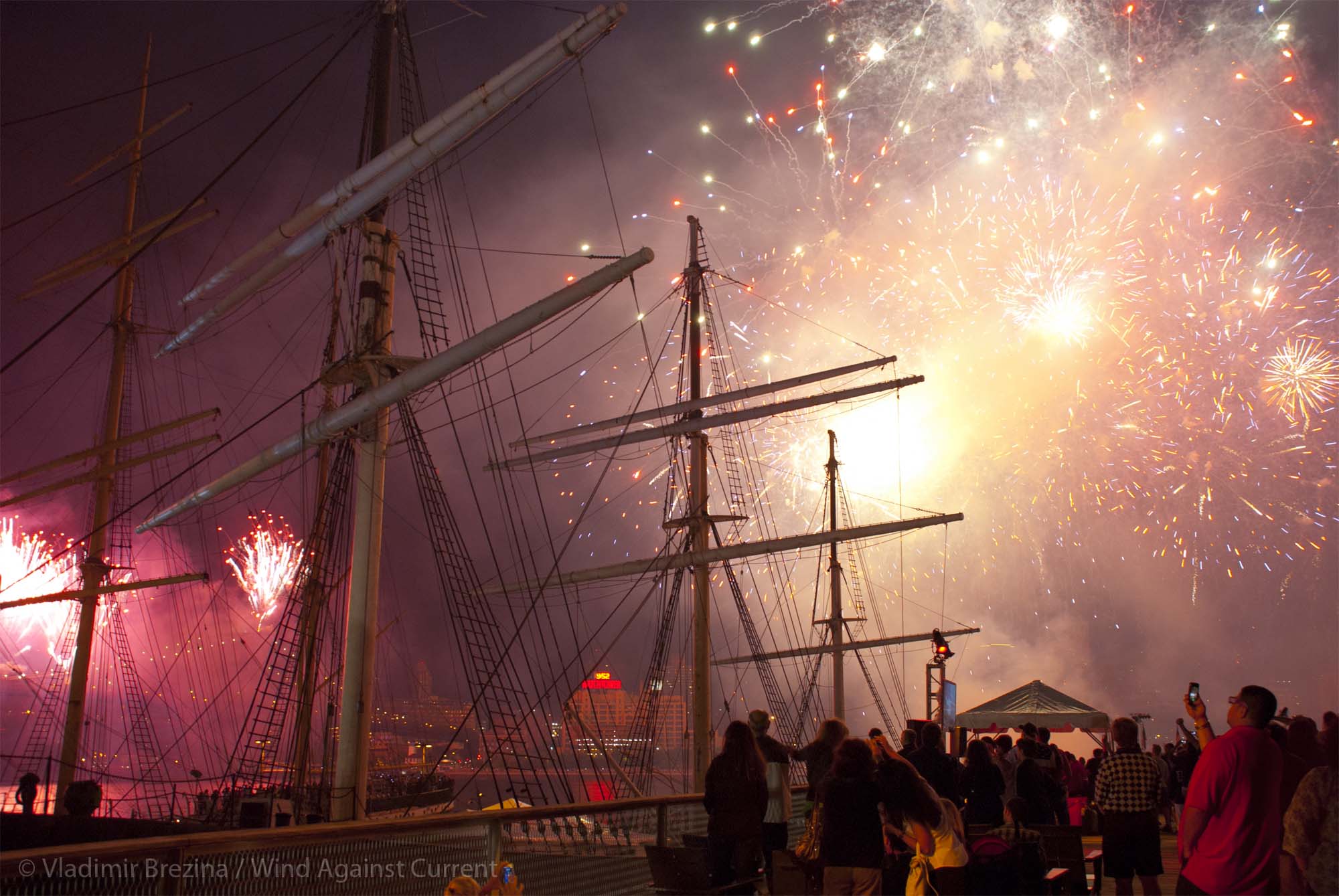
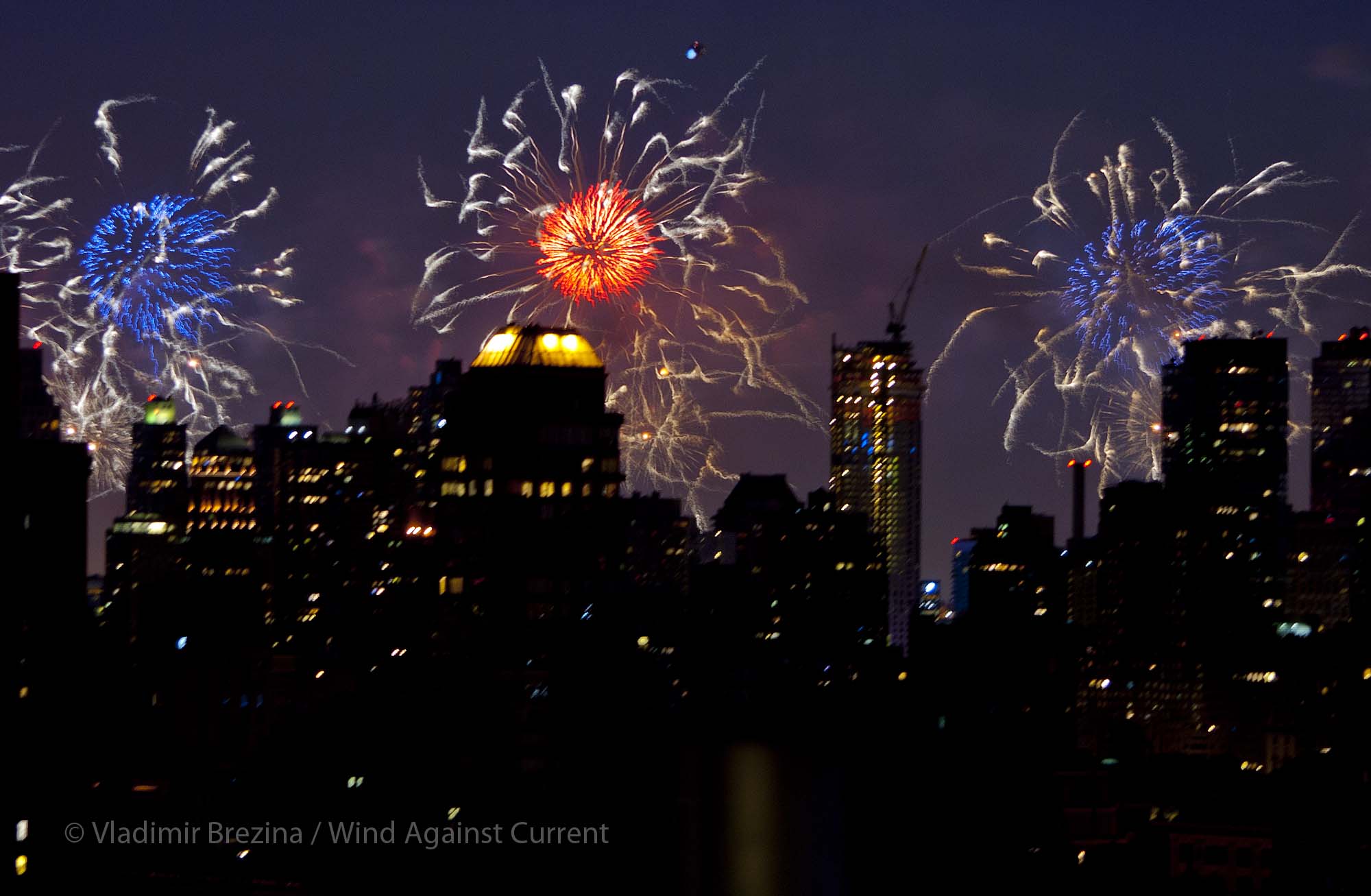
But these weren’t just any fireworks. This was the first time ever they’d be in the lower East River—even be launched from the Brooklyn Bridge! And our friend John, who, like Vlad, is a photographer, would be in town expressly to take photos, and we needed to find an uncrowded location for them to set up their tripods.
Yesterday in the early evening a line of strong thunderstorms rumbled through New York City. This happens often in the summer and the sight can be awe-inspiring. But I was working all afternoon in a windowless room, and later, when I got to a window, it was too late to discern much. The building was already submerged in thick green fog. Lightning flashed and thunder cracked directly overhead.
What to do under those circumstances? Let’s go to the video replay!
And from where better to observe the arrival of the storm over New York Harbor and the Manhattan skyline than the Statue of Liberty?
Vladimir Brezina (RIP)
... kayaked the waters around New York for more than 15 years in his red Feathercraft folding kayak. He was originally from (the former) Czechoslovakia and lived in the U.K. and California before settling down in New York. He was a neuroscientist at the Mount Sinai School of Medicine in New York City. He died in 2016.
Johna Till Johnson
... is a kayaker and technology researcher at Nemertes Research. She's an erstwhile engineer, particle physicist, and science fiction writer. She was born in California and has lived in Italy, Norway, Hawaii, and a few other places. She currently resides in New York City.
















 Vladimir Brezina (RIP)
  Johna Till Johnson


 Wind Against Current